
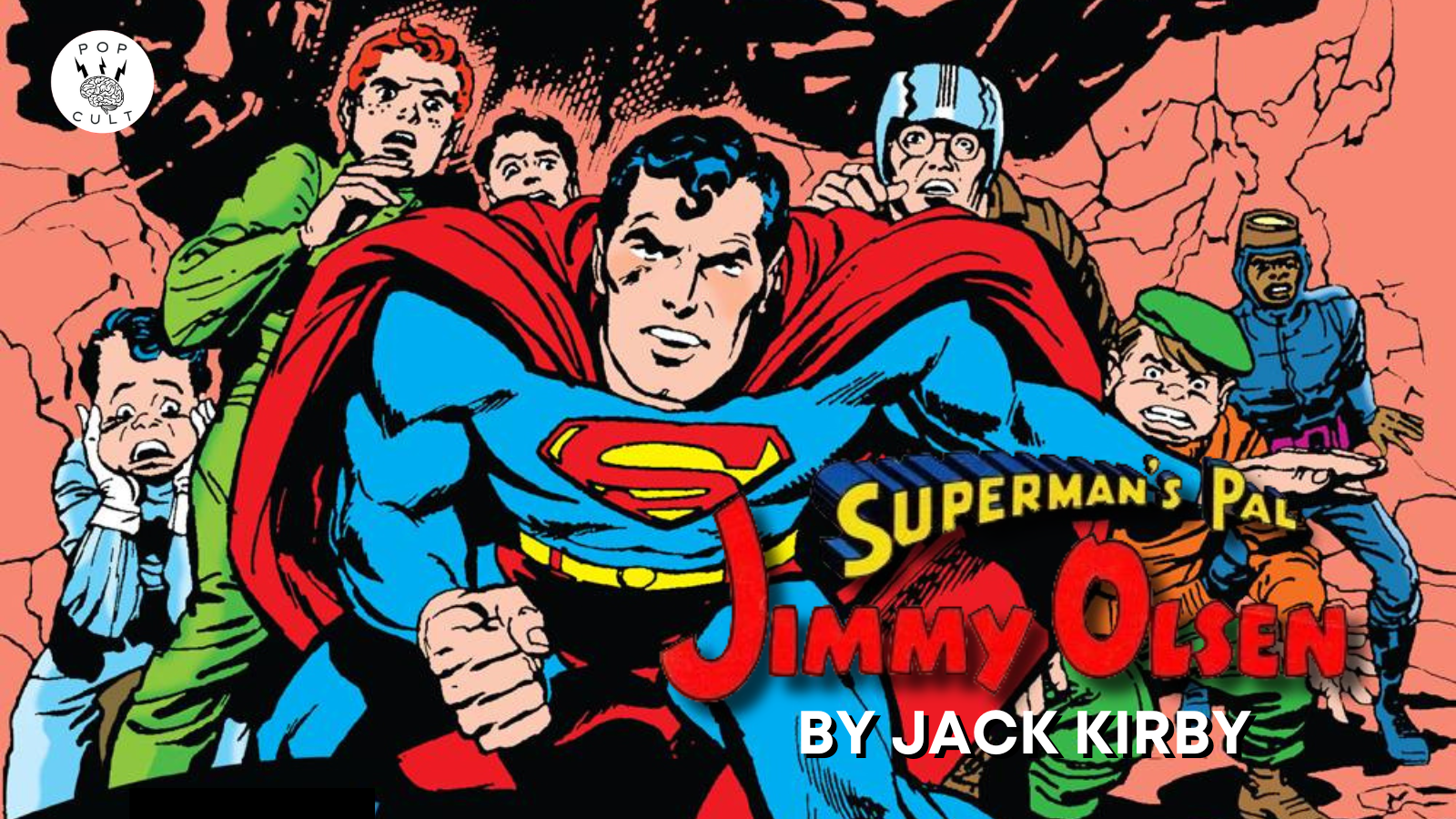
Superman’s Pal, Jimmy Olsen by Jack Kirby (2019)
Reprints Superman’s Pal, Jimmy Olsen #133-139, 141-148
Written by Jack Kirby
Art by Jack Kirby, Vince Colletta, Mike Royer, Al Plastino, and Murphy Anderson
You should have dignity in whatever work you do. Jack “The King” Kirby had that self-respect, and in 1970, when he was presented with a less than favorable new contract by Marvel, the already legendary artist said, “No thanks.” Kirby had been a loyal company man despite being shit on constantly by the likes of Stan Lee. He was held back creatively in favor of more “marketable” ideas and art. So, with limited options, Kirby went to DC Comics and, over almost two years, negotiated a deal he could live with. Part of this deal was the development of a line of titles under the banner of “The Fourth World.” This new cosmic saga would be composed of three ongoing books: New Gods, The Forever People, and Mister Miracle, with the Jimmy Olsen ongoing thrown in as well.
The Jimmy Olsen comic had been a long-running silly book, often focused on Jimmy undergoing some sort of accidental transformation or going to ludicrous means to cover a story or uncover evil. Superman was a supporting character who typically showed up to save Jimmy from the predicaments he had become involved in. When Kirby came into the book, he completely transformed the title’s look and storytelling style. The Kirby style was so jarring to DC’s editors that they secretly had Al Plastino and Murphy Anderson, long-standing Superman illustrators, come in and redraw all of Kirby’s Superman faces. This did irritate Kirby, but he had a contract to fulfill.
Kirby’s Jimmy Olsen is not a loveable goofball but a reporter eager to break the story and willing to get into dangerous situations, a throwback to a classic type of boy hero from a past era. Instead of stand-alone single-issue stories, Kirby created a sprawling serial that revived an old creation he’d helped make back when he worked for DC in the 1940s, The Newsboy Legion. This gang of kids was a recurring theme in the artist’s work, hearkening back to his childhood in the Lower East Side. However, this group was the kids of the original Newsboy Legion, with those now grown men working for the mysterious DNA Project, which operates just outside of Metropolis and has been cooking up some interesting genetic experiments. This includes The Guardian, a variation on Captain America that Kirby and his collaborator Joe Simon had as the hero the original Newsboy Legion backed.
Kirby’s takeover of the book also introduced a villain who would lead to a significant transformation of the Superman titles in the 1970s. Morgan Edge was a media mogul who purchased the Daily Planet and owned the television station WBGS. Edge was a prototype for John Byrne’s eventual reimagining of Lex Luthor in the 1980s as a businessman, but this millionaire was secretly running Intergang. Intergang were often the central villains in the Jimmy Olsen comic and popped up across all the Fourth World titles. What set Intergang apart was that it used highly advanced alien technology in its operations, which was funneled to them by a mysterious figure seen only on some monitors. His name was Darkseid, and if you just read Jimmy Olsen, you’d likely never really get a sense of exactly who he was.
Across all of Kirby’s DC books, he fully embraced the counterculture that had emerged in America during the 1960s. These are not conservative stories like you’d expect, especially from DC at that time. The heroes in Kirby’s stories are always the young free-thinking free-love types, and the enemies are the establishment. Jimmy’s greatest foe during Kirby’s run is Morgan Edge, the cub reporter’s boss. Taking chances and finding ways to enjoy life make Jimmy and his cohorts the heroes. They sometimes encounter strange beings who end up being benevolent or kind, and it’s by not judging them right away that our protagonists discover this. Kirby was still stuck in a conservative mindset regarding women; they only appear as secretaries and even more rarely as villains, at least in Jimmy Olsen.
There are glimpses through this volume of a few other Fourth World characters. Superman goes on a cosmic journey and encounters Lightray, one of the Young Gods of New Genesis. What’s funny is that executives at the company expected Kirby to write classic Jimmy Olsen stories and that the stranger ideas he was proposing would be brought out down the line. The creator had other ideas and started weaving in his grand epic from the first issue. Intergenerational conflict is at the core of the broader narrative, which we will see even more clearly when we review the complete Kirby New Gods collection.
Kirby made Jimmy Olsen a weird comic in all the best ways. One of the most jarring was a technique the artist had begun experimenting with on Fantastic Four: collage. For dramatic emphasis and especially in places where Kirby wanted to bring out the grandeur of the cosmos, he would employ collages of standard comic drawings, paintings, and photocopied photographs. I can imagine how a kid picking up the new issue of Jimmy Olsen in 1971 would have had their mind blown at this two-page spread they had not anticipated.
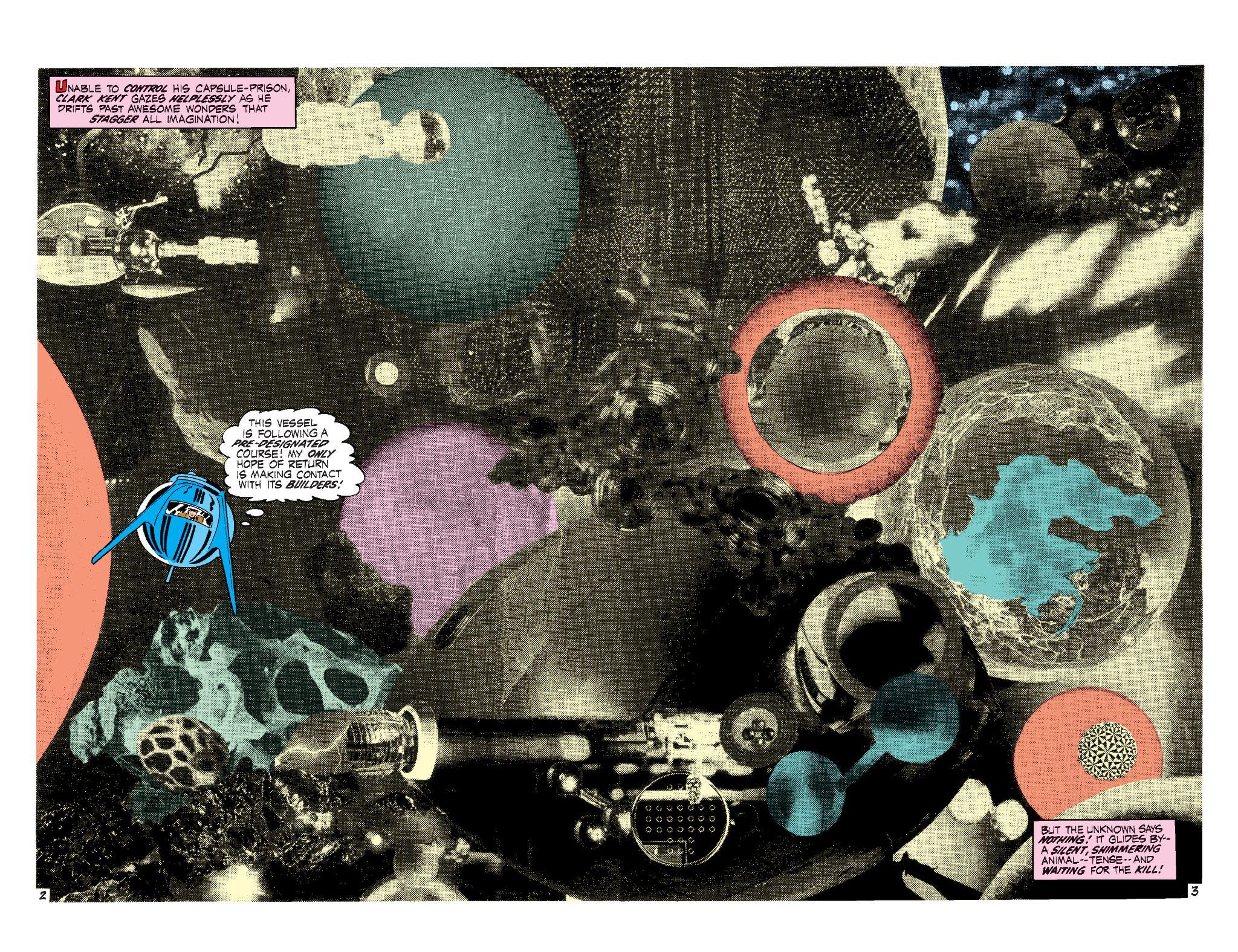
One of the problems with Kirby’s work is that he is overflowing with new ideas, and a single issue can throw out so many new concepts that it can be overwhelming. Kirby is also telling stories stretched out over a large scale of time. So when he left DC Comics in 1975, dissatisfied with the changes done without his approval and the push to be less “weird,” many of these big ideas remained undeveloped. Some of them he brought with him back to Marvel when he returned and created The Eternals. But one thing you cannot say about these Jimmy Olsen stories is that they are not original. No one had seen anything like this before, such a celebration of the longhairs and the peaceniks, and it was coming out on the comic racks of your local drugstores and supermarkets.
Next, we’ll dive into the premier book among Kirby’s DC run: New Gods.

 PopCult Reviews
2 thoughts on “Comic Book Review – Superman’s Pal, Jimmy Olsen by Jack Kirby”