
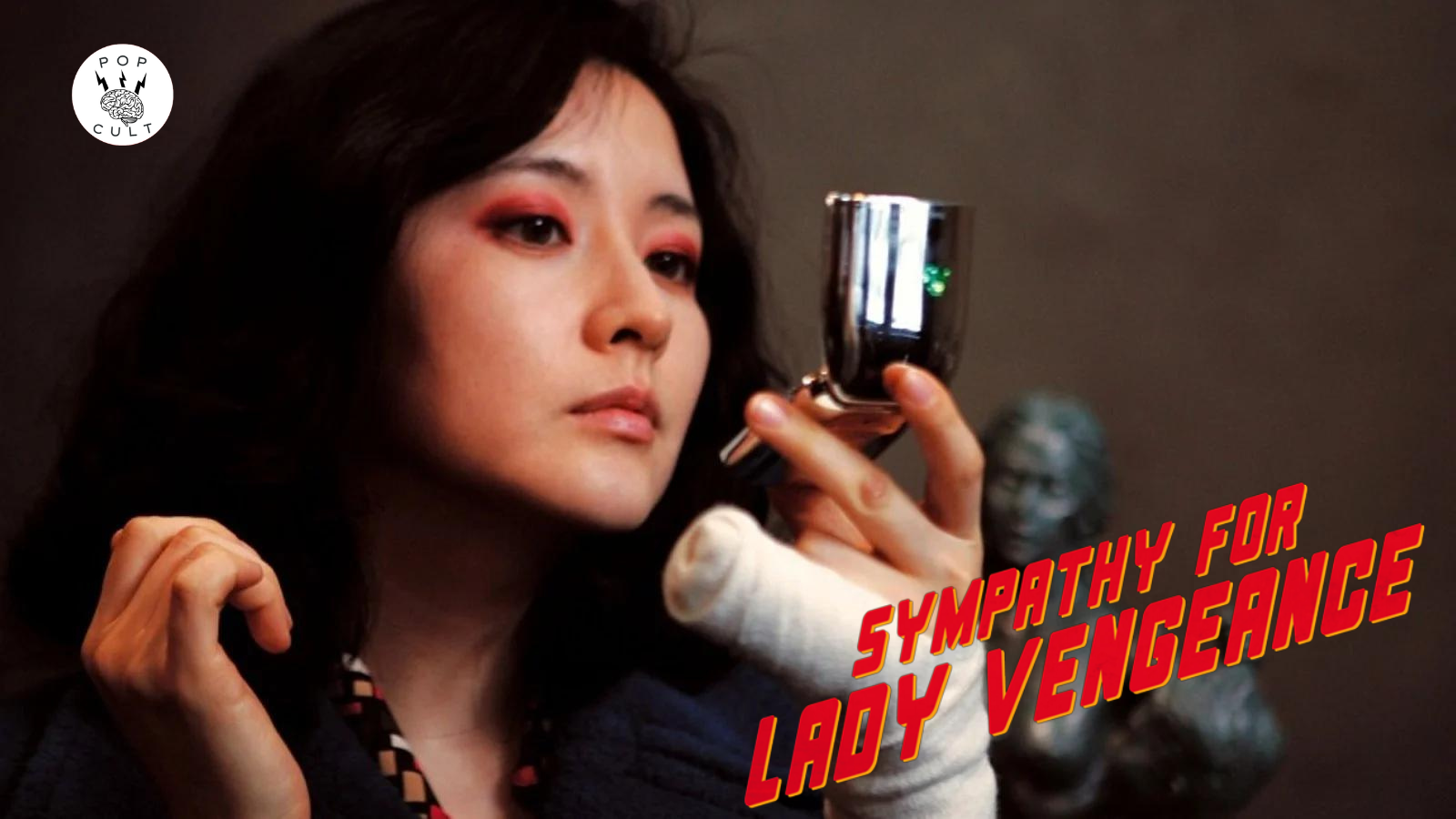
Lady Vengeance (2005)
Written by Chung Seo-kyung & Park Chan-wook
Directed by Park Chan-wook
Park Chan-wook is a master filmmaker. If you read my review of Decision to Leave last year, you know how much I love this director. South Korean cinema is the most vibrant creative filmmaking scene we have right now, with a diverse array of directors making all sorts of movies that play to their strengths. Bong Joon-ho (Parasite) is fantastic at making biting social satires, Hong Sang-soo (In Front of Your Face) crafts gently paced slice-of-life dramas, Lee Chang-dong (Burning) dark stories of psychological trauma, and Park Chan-wook has mastered the art of telling tense & violent thrillers. Lady Vengeance was part of Park’s Vengeance trilogy, which started with Sympathy for Mr. Vengeance (still on my Watchlist), Oldboy, and finally, Lady Vengeance. Throughout every film, he follows the response of a profoundly wronged person and explores the effects their quest for vengeance has on them.
Lee Geum-ja (Lee Young-ae) has been released from prison after a thirteen-year sentence. She had been convicted of kidnapping and murdering a 5-year-old boy and gained significant media attention over the public’s shock at how young and angelic she appeared. The chief detective was surprised at how eager she was to confess to the crime, and she subsequently became a model prisoner. Former inmates remember her as being so “kind-hearted,” which means she can find help on the outside immediately because of the contacts she made while in prison. Within a day, Lee has an apartment, a job, new clothes, a haircut, and everything she wants or needs. As the story unfolds, we quickly learn that Lee never killed any little boy and, in fact, was framed by a particularly sadistic authority figure (Choy Min-sik). He used Lee’s vulnerability as a young girl to put her in a position where she had to take the blame. After a decade of planning, Lee is ready to execute her revenge, an odyssey that ends with her drenched in blood and forever scarred by what she felt she had to do.
Park Chan-wook clearly doesn’t see vengeance as something positive in a person’s life. Between this and Oldboy alone, we can see how while the villain can be effectively argued to deserve a painful end, however, there is a cost to the one who performs the act, a hefty one that never leaves. A visual technique occurs at the halfway point and is done so subtly that I didn’t notice until much further along. Park slowly desaturates the colors until the movie becomes black and white. In addition, Park begins switching out production design elements from bold primary colors, as seen at the start, with pastels as the color bleeds out of the film. A bright blue jacket, in the beginning, becomes a baby blue about a third of the way in, for example.
Lee is going where she cannot think about the nuance of her actions or contemplate the complexity of guilt & punishment. She becomes an incredibly exacting figure, taking bold steps and not dwelling much on their meaning. What Lee comes to learn is that she had been dealing with a serial child murderer all those years ago and that there were half a dozen victims. Her original plan for revenge had been simple, and she shifts to a grander scale. Lee begins to contemplate the idea that the victims’ parents are more deserving of retribution than she is, and so she actually seeks them out without showing her hand until they are in a position where refusing to participate may endanger them. This is where the double-edged sword emerged for me; what would happen if one of them declined? This is a worry for everyone involved, so Lee forces them all to participate in a harrowing final sequence of slow torturous death.
Park wants to communicate that revenge is not necessarily about whether a person deserves it. Revenge is not simply an act that happens to the one judged guilty; it also happens to those carrying out the punishment. Lee is destroyed by her act of revenge; this is why she weeps in the final scene, hugged tight by someone she loves, pleading with them to not become what she is, to find a better path in life. Yet, Lee also acts in a way that insists her approach is one she must follow; it doesn’t matter what is good or bad for her, there is an imbalance in justice, and she can set things right. Revenge is not a joyful process; no one seems better than they did before. Of course, they may have experienced a brief sense of satisfaction, but that fades relatively quickly when the gravity of what they have done to another human, regardless of guilt, sets in.
It’s one thing to just plug someone in the head and move on, but the killing here is done with blades and is slow and drawn out. There’s an animal fervor in the perpetrators, humanity dripping away from their faces as they get their chunk of flesh. In the aftermath, we see the quiet, dark realization of how they let that control humans pride themselves on fall off and be replaced with a primal rage. Their loved ones are still dead, and no matter how much blood they drained from the killer or flesh they tore away from his body will change the grand pit of loss that has stayed with them for thirteen years.
Park also makes some interesting observations about female revenge against the male version (Oldboy). In Oldboy, Oh Dae-su is always reactive in his revenge. Very little about what he does is planned in a long-term way; he lives moment to moment, gathering information and then taking action. Lee of Lady Vengeance is patient and lets plans unfold over long swaths of time, understanding the need to build a network of lackeys in the outside world to sustain her when she gets out. It can be argued that Lee only loves one person in the entire film, and everyone else is a possible tool for her to use. Park isn’t saying one is better or worse than the other; just commenting on how the same desire can result in two different methodologies.
Lady Vengeance is also a funny film with many slapstick comic moments in the first half. The stories from Lee’s former cellmates detail how she would help them out, even if, in one instance, it meant creating an accident to kill the prison bully. Some critique this as objectively “not as good as” Oldboy, but I think those comparisons are meaningless. Park is still working at the top of his game and delivers a story with a different tone and structure than Oldboy. I can’t imagine anyone wouldn’t be profoundly moved by the moments the credits roll for Lee and her story.

 PopCult Reviews
Good film this