
Didn’t get to see but will likely be on next year’s list: Poor Things, The Zone of Interest, The Boy and the Heron, The Iron Claw, and All of Us Strangers
Honorable Mentions: Priscilla, Evil Dead Rise, Passages, Rye Lane, Rotting in the Sun, A Thousand and One, Kokomo City, and Earth Mama
Special Mention: Are You There God, It’s Me Margaret?
Written and Directed by Kelly Fremon Craig
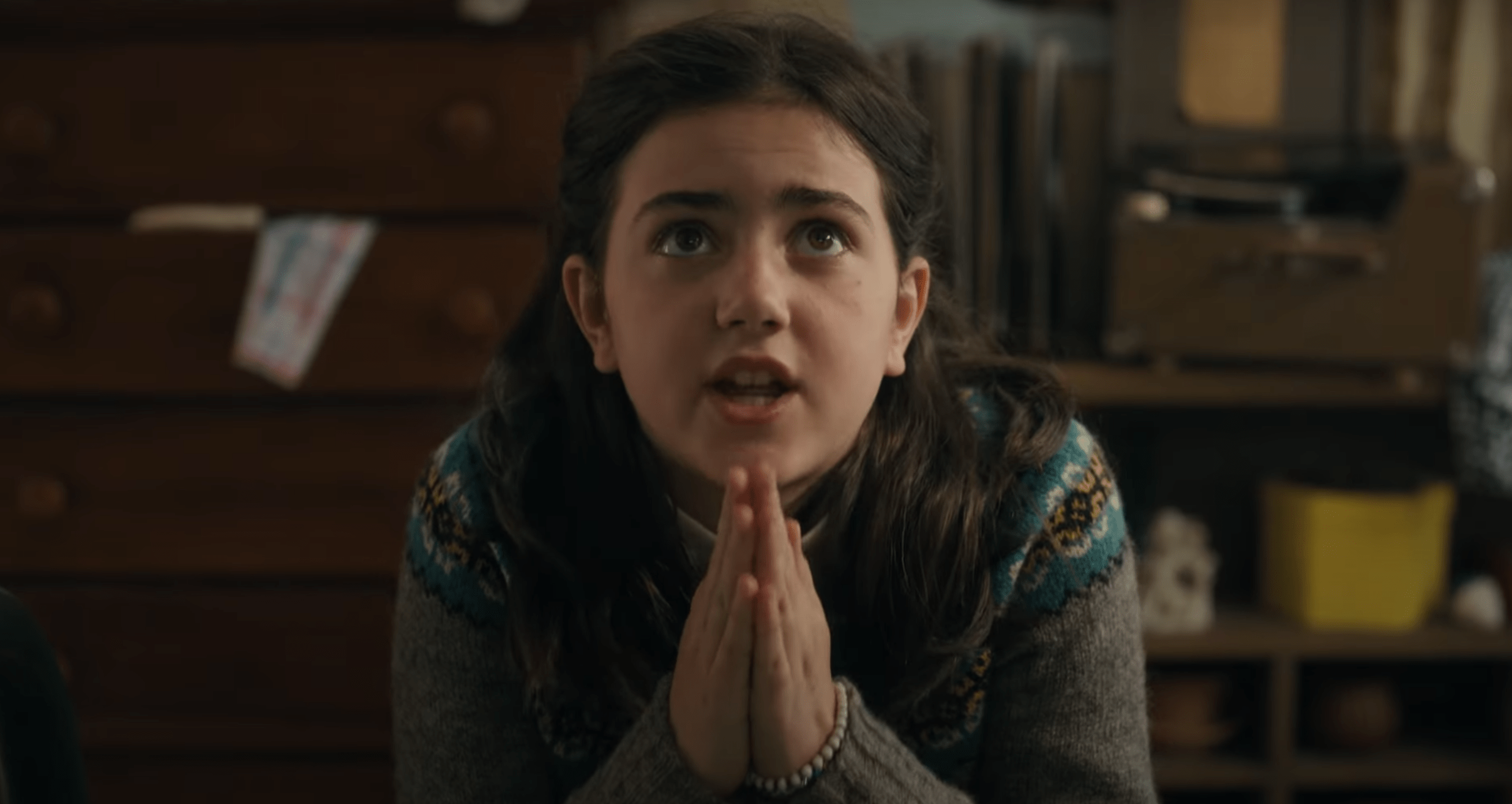
This is the best family film I’ve ever seen. Judy Blume’s writing was never made available to me as a child, but I certainly had heard of this title and knew the basic concept. Writer-director Craig put together a wonderfully poignant adaptation about a young girl going through the changes brought on by puberty, as well as learning the complexity of family relationships. Not only does Margaret learn about her period and start to feel attraction to other people, but she also learns about her mother’s estranged relationship with her parents and how not all parents are kind. Abby Ryder Fortson gives a beautifully naturalistic performance, especially the complicated emotions related to the grandparents on her mother’s side. All children should see this film because it honestly and thoughtfully spotlights the female coming-of-age experience.
Joyland
Written by Saim Sadiq & Maggie Briggs
Directed by Saim Sadiq

The opening shot of Joyland sets the tone. The lighting, the texture, and the figure draped in a sheet, moving with precision. Set in Lahore, Pakistan, we follow Haider as he works at an erotic dance theater. He assures everyone in his conservative family that he’s just working the box office. Meanwhile, his wife Mumtaz is forced to quit her job to stay home and have babies. This clash of gender roles leads to dramatic changes in everyone’s lives. Haider finds himself falling for Biba, a transwoman who dances at the theater. Everyone feels like they have done harm to each other, but the society they live in makes them judge each other so harshly. The film takes a considerably dark turn at the end of the second act, and when the movie ends, it’s not on a joyous note. Joyland is a reminder of how patriarchy harms not only women but men, too, with its rigid guidelines about how a person must live.
The Killer
Written by Andrew Kevin Walker
Directed by David Fincher

I do not understand why so many people were ragging on this film. It was a very clever satire where Fincher was making fun of himself. The unnamed Killer (Michael Fassbender) goes on and on about how precise his job as a hitman is and how he has to be on top of his game. The minute he fires his first shot, he fucks everything up and spends the rest of the film trying to fix his mistake. It’s a dry-as-hell type of humor, so I get why some people may miss it, but I found it funny. The Killer is a film made up of smaller films where the hitman encounters someone and has to kill them. It’s also a reminder of how good Fincher is regarding sound design. Every footstep, gunshot, and fist going through drywall has a weight to it. A beautiful soundscape to accompany a smart little movie.
The Wonderful Story of Henry Sugar
Written and directed by Wes Anderson

The first of two appearances by Anderson on this list, Henry Sugar, and the other short films that go with it are the director at his most visually playful in years. That’s saying a lot for a filmmaker chiefly known for his aesthetics. Anderson tells a handful of short stories penned initially by Roald Dahl (played by Ralph Fiennes), each with their own tone from comically absurd to poignant to mysterious. His troupe of actors (Dev Patel, Benedict Cumberbatch, Richard Ayoade, Rupert Friend, and Ben Kingsley) do a terrific job of taking on various roles throughout. I appreciated Anderson’s visual choices more than usual, like a camouflage-painted box to make it appear like someone is levitating or switching to stop-motion animation when a character climbs a tree. I hope we get more of this Anderson someday, someone willing to experiment and play to discover what they can make.
The Beasts
Written by Isabel Peña & Rodrigo Sorogoyen
Directed by Rodrigo Sorogoyen

Set in the autonomous Spanish region of Galicia, The Beasts tells the story of Antoine, a French farmer who has moved there to start an organic farm, and the Anta brothers, his neighbors who desperately want to sell to a windmill company so they can finally have money and no longer have to do back-breaking labor. Early on, the film wants us to be entirely on Antoine’s side, but once the Antas make their argument, it becomes difficult not to sympathize with them. Their mother is old and forced to work in the barn. Both men cannot find women to partner with because everyone leaves this village in the middle of nowhere. Tensions rise until we reach a breaking point; from there, the film takes a dramatic turn, and our sympathy cannot outweigh our outrage. The Beasts is an excellent thriller because it can show you everything while keeping the viewer in suspense. It humanizes all parties and makes knowing who to side with complex.
Godland
Written and directed by Hlynur Pálmason

In the 19th century, Danish priest Lucas is sent to Iceland to build a church for a settlement. He brings his camera along with him to document the journey. Eventually, he ends up with Ragnar, an Iceland native who mistrusts the Danes. Neither man speaks the other’s language, making it even harder for the two to bond. Eventually, they reach the village, where Lucas quickly learns he’s out of sync with both the native people and the Danish settlers who are trying to assimilate. Not only is this a stunningly gorgeous film, taking full advantage of the scenic beauty offered by Iceland, but it’s also a picture of massive ideas. Lucas lives in a state of conflict, wanting to both appreciate the landscapes around him and capture & contain them through his photos and ministry. The faith he offers is not something the Icelanders get too excited about, and it’s clear they understand it to be another tool of colonialism to erase their culture.
Anatomy of a Fall
Written by Justine Triet and Arthur Harari
Directed by Justine Triet

Early into the film, the body of Samuel lies dead in the snow, appearing to have fallen from the second-story balcony. Did he jump? Was he pushed? The only witnesses are his wife, Sandra (Sandra Huller), and their blind Daniel, who is visually impaired. Anatomy of a Fall is one of the best courtroom dramas I’ve seen in a long while. Sandra Huller never gives away her guilt or innocence with her performance, and the film refuses to show us what happened in the moments just before Samuel’s death. It’s a film about trying to understand why something bad happened, even if you realize you’ll never have enough evidence to know. The final sequence, where we hear the audio of a secretly recorded fight between Samuel & Sandra, is genuinely harrowing, with the tone of an authentic domestic dispute that devolves into a physical confrontation. The fact that their son is allowed to be in the courtroom when it is played adds so much weight to how this event will forever shape the rest of the boy’s life.
Eileen
Written by Luke Goebel and Ottessa Moshfegh
Directed by William Oldroyd

This was also one of my favorite fiction books I read this year, anticipating the film’s release. I am happy to say director William Oldroyd nailed this one. Eileen Dunlop (Thomasin Mckenzie) is a young woman working at a boys’ correctional facility in the mid-1960s. Her life is one spent in solitude, daydreaming to escape her job and her disgusting father (Shea Whigham). A spot of sunshine comes into her life when the prison hires a new psychologist, Rebecca (Anne Hathaway). The two women quickly bond, and Eileen seems to come out of her shell. They both are interested in one of the prisoners, a boy whose circumstances are much darker than they appear in the prison’s paperwork. This leads to one of the most shocking sequences I saw on film in 2023, a monologue delivered by Marin Ireland that will leave your jaw on the floor.
The Quiet Girl
Written and directed by Colm Bairéad

This one touched a personal spot for me, reminding me of a former student my wife & I took in during a rough time and keep in touch with as she navigates adulthood. Cait is sent to live with distant cousins during the summer of 1981. She’s a painfully shy child, constantly on edge because of the tension between her parents at home. They need some relief from all the mouths they have to feed, and cousin Eibhlín is more than happy to take Cait in. Over the summer, the young girl finally opens up in a place where gentleness and tenderness are given chief importance. The people she’s with are grieving, which she doesn’t become aware of until the end. The Quiet Girl is an achingly beautiful film about how everyone needs to be loved and given space to grow and how the coldness of our world needs to make way for warmth and love. It’s also another stunning performance from a child.
Killers of the Flower Moon
Written by Eric Roth & Martin Scorsese
Directed by Martin Scorsese

Martin Scorsese found a muse in Lily Gladstone. You can see it in how he films her; there’s a reverence, a presentation of her that centers on her dignity, beauty, and confidence. Based on actual events, the film unfolds how the Kyles, an Osage family who has become wealthy from owning oil headrights, is systematically executed by a group of craven white men intent on taking the land and the money for themselves. They enlist Ernest Burkhardt, a WWI veteran who has fallen for Molly Kyle (Gladstone). This film is about men doing monstrous things, disguising their actions as love. But it’s also a story where good people win, and the bad guys lose. Molly endures despite all the horrible things Ernest does while pretending that he still loves her, even lying to convince himself. It’s not the strongest Scorsese film, but for a director with so many under his belt, this shows how vital a filmmaker he remains.
Past Lives
Written and directed by Celine Song

The opening scene of this movie is one of the most perfect scenes you’ll see this year. It asks questions and sets a tone. Past Lives is about Nora (Greta Lee), a Korean woman who once had a childhood sweetheart. When her family moves away to Canada, Nora loses touch with Hae Sung. Years later, they reconnect via the internet, but she pulls away. Nora wants to focus on her writing career and, as a result, meets fellow author Arthur. The two fall in love and get married. Twelve years later, Hae Sung has just gone through a break-up and decides to travel to the States for the first time and see Nora. There’s a lot of tension around this. Is it just a visit? She’s a married woman. Is Sung trying to steal her away? This is a story about thinking over what might have been, realizing how much we change and the distance that puts between us and the people we used to know. Audiences will be taken on an emotional ride that ends in a way that will bring many people tears but happy ones. Life is such a complicated experience, and we never know for sure how one choice would have changed things.
R.M.N.
Written and directed by Cristian Mungiu

Set in Transylvania, there are no vampires to be found in this cleverly written tense drama. Matthias returns to his home village in Romania after a fight with his boss in Germany. He finds the place has changed, with one of the most significant ones being the presence of Sri Lankan laborers at the local bread factory. Matthias gives a cold shoulder to the mother of his child while trying to take over the parenting of their son. He also tries to rekindle old flames with Csila, who runs the factory. A violent incident unsettles the community, and they want someone to blame. The outsiders working among them seem like a good target. Cristian Mungiu lets his film develop at a slow pace with striking visuals. The town hall meeting is one of the best blocked and shot scenes I have seen all year, a single frame encapsulating an entire universe. The ending is a profoundly ambiguous one, but it’s stuck with me, and I’m still trying to unpack everything it means.
Return to Seoul
Written and directed by Davy Chou

No movie had a better opening ten minutes than this one. The audience is hooked from the moment Freddie (Ji-min Park) comes on screen. Park, who came from an arts background, made her acting debut and put her name on the map. I hope she does so much more after this. Freddie has come to Seoul to seek out her birth parents, who gave her up for adoption. Her entire conscious life has been in France, so a tremendous culture shock is at play. She meets her parents, but these encounters do not go the way she would like. Over several years, Freddie returns only to leave, every time failing to understand this place. Return to Seoul is about being from a place while struggling to feel connected to it, being related to people but not understanding what your relationship with them is. It’s also an incredibly stylish picture, with director Davy Chou making bold choices and surprising us with every new iteration of Freddie’s life.
Asteroid City
Written by Wes Anderson & Roman Coppola
Directed by Wes Anderson

Anderson makes a second appearance with this picture, which has divided many film fans. I understand why not everyone likes Anderson, and I have had my ups and downs with his work over the years. Asteroid City clicked so well with me because shortly into the picture, I began to see it as a meditation on how neurodivergent people grieve. That may be what is putting off some people. This isn’t grieving with lots of tears & blubbering but a sort of intense contemplativeness. People are sad, but not how you might expect. It’s set against the backdrop of a Southwestern town hosting a convention of young people aspiring to be scientists. An encounter with an extraterrestrial entity leaves everyone shaken and trying to understand their place in the universe. Anderson employs some ingenious framing, making this a play within a movie. This is one of his most mature works so far, picking up on the anthology nature of The French Dispatch but also really going for a level of pathos I haven’t seen in many of his pictures.
Beau is Afraid
Written and directed by Ari Aster

I expected to like this movie more than I did, but I still loved it. Ari Aster delivers a film experience like nothing else you’ll see all year. It’s one of the most anxious movies I’ve ever seen, with an opening hour that continually escalates the peril our protagonist Beau (Joaquin Phoenix) is going through. I don’t think audiences were expecting this, but I had combed through Aster’s short film catalog years ago and saw how unhinged his sense of humor could be. Even so, he still shocked me multiple times in this one. This is a movie where the director is really hard on himself, making fun of a character who embodies all of his own anxieties. He forces these scenarios to play out in extreme ways, making you unsure if you should laugh or gasp in horror. It’s undoubtedly not Hereditary or Midsommar, but I don’t think anything else you watched in 2023 will be like this one.
Showing Up
Written by Jon Raymond & Kelly Reichardt
Directed by Kelly Reichardt

2023 was the year I learned to love Kelly Reichardt. I’d seen some of her films in previous years (Old Joy, Certain Women, First Cow) but now I really get what she’s doing. Showing Up has her teaming up again with Michelle Wiliams, who plays Lizzy, a sculptor and administrative assistant at Portland art college. Lizzy is deeply insecure about her art, exacerbated by landlord/neighbor Jo (Hong Chau), who is everything our protagonist wishes she could be. One night, Lizzy’s cat maims a pigeon, which gets tossed out a window. Jo finds it the following day and thinks it landed there injured. Somehow, Lizzy ends up caring for the bird. This is the most comedic Reichardt has been thus far, a sort of Pacific Northwest Curb Your Enthusiasm. Williams is brilliant as always; she may be the best working actress in the American scene. Showing Up hits all the right notes, balancing pathos and comedy. I can’t wait for Reichardt’s next.
How To Blow Up a Pipeline
Written by Ariela Barer, Jordan Sjol, and Daniel Goldhaber
Directed by Daniel Goldhaber

The energy of a great heist movie, with the story we need to hear right now. A group of young people, all affected in various ways by the oil industry and its pollution, work together to take out a pipeline in West Texas. The story is told in fragments, jumping from the present, where the group is putting together their bomb and scoping out the landscape, to the past, where we see the events that brought them to this point. I kept thinking the movie was going to get too frightened of the ideas it was presenting and chicken out, delivering a “crime doesn’t pay” style message. It does not. This is a poignant, triumphant story of people finding solidarity over a shared cause and doing damage to help save lives. I genuinely cannot believe this film was released in the United States. This is a piece of entertainment not out to sell you anything but to encourage you to do lasting damage to a system that will kill us all in the long run.
Full Time
Written and directed by Éric Gravel

You’ve probably never wondered, “What if they made a Jason Bourne movie, but it was just about a single mom trying to go back and forth from work to her two kids.” But this movie does, and it is absolutely fantastic. Instead of Matt Damon running through a crowded European city, we have Laure Calamy as Julie. A transportation strike has made her commute increasingly more difficult with each passing day. She works as the head maid at a luxury hotel in Paris, so taking time off isn’t an option.
If the tense cinema of The Safide Brothers appeals to you, then Full Time is another great movie to check out. I could feel my hands gripping the couch as the film went on, watching Julie miss a bus, then a train, bumming a ride, getting stuck walking on a congested highway with construction going on. You really feel for Julie, stuck in a job she never wanted in the first place, trying to get interviews in the field where she can finally have the time to be with her kids. Would someone please give this woman a fucking break! Full Time is one of the few recent uses of handheld shaky camera work I can get behind. It perfectly suits the tone of this working-class thrill ride.
May December
Written by Samy Burch and Alex Mechanik
Directed by Todd Haynes

Todd Haynes has been a perennial favorite of mine for years. His latest is yet another incredible film in a career that defies definition. I can’t say what the Haynes aesthetic is because he can adapt in many ways. At the core of May December is a melodramatic satire, a play on the Lifetime movies and true crime obsessions of America. Natalie Portman and Julianne Moore are perfectly cast, each playing off the other in an increasingly tense & disturbing relationship between actor & subject.
The breakthrough performance is Charles Melton, transforming his body language & mannerisms to play a man-child, stunted in his growth by a profoundly horrible person. Haynes takes the tabloid and tawdry and transforms it into something wonderfully venomous. The sleazy feeling you might have while watching this is the point; the audience are vultures along for the ride with Portman’s actress. She wants all the dirty details so she can garner acclaim and it really doesn’t matter what effect she has on this tragic family.
Saint Omer
Written by Alice Diop, Amrita David, and Marie NDiaye
Directed by Alice Diop

Rama, a novelist (Kayije Kagame), travels to the community of Saint-Omer to attend the murder trial of Coly (Guslagie Malanda), accused of killing her 15-month-old daughter by leaving her on the beach to be swept away by the tide. What connects these women is that they are Senegalese and in mixed-race relationships but of two very different economic classes. Rama is a literature professor with a baby on the way. The more she learns about Coly’s life, the more Rama becomes anxious about her own and starts to wonder about things she has intentionally ignored to just get along in life.
Inspired by the neutral cinema of Robert Bresson, director Alice Diop has given us one of the best pictures of the 21st century. Everything from the sound design (the silence of the courtroom & the breathing) to the themes focused on fears of motherhood, the African immigrant experience, and our justice systems are spot on. Saint-Omer is a brilliantly mature work, a film that is so specific but also invites us in so it never feels distant.
Close
Written by Lukas Dhont and Angelo Tijssens
Directed by Lukas Dhont

I don’t know if it has always been like this, or I just woke up to it, but the discourse around masculinity in the West is fucking bonkers. This contingent that is so dead set on defining masculinity as the absence of emotions other than anger & lust is leading a lot of young men down a destructive path. There is a terror in the hearts of some men to be vulnerable, gentle, and close.
Leo and Remi have always been. These adolescent boys suddenly have their relationship questioned by their peers. A layer of salaciousness is injected into an intense bond, and it causes Leo to push Remi away. The pain of this is laid so bare on the screen. Tragedy strikes, the kind that leaves the audience, like our characters, slumped to the floor sobbing. That’s not the end, though. We cannot repair what has been done as it is so brutally final. But that isn’t the end, and the picture ends on a note of hope.
Lukas Dhont directs every element of this film to perfection, especially his young actors. 2023 was a year that opened my eyes to some of the great child performances happening in cinema, probably one of the brightest spots of the year. I find that the key to making the performances work is less adherence to the exaggerated grotesque of the Disney Channel/Nickelodeon method and more naturalism, letting children play children as they are, how they live. You will feel like you’re part of Leo and Remi’s friendship as Dhont brings us into it; we laugh with them and hurt when they hurt. No other film of this year seemed to say what was needed about something threatening to tear people apart. It is good when boys are close friends and when men feel the hurt of life and are sad.

 PopCult Reviews
One thought on “Seth’s Favorite Films of 2023”