
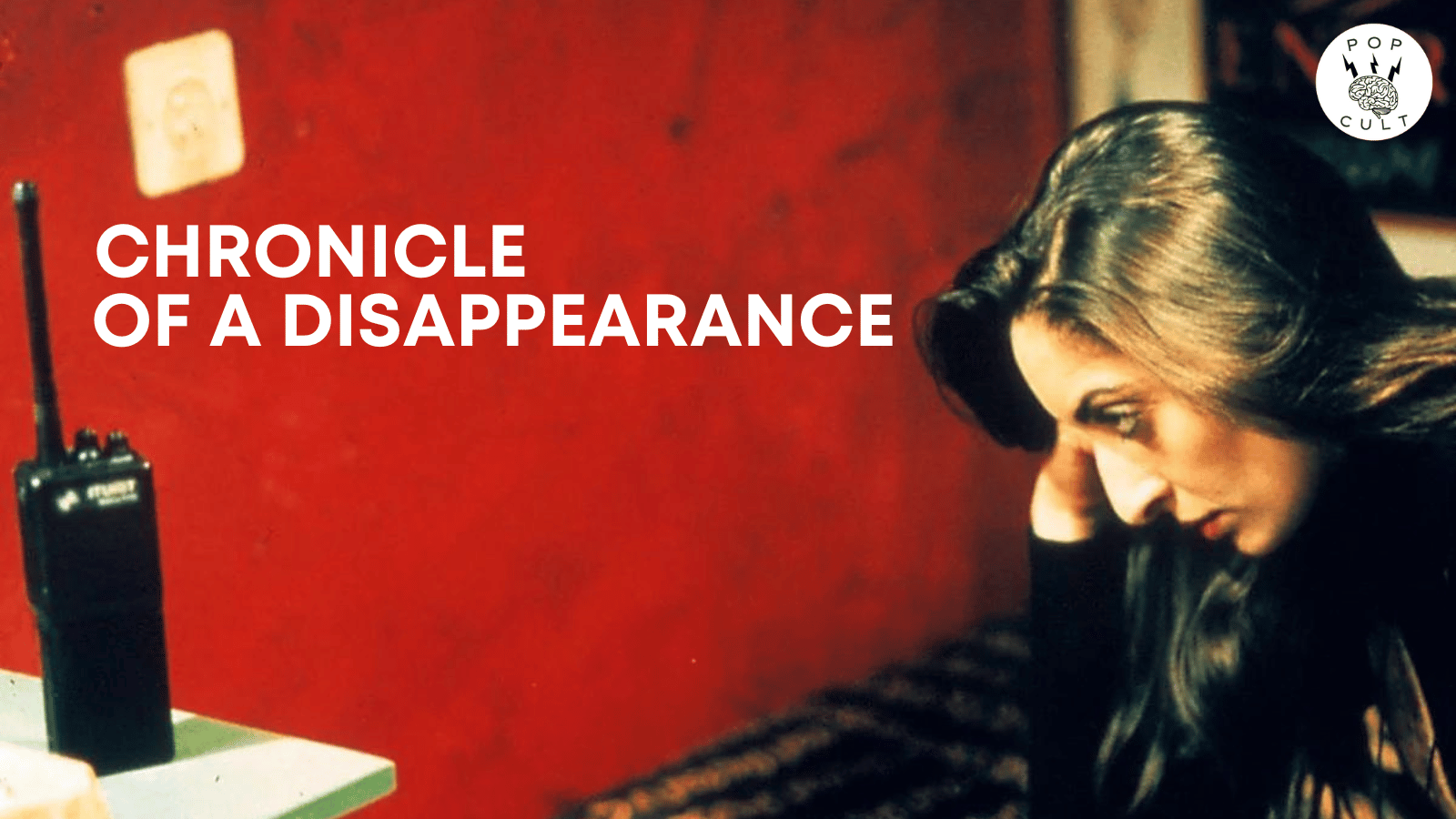
Chronicle of a Disappearance (1996)
Written and directed by Elia Suleiman
I don’t have a large platform, though it has grown significantly in the last year. I don’t assume that many eyes see what I do here. However, I feel an obligation to do something regarding the ongoing genocide of Palestinians, something that began in 1948. Because I focus on media, I thought a film series spotlighting Palestinian cinema might do some good. At minimum, it would elevate some pieces of art that deserve to be seen. In early 2020, when the Trump administration assassinated Iranian military leader Qasem Soleimani, I saw a rise in the old Islamophobia I remembered seeing in my college days. In response, I did a series spotlighting Iranian films. I’m glad I did. I think Iranian filmmakers have been doing incredible work for a long time. With the vitriol and rancor towards Palestinians eclipsing anything I saw in 2020, I decided to do this.
We will be watching & reviewing nine films. Four of them are written, directed, and starring Elia Suleiman. Two of them are the work of Hany Abu-Assad. Two are documentaries. And one is a film by Annemarie Jacir. If you want to watch along, I will share the list of my movies. You can use JustWatch to see if they are available on services you can access.
The films, in order of viewing, are this film, Divine Intervention, Paradise Now, Salt of This Sea, The Time That Remains, Five Broken Cameras, Omar, It Must Be Heaven, and Gaza Fights For Freedom.
Chronicle of a Disappearance is the work of Elia Suleiman, who imbues his films with lots of autobiographical material. Set during the tense period just after Israeli PM Yitzhak Rabin was assassinated by a Zionist and before Benjamin Netanyahu’s first term, E.S. (Suleiman) returns home to the West Bank after a 12-year exile in New York City. There’s no plot here, more comedic vignettes which the director uses to shine a light on the humor of day-to-day life in the West Bank or express thoughts about the occupation of Palestine. If you feel unsettled as the film progresses, that is intentional. Life in this place feels disconcerting for Palestinians, and Suleiman is attempting to convey that through the structure of the work.
In the film’s first section, “Nazareth: Personal Diary,” we get snippets of people’s daily routines in E.S.’s neighborhood. Many of these center around a souvenir shop called “The Holyland” catering to those visiting Israel on religious pilgrimages or sightseeing. The shop owner fills bottles labeled “holy water” from the tap. We spend time with the old men as they sit in front of the shop but never see a single tourist stop.
There’s a very memorable documentary moment where E.S. interviews a Russian Orthodox cleric who speaks on tourists’ polluting of the Sea of Galilee. He remarks: “Do you see that? That is where Jesus is said to have walked on water. Now it’s a gastronomic sewer filled with excrement, shit of American and German tourists who eat Chinese food. It forms a crust on the surface of the lake. Anyone can walk on water and perform miracles now.”
There’s a brief moment where E.S. attends a conference on Palestinian filmmaking only to have his microphone give so much feedback he’s unable to share his thoughts. You’ll notice in Suleiman’s work that he is often a silent but comedic figure when he appears. The influence of performers like Buster Keaton and Jacques Tati is very evident. It’s also a humor that is extremely dry to the point that I could see general audiences feeling completely alienated. I can’t say I laughed a lot, but I got what the director was doing. Comedy is that one genre that is the hardest to translate, though, and I suspect this appeals strongly to a Palestinian sense of humor based on shared cultural experiences.
The film’s final section is titled “Jerusalem Political Diary” and finds E.S. crossing paths with a young Arab woman who has been fruitlessly searching for an apartment. There’s a scene where she makes call after call at a payphone inquiring about apartments in Jerusalem. She speaks Hebrew, but her accent is a giveaway, and every call ends with a rejection of even the option to look at a place. An Arab landlord tells her he will only rent if she lives a traditional Muslim way, including putting on a hijab, which she doesn’t usually wear. This is paralleled by the gift shops’ failure to find tourists. In a sequence that could be fantasy or something that adds to the surreality of the work, the woman gets her hands on a walkie-talkie that allows her to mess with Israeli guards at a checkpoint. That eventually leads to her tricking the men into a guerilla theater performance.
One of the themes woven throughout this work is how much of life in occupied Palestine is performative. People are playing roles both within their communities and when they encounter soldiers to the point that their authenticity has become suspect. He doesn’t judge them, though; Suleiman wants us to understand this dissonance is part of survival. If Palestinians don’t behave in these ways, they draw greater attention to themselves from the occupiers, and that leads to bad things.
The disappearance in the title references the Palestinian way of life. Palestine is fading away, to be replaced with the entity of Israel. E.S. quietly observes the passing of these things. While his silence connects him to similar comedians of the past, it also highlights how many Palestinians have been terrorized into saying nothing. When you’re stopped by a checkpoint or randomly picked out by a soldier, answering their questions directly and saying little else is how you stay alive for another day. Suleiman is also catching up on the changes. He’s been gone for over a decade, and the Palestine he’s returned to while having some familiar faces & places, has changed. He’s breathing a different air now. The filmmaker has some of the best hang-dog eyes I’ve ever seen, a living breathing Droopy Dog.
There is a palpable sense of waiting for something to happen from beginning to end. The West Bank is very quiet for most of the film. There are little flare-ups; a car stops in front of the gift shop. Two men emerge in the middle of an argument, ready to throw punches. The old men from the shop run out, restrain them, and then start getting into a fight with the duo. These two men return to their car, their original fight quickly forgotten, and drive off. It’s all in a single long shot, a distant observation of a brief moment of life in an otherwise sedate place.
This is just the first of several films by Elia Suleiman we’ll look at. In upcoming reviews, I’ll get into more biographical depth, and we’ll search for threads that connect all of his work. While unfairly said to be mimicking Wes Anderson, the timeline shows me they are contemporaries and more likely inspired by similar films. Suleiman certainly has a distinct style that will either pull a viewer in or push them away, depending on their taste.

 PopCult Reviews
One thought on “Movie Review – Chronicle of a Disappearance”