
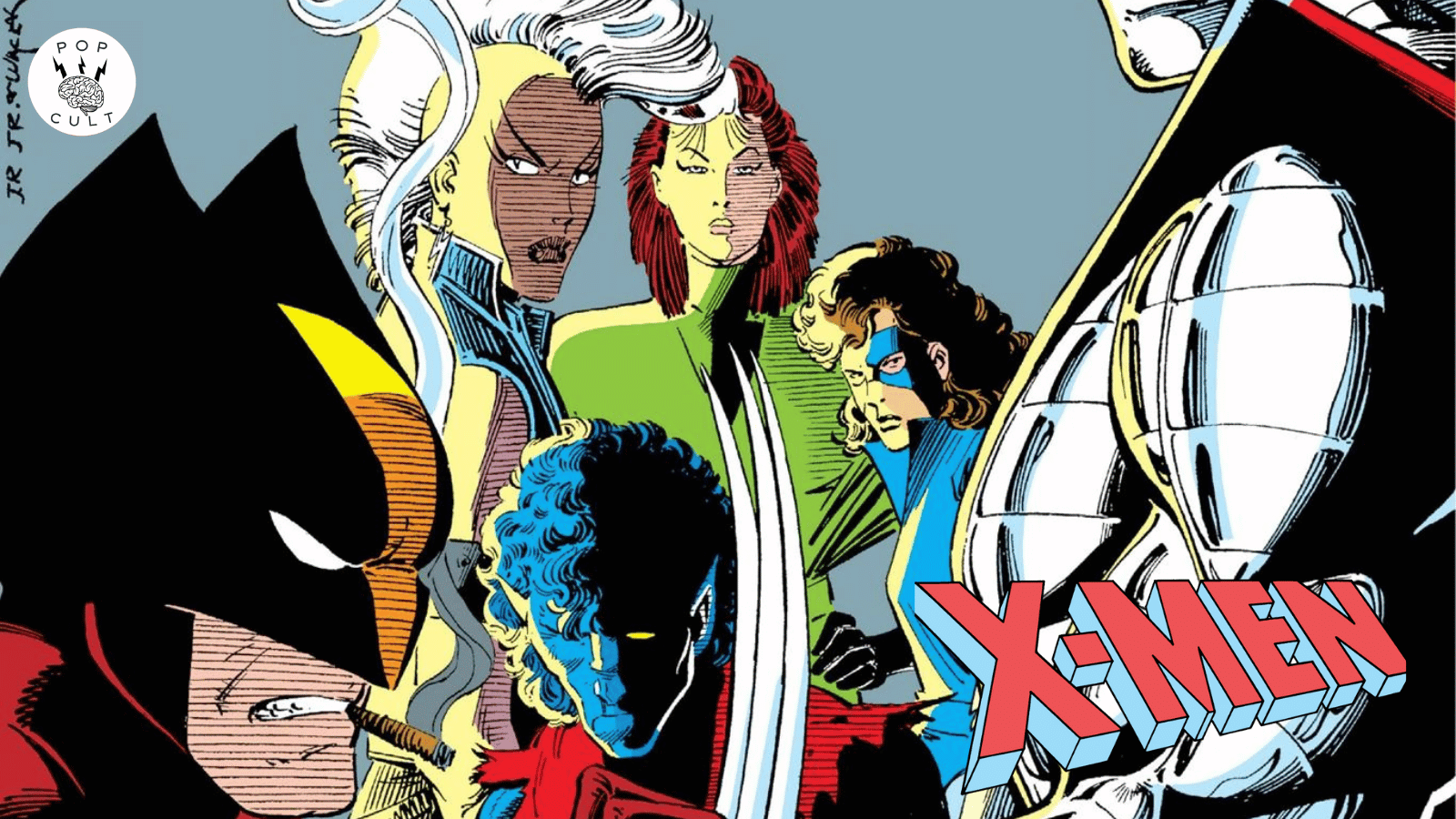
X-Men: Mutant Massacre Omnibus (2022)
Reprints Uncanny X-Men #210-219, X-Men Annual #11, X-Factor #9-17, X-Factor Annual #2, New Mutants #46, Thor #373-374 and 377-378, Power Pack #27, Daredevil #238, Fantastic Four vs. The X-Men #1-4, and X-Men vs. The Avengers #1-4
Written by Chris Claremont, Louise Simonson, Walt Simonson, Ann Nocenti, Roger Stern, Tom DeFalco, and Jim Shooter
Art by John Romita Jr, Bret Blevins, Rick Leonardi, Alan Davis, Barry Windsor-Smith, Jackson Guice, Marc Silvestri, Terry Shoemaker, Walt Simonson, David Mazzucchelli, Jon Bogdanove, Sal Buscema, and Keith Pollard
One of Chris Claremont’s goals with X-Men was that it would be a team constantly experiencing change. In an interview published around X-Men #200, the writer said he wanted it so that if you picked up issue 100, you’d get one version of the team. A hundred issues later, another version and a hundred issues after that would differ from the first two. This was a particularly refreshing viewpoint in superhero comics, where stagnancy is the default setting. Think about Uncanny X-Men just as the Mutant Massacre was happening. Cyclops was married and had left the book, Magneto had taken over Xavier’s role, and Storm had lost her powers and become a mohawk-wearing punk, bringing in characters like Kitty Pryde, Rachel Summers, and Rogue. There was another significant change coming.
Uncanny #210 opens with a jarring sequence. A Hellfire Club guard and his lover, one of the Morlocks, are attacked by a group of mutants we’ve never seen before. Claremont doesn’t provide any backstory to who these two are, but it immediately sets a tone. Death is coming, and it is going to be brutal. The rest of the issue is doing the rounds with our characters, in some instances giving us a last look before things change forever. Magneto meets with the Hellfire Club, having been inducted into the inner circle. There’s an evident tension between Magneto and these wealthy mutants; he is not one of them. Yet, he still took the spot, something I can’t imagine Xavier would have done. It’s a clear signal he is not the same mentor the X-Men had grown used to.
Claremont really kicks off the Mutant Massacre storyline in issue 211. He’d felt at the time that the mutant population had boomed tremendously, especially among the seemingly infinite Morlocks. Apparently, artist Paul Smith had drawn much larger crowds in the first Morlock story than Claremont had envisioned, which was kept as the continuity. This is also our first full view of the cruel & vicious Marauders, a team of mutants working for an unseen figure named Mister Sinister. When the X-Men finally arrive, they are too late to save so many and are overwhelmed by the bloodshed. This leads them to make mistakes. At one point, the insensitively named “Scalphunter” puts a shotgun to Kitty’s temple and fires. Thankfully, her phasing power allows the shell to pass, and she is unharmed. However, a later attack locks her into phased mode, and she becomes a ghost for the rest of this collection.
The heroes of this book pass a threshold during this fight. Colossus is driven into a rage when he sees what happened to Kitty and kills some of the Marauders. This issue closes with Storm ordering Wolverine into the alley to capture one of their enemies to interrogate. He asks about any others he might encounter, and the team leader responds that one is enough; the rest are Wolverine’s to do with as he pleases. It’s an incredibly dark turn, but when you look at what the Marauders have done to men, women, children, and the elderly, it is justified. They are not killing to defend or protect anything; they are killing for pleasure.
The steam runs out surprisingly quickly for as strong a start as Mutant Massacre has. This is partly due to the storyline crossing with several other Marvel books. Louise Simonson’s Power Pack was a book that editors at Marvel seemed to insist must tie into the mutant world regularly. This made sense because Louise Simonson was also writing X-Factor and would later take over New Mutants when Claremont left that title. From a story perspective, it is very odd. A group of 5 to 10-year-old siblings with powers given to them by aliens teaming up with the X-Men needs a lot of contrivances to make work half the time. We see said Pack deliver a beating to the Marauders, which deflates the menace they were introduced with.
Issue 212 serves as the introduction to a comic book rivalry that is still happening today. Wolverines faced off with Sabretooth for the first time in the comic pages. However, their dialogue reveals this is not their first meeting. Sabretooth first appeared in the pages of Power Man and Iron Fist, written by Claremont and drawn by John Byrne. Eight years later, he had his first fight with the hero with whom he would be forever associated. This is paralleled by a battle between Storm and Callisto, whose rivalry dates back years in Uncanny. It results in a new understanding between these two. This issue also shows Colossus collapsing from injuries sustained in the fight, putting him, Kitty Pryde, and Nightcrawler out of commission for the rest of this collection.
Uncanny 213 sees Psylocke’s first appearance in the monthly title after being introduced to American audiences in the pages of a New Mutants Annual. Her mind-reading powers, used on Sabretooth, reveal the name Mister Sinister, though that will be as much as we learn about the villain for a while. Claremont didn’t know who that villain was yet, either. The X-Men won’t come face to face with Sinister for two more years when the Inferno crossover occurs, and they don’t immediately know this is the guy who the Marauders were working for. Psylocke also seems to be a replacement for Rachel Summers, with a similar powerset and is underestimated by her new team, forcing the character to prove herself.
Dazzler is brought onto the team in issue 214, which is also Barry Windsor-Smith’s final collaboration with Claremont. It’s not the best of their work, and I would have loved to have seen them on a regular title. They would have been the perfect pair if Storm had gotten a solo ongoing. Issue 215 has a very pared-down X-Men team line-up (Storm, Wolverine, Psylocke, Rogue, Dazzler), and Longshot is brought in to round out what will effectively be the roster for the next couple of years. As he said in that interview, if you had the Cockrum-era version of this book and then jumped to 1987, you’d find an all-new team again.
Issues 215 and 216 are a two-part story about three obscure Golden Age heroes turned villains who want to hunt Storm and Wolverine. It also plants seeds of a new dynamic between these two mutants that Claremont had wanted to explore for a while now. There’s sexual tension between them that is countered by a shared respect as colleagues. There’s also this dom/sub thing going on with Wolverine becoming like Storm’s personal attack dog who she can sic on enemies. In the following decades, a distance grew between them, and they lost a fascinating interpersonal dynamic. A new writer will bring it back up every once in a while, but it never seems to have staying power.
Much of the team has relocated to Muir Island by 217, where Moira MacTaggert is trying to find solutions for the mutants that have been put in comas or have their powers acting unpredictably. This is a Dazzler spotlight, and after reading a few stories about her, I am still confused about the appeal. I don’t find her powers or character interesting; they seem very generic. She is pitted against Juggernaut, who once again is just living his life and ends up in conflict with the X-Men. He even recognizes Dazzler as the popstar Alison Blaire and wants to fawn over her until she makes the first strike.
Issue 218 sees the arrival of the book’s new regular penciller, Marc Silvestri. He has a different style from Romita Jr, who had a penchant for drawing broad-shouldered types. Silvestri’s best work is often mid-distance rather than close-ups, and his panels have cartoonish kinetic energy. I’m not a massive fan, but I always like seeing how a new artist handles these characters. The X-Men wrap up the Juggernaut fight from the last issue, while Havok and Polaris are re-introduced into the title. Their lives in the Southwest seem to be going well until they discover a Brood ship crashed, revealing the infectious aliens are out there somewhere (another plot line Claremont lets twist in the wind for a while).
The last Uncanny issue collected here is 219, and Havok’s and Polaris’s stories diverge dramatically. He has recurring dreams of visiting Xavier’s mansion and being attacked by the X-Men. This causes him to journey to the northeast and find out what’s going on. What is particularly wild here is that the X-Men contemplate murdering Havok to keep the Marauders from getting to him. These are indeed dark days for this team to consider such an act. On the other hand, Polaris is attacked by the Marauders and ends up possessed by Malice, making her one of them and setting up an arc that will play out over the next couple of years.
From a continuity perspective, Fantastic Four vs. The X-Men comes next. I wasn’t in love with this mini-series because you also needed to know what was happening in the FF title then. One day, I’ll get caught up on all of that. The fight eventually brings Dr. Doom into the mix, continuing some of the established story beats between him and Storm.
This is followed immediately by the Roger Stern-penned X-Men versus Avengers, which focuses on Magneto being brought to justice again after the events of Uncanny #200. What’s odd here is that Claremont didn’t write this when he’d helmed every X-Men mini-series since taking over the book in 1975. Stern gives a different perspective on Magneto; the Avengers & everyone else still sees him as a terrorist who threatened to wipe out humanity multiple times.
You might notice a drastic change in writing credits when you get to issue four, in that Stern is not listed, and instead, we have editors Tom DeFalco and Jim Shooter getting the nod. Apparently, Stern wanted to show Magneto turning back to his evil persona, which was not what Shooter, the editor-in-chief at the time, thought should happen. Stern refused to write the story they wanted and stepped away from the final issue. You are not wrong if you read this and feel a sudden jarring shift in tone. The whole momentum of the book is off, and the build-up feels greatly diminished.
We’ll end this here, and while I didn’t talk about the storyline happening in X-Factor, I will get to that in our next and last (for now) X-Men review in a week, The Fall of the Mutants.

 PopCult Reviews
One thought on “Comic Book Review – X-Men: Mutant Massacre Omnibus”