
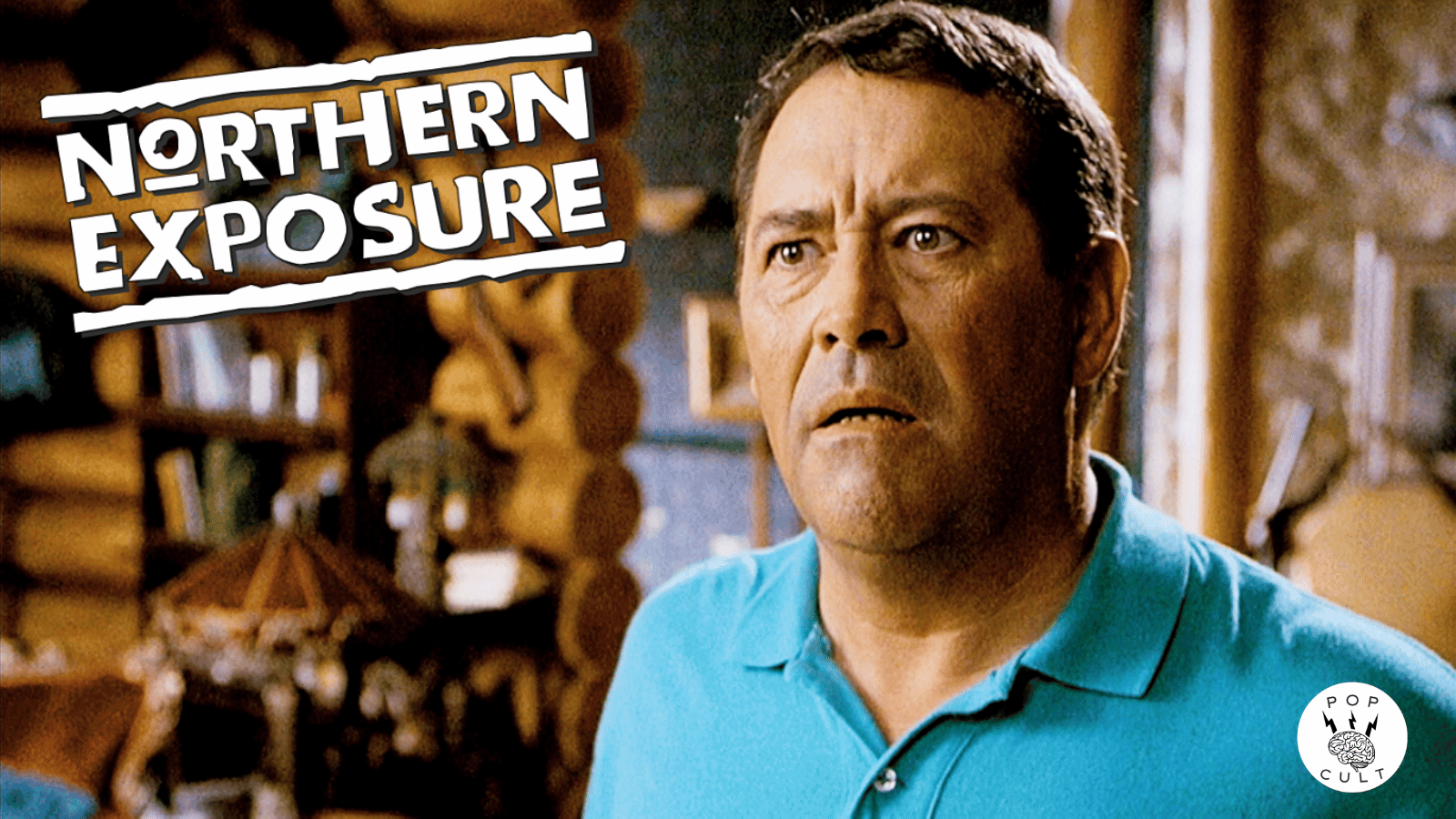
Northern Exposure Season Three (1991-92)
Written by Martin Sage, Sybill Adelman, Ellen Herman, Robin Green, Stuart Stevens, Henry Bromell, Dennis Koenig, Jordan Budde, Craig Volk, Diane Frolov, Andrew Schneider, Jeff Melvoin, David Assael, Mitchell Burgess, Kate Boutilier, Jeffrey Vlaming
Directed by Nick Marck, Bill D’Elia, Miles Watkins, Jim Hayman, David Carson, Sandy Smolan, Michael Katleman, Jack Bender, Michael Fresco, Lee Shallat, Dean Parisot, Rob Thompson, Matthew Nodella, Steve Robman, Tom Moore
This was the season where the awards started coming in for Northern Exposure. It was also the first season to have a complete order, twenty-two episodes. The budget has been increased, and the amount of care put into many of these episodes approaches cinematic levels. I had to check what year these episodes came out, 1991-92, but they feel more complex than something you would expect from CBS then. It’s become clear to me how this show was one of the experimental US programs of the 1990s that paved the way for the prestige TV of the cable era.
One of the smartest moves here is that the series goes from being mainly about Joel’s (Rob Morrow) perspective to more of an ensemble piece. It makes sense when you have to fill this many episodes; they can’t all be fish out of water Joel stories. As a result, this season fills in the details of Cicely, Alaska, in a way the previous two had lightly touched upon. This time, there are multiple episodes where Joel doesn’t appear or has a limited presence in the narrative. As a result, we learn much more about characters on the sidelines, like Marilyn and Ruth-Anne.
One downside to a long season is that it underlines some of the more repetitive aspects of the show. While Northern Exposure was an hour-long program, a comedy with some drama, it often feels like a beautifully filmed sitcom. How frequently do you need an episode rehashing the same relationship drama between Holling and Shelly? At a certain point, resolve it or break up. The same goes for Joel & Maggie, but by the end of this season, it seems like we’ve made progress. But these low points are few & far between, quite a feat to pull off with this dense season.
Some of the episodes that stood out to me:
Seoul Mates (Episode 10)
This Christmas episode introduces Joel & the audience to the Raven celebration, an indigenous winter solstice event that the town has folded into their holidays. This leads to a beautiful final scene at a pageant where native people reenact the myth of how the Raven brought the sun to the people. The main plot is focused on Maurice (Barry Corbin) discovering he has a grown son & grandson from his service in the Korean War. Maurice is the show’s conservative voice, but not one it ever allows to speak without being shown his prejudice. Having a Korean son seems to unsettle Maurice, and Chris (John Corbett) sets the man straight by telling him to get over it.
Burning Down the House (Episode 14)
Season Three saw lots of visitors and returning visitors. Chris’s brother was a recurring character, as were Adam & Eve, the bane of Joel’s existence. This episode introduces Maggie’s (Janine Turner) mother, who comes to visit only to reveal to her daughter that her parents’ marriage is ending. That’s not the only bombshell; the next is when her mother accidentally burns Maggie’s house down. The B-plot follows Chris as he has struck upon the wild idea of launching a live cow into the air with a trebuchet. Chris and Maggie’s plots intersect pleasantly, and she gets a lot of character development.
The Three Amigos (Episode 16)
The first of several cinematic episodes, The Three Amigos, is centered around Maurice and Holling (John Cullum). They receive news that a longtime friend has died, and they set off to retrieve his body and bury it in the remote location he asked them to make his final resting place. A complication arises when they meet his widow (Joanna Cassidy) and realize they had drifted away from this friend and didn’t really know who he was. This ambitious production sent our actors through the wilderness and delivered some beautifully lit and blocked shots.
The Final Frontier (Episode 20)
Holling learns Jesse, the legendary grizzly he’s been tracking for decades, has been found dead. It triggers an existential crisis about finding meaning in a person’s life. This also sees the return of Ron and Erick, a gay couple who run the Sourdough Inn. Maurice sold it to them last season and, upon learning they were a same-sex couple, tried to go back on the deal. Once again, we see how these two men know how to push Maurice’s buttons when a contingent of Japanese tourists appear in Cicely. There’s also a package that has traveled the world and ends up in Cicely. It draws the curiosity of Maggie, who wants to open it, while Joel insists it is against the law.
Cicely (Episode 23)
The season’s grand finale is this flashback to the origins of the town’s name. Joel accidentally runs elderly Ned (Roberts Blossom) off the road one dark night. He brings the man back to his cabin, where he learns Ned was a community resident at the turn of the 20th century. During this time, Roslyn and her partner Cicely moved to the unincorporated town to build an artists’ utopia. They even bring writer Franz Kafka (Rob Morrow) in. This movement is challenged by Mace Mobrey (Barry Corbin), the leader of a gang of criminals that has held the people in his sway. This is one of those episodes that helps you understand why an old television series found such a dedicated audience. You would not see the storytelling here on most networks in 1992.

 PopCult Reviews
2 thoughts on “TV Review – Northern Exposure Season Three”