
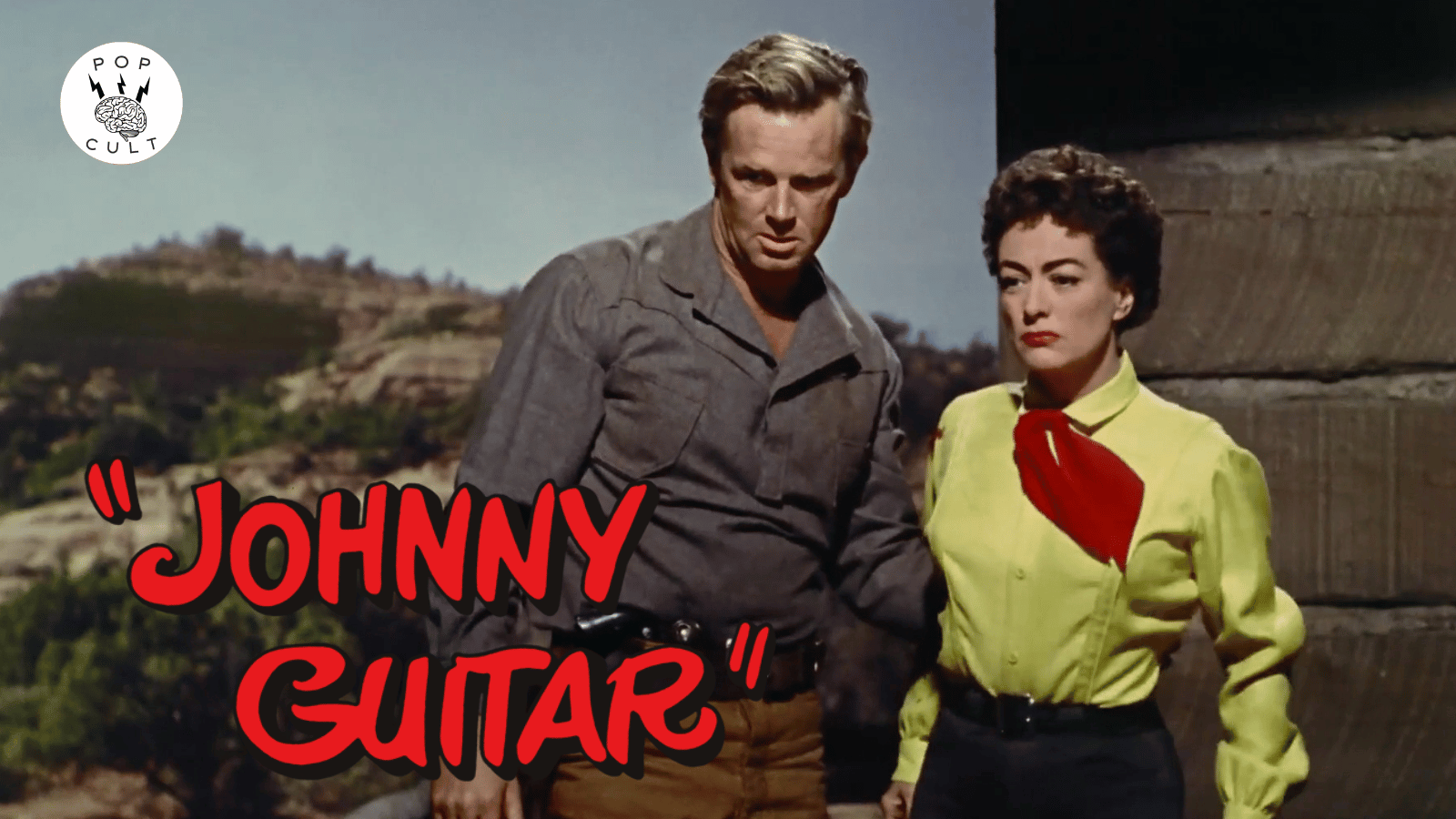
Johnny Guitar (1954)
Written by Philip Yordan and Ben Maddow
Directed by Nicholas Ray
By 1954, Joan Crawford was in the latter part of her career. She debuted in 1924 after receiving a contract from MGM that paid $75 a week. This was during the silent era, which Crawford was able to transition from into sound. By 1938, she was one of several actors labeled “box office poison” for declining revenues. That didn’t stop Crawford; she got bought out of her contract to move to Warner Brothers. It was here she starred in Mildred Pierce, one of her most well-regarded pictures of this era. She would branch out to other studios, and it was with Republic Pictures that she collaborated with Nicholas Ray to make the cult classic Johnny Guitar.
Vienna (Crawford) runs a saloon on the outskirts of an Arizona cattle town. Her relationship with the locals could be better, with them hungry to force her out of town. That sentiment is especially strong among Emma (Mercedes McCambridge), a woman who vied for the affections of the Dancin’ Kid against Vienna. A mysterious stranger who goes by the name Johnny Guitar (Sterling Hayden) arrives in the middle of this conflict. Johnny just wants to be the guitar player at the saloon and observes this ongoing clash with amusement and concern. The locals give Vienna and her confederates 24 hours to leave while Emma tries to convince the townsfolk that Vienna is responsible for the railroad coming through the mountains that will upset the quiet idyll of the community.
A year later, Nicholas Ray directed the explosive youth picture Rebel Without a Cause, highlighting something important about the filmmaker. He has a tremendous sensitivity and empathy for people vilified by society. Ray had been hired to direct the Howard Hughes-funded I Married a Communist propaganda picture in 1949 but stepped away following the news that fellow directors John Cromwell and Joseph Losey were both blacklisted for turning it down. It is rumored that Ray was bisexual and, due to his job and the era in which he grew up, was unsure of how to deal with those feelings. The 1950s was an artistic pressure cooker due to the witch hunts that plagued society.
There’s some play with gender going on. Vienna is the owner and manager of her own business. She doesn’t take lip from anyone and is willing to step up and challenge a man. Her rancor with Emma speaks to a potential sexual attraction from Emma towards Vienna. The Dancin’ Kid apologizes to Emma after dancing with her, which also points to an understanding that it’s not really him that she’s attracted to in this love triangle. If Ray intended any of this, it would have to be subtle; the period would not allow for overt conversations in cinema about sexuality. You can see a commentary on the witch hunts for communists, too. It’s a film about mobs, repression, and people trying to live as they please.
The thing about this film is that it doesn’t reveal these aspects right away. The tone of the first few minutes is rather stiff and clings closely to the tropes of Westerns. But as the film unfolded, I was surprised to see how much film noir had made it into the plot. Johnny Guitar becomes a new type of Western, something very modern for its time that refuses to simply be a shoot ‘em up between white and black hats. The conflict between Vienna and the town is ongoing, so we learn about it in a moment of intense escalation. The truth about the Dancin’ Kid and his relationship with these women comes out over time.
There are so many bold choices in this movie. The first thing you’ll likely notice is the bright color palette. This is one of the most colorful Westerns you’ll ever see. The browns and earth tones are cast aside for bright reds, blues, and yellows. It’s also rife with melodrama, which is beneficial for the film. Big movements happen, everything is shaken to its core by the end, and I can’t imagine this movie playing out its story in a quiet voice. Despite a different character in the title, this movie is all Crawford’s, and she delivers.
Johnny Guitar also has me keenly interested in exploring more of Nicholas Ray’s work. The only other picture I’ve seen is Rebel Without a Cause over a decade ago. Something about the filmmaking here truly feels unique and with a clear point of view. The director would become a major influence on the French New Wave. Godard cited Ray as the key figure in cinema for him, and Johnny Guitar’s implied anti-McCarthyist themes came up in that French filmmaker’s La Chinoise. If you are someone who doesn’t enjoy typical Westerns, I would highly recommend Johnny Guitar. Ariana even mentioned afterward that the bar was low for her when the film started, but she was very invested and loved it by the end.

 PopCult Reviews
One thought on “Movie Review – Johnny Guitar”