
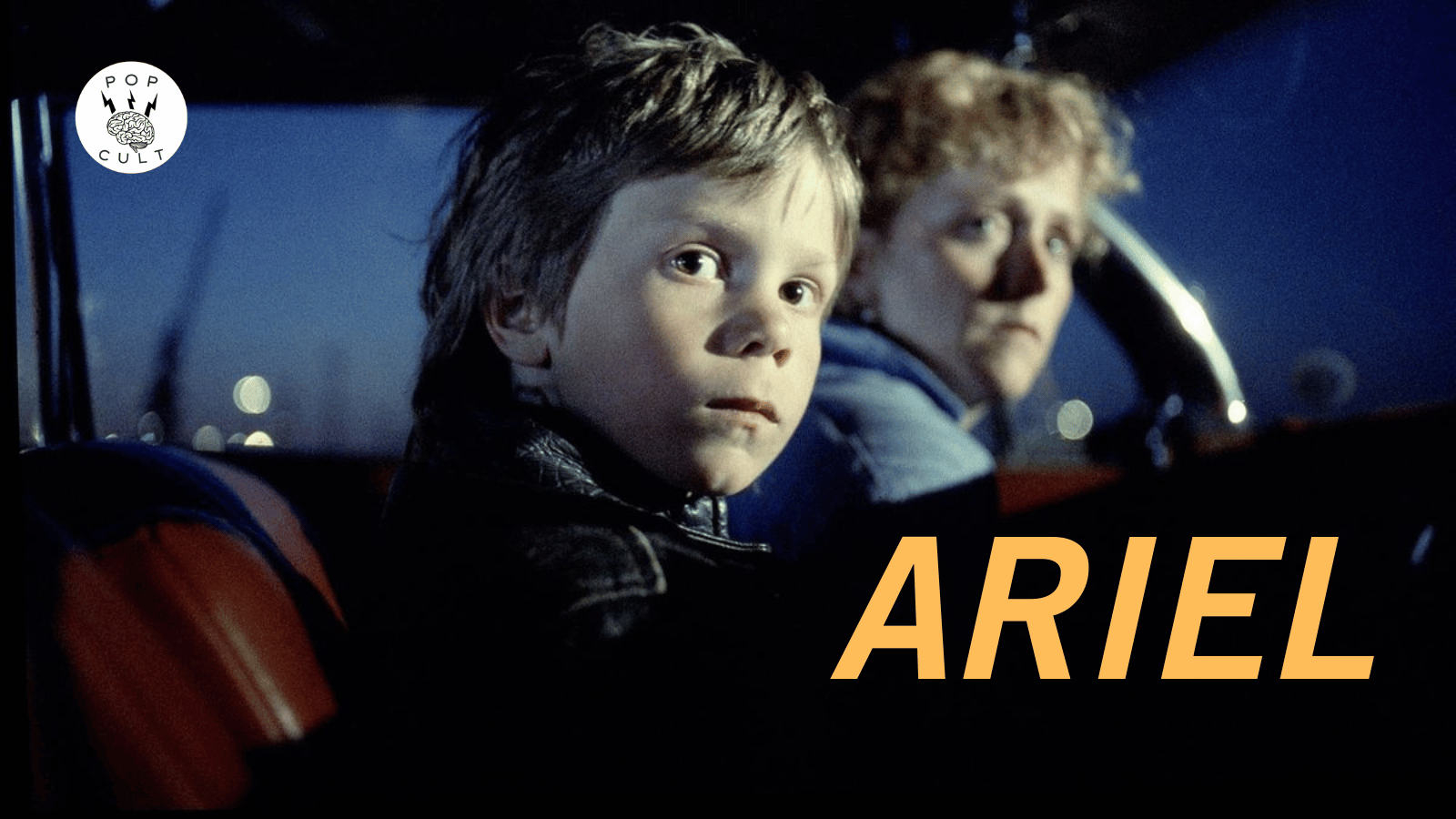
Ariel (1988)
Written and directed by Aki Kaurismäki
The more I watch Finnish director Aki Kaurismäki’s work, the more I warm up to him. I haven’t seen a considerable amount so far, only Le Havre, Fallen Leaves, and now Ariel. I found myself adjusting to his tone & style in Le Havre and would probably enjoy it even more if I rewatched it. I loved Fallen Leaves, and Ariel is my favorite of all the films I’ve seen. It is also Kaurismäki’s personal favorite of his films thus far, the middle of what he labeled his Proletarian Trilogy.
Taisto is a Finnish Lapland miner who finds his workplace is being shut down. An older miner, a father figure of sorts, sits down with Taisto at a local cafe, where he gives the younger man the keys to his Cadillac. The old timer laments the passage of time, how he has little ahead of him, gets up from the table, and shoots himself in the bathroom. Taisto drives the Cadillac to the south in hopes of finding better prospects, and proceeds to get mugged and has all his money stolen. The injured man finds a cheap hostel to call home and a laboring job that barely pays enough.
Irmeli, a meter maid about to ticket Taisto, is impressed with his car. He invites her to dinner, so she quits her job on the spot and throws her lot in with this fellow traveler. She’s divorced and has a kid, and Taisto quickly becomes entangled in her life. A series of further unfortunate circumstances put Taisto on the wrong side of the law until he’s forced to embrace life as a criminal, hoping these antics and the money he steals can create a better life somewhere else for this found family he’s made.
Like the other films I’ve watched from Kaurismäki, Ariel feels like a piece of classic cinema from the 1930s or 40s dropped into our own time. Structurally, it’s quite short, around 75 minutes. It also balances bleak noir with comedy and delivers a crowd-pleasing happy ending without ever feeling unworthy of it. Taisto is an easily loveable character who just seems to have bad luck no matter what he tries. In this way, he resembles so many of the poor, working-class working-class protagonists of the early days of cinema.
Characters aren’t superhuman. They are awkward and clumsy physically and socially. This reminded me of some of Werner Herzog’s films, particularly Strozek, which features similar down-on-their-luck people who behave strangely. This authenticity helps the film separate itself from similar American movies’ fantastical or unrealistic aspects. Taisto is a character whose life has been a series of misfortunes, so when we meet him, he’s often not always phased by what happens. He goes with the miserable flow because what else can he do?
This is why his relationship with Irmeli and her son works so well. They are living on the same fringes of society, trying to make it day-to-day as Taisto. Even the guys who mug him and show up later in the film live in the same social circles. It’s a reminder that so often in contemporary society, we harm those who are in the same lot as us, while the actors responsible for our immiseration get away scot-free and with a lot of money. Characters behave with a sort of Wes Anderson-ian (Anderson has cited Kaurismäki as a major influence) cool even when stuff gets dicey.
What bumped this up was the cinematography. Ariel has some gorgeous images in its short runtime. It feels like this was a film Kaurismäki had put a considerable effort into, setting up tracking shots and incredible lighting that take something he could have gotten away with as a simpler low-budget affair and turn it into a truly special piece of cinema.
This is also a hilarious movie but in that dry, dark Nordic way. Characters rarely crack a smile, but there are plenty of jokes. My favorite was Taisto’s inability to raise the convertible roof on the Cadillac throughout the entire film, only for another character to do it right around the time he’s forced to abandon the car. Ariel has made me eager to check out more of Kaurismäki’s body of work, one of the contemporary directors many more people should be watching.

 PopCult Reviews
One thought on “Movie Review – Ariel”