
Superman: Escape from Bizarro World (2008)
Reprints Action Comics #855-857, Superman #140, DC Comics Presents #71, and The Man of Steel #5
Written by Geoff Johns, Richard Donner, Otto Binder, E. Nelson Bridwell, and John Byrne
Art by Eric Powell, Wayne Boring, Curt Swan, John Byrne, and Dick Giordano
Superman: Secret Origin (2009)
Reprints Superman: Secret Origin #1-6
Written by Geoff Johns
Art by Gary Frank
Superman and the Legion of Super-Heroes (2008)
Reprints Action Comics #858-863
Written by Geoff Johns
Art by Gary Frank
It was Escape from Bizarro World where I started to think Richard Donner wasn’t as involved in Geoff Johns’s Action Comics run as suggested. Something about the story beyond Eric Powell’s art makes me believe The Goon creator had more of a hand plotting the story. It makes sense because his tone to Bizarro’s cube-shaped version of Earth feels very similar to his cult-hit comic book series. The Donner involvement was likely little more than he and Johns talking on the phone over coffee about plots, which generally served as a good marketing tool to bring readers to Action Comics at the time.
Eric Powell is an excellent artist on a Bizarro World story, as most of them are comical more than any threat to Superman. It’s an excuse to be very silly with the elements that make up the Superman mythos. We are presented with twisted takes on Lois, Jimmy, and the Daily Planet staff. We also get a revival of the Bizarro Justice League, a brief thing pre-Crisis. Johns even ties this into his work on Green Lantern by having the Yellow Lantern, Bizarro World’s version of the GL, end up in the color-matched Sinestro Corps. In terms of plot, you’re not getting anything new that hadn’t been a part of Bizarro’s corner of the mythos back in the Silver Age and early Bronze Age.
Escape From Bizarro World sees the title villain coming to Smallville and kidnapping Pa Kent. Superman, with aid from a hologram of his birth father, Jor-El, plots a course to the closest blue sun and finds the newly made Bizarro World there. The story plays out like a zombie movie in many parts, with the Bizarro citizens attacking Superman in mad swarms. We get some comedy bits like Bizarro’s poor attempt at disguising himself as Kent Clark. Johns also plays with perspective – jumping back to formative moments in Clark’s life where his Dad taught him about the world and Bizarro’s view of how he sees the world. They inform us as to why these characters are doing what they do.
The rest of the collection reprints three Bizarro stories from over the years.
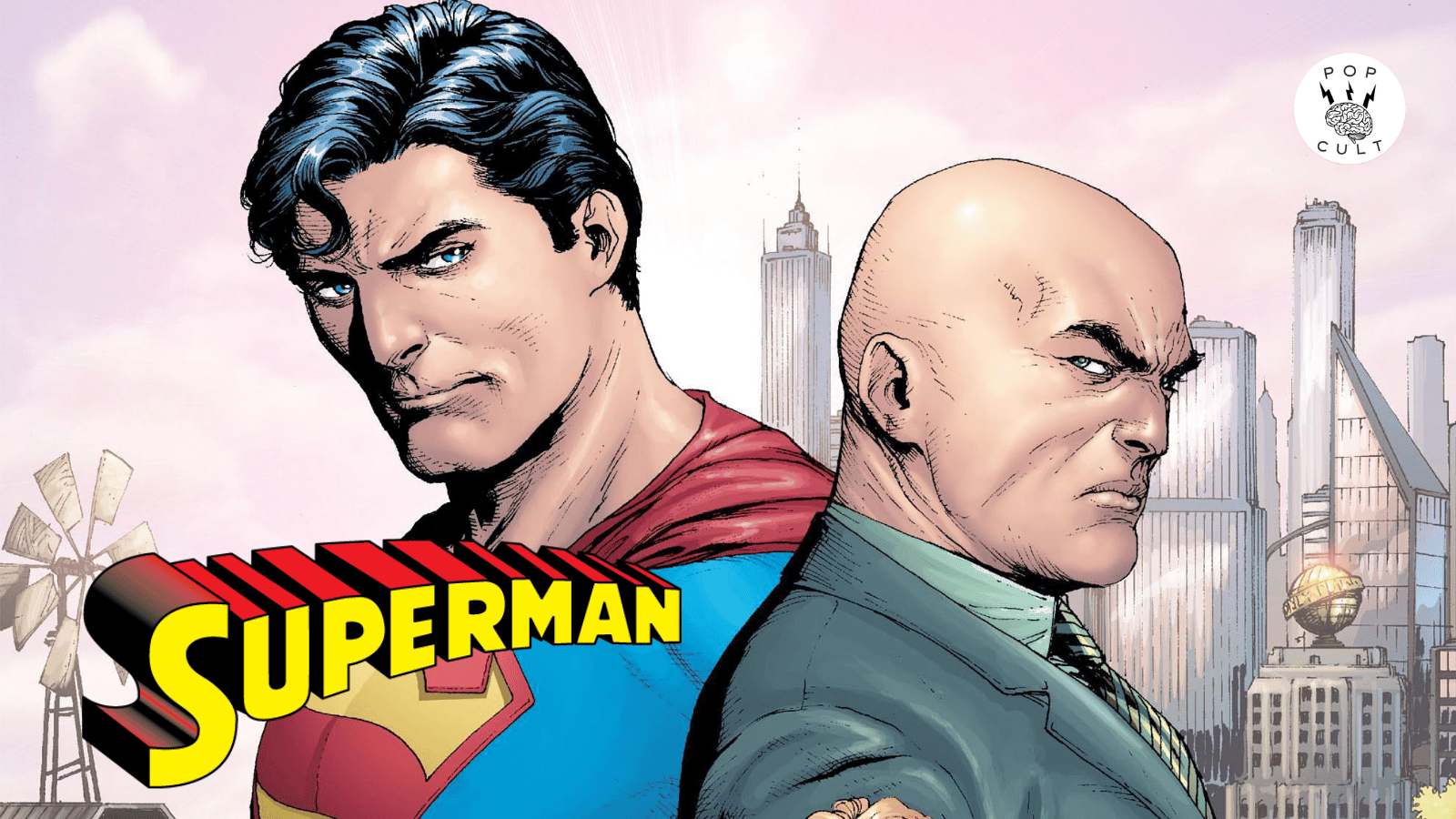
Not chronologically next, but in terms of publishing order, we have Superman: Secret Origin, Geoff Johns’s post-Infinite Crisis re-working of the hero’s origins. The most significant change here is attempting to bring back some of the Silver Age elements removed after John Byrne’s 1980s reboot. The two most prominent changes are Clark & Lex’s childhood ‘friendship’ and Superboy’s inclusion in the Legion of Super-Heroes. Johns does a very good job of adding these, though I’m not sure too many writers used these things after the fact. This is one of the problems with Superman reboots: if you don’t have buy-in from your colleagues or whoever comes next, you’ll see
Superboy is a character I missed in the comics continuity. By the time I became a regular monthly reader of comics in the early 1990s, Crisis had already wiped the character from the slate. Instead, the Superboy I read the most growing up was the teenage clone that came out of the Reign of Superman series. That said, I have loved the concept of the Legion of Super-Heroes, which has always felt like its own distinct pocket in the DC Universe. It is how the X-Men carved out a niche at Marvel. Johns’s solution seems to be that in his period, Clark would perform good deeds with his powers in secret. When the Legionnaires came to pick him up for an adventure, he’d don his Superboy costume and be that in the 31st century.
Some interesting parallels are going on here. Superman’s friendship with Jimmy Olsen is juxtaposed with the three Legionnaires coming to visit him as a kid. He felt like an outsider who made friends that helped him see himself in a new light. Jimmy is struggling at the Planet, thinking about moving back to his mom’s, and Superman shows up to boost his spirits. The Legion helped young Clark see that despite the bleak present, there is a better future ahead, and Superman does the same for his famous pal.
I wouldn’t say Secret Origin is a cohesive single story until the second half. Each issue dips into a moment in Clark’s life and dips out. We have a Legion issue and then don’t see them again. Same with Krypto, who is a part of Superman’s childhood but doesn’t play a role when he becomes Superman. Once Clark grows up and moves to Metropolis, we get a plot about Lex Luthor’s reaction to Superman and his plot to create Metallo to stop the alien visitor. It doesn’t feel very clear to bring in these older elements but not make them integral to Secret Origin.
Part of this confusion is because DC Comics didn’t want to do a hard reset on Superman, keeping the majority of continuity from 1985 to the late 2000s intact. Byrne’s Man of Steel mini-series radically cleaned the slate, and I suppose the editorial didn’t want to confuse younger readers too much. It doesn’t help that just a few years prior, Mark Waid penned Superman: Birthright, a maxi-series that gave his more contemporary take on Superman’s origins, filling gaps and making slight changes from Byrne’s work. Fans, including me, were unsure if Birthright was meant to be in continuity. It was published as such, but I can’t remember any real references in the ongoing books.
It’s undeniable Richard Donner’s Superman: The Movie was the biggest influence on Secret Origin. Superman debuts by saving Lois during a helicopter accident. Clark is back to being a dorky, clumsy guy again, unlike Byrne’s Kent, who he presented as a dedicated, clever reporter. Gary Frank’s designs for Superman are heavily influenced by Christopher Reeve. I do like that Lois doesn’t buy Clark’s naive act but can’t figure out why he plays the innocent the way he does.
Johns remembers that the Golden Age Superman was anti-establishment and incorporates that. He was also setting up some plot elements for the New Krypton storyline that would take over all the Superman books very soon. Lois’s Army general father, Sam Lane, is just as much a villain as Luthor. John Corben (Metallo) is one of Lane’s lieutenants and has his body rebuilt to go toe to toe with Superman. This is also the first time we see Corben as a rival for Lois’s affections against Superman. This would be reused in Grant Morrison’s Action Comics run when all of DC got rebooted in 2011 for the New 52. It reminds me of the Glen Talbot/Betty Brant/Bruce Banner love triangle with Sam Lane serving as Thunderbolt Ross. It’s not a terrible idea, but I feel no writer has really played with and figured it out.
This version of Superman attempts to pull bits and pieces from all media about the character around the time (the Donner movies, the animated series, Smallville) and Silver Age elements. The problem is that the DC editorial didn’t closely examine how these things might clash with other writers’ works. Superman: 3-2-1 Action was a mini focused on Jimmy Olsen’s origins, while the mini DC Universe: Legacies presents a different meeting of Superboy and Legion. In the 1990s, many DC writers invented Hypertime to explain such contradictions, but I never found that to be a great excuse. If we look at Secret Origin outside this particular context and more like Birthright, it’s still a fun story.
Of all of Johns’s story arcs in Action Comics, Superman and the Legion of Super-Heroes is my favorite. It is one cohesive story that builds on previously established continuity without being so obtuse that a new reader would be lost. Of all the stories, this is most Superman-like, in my opinion, meaning we get to see him both in cool action sequences and being upright and good. Thanks to both Johns’s writing and Frank’s artwork, the pacing is perfect. We get many images that feel like they could be storyboards for a motion picture.
The story’s opening is a clever play on Superman’s origin that sets up the story’s core theme. A planet is dying, and a scientist and his wife send their child to Earth. The rocket crashes in a field in Smallville. But this is the 31st century. It turns out humanity is less welcoming to aliens this time around as a farmer and his wife find the child, and the man pulls out a weapon to kill it. Quite a shocking introduction to this story. Clark encounters a Brainiac drone, but it turns out that it was sent by Brainiac 5, the heroic descendant of Supes’s nemesis and a member of the Legion.
Superman comes to the future, where he finds revisionist history has taken over. An anti-extraterrestrial movement has taken over the Planet, led by Earthman, a former teen hero who was rejected by the Legion. He’s forced a new history in which people believe that Superman was a native human whose alien origins were propaganda spread by outsiders. The members of the Legion have gone underground and are doing what they can to fight back against his forces.
Some light continuity references include Legion tryouts, Colossal Boy & Chameleon Girl’s marriage, etc. I understood all these things from being a nerd who read DC encyclopedias and Who’s Who very closely, but I think anyone can handle it. The worldbuilding is done quite well with vignettes in a primary school classroom where children learn alternate history. We also get the original three Legionnaires spelunking into the ruins of the Batcave to find something they believe will help them defeat Earthman. There are moments between members of Earthman’s team that hint at complex team dynamics and grudges. I would have been interested to see Johns write a Legion ongoing based on this world, but we never got that.
Overall, Johns didn’t do too badly on his Superman run. He spotlighted nearly all of Superman’s Rogues while giving plenty of time to the iconic supporting cast. The result is a nice blend of classic Silver Age Superman tropes integrated into the contemporary setting. Johns would follow up with a Legion mini during Final Crisis and remain on the title as part of the sprawling New Krypton arc, which deserves a series of reviews. He also wrote a six-issue arc for the New 52 Superman with John Romita Jr on art that I remember feeling lackluster. There are a lot of good ideas here, but I don’t feel they had sticking power, and other writers who came after essentially passed over them.

 PopCult Reviews
One thought on “Comic Book Review – Superman by Geoff Johns Part Two”