
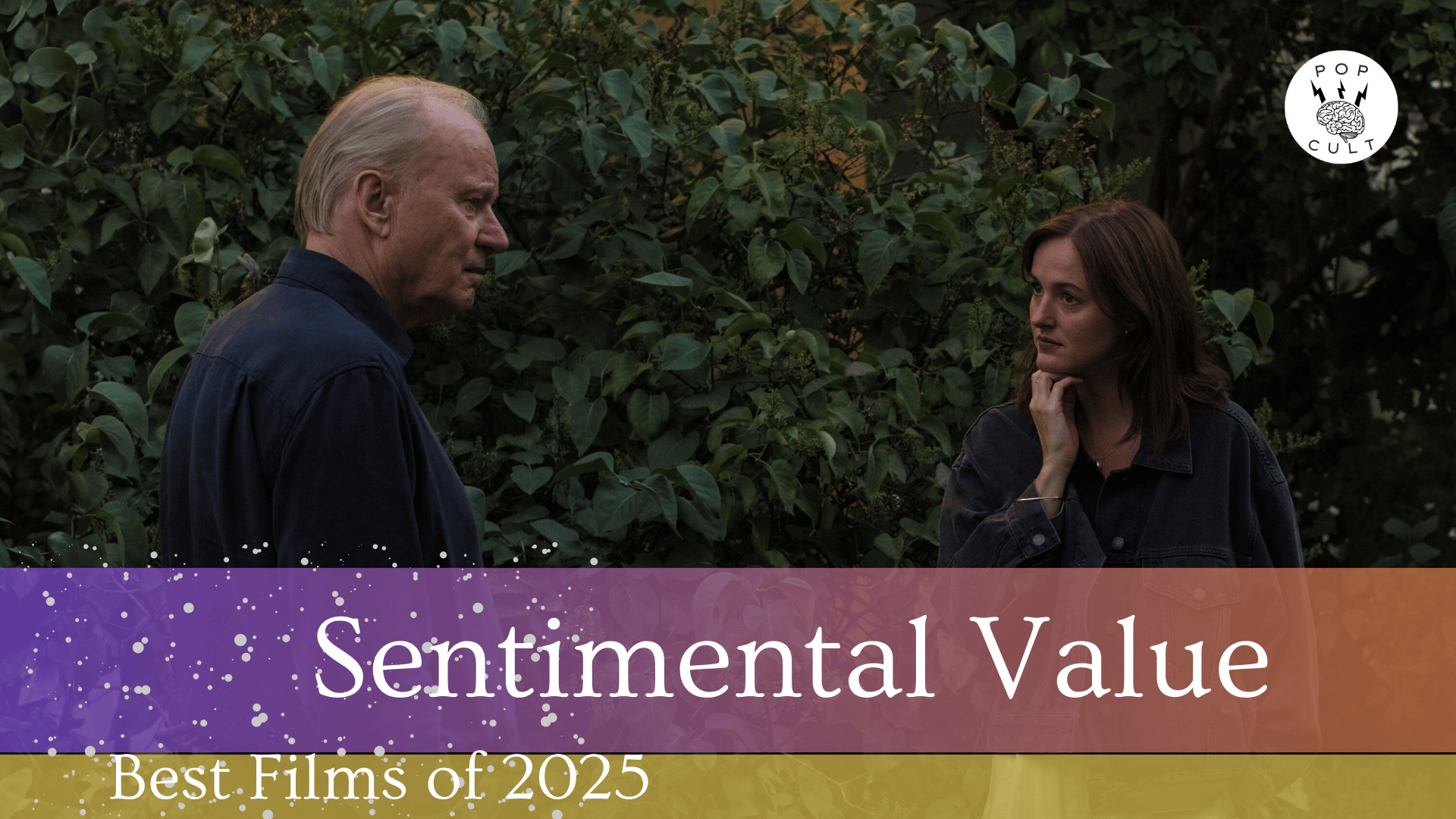
Sentimental Value (2025)
Written by Eskil Vogt and Joachim Trier
Directed by Joachim Trier
It is becoming increasingly harder to find humanity on the screen in the 21st century. It started when finance conquered Hollywood in a hostile takeover. For a long time, there were a considerable number of studio heads who balanced the commerce of film with artistry. That battle was completely lost by the end of the 2010s. With AI coming into proliferation, we’re now gazing out at a bleak landscape of soulless content that will make the commercialism of the 1980s look quaint by comparison. Yet this list of films I’ve been working on is full of filmmakers I believe are trying their best to maintain a sense of humanity in cinema. Their work does not make much money and is not seen by as many eyes as most of the films in your local multiplex, but they express ideas and themes that are essential to examine if we are to understand what it means to be human.
Sentimental Value follows sisters Nora (Renate Reinsve) and Agnes (Inga Ibsdotter Lilleaas) as they navigate the long emotional aftershocks of their father, Gustav (Stellan Skarsgård), a once-celebrated filmmaker whose absence shaped their childhood as much as his reputation ever did. When Gustav reenters their lives with plans to revive his career by making a deeply personal film about his mother’s death, old wounds reopen—especially for Nora, an actor wary of being cast into her father’s unresolved guilt. As the project inches forward, the film moves between past and present, tracing how love and neglect calcify within members of a family. What unfolds is a quiet reckoning, examining how families inherit damage and how sentiment can both preserve and distort the truth we tell ourselves about the people who raised us.
Joachim Trier is a filmmaker who consistently privileges theme and interior character life over conventional plot mechanics. In Oslo, August 31st, the narrative framework—a recovering addict spending a single day in the city—is deliberately minimal, allowing the film to dwell instead on the quiet terror of feeling left behind by time due to one’s own actions and guilt; the plot merely escorts us through Anders’ internal reckoning. Thelma adopts the surface trappings of a supernatural thriller, but its true concern lies in the repression of desire, with telekinesis functioning less as spectacle than as an externalization of emotional and sexual awakening. Similarly, The Worst Person in the World presents itself as a romantic dramedy structured around chapters and playful formal devices, yet its loose, episodic plotting exists primarily to map Julie’s shifting sense of self—particularly her fear of choosing wrongly in a culture obsessed with self-actualization. Across these films, Trier uses narrative momentum sparingly so that mood, psychology, and thematic resonance are what linger. It’s not what happens that matters so much as how the characters process it.
The family conflict in Sentimental Value is not predicated on melodrama because it centers itself on the internal rather than external, loud actions. When Gustav shows up with DVDs for Agnes’s son, a quick glance shows they are “great films,” but certainly not appropriate for a young boy. Nora’s only response is a sarcastic chuckle. There’s no further conversation on the matter, but this communicates something crystal clear. Nora believes—and is right to do so—that her father is completely out of touch with what is appropriate for a child, and she knows this because of his absence throughout her own youth. Gustav is also aware of this, which is why he doesn’t respond. His ego is bruised, but he’s also feeling a tremendous amount of guilt about that neglect. His method of trying to rebuild those bridges with Nora is to offer her the role of his mother in the film he’s making about his own childhood trauma. We understand why Nora rejects this, too. None of this happens with explosive emotional outbursts. The key to avoiding melodrama in this type of story lies in making characters multi-dimensional and presenting them with emotional authenticity.
Each of the two daughters approaches this examination of their family in different ways. Agnes is a historian, so it makes sense to her to deep dive into their family’s history, and through this she learns a great deal about her late grandmother. Agnes uncovers the woman’s involvement in the Norwegian resistance movement during World War II and her subsequent torture at the hands of the Nazis. By uncovering this trauma two generations back, she develops a better understanding of her father’s cold nature. This comes after he casts Agnes’s son in the film without her consent, and she is furious with him. It never excuses his behavior, but it helps to contextualize it. I hear many people these days responding to any attempt to learn the root of a behavior as trying to justify the harm a person has done. It’s a troubling idea to have become so common because it refuses to allow people to be human. I believe accountability is necessary for societies to function, but I find that what many people are really searching for is revenge and a reflection of the pain they feel.
This is a film about many things. I haven’t discussed Elle Fanning as the American actress Gustav casts when Nora turns him down, or how her arc explores the difficulty of playing something she hasn’t lived. This, in turn, is part of what helps Gustav better understand himself and his work. It’s also important that one daughter works in the arts while the other is an academic when considering the film Gustav wants to make. I also haven’t delved into the importance of the family home and how it connects this family across generations. Joachim Trier has given us a film that is complex and mature, and that is rare in these times.

 PopCult Reviews
One thought on “Movie Review – Sentimental Value”