Movie Review – Traffic

Traffic (2000)
Written by Stephen Gaghan
Directed by Steven Soderbergh

Steven Soderbergh’s career has been one of the most eclectic and prolific of most modern directors. It was a slow burn, though. His directorial debut, sex, lies, and videotape, was a massive breakthrough in 1989. However, for all his promise, it led to a decade of commercial failures and an embrace of independent filmmaking and experimentation. It was 1998’s Out of Sight that changed things and led to his reemergence as a mainstream film director. Soderbergh never lost sight of those formative experimental years, and Traffic served as a bridge between more conventional filmmaking and the director’s insistence on playing with form and presentation.

Traffic is a film based on a BBC mini-series that follows three separate but intersecting plots centered around the War on Drugs in the United States & Mexico. In Tijuana, we follow police officer Javier Rodriguez (Benicio del Toro), who is brought into General Salazar’s inner circle, a high-ranking official that wants to take down the Obregón brothers who head the local cartel. Rodriguez and his partner become further intertwined with Mexico’s corruption, quickly realizing every side is out to have a piece of the drug trade and is only interested in eliminating the competition.

In the Midwest, we meet conservative judge Robert Wakefield (Michael Douglas) is appointed to head the President’s Office of National Drug Control Policy. It becomes clear to Wakefield from his predecessor and longtime staff members that the War on Drugs is unwinnable, but he keeps moving forward with the transition. Meanwhile, his daughter Caroline (Erika Christensen) has become involved in drugs, her latest vice being freebasing cocaine. She and her boyfriend (Topher Grace) hole up in a cheap motel room where they spend the day blasting their minds with drugs. When her addiction comes to light Wakefield and his wife (Amy Irving) struggle with the best way to help their daughter.

The final plotline centers on Helena Ayala (Catherine Zeta-Jones), who’s husband is arrested by the DEA for his role as a drug trafficker. Meanwhile, DEA agents Gordon (Don Cheadle) and Castro (Luis Guzman) are leading the investigation on Ayala’s operations, which also involves surveilling his wife. Helena finds herself becoming financially desperate. People whom her husband owes come around making threats, and she finds herself reaching the edge. Gordon and Castro get their hands on a significant witness against Ayala, Eduardo Ruiz (Miguel Ferrer), whose testimony makes him a valued asset of the US government and the cartels’ target.

Soderbergh bit off so much with this film and does an excellent job developing each plot thread, allowing light crossing over but making sure each story has its own complete arc. One technique he uses to help the audience is by using three different color correction techniques for each story. Rodriguez’s sun-bleached Mexico story is shown in an overexposed sepia, Wakefield & his daughter’s journey through addiction is presented in a stark, cold blue. The California storyline looks the most conventional, with colors just slightly oversaturated. Soderbergh was an early adopter of digital filmmaking, and it shows here as those first cameras could show a lot of grain & distortion in the video. This was a detractor in some pictures, but here it helps with the cinema verite style that Soderberg was going for, a semi-documentary atmosphere with handheld camera work.

The best thing about Traffic is how Soderbergh presents the War on Drugs as an unwinnable conflict. Wakefield delivers a speech in the third act about how we are asked to go to war with our own children, and that understanding and offers of help will do more to curb the desire for drugs. The film does an excellent job of showcasing how overly complicated and pointless the mission to wipe out drugs is. It’s pointed out early in the movie that the cartels would have no power if the demand in the white suburbs of America weren’t there. The very law enforcement that claims to be fighting the spread of drugs regularly turns out to be on cartels’ payrolls.

The way Soderbergh delivers this message is not through the characters didactically spouting platitudes (I’m looking in your direction, Aaron Sorkin!). He keeps that documentarian style that distances his own views from the characters and never editorializes things. A few moments, particularly with the Wakefield character, come close to that, though, but the director manages to avoid going over that cliff into a movie of the week.

Traffic’s biggest problem is the scope of its story and how, even with a three hour running time, so many characters are still relatively undeveloped. I have to think that the original television version could do this, but you lose that in a feature film. Caroline is a non-character for most of the movie, just a drug-addicted teenager with minimal other defining characteristics. I also think Helena deserved some more development because we see her story arc rushed along to make her the head of her husband’s operations without really seeing her struggle along the way. Traffic certainly still holds up, one of those movies that created an aesthetic for the 2000s that is even mimicked today.

Movie Review – Sexy Beast

Sexy Beast (2000)
Written Louis Mellis & David Scinto
Directed by Jonathan Glazer

Jonathan Glazer has been working in the performing arts for over thirty years, starting as a theatrical director and building a reputation for himself in the world of music videos through the 1990s. He was responsible for some iconic Radiohead, Blur, and Jamiroquai videos, which displayed his creativity and ability to build powerful moods through images and music. Glazer also directed some brilliant advertisements, with his Levis ads being some of my favorites. So before he had settled on a feature film debut, those who were aware of Glazer’s talents knew he was going to make incredible movies. That debut ended up being 2000’s Sexy Beast.

Gal Dove (Ray Winstone) is a retired English criminal living happily in Spain with his wife, DeeDee. They have been joined by friends Aitch and his wife, Jackie. Every day is spent lounging by the pool, eating at fantastic restaurants, and drinking wine as they joke about the old days. It all comes crashing down when Jackie receives a call from Don Logan (Benjamin Kingsley), a criminal associate and cold sociopath they thought was a memory. Don shows up demanding Gal take a job being offered by crime lord Teddy Bass (Ian McShane). Gal doesn’t want to go back to that life and wants to be left alone, but Don’s insistence and eventual violence are pushing him into giving in.

Sexy Beast is a gorgeous mood piece. The characters are incredibly well-written, but what makes the film are the stylistic flourishes Glazer adds on. The entire movie, despite some intense and violent moments, is overflowing with passion and love. Gal is whole-heartedly devoted to DeeDee, a fact that Don Logan knows and attempts to undermine by digging up sordid details of DeeDee’s past. She has already shared these with Gal, and his pain is less about the besmirching of his honor but knowing how much it must hurt for DeeDee to be reminded of regrettable choices. 

Before we see Don Logan on screen, we feel his presence. The movie opens with an iconic scene of a boulder that nearly kills Gal and falls into the swimming pool behind the house. Later, Gal has a dream about a monstrous anthropomorphic rabbit coming to gun him down. These are all portents of something terrible on a direct path to ruin the idyll that Gal and his friends have created. When Kingsley shows up as Don on the screen, we immediately understand the characters’ gloom. 

Don is this angry, little dog that just won’t let go. He tries to engage in social niceties, but it’s clear he’s disinterested in it all. He wants to make sure he dominates the space and that people do as he says. Don doesn’t show emotions; he assumes behaviors he’s observed in people but delivers them awkwardly. One minute, Don pretends to want to know what you’ve been up to, and in a hairpin second, he switches to not giving a shit and getting down to business. A compliment can transition to a ribald joke about your wife moments later.

I’m not such a great fan of Kingsley. He can be excellent in the right roles, but more often than not, I think he picks terrible projects, and it ends up being embarrassing. Here we get to see a side of the actor not glimpsed often. Gone is the fatherly gentleness of Gandhi, and in its place is a vicious pit-bull of a human being. It becomes evident that the story cannot end in anything but violence when such a person is present. Gal is steadfast that he won’t do the job, and Don cannot handle this fact. The madman teeters between angrily accepting the decision to physically strike Gal to the floor when he doesn’t comply.

Jonathan Glazer picked a fascinating film to begin with, the most accessible film in his very selective film directing career. When you look at his later two features, Birth and Under the Skin, they are very different in aesthetics, themes, and tone. Unlike his contemporaries, Michel Gondry and Spike Jonze, Glazer is a more versatile filmmaker. You might not always know a movie is a Glazer work because he is malleable without losing his insistence on smart stories and striking visuals.

Comic Book Review – JSA by Geoff Johns Book Four

JSA by Geoff Johns Book Four (2020)
Reprints JSA #32-45
Written by Geoff Johns & David Goyer
Art by Peter Snejbjerg, Leonard Kirk, Keith Champagne, Steve Sadowski, and Patrick Gleason

There is something deeply satisfying about reading Geoff Johns’s JSA run. When I was a kid with a limited amount of money to spend while perusing the comic rack on the wall at Kroger, I always leaned towards the team books because it was more economical in my line of thinking. I wanted to expand my knowledge of obscure characters, and team books always gave you the most characters for your buck. So, as an adult, when I stumbled across this run by Johns, it was like my childhood dream come true. He always found creative ways to weave together disparate strands of the DC Universe by using those commonalities.

Continue reading “Comic Book Review – JSA by Geoff Johns Book Four”

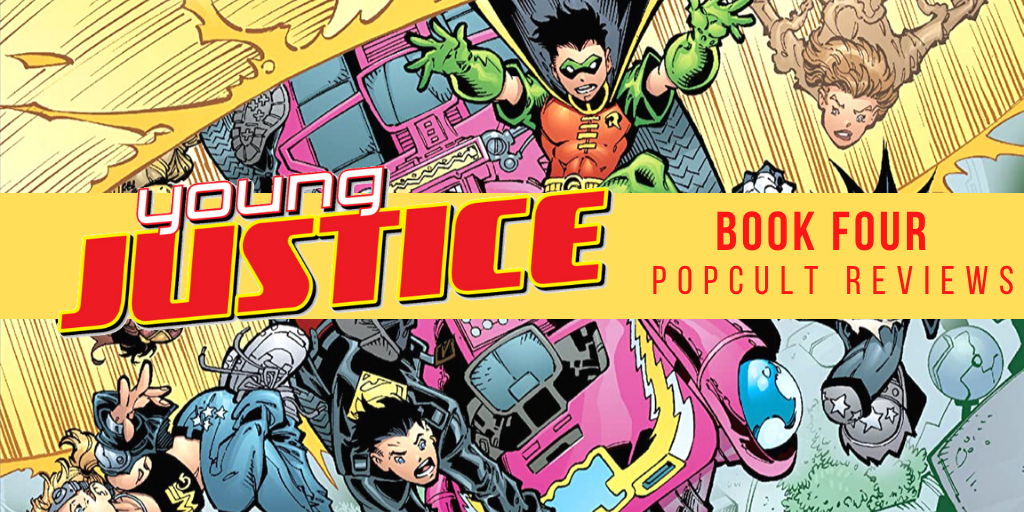
Comic Book Review – Young Justice Book Four

Young Justice Book Four (2019)
Reprints Young Justice #20 – 32
Written by Peter David, Jay Faerber, Chuck Dixon, Brian K. Vaughn, and Todd Dezago
Art by Todd Nauck, Sunny Lee, Coy Turnbull, Eric Battle, Patrick Zircher, and Scott Kolins

One of the problems I think Peter David encountered as the writer of Young Justice was his inability to develop or change his flagship characters because he was borrowing them from other titles. Superboy has his own ongoing series, which wouldn’t end until 2002. Robin had a very popular ongoing written by Chuck Dixon that ran from 1996 to 2009. Impulse was under the umbrella of Mark Waid’s Flash family with a solo book. Wonder Girl was a recurring cast member in the Wonder Woman title. That left Waid with characters like The Secret, Empress, and Arrowette to have the freedom to develop. However, the book wasn’t going to sell if those were the people on the covers. Yet, by continuing to spotlight characters outside of David’s control, the book never really felt like it went anywhere.

Continue reading “Comic Book Review – Young Justice Book Four”

Movie Review – Howl’s Moving Castle

Howl’s Moving Castle (2004)
Written & Directed by Hayao Miyazaki

Howl’s Moving Castle is one of the most financially successful Japanese films ever made. It grossed $236 million worldwide, which is quite a feat for a picture like this. It’s also yet another Miyazaki film that has had heaps of praise for its inventive magical world and characters. However, it’s the first Miyazaki movie in this series that I would rate below everything that has come before. For all of the technical mastery of animation and the fully developed world, I would argue something is lacking to pull all the elements together. Miyazaki revisits some old themes and some new ones, and I think the result is a very confusing picture.

Continue reading “Movie Review – Howl’s Moving Castle”

Movie Review – Spirited Away

Spirited Away (2001)
Written & Directed by Hayao Miyazaki

Spirited Away became the Studio Ghibli film that opened the floodgates into the American theatrical market. It was just home video sales of movies like My Neighbor Totoro and Kiki’s Delivery Service had doing well until this picture. However, seeing a Miyazaki movie in a theater was a more challenging experience to find. If you lived in a major urban area, your art-house theater might show them, but it was difficult outside of those venues. That isn’t to say Miyazaki films became marquee pictures in the States. However, from my own experience, it was from this point forward that I knew I could go to my local Regal cineplex; when these animated films reached our shores, they would have them playing on at least one screen.

Continue reading “Movie Review – Spirited Away”

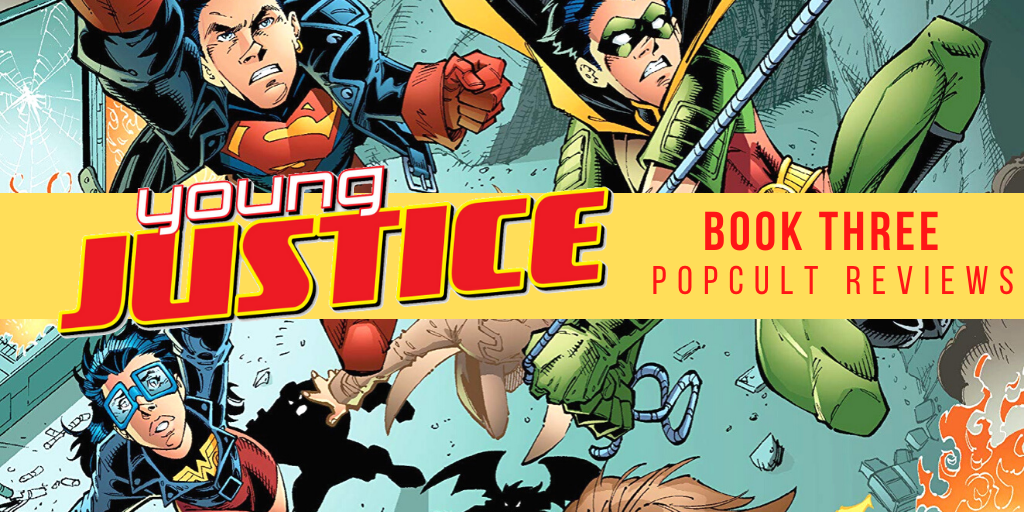
Comic Book Review – Young Justice Book Three

Young Justice Book Three (2018)
Reprints Young Justice #18-19, Young Justice: Sins of Youth #1-2, Young Justice: Sins of Youth Secret Files and Origins #1, Superboy #74, Sins of Youth: JLA Jr. #1, Sins of Youth: Aquababy/Lagoon Man #1, Sins of Youth: Batboy and Robin #1, Sins of Youth: Kid Flash/Impulse #1, Sins of Youth: Starwoman and the JSA Jr. #1, Sins of Youth: Superman Jr/Superboy Sr #1, Sins of Youth: Wonder Girls #1, and Sins of Youth: The Secret/Deadboy #1
Written by Peter David, Todd Dezago, Chuck Dixon, Geoff Johns, D. Curtis Johnson, Karl Kesel, Dwayne McDuffie, Ben Raab, Brian K. Vaughn, Jay Faerber, Lary Stucker, Scotty Beatty, and Jim Alexander
Art by Todd Nauck, Carlo Barberi, Sunny Lee, Tom Grummett, Rob Haynes, Drew Johnson, Scott Kolins, Cary Nord, Michael Avon Oeming, Angel Unzueta, Mike S. Miller, Norm Breyfogle, Pasqual Ferry, and Cully Hamner

It all started with making Superman a weekly character. In the 1990s, the Man of Steel had four monthly series making it so that you could pick up the next chapter in the Superman saga every week of the month. This led to DC Comics shaping their publishing schedule around this four-week model. However, this ran into a problem when you had a month with a fifth Wednesday (traditionally New Comic Book Day). In 1997, DC introduced fifth-week events, a filler week where a collection of themed one-shots would be published. That grew into a space to have a mini-event, nothing world-shattering but a longer story, the type you might typically have seen in the summer annuals. This is how we got Sins of Youth.

Continue reading “Comic Book Review – Young Justice Book Three”

Supervillain Spotlight – The Cheetah

Earlier, I looked at Max Lord, one of the villains in the upcoming Wonder Woman 1984. Today, I’ll breakdown the second villain, The Cheetah. Unlike Lord, The Cheetah has always exclusively been a Wonder Woman enemy, but there have been multiple people that worked under that name. In 1985, DC Comics launched Crisis on Infinite Earths, a company-wide event that rebooted the entire timeline and compressed many parallel Earths into one. Before this, there had been two Cheetahs, neither of whom had superpowers and were mainly knock-offs of Batman’s villain Catwoman. With Crisis, these versions were erased to make way for writer-artist George Perez’s overhaul of Wonder Woman and her continuity. This led to a new Cheetah, one who derived her powers from dark mythic gods.

Continue reading “Supervillain Spotlight – The Cheetah”

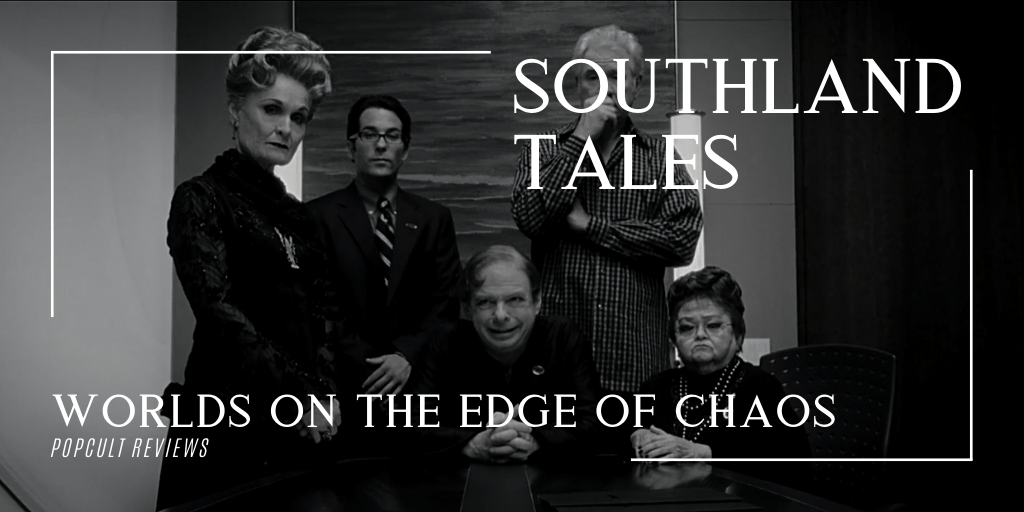
Movie Review – Southland Tales (The Cannes Cut)

Southland Tales – The Cannes Cut (2006)
Written & Directed by Richard Kelly

The promise of Richard Kelly was huge and seems to have dimmed in the last decade. In the wake of Donnie Darko, he was suddenly rocketed to the list of hot up-and-comers. I was definitely one of those people caught up in the Darko hype. I still hold that it’s his best work to date and that his subsequent work never felt quite as honed and clear. Southland Tales was the follow-up with a bigger budget and big names in the cast. It debuted at the Cannes Film Festival, and it was hailed as a disaster, bloated and too sprawling. Another cut was made for the theatrical release, and the reaction was much the same from audiences.

Continue reading “Movie Review – Southland Tales (The Cannes Cut)”

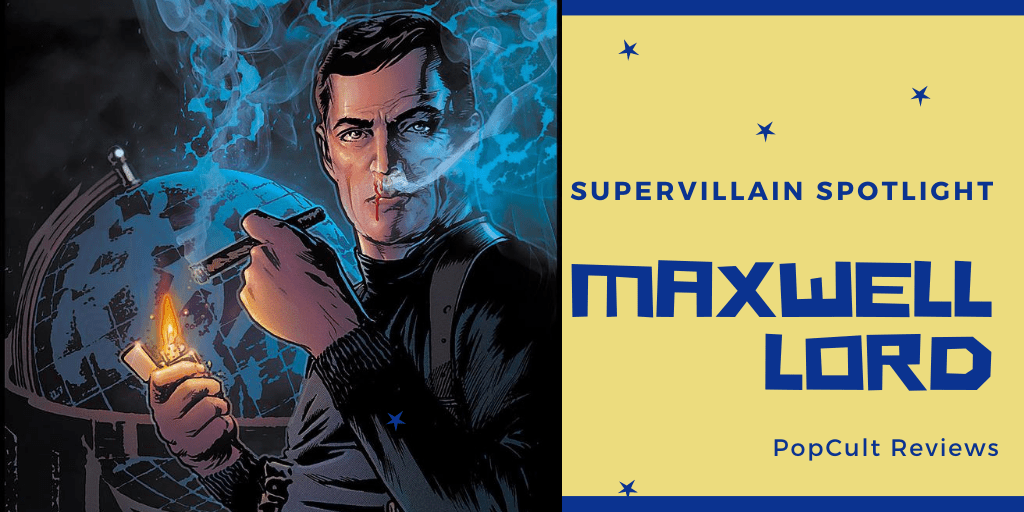
Supervillain Spotlight – Maxwell Lord

The upcoming Wonder Woman 1984 is set to feature two villains, and I am writing up a spotlight on each. First up is a character who has been both a hero and a villain, and it wasn’t until 2006 that they were even associated with Wonder Woman so directly.

Continue reading “Supervillain Spotlight – Maxwell Lord”