Director in Focus: Brian De Palma – The Untouchables


The Untouchables (1987, dir. Brian de Palma)
Starring Kevin Costner, Sean Connery, Robert DeNiro, Andy Garcia, Charles Martin Smith, Patricia Clarkson, Billy Drago

If someone told me Sisters and Carrie were made by the same director, it would sound plausible. If someone told me Carrie and The Untouchables were made by the same director I would definitely question the validity of that statement. At this point in his career, this was de Palma’s most “Hollywood” film. Its based on actual events, though highly dramatized for the screen and has the sort of “sweeping” nature you expect from movies vying for an Oscar nod. The story is an interesting one and de Palma is allowed to use some of his cinematographic trademarks along the way.

It’s the height of Prohibition in Chicago and one man runs the bootlegging industry, Al Capone (DeNiro). His men use violence and murder to enforce their control, with many innocents caught in the middle. Special Agent Elliot Ness (Costner) is sent in to work against the flow of police corruption and find that piece of evidence needed to bring Capone down. Along the way he recruits an accountant, a police academy rookie, and veteran beat cop Malone (Connery). These men are untouchable, free from the briberies and intimidation tactics of the mob. As they get closer and closer to finding the witness and evidence they need the violence rises and many of them won’t make it to see the end.

All the names associated with this film make you think it would be a dynamic and interesting look at the fall of Capone. You have de Palma directing, David Mamet on the script, and a cast of talented actors. However, the film is utterly dull. In particular, the acting of Kevin Costner is like cardboard here. He makes Ness into one of the flattest, uncharismatic crime fighters I’ve seen in a movie. Not once did I feel energized or inspired by anything he had to say to his men. I half expected a shot of the officers gathered to work under him half asleep as he droned on. On the other hand, I feel like there’s very little direction being given to the actors and there is obviously not much good in the screenplay.

Where the film is interesting is when de Palma is allowed to play with how the camera tells the story. There is his typical first person shot, used during a very crucial scene involving Malone. There’s also the use of deep focus during an opera scene and some moderately interesting tracking shots. For the most part though, the movie seems devoid of life, which is a shock when it employs such a dynamic director like de Palma. The majority of the work seems to have been put into production design. 1930s Chicago is reproduced with pristine accuracy and costume design was overseen by Armani. The film’s score is also handled by the always amazing Ennio Morricone. It just would have been nice to see a film where everyone was allowed to bring their A game.

Director in Focus: Brian DePalma – Body Double


Body Double (1984)
Starring Craig Wasson, Melanie Griffith, Gregg Henry, Deborah Shelton

This film wouldn’t exist if it weren’t for Vertigo and Rear Window. Once again, de Palma returns to his filmmaking mentor, Alfred Hitchcock to inform his own work. However, coming off of the stylistically redefining Scarface, Body Double feels like a Cinemax softcore porn with a creative cinematographer’s flourish lain over the top. For all the moviemaking love put into this film there’s just something off about it the whole time that taints it from living up to de Palma’s previous Hitchcock homages.

Jake is an actor working on a B-horror film, Vampire’s Kiss. He experiences a moment of claustrophobia during a scene in a coffin and the director tells him to take the week off. Jake arrives home to find his girlfriend in bed with another man and ends up homeless. Things are not going so well. He meets a fellow actor, Sam who needs a replacement for a house sitting gig in the Hollywood Hills. Jake happily takes the job and Sam lets him know about the woman across the street who nightly stands naked right in front of the large windows. Jake begins watching her obsessively and begins to realize she is in danger as a menacing figure stalks her. There are lots of twists and turns, but if you are an observant film goer you will probably figure out the picture’s twist early on.

What hurts the film about as equally as the lackluster script are the uncharismatic actors. Craig Wasson is so incredibly bland his performance comes across as comically bad. His interactions with Gregg Henry, who plays Sam, feel incredibly odd and unnatural, and this never comes across as intentional. Beyond Jake, there isn’t much acting going on in the film. All of the other characters, particularly female characters are flat props used simply to create peril and have violence rained down upon them.

The picture definitely feels like a film only the 1980s could have produced. It is full of excess and gratuitous sex that is put in the film merely to satisfy de Palma’s proclivities as well as to make Hollywood execs happy. Jake is eventually pulled into the harsh world of pornography to track down a woman that has a connection to the mystery he has become involved in. This gives de Palma the opportunity to shows lots of naked ladies (something he enjoys doing a little too much). At the end this will feel like de Palma’s cheapest film, a sidetrack back to Hitchcock country and a strange work to bridge the gap between Scarface and his later entrance into Hollywood big budget movies.

Director in Focus: Brian DePalma – Scarface


Scarface (1983)
Starring Al Pacino, Steven Bauer, Michelle Pfieffer, Robert Loggia, F. Murray Abraham, Mary Elizabeth Mastrantonio

Certain films permeate the pop culture consciousness so deeply that you never have to see them to know them. I was 13 and watching an episode of The Simpsons where Homer ends up in possession of a large pile of sugar. He becomes power hungry as the episode progresses and at one point says. “First you get the sugar. Then you get the money. Then you get…the women.” At the time I found the line hilarious and filed it away as simply something those clever Simpsons writers came up with. Years later I would learn it was reference to Brian De Palma’s trend setting foray into big budget Hollywood movies.

Its 1980 and Fidel Castro has opened up Cuba temporarily to send away those unwilling to conform to his particular brand of Communism as well as a large number of convicts. One of these convicts is Antonio Montana, a small time thug. Very quickly Tony and his pal, Manny come into the employ of Miami druglord Frank Lopez. Tony proves himself a tenacious and ambitious figure and it comes as no surprise that any gangster that crosses his path is in danger of his life. Tony weds his rival’s woman, sets his sister up with beauty salon of her own, and establishes strong ties to a Columbian cocaine grower. However, this film is based on the style of a Greek tragedy, meaning for every rung Tony climbs on the ladder of power he has that hard of a fall waiting for him when it all goes bad.

It’s incredibly interesting watching Scarface in the context of twenty-seven years after its release. Stylistically it bleeds the 1980s. It’s separated by De Palma’s last film, Blow Out, by only three years but the distance between the films feels like a decade. While Blow Out owed much to the paranoiac anti-establishment pictures of the mid to late 1970s, Scarface is a trailblazing film, inventing its own style as it goes. This is an even bigger accomplishment after De Palma was basically tagged as “the new Hitchcock” and produced films that were highly derivative of classic cinema. The choices De Palma makes firmly entrench this picture in a very specific time and place, and there is no way it could ever be called “timeless”. Choices of music and cinematography here basically invent the 80s aesthetic. Everything is neon and harsh and brutal, and underneath it all driven by greed.

The screenplay was penned by a 36 year old Oliver Stone (pre-directorial debut) and reflects a lot of themes he would further explore in his own films. Greed is the driving force here, just as in Wall Street. While Stone hits his criticism of American capitalism right on the nose in that picture, the commentary is much more disguised in Scarface. Tony’s story is the immigrant story; he comes to our shores and works his way up the ladder to become a rich and powerful man. Yet, that classic immigrant story is soaked with corruption and acts of vile depravity. While this picture is very much surreal in how it deals with its characters, its themes lie in utter truth. It’s interesting to note that Tony’s story, while very apropos looking back at the Miami drug trade going on in the 1980s, was also reflective of the Hollywood system and Wall Street, where cocaine was a daily part of life.

It’s not a surprise that this picture was incredibly divisive. The main character is a man who is a danger not because he is a physical threat, but because he is frustratingly stubborn. The power of his personality was bound to turn off audiences expecting their title figure in a mainstream film to be a protagonist to root for. Not once did I find myself wanting Tony to succeed. Instead, I found a character to root for in Manny and Tony’s sister, Gina. For De Palma, this film changed everything. The days of Hitchcock-ian pastiche were coming to a close, and now he was a golden boy amongst the Hollywood studios. However, he has one last major nod to his beloved influence in the form of Body Double.

Director in Focus will be back in two week with Body Double. Next week, get ready for a birthday surprise!

Director in Focus: Brian DePalma – Blow Out


Blow Out (1981)
Starring John Travolta, Nancy Allen, John Lithgow, Dennis Franz

Alfred Hitchcock passed away in 1980 and with him ended De Palma’s rather blatant homage/ripoffs of his work. With Blow Out, De Palma attempted an American remake of Italian director Michaelangelo Antonioni’s 1966 Blowup. The picture leans much more in the direction of the big Hollywood pictures De Palma would go on to make in the 1980s and 1990s, yet it also marks his move away from the psycho thriller. Here the murders going on are linked to political conspiracy, not a mentally disturbed individual working on their own, though the murderer is definitely mentally disturbed.

Set in Philadelphia during the 100th anniversary of the Liberty Bell’s last ringing, the film follows Jack (Travolta) a sound editor for B-horror/slash nudie pictures. Jack was once in the military and worked as a cop wiring informants to crack down on the mob. The end of his career came when one of the informants was caught and killed because Jack couldn’t get to him in time. One night as Jack is out at a local park recording some samples he sees and ends up recording the audio of a car accident. He rescues the girl inside, who is still alive, and finds the driver dead. Later, at the hospital he learns the driver was a presidential candidate and the police are very eager to make Jack and the girl, Sally (Allen) forget what they saw. Using the photos of a private eye, that happened to be at the park, and his own audio recordings, Jack makes his own film of the incident. What he discovers is that the car’s tire didn’t blow out as the police are claiming but that someone fired from the bushes and shot it out. However, there is a man (Lithgow) who has been hired to kill any and all witnesses to the incident.

The film is chock full of references to other pictures and while it is not one of de Palma’s best it still has those individual sequences that are amazingly put together. The opening of the film is a blatant reference to the popular slasher flicks of the time, in particular Halloween. One long take from the POV of a killer stalking a sorority is slowly zoomed out to reveal Jack and his employer working on the sound for their newest picture. The entire conspiracy set-up is a hodgepodge of real life historical assassination and plot elements from the mid-20th century. The film Jack puts together is a parallel to the Zapruder film. The car crash with the drowning girl inside a direct reference to Teddy Kennedy and Chappaquiddick. And the desperation of the powers that be to cover everything up is deeply linked to the still linger negative sentiments manifested by Watergate in the 1970s.

One of the best parts of the film is that de Palma keeps it simple. When dealing with political conspiracy it could be very easy for the story to spiral out of control as more twists and sinister figures are added. Instead we never really get the specifics of why this potential candidate was killed, we just keep focused on Jack and Sally and really only know as much as they do about what is going on. The cast is fairly small and its only Jack that we learn any real background about. The mysterious hired killer played by John Lithgow is given all the character development we need. His precision and adherence to duty hint at his past as a military man or a member of the CIA but we never need that spelled out to us. There’s no great speech at the end either where everything is spelled out to make sure the audience got it. De Palma seems to trust our intelligence that we picked up on the things he was saying.

While not my favorite of what I’ve seen so far, Blow Out is definitely one of the tightest, leanest pictures of De Palma’s. He delivers just enough of every element that it never sags in the middle. It’s definitely not something you haven’t seen before in terms of the plot but its those elements that have been retread presented by a master filmmaker. It’s also a perfect example of how to remake a film without copying it beat for beat. De Palma takes the almost wordless Blowup, where the murder is kept completely obscured and vague, and makes a truly American version that reflected the current mood towards the upper echelons of power at the time.

Director in Focus: Brian DePalma – Dressed to Kill


Dressed to Kill (1980)
Starring Angie Dickinson, Michael Caine, Nancy Allen, Dennis Franz, Keith Gordon

I have said it many times about de Palma already, but the man was obsessed with emulating Hitchcock. Here in his blatant nod to Psycho, we have a film that stays above water simply because of its stylistic flourishes. While much more entertaining and better at keeping my attention than Obsession, it lacks some of the depth of a picture like Sisters or Carrie. And there are moments that trend uncomfortably into homophobic territory as well as scenes that could be interpreted as heavily misogynistic. While I don’t think De Palma hates women (they feature heavily in all the features I’ve seen so far), I do think is highly attuned to the traditional portrayal of women in cinema as constant victims.

The film opens with a heavily “porn-y” shower scene featuring Angie Dickinson as Kate Miller. The heavily erotic scene ends up being a dream sequence and we learn Kate is a housewife who frequents the office of Dr. Robert Elliott (Caine), a psychiatrist attempting to help her through her psycho-sexual hang ups. After a visit which ends in Kate attempting to seduce Elliott, she travels to a local museum where she and a stranger flirt and end up in bed together. It’s at his point a catalytic murder occurs that brings a high priced call girl (Allen) and Kate’s son (Gordon) into the film. At the same time, Elliott is receiving threatening phone calls from a transsexual patient who is threatening to murder. All of these elements intertwine into a very over the top psycho thriller.

While there is a lot lacking in the structure of the film’s story, it can never be said that De Palma is incapable of filming a tightly crafted scene. The pursuit and withdraw flirtation scene in the art museum is a perfect example of how the director can create a scene without a single line of dialogue that tells the a complete story. The scene continues into a discovery Kate makes that sends her running from her lover’s apartment and once again contains zero dialogue. The movie is filmed through a sensual haze and has some moments that stand out from others, such a scene late in the film that takes place in a mental asylum. The lighting is a schizophrenic blue that seems to accentuate the twisted nature of what takes place there.

Yet, the film is more a style over substance endeavor. Nancy Allen lacks the skill to make her role sympathetic or interesting. Her line delivery can be truly excruciating at times. But she was sleeping with the director (they were married) at the time so how she got the role was by default. Michael Caine keeps things stoic and nonreactive throughout the film and because that is part of the character its hard to say if this was a poor performance or not. Angie Dickinson is definitely the standout in the picture, and her role consists of very little dialogue. She is a picture of class and is able to provide the perfect amount of information without speaking a word.

Dressed to Kill was certainly entertaining and is viewed best as a campy thriller in the vein of Hitchcock. It wouldn’t surprise me in the least if most people guess the film’s twist fairly early on. The story is fairly transparent and de Palma does cheat a little in an effort to cover it up.

Next up: Blow Out

Director in Focus: Brian DePalma – Obsession


Obsession (1976)
Starring Cliff Robertson, Genevieve Bujold, John Lithgow

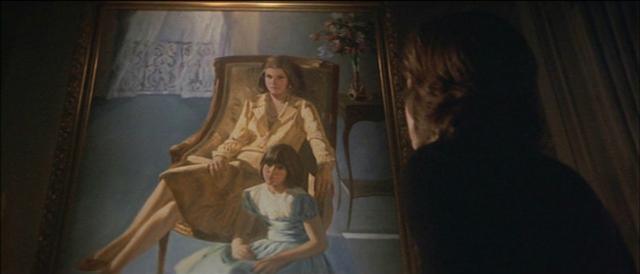
Throughout his early career, de Palma was either referred to as a director who made homages to Hitchcock, or was blatantly ripping the master director of thrillers off. And its a very fine line de Palma walks, particularly in this melodrama that is an obvious reference to both Rebecca and Vertigo. In fact, Hitchcock himself was reportedly furious that de Palma’s Obsession was so incredibly close to Rebecca. And its interesting to note that Hitch’s trademark composer, Bernard Herrmann, once again composes the score to a de Palma thriller. So how does this furiously melodramatic Hitchcock knock-off stack up?

The story opens in New Orleans in 1959, where land developer Michael Courtland’s wife and daughter are kidnapped and held for ransom. Courtland’s business partner, Robert Lasalle helps him raise the money, but at the last minute the police decide to drop a phony suitcase with a homing device in it. The kidnappers find out they have been duped and escape their hideout with police in pursuit. Courtland watches from the back of the lead detective’s car as the vehicle carrying his wife and daughter explodes in a ball of flame. Jump to 17 years later, and Courtland is still haunted by this incident. He takes a trip to Italy where, while touring a cathedral, he happens upon a woman who is the spitting image of his late wife. A romance begins, but Courtland’s intentions sink further and further into reshaping this new woman into a facsimile of his wife.

The soundtrack to this film never lets up. From the opening title to the closing credits, the music is not present maybe three times, and those are only for a minute or two. The rest of the film is filled with the rise cry of despair from a choir or the operatic dissonance of a church organ. The music compliments the plot of the film which is an over the top, melodramatic gothic tragedy. At points the melodrama can become so overblown its laughable and the actors play along with this tone. John Lithgow in particular is some times comical with Foghorn Leghorn-esque take on a New Orleans businessman.

Courtland’s wife, Elizabeth feels like a non-character. She appears on screen for all of 6 minutes and never speaks and so it was hard for me to buy into Courtland’s undying love for her. Though, this could be an intentional choice, by not making her an actual character it passes judgment on Courtland. At one point in the film, Sandra, the new wife discovers Elizabeth’s journal and learns that her predecessor saw Courtland as uninterested in his family, and more concerned with his land developments. The final brutal twist of the film operates on two levels, as well, and recalled the 2006 South Korean mind twister of a film Oldboy. Courtland ends up in an embrace that can be read as a beautiful denouement or as a disgusting and bizarre finale.

Director in Focus: Brian DePalma – Sisters


Sisters (1973)
Starring Margot Kidder, Jennifer Salt, Charles Durning, William Finley

Sisters is director De Palma standing up and yelling, “I love Hitchcock!”. He got Bernard Hermann, Hitch’s composer and most famous for the the slashing string crescendo of Psycho, he gives us murder enigmatically glimpsed from an apartment window, he gives us crazy camera tricks such as split screen wherein figures meet between both views, and many more flourishes that express his admiration for the great suspense director that Hitchcock was. And this film is as disturbing, if not more than Hitch at his most macabre.

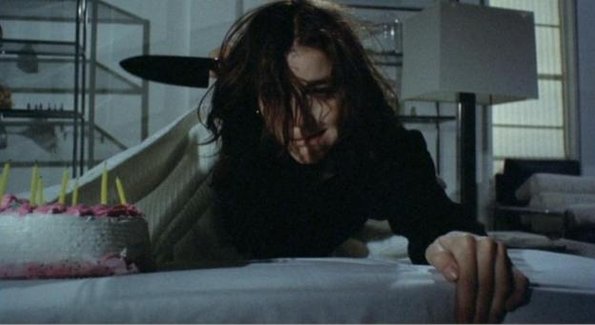
The film uses a Hitchcock bait and switch technique of making us believe one character is our protagonist only to kill them off about 20-30 mins into the film. The focus of the story is Dominique (Kidder), a French-Canadian model who is plagued by a possessive ex-husband. Her current date, Phillip, a gentleman she met while working on a game show, escorts her home and helps her ditch the ex-husband. Phillip spends the night and goes out to pick up some medication for Dominique. It’s at this point the film goes into psycho overdrive and it is so much damn fun. A neighbor, reporter Grace Collier sees a murder take place through her window and into Dominique’s. The police show up and there’s no blood or body.

What makes the picture so much fun is how unashamedly de Palma is referencing Hitchcock’s work. A murder clean up scene is straight out of the overlooked Hitchcock picture Rope and the way the director plays the idea can’t help but get your adrenaline going. Jennifer Salt as Grace plays the traditional Hitchcock style protagonist perfectly. She is determined and focused, despite the skepticism of others around her. She even gets a Grace Kelly (a la Rear Window) in the form of Charles Durning. Durning plays a P.I. hired by her editor to help gather facts for her story.

Alongside all the blatant Hitchcock imagery, there’s some interesting subtext about women and their subjugation. Both Danielle and Grace are victims of being forced into a particular societal role. Danielle’s is much more external, while Grace’s is a psychological one. Having that subtext in mind makes Grace’s final scene in the film even more chilling, as it appears she has been defeated. The film ends in a strangely ambiguous way, referencing its opening game show sequence titled “Peeping Tom”, a nod to both the Michael Powell film and the act of voyeurism in general. The finale features a character watching, and waiting, with the solution to our mystery hanging up in the air with it.

Director in Focus: Brian DePalma – Carrie

Some pre-conceived notions about Brian DePalma: Before I get into the review of this first picture in the DePalma series, I will address some ideas I have about this director. Of Mr. DePalma’s films I have seen are Phantom of the Paradise, Raising Cain, Mission: Impossible, and Mission to Mars. I wouldn’t say DePalma is a director I actively dislike, I just have never been overly impressed with him. Without further ado, my first review:


Carrie (1976)
Starring Sissy Spacek, Amy Irving, Piper Laurie, Betty Buckley, Nancy Allen, John Travolta, William Katt, Edie McClure, PJ Soles

I was homeschooled through my entire elementary, middle, and high school grades. So, I was never subject to the sort of direct bullying I’ve seen in countless films and television shows. I definitely was raised in a sporadically religious home and was a quiet kid, so I felt some connections to the character of Carrie White. My ideas about this film from its osmosis into popular culture was that Carrie is a “weirdo” character. I found myself pleasantly surprised by the depth actually brought to her in the film.

In the town of Bates (named after Hitchcock’s nefarious Norman), is the home to quiet and shy Carrie White (Spacek). In the opening of the picture, Carrie experiences her first period while in the girls’ showers at school. Her mother (Laurie), has kept Carrie completely ignorant of her own sexuality and Carrie immediately thinks she is dying. The other girls mock her, tossing tampons at the poor girl as she cowers. Miss Collins (Buckley), the PE teacher chastises the girl and comforts Carrie. As punishment, the girls are forced into an afterschool PE detention, which causes popular girl Chris (Allen) to harbor resentment towards Carrie. Conversely, Sue (Irving) feels bad about the incident and convinces her boyfriend to ask Carrie to the prom. If you are aware of the way this film has been parodied since, then you know how things turn out.

The picture has not aged too well. The majority of the music, particularly a lot of light-hearted montage scenes feel incredibly cringe-inducing. Piper Laurie, who plays Carrie’s mother, is an actress who hasn’t met a piece of scenery she hasn’t enjoyed chewing and that’s fun for the most part. I was reminded of author Stephen King’s cliched zealous fanatic archetype that seems to crop its head in almost all his work. However, I can definitely see how a lot of the high school movie tropes were borne out of this film. Nancy Allen as the uber-bitch Chris does an excellent job and Amy Irving as Sue comes across very genuine.

Where the film won me over was the famous prom scene. Wow! The tension that DePalma is able to create in the moments before poor Carrie is pushed over the edge are breathtaking. He is most definitely a skilled editor, knowing how long to stay on a shot before cutting to a reaction or image related to the previous shot. It’s like a cinematic Rube Goldberg device where every little piece click and leads to the next perfectly. The music here is an homage to the work of Hitchcock’s composer, Bernard Hermann. Hermann died before he could compose the score for Carrie so it was brilliant to make it a reference to his previous works, especially Psycho; four notes of that film’s score are heard repeatedly through the film.

I was most impressed with the portrayal of Carrie White. She was not the “weirdo” or “freak” you might see portrayed in derivative films made since. Carrie shows resentment and anger towards her mother about not being told about her sexuality. She isn’t completely naive and shows reasoned skepticism when invited to the prom. And Spacek’s choices in acting, particularly in her scenes with actor William Katt at the prom are exceptional. I found this to be a great start to my exploration of this director’s films. It wasn’t perfect, but it showed a wonderful sense of pace and restraint that a lot of contemporary horror films could learn from.

Director in Focus: John Sayles – Passion Fish


Passion Fish (1992, dir. John Sayles)
Starring Mary McDonnell, Alfre Woodard, David Strathairn, Vondie Curtis-Hall, Angela Bassett, Nora Dunn, Sheila Kelly

John Sayles makes films that are a bizarre phenomenon amidst Hollywood culture. His characters are all adults, usually in their late 30s, early 40s. They actually behave like adults. The conflict in these films is muted and commonly unresolved. It’s no wonder he is forced to make films independently. This particular film features the “umarketable” combo of two women in their late 30s and a conflict that is never truly resolved.

May-Alice (McDonnell) is a soap actress paralyzed from the waist down after a car accident. This is the last in a series of disappointments that sends the obstinate woman back to her family home on the Gulf in Louisiana. She goes through a series of in-home caregivers that are driven away by her temper, until she meets Chantelle (Woodard). The two women bond after Chantelle shows May-Alice she’s going to make her work to rehabilitate her body. Each woman learns about the other’s past and through these revelations they grow closer and learn to put down their aggressive facades.

This could have been a very overwrought melodrama, but Sayles is able to make very fleshed out, three dimensional characters. The friends and uncle of May-Alice who come to visit feel very unique in this world. The love interests of both characters feel very real as well, despite not having all that much screen time. Each of these characters feels like they could support a feature, or at least a short, of their own. And May-Alice plays a different role with each person, revealing that the only time she isn’t acting is when it is just she and Chantelle.

This is not a film for the CG driven and big explosion crowd. If you are looking for a thoughtful film about something, and a film that really highlights strong female acting, then I would definitely recommend you pick this up.

Some final thoughts about John Sayles: Sayles is most definitely an independent spirit. His films are not the kind Hollywood would ever think to make, and its a good thing he is there to make them. I can see how his style of muted filmmaking has influenced a lot of similar indie filmmakers today. He never felt a need to be too stylistic with his camera, preferring to make it clean and crisp, while focusing on fleshed out characters who are real people.

Films I watched by this director: Lone Star, Matewan, Men With Guns, Silver City, and Passion Fish

Director in Focus – New Director Poll Results

So the vote for my next Director in Focus is complete and the results are as follows:

Francois Ozon – 9%
Claire Denis – 18%
Pier Pasolini – 27%
Brian DePalma – 45%

So Brian DePalma it is! The April schedule looks as follows:
April 3rd – Carrie
April 10th – The Fury
April 17th – Sisters
April 24th – Dressed to Kill