Movie Review – Touch of Evil

Touch of Evil (1958)
Written & Directed by Orson Welles

None of his peers could come close to touching the natural filmmaking genius of Orson Welles. Sometimes, you hear film people overhype a filmmaker or actor, but in this case, believe the hype. Welles delivers a film that looks like nothing else that was out at the time, pushing the boundaries of American cinema once again. Charlton Heston was cast after the release of The Ten Commandments and was curious who would direct. Welles was already in the cast, and Heston suggested the film legend helm the picture. Universal said they would get back to him. He got the picture, rewrote it, and staged one of the most visually exciting film noirs ever made.

Continue reading “Movie Review – Touch of Evil”

Movie Review – Kiss Me Deadly

Kiss Me Deadly (1955)
Written by A.I. Bezzerides & Robert Aldrich
Directed by Robert Aldrich

At one point, around the halfway mark, I turned to Ariana and said, “This main character… he’s a real scumbag, right?” She agreed. The screenwriter A.I. Bezzerides said, “I wrote it fast because I had contempt for it… I tell you, Spillane didn’t like what I did with his book. I ran into him at a restaurant, and, boy, he didn’t like me.” I haven’t read Spillane’s novel or any of his Mike Hammer work, but I liked how nasty the investigator was. It felt in tune with the world of film noir, where everyone seems to be simmering with misanthropy and taking their anger out on the world. Hammer is no exception to this. Kiss Me Deadly is also a film that has influenced many other pictures as varied as Alex Cox’s Repo Man, Raiders of the Lost Ark, and Pulp Fiction. This is by far the most cynical of all the noir pictures we’ve watched. 

Continue reading “Movie Review – Kiss Me Deadly”

Movie Review – The Big Heat

The Big Heat (1953)
Written by Sydney Boehm
Directed by Fritz Lang

What is the Law? Who does it exist to protect? It’s becoming more evident to me, maybe to you too, that the Law as an institution in the States (as that is where I grew up) does not exist to protect me. If I benefit from it, that is an unintended benefit. The Law is in place to protect & serve the wealthy ownership class. The main prerogative of the police as an institution is to protect the rich & their property. If that means cracking the skulls of the plebs, they don’t shed a tear over that. The noir genre is full of characters who find themselves on the receiving end of these systems, and over the years, one subgenre has emerged: the rogue cop. It probably didn’t start here, but The Big Heat was likely one of the significant sparks to see this subgenre grow in popularity. It’s a very reactionary response to social injustice, continuing the fixation on hyper-individualist solutions.

Continue reading “Movie Review – The Big Heat”

Movie Review – Night and the City

Night and the City (1950)
Written by Austin Dempster, William E. Watts, and Jo Eisinger
Directed by Jules Dassin

For years, American film industry censorship worked to soften the edge of noir films. There would always be a good cop, or crime would always punished severely. This caused the stories to lose their bite present in the source material, where writers wrestled with big existential questions and faced the cruelty of life in the modern era. The United Kingdom, while not exempt from moralizing about films, allowed for a more nuanced version of noir to be presented on the screen. At the time of its release, Night and the City was noted for being a film without sympathetic characters (save for maybe one woman). Some critics of the time saw the film as “trashy” and “pointless” in reaction. I take a different stance; this movie points out how desperately people live in the struggle for survival exacerbated by capitalism.

Continue reading “Movie Review – Night and the City”

Movie Review – The Third Man

The Third Man (1949)
Written by Graham Greene
Directed by Carol Reed

The film noir was an international hit. In our last review, we saw how Akira Kurosawa interpreted the genre in Japan. This time around, we look at a British application of noir. After watching this movie, I had a question: are Cold War/spy films a subgenre of film noir? There is undoubtedly some shared DNA. Look at a book/film like John Le Carre’s The Spy Who Came in From the Cold, which has all the tropes of a film noir, most importantly, a doomed protagonist who faces the consequences of his past actions despite trying to do better. Over time, the spy novel/movie became its own thing, but it was born out of the noir.

Continue reading “Movie Review – The Third Man”

Movie Review – Stray Dog

Stray Dog (1949)
Written by Akira Kurosawa & Ryūzō Kikushima
Directed by Akira Kurosawa

When we think about Japanese filmmaker Akira Kurosawa, we typically think of samurai films, his earlier work like Rashomon & the Yojimbo films, or his later epics like Ran or Throne of Blood. But Kurosawa was a far more diverse filmmaker than that. He directed four noir movies in the post-war era of Japan, and Stray Dog served as the way forward for the genre in Japan. Watching Stray Dog today, you can see its influence spread beyond Japan. Noir from China and South Korea show their roots in this earlier picture, its unique mixture of comedy and crime stories. Where American noir was restrained by the morals of the Hays Code, particularly that crime can’t pay and the police cannot be mocked, Japanese cinema had no such restraints. As a result, Stray Dog feels ahead of its time compared to the noir of the States in the 1940s.

Continue reading “Movie Review – Stray Dog”

Movie Review – Out of the Past

Out of the Past (1947)
Written by Daniel Mainwaring
Directed by Jacques Tourneur

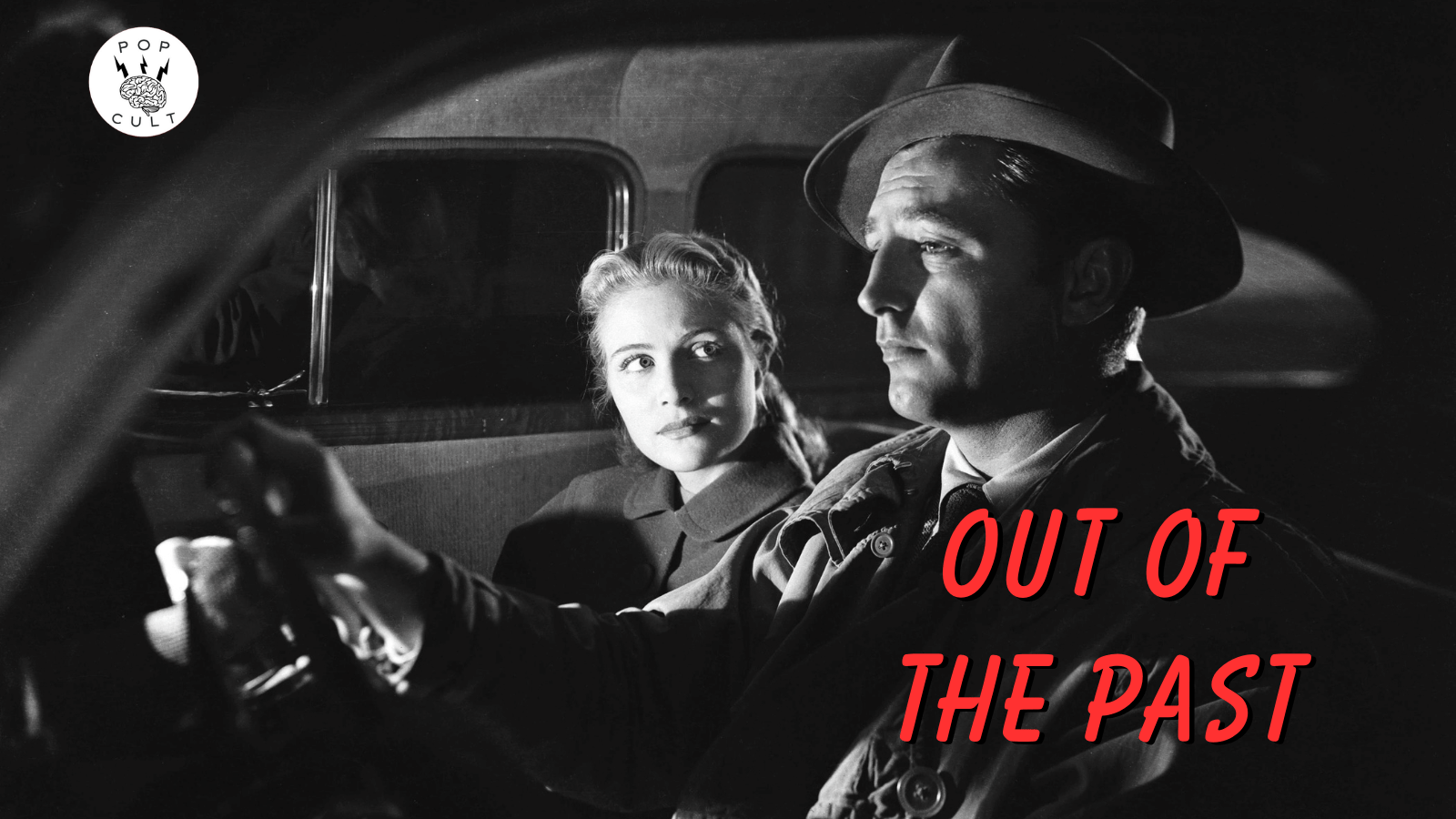
RKO Pictures was once one of the big Hollywood studios, and now it’s gone. Radio businessman David Sarnoff and his company RCA merged with a theater chain and film booking company to form this all-in-one studio. They were always considered makers of low-budget fare, but that didn’t stop RKO from making its mark on cinema. Fred Astaire & Ginger Rogers’ song and dance career bloomed at the studio, and Katharine Hepburn saw her first screen success at RKO. The studio was the home of Val Lewton’s innovative horror experiments like Cat People. RKO’s most well-known productions are still King Kong and Citizen Kane, pictures that have created ripples through world cinema today. They produced It’s A Wonderful Life and even much of Walt Disney’s early work. After a series of takeovers and buyouts, the company’s body of work lies mainly under the control of Warner Discovery. Out of the Past is a standout of their many influential pictures due to its perfect encapsulation of so much of the film noir tropes. 

Continue reading “Movie Review – Out of the Past”

Movie Review – The Postman Always Rings Twice

The Postman Always Rings Twice (1946)
Written by Harry Ruskin and Niven Busch
Directed by Tay Garnett

The Postman Always Rings Twice is one of the great archetypal noir stories. It shares some elements with the equally iconic Double Indemnity. However, this film’s setting and the intentionally tortuous way it lets its characters double back on their decisions turns it into a knife that slowly drives its way between our ribs. Both were based on the novels of James M. Cain, who also wrote Mildred Pierce. He came from journalism and penned many editorials, which he would later explain were written as a character rather than himself. That first-person confessional style became a crucial part of his novels, the noir protagonist who has come to the end of his rope and reflects on the events that got him to this tragic point. The Postman Always Rings Twice serves as Cain’s grandest statement in the noir genre, pulling together all his strengths to deliver a harrowing story.

Continue reading “Movie Review – The Postman Always Rings Twice”

Movie Review – The Killers

The Killers (1946)
Written by Anthony Veiller, John Huston, and Richard Brooks
Directed by Robert Sidomak

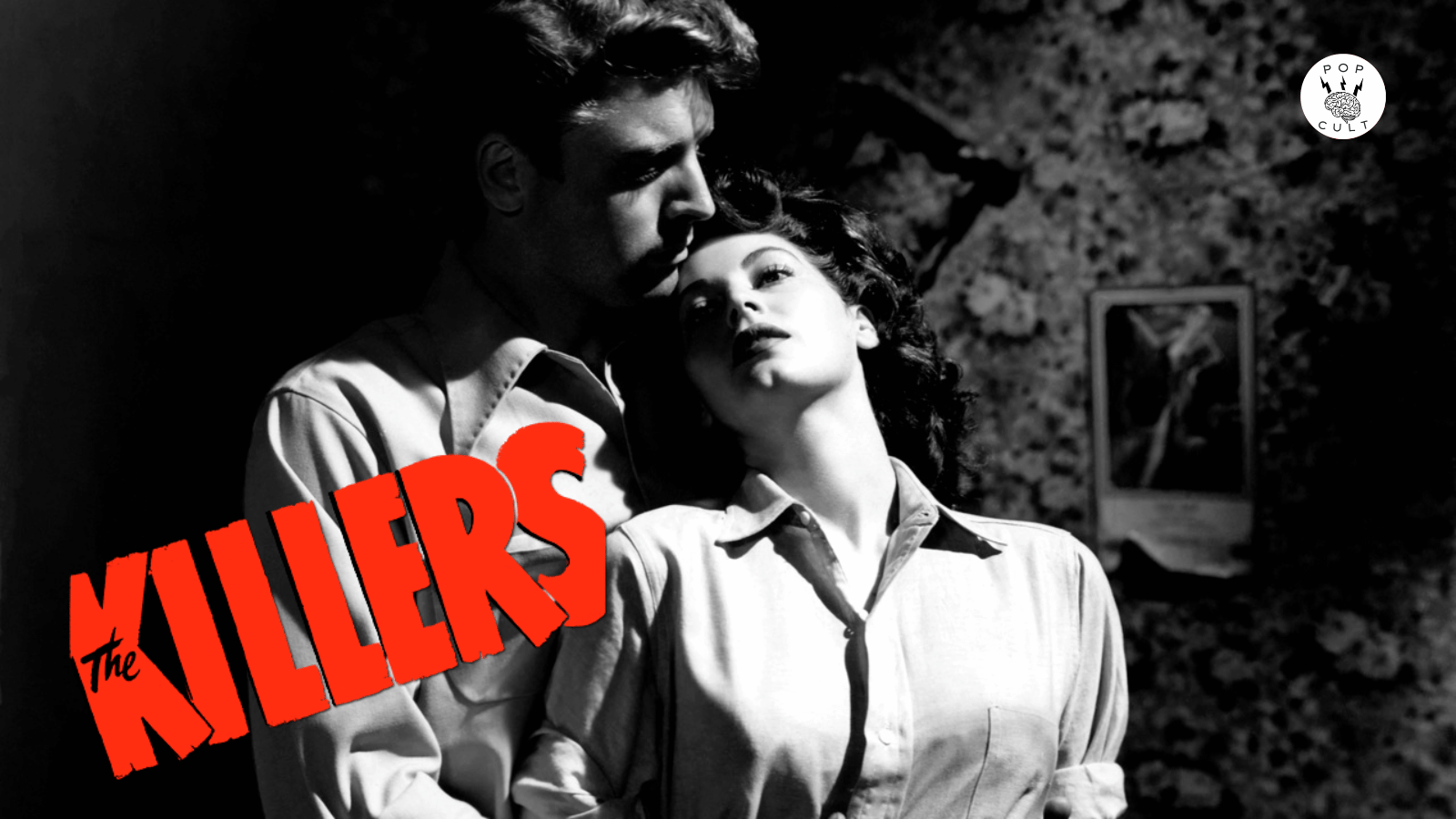
Ernest Hemingway is not a name we often associate with noir & crime literature. The short story this film is based on isn’t necessarily a piece of noir fiction, either. That piece makes up only the opening sequence of this film, which expands significantly on the central character through extensive flashbacks. Up to this point, Hemingway had been vocal about how much he disliked Hollywood’s adaptations of his work. However, The Killers stood out as one that garnered his praise. Many people liked it, leading to four Oscar nominations, including Best Director and Best Film Editing. The film’s director was a German man who fled Hitler’s Nazi regime after propaganda minister Joseph Goebbels leveled an attack on one of the filmmaker’s pictures. The Killers is a film that is a tragic examination of masculinity, all coming from men who suffered extensively under the social expectations of what sort of men they could be.

Continue reading “Movie Review – The Killers”

Movie Review – The Big Sleep

The Big Sleep (1946)
Written by William Faulkner, Leigh Brackett, and Jules Furthman
Directed by Howard Hawks

Much about The Big Sleep makes it an American film of immense historical importance. It was one of many fantastic films directed by the great Howard Hawks. It has that snappy, punchy energy all his films embody while still staying to the ideas of the noir. It was co-written by American writing legend William Faulkner. Additionally, the criminally underrated writer Leigh Brackett co-wrote it with Faulkner. She would work on an early draft of The Empire Strikes Back and penned my favorite Robert Altman film, The Long Goodbye. In front of the camera, we have Humphrey Bogart & Lauren Bacall. Despite being made in 1944, the film was delayed with plans to release once World War II was officially concluded, and in the interim, these two acting legends got married. With all of these potent elements, how’s the movie?

Continue reading “Movie Review – The Big Sleep”