
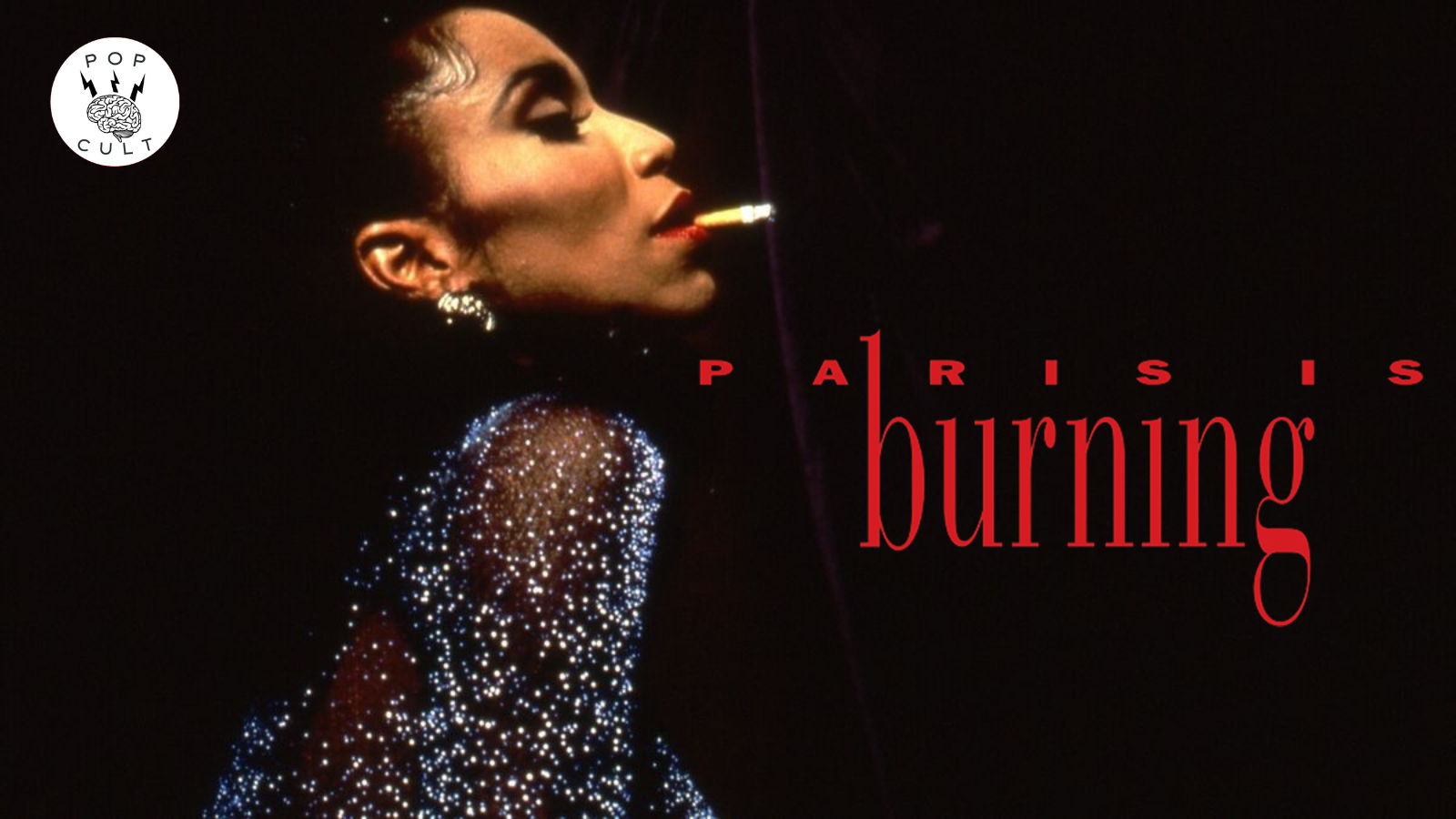
Paris Is Burning (1990)
Directed by Jennie Livingston
Exclusion is a standard tool used by the institutions that make up the United States. The ones who get excluded are typically BIPOC, LGBTQ, economically destitute, and/or disabled in some fashion. By pushing these people to the fringes of society, often by reactionaries who ultimately gain nothing through the act of exclusion, they are forced to create subcultures. These subcultures respond to being told they are not beautiful or have value. The marginalized simply redefine the terms of what beauty & value can be.
To the consternation of the excluders, the marginalized find new families and joy in these environments. Non-marginalized people are always drawn to such displays of love & identity, yet so many of them suddenly turn heel and want to destroy the happiness of others. These marginalized people were supposed to live in constant jealousy of what the conforming groups have, yet they don’t. This is the eternal reactionary war, destined to push people to the edges, only to claw at the splendor the marginalized create out of the scraps they are left.
Paris is Burning is a documentary that chronicles the ball culture of New York City in the late 1980s. It was a combination of cultural elements from Black, Latino, gay, and transgender communities to recognize their beauty & culture as having equal value to the mainstream. It’s a film documenting the end of New York’s golden era as a mecca for artists. Unfortunately, in the decade that followed, NYC would continually be swallowed up by mass media corporations and real estate firms, forcing out the people who gave the city its distinct life.
While drag still exists in the city, it’s not the same thing as what was happening with the ball culture. These beauty pageants comprised an ever-growing list of categories that became more and more specific. A contestant in a category walks before the audience and is judged on three primary areas – their dance talent, their fashion, and their ‘realness’ (i.e., ability to pass as the member of the group or gender they are dressed as). Out of this subculture emerged a complex slang used to describe groups of people in society. The category ‘banjee realness’ concerns gay men portraying traditional masculine stereotypes, particularly military members or police officers. There are additional categories for men able to “pass” as women and women trying to “pass” as men.
The documentary shares copious amounts of footage from these contests while using interviews with contestants as the exposition to help the unfamiliar audience understand. Over six years, director Jennie Livingston got to know and interview hundreds of performers and became close friends with many of them. The film introduces and defines the concept of ‘houses,’ surrogate families for ball walkers rejected by their birth families. These young people are rejected for various reasons, but always at the center is a challenge to gender & sexuality norms. Houses have names that reflect the personalities of those who founded them, like House Xtravaganza or House Ninja.
Despite having houses as a form of shelter & protection, these people are still targets of constant danger, especially at a time when being out in any form was still met with physical violence more often than not. AIDS was tearing through the male community in New York then, and these performers weren’t spared. Furthermore, because they are mostly non-white, racism is constantly looming over everything they do. The documentary is about people living as their true selves, suffering economic punishment, finding it difficult to get a job in any legal field, and resorting to sex work to pay the bills.
The film spends time with a young Latino performer named Venus, who aspires to develop as an actress while struggling to maintain herself while working as a prostitute. During the six years of filming, Venus is found strangled to death, and her house mother speculates it was likely a disgruntled client who knew that because Venus was a transwoman, the authorities wouldn’t put much energy into finding her killer. And they were right. People like Venus continue to die either through suicide or murder every year in the United States, all because a large chunk of the culture is insecure about their own sexuality & gender and likes to take it out on people who are not.
What happened in the emergence of ball culture was a display of Signifyin’. This concept has been formally expanded on by intellectuals like Henry Louis Gates, Jr., who explained that it is a form of verbal indirection developed in Black culture as a way to say things without saying them. The best example of this might be insulting someone as a form of affection. The surface level obscures the subtext, the true meaning. Someone unfamiliar might think a fight is happening when in actuality, there is bonding happening. Playing the Dozens is another form of this with “Yo Momma” jokes, not intended to disparage anyone’s mother but to serve as a game of wordplay where we try to make each other laugh.
The ball participants understand that the audience can unleash brutal commentary on them, but it’s not because they hate them. It’s like a roast, where the jabs come from a place of love. However, if I were to go into a ball and try to join in on this, I would rightfully be admonished. There’s a level of trust & familiarity between these people, and a cis white hetero man like me hasn’t earned their way into joining in. While some reactionaries see this as a form of discrimination, it’s a protective layer. The BIPOC people at these events shouldn’t trust white people as white people are either responsible for their oppression (if they are wealthy) or under the delusion that BIPOC suppression benefits them even if it really isn’t (your typical reactionary chud).
After watching Paris Is Burning, the big takeaway is that the doc is a testament to the power of survival & adaptability. I don’t think any groups in America are as well equipped to survive against the odds as the people featured here. I grew up in a part of the country where white Christians, the dominant demographic, liked to fancy themselves the victims of persecution. It is laughable as they couldn’t have been more coddled by society. However, it was always queer people and BIPOC people that were the poorest and that had to live the most bravely, navigating treacherous waters that could indeed get them killed.
My feeling when the film ended was that I wanted to spend more time with these people; I wanted to learn more about this subculture. It’s relatively clear to me the doc could only really scratch the surface and that there are so many complex ideas surrounding culture & politics to be explored here. It’s also interesting to see how much the mainstream has stolen from subcultures like these, adopting the language but refusing to administer the credit. I loved how the outfits for many were something they put together themselves, making them more beautiful than some designer label dress bought at a store. This culture is centered around the love of oneself and the larger community, something all of us could learn from.

 PopCult Reviews
One thought on “Movie Review – Paris Is Burning”