

Runaway: Stories by Alice Munro

May & June have been my two favorite reading months this year. It’s one of those rare times when I didn’t read anything I disliked. As you’ll see in one review, my expectations for a new book didn’t pay off, but I still didn’t think the book wasn’t worth reading. May started with my first read ever of the fantastic Canadian author Alice Munro. Very much in the vein of your classic literary short stories, Munro offers up stories that spotlight crucial moments in everyday people’s lives, women exclusively. Spanning the decades, these stories all deal with choices these women made at some point, often affected by circumstances that shaped them going forward.
After reading Munro’s work for the first time, I immediately understood why she is so beloved. Her stories are rich character studies, less concerned with plot beats than placing people in a situation and spending time on how they feel and react to what is happening. Through these reactions, the character is illuminated for the reader, and because these stories are all very grounded, we can then reflect on our own lives and similar moments. The title story is about a woman who plans to flee her marriage after suspicions that her husband killed her pet goat. Of course, their marriage falling apart is about far more than this animal, but it serves as the catalyst. “Trespasses” has all the potential for your standard Dateline NBC exploitation, yet in the hands of Munro is handled with such profound love and humanity. “Passion” relates the events of a woman who strikes up an affair with her fiance’s brother after becoming enmeshed as part of the family.
There’s a beautiful trilogy of stories (Chance, Soon, Silence) about a woman named Penelope where she begins a romance with a man she meets on a train, visits her parents after having the man’s baby, and in her later years, deals with being estranged from her daughter who left years ago. Each story can be read on its own and deliver a complete experience. Yet when seen as a whole, they reflect the painful succession that life can be, from a youth full of dreams to living out your late middle age and elderly years ruminating on mistakes you made that you wish you could change.
Chain Gang All-Stars by Nana Kwame Adjei-Brenyah
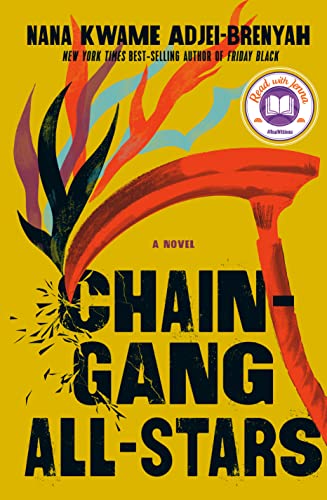
I was so unbelievably hyped about Adjei-Brenyah’s follow-up to his short story collection Friday Black. That book is one of my favorite reads of the last decade, so his first novel was something I looked forward to a lot. However, I didn’t enjoy it as much as I anticipated, partially because of how I hyped it and because the book’s structure doesn’t play to its strengths. The book undoubtedly comes from a place of noble intent, examining the American carceral system & the exploitation of marginalized people through a dystopian science fiction lens.
In the near future, CAPE (Criminal Action Penal Entertainment) will dominate the media. Prisoners given the death penalty are offered the option of competing in this gladiatorial system. They will be allowed their freedom if they kill their way through other prisoners. The catch is that only one person ever made it out, and there are questions about whether that was rigged. CAPE is also planning to suddenly change its rules for an upcoming tournament as two of its most popular fighters are chains on the same link (the in-universe term for teams). Loretta Thurwar has become a stoic champion, and her friend & lover, Hurricane Staxx, is also climbing the ranks. Thurwar’s brief words at the end of her matches have started a snowball effect with a growing activist movement speaking out about CAPE. But there are other people who have invested too much of their lives in this system to let it go.
My biggest problem with Chain Gang All-Stars was its choice of structure. Chapters often alternate between the prisoners’ perspectives on Thurwar’s link with other people in this world. I don’t think you could argue that the author was lazy about worldbuilding; I think things are a little overbuilt. We get many asides to characters who don’t impact the narrative. If this had been a collection of short stories, even interlinked ones, it wouldn’t have been terrible, but because it is meant to be one cohesive narrative, it became a slog for me to read at some points. Paired with that are the copious footnotes, sharing in-universe lore and real-world statistics on the penal system. I could feel the genuine concern of Adjei-Brenyah on this issue, but that also caused the novel to feel muddled from my point of view. I wondered when characters mentioned in some of the asides would return to the narrative, but many didn’t. I think the core story is a great one, and this possibly would have worked better for me as a novella, cutting away all the extraneous material. Yet, a publisher would say that novellas don’t sell, so it had to be expanded into a novel. Not the worst book I’ve ever read and not even one that would drive me away from whatever Adjei-Brenyah writes next, but not one that will be on my favorites list for the year.
Parable of the Talents by Octavia E. Butler
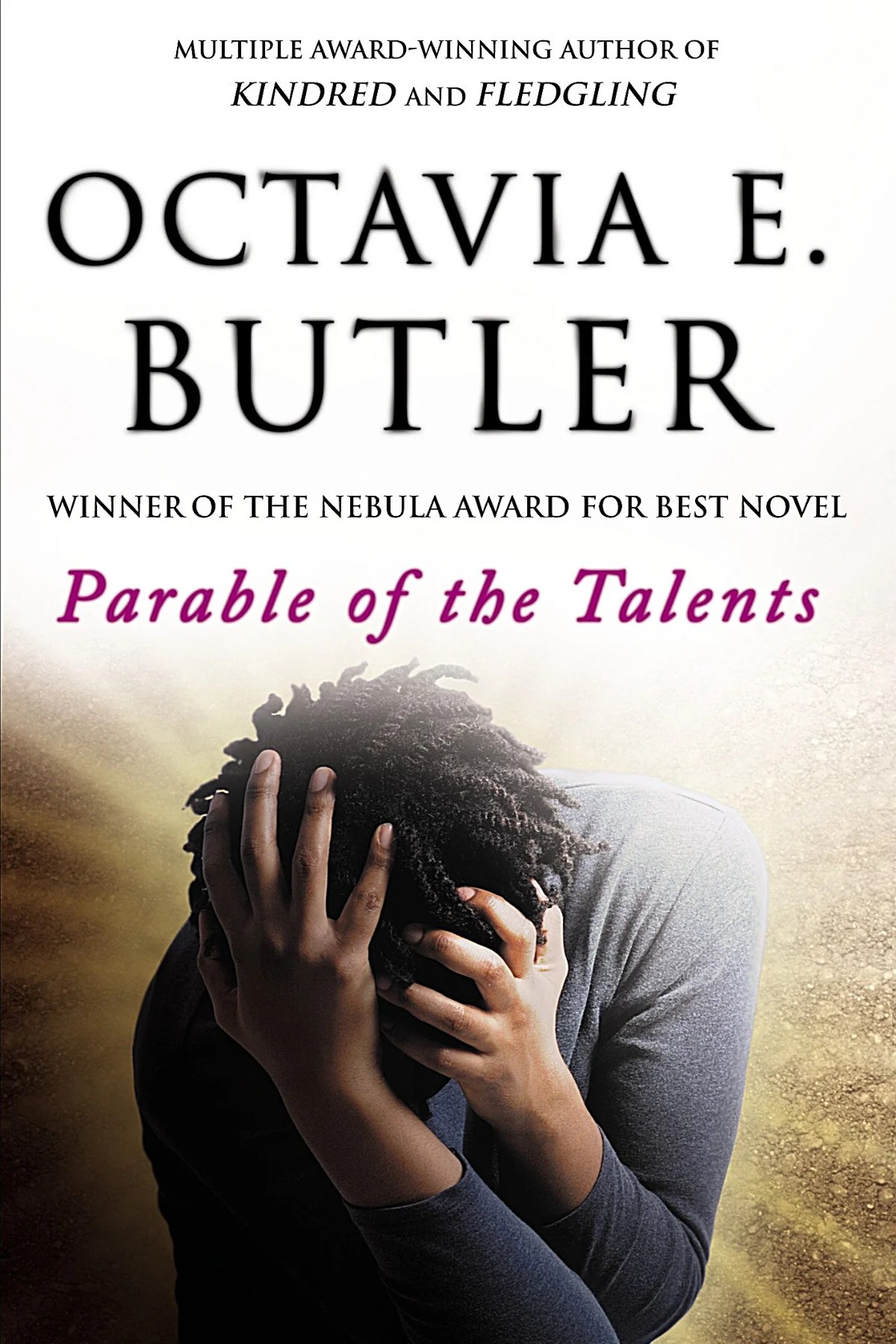
The feeling I have when I finish an Octavia Butler work is always complicated. I love everything I have read from her, which makes me so angry that she died so young, only 58 when she passed. It is unfair to both her and us that she left this world so early because what she gave us during her short life showed Butler was a true visionary. In Parable of the Sower, she imagines a not-too-distant future where America descends into dystopian chaos. Society is more stratified than ever, and a young girl named Lauren develops the beginnings of a new religion called Earthseed that centers on the inevitably of humanity to transcend this planet and live on other worlds among other beings.
Early on in Parable of the Talents, we learn this is written from the perspective of Larkin, Lauren’s daughter, and that our protagonist from the first book is now dead. However, much of the novel comprises entries from Lauren’s journal, so we get to spend some of the most crucial years of her life with her. During this time, Lauren develops her community in Northern California which she has named Acorn. Meanwhile, America has elected a religious demagogue who assures the petite bourgeoisie that they must purge the country of “sinners,” basically anyone they hate, and then the economic woes will be solved. This “Christian America” movement makes what was already a bad situation even more nightmarish, and it is only a matter of time before they discover Acorn.
Parable of the Talents is one of the best pieces of science fiction literature I have ever read. It feels so of our moment despite being written decades ago. That makes me realize that this crisis was already alive and building when Butler was writing. She was actually “woke,” a term which, like many in America, has lost the roots of its actual meaning. Butler could see the true nature of her present moment and, through the lens of history, extrapolate where things would go. It is shocking to see how accurate she has been thus far. More people should read these two books because they remind us we are not alone. The fears & anxieties you have are shared by many, and that should imbue us with solidarity. Butler doesn’t write Lauren as a flawless figure, either. Lauren has to decide if her priority will be Earthseed or her family at one point later in the novel, and she chooses the collective good. That is a difficult choice, but shortly, we must understand that the interest that serves the whole is necessary if our species can continue.
All the Pretty Horses by Cormac McCarthy
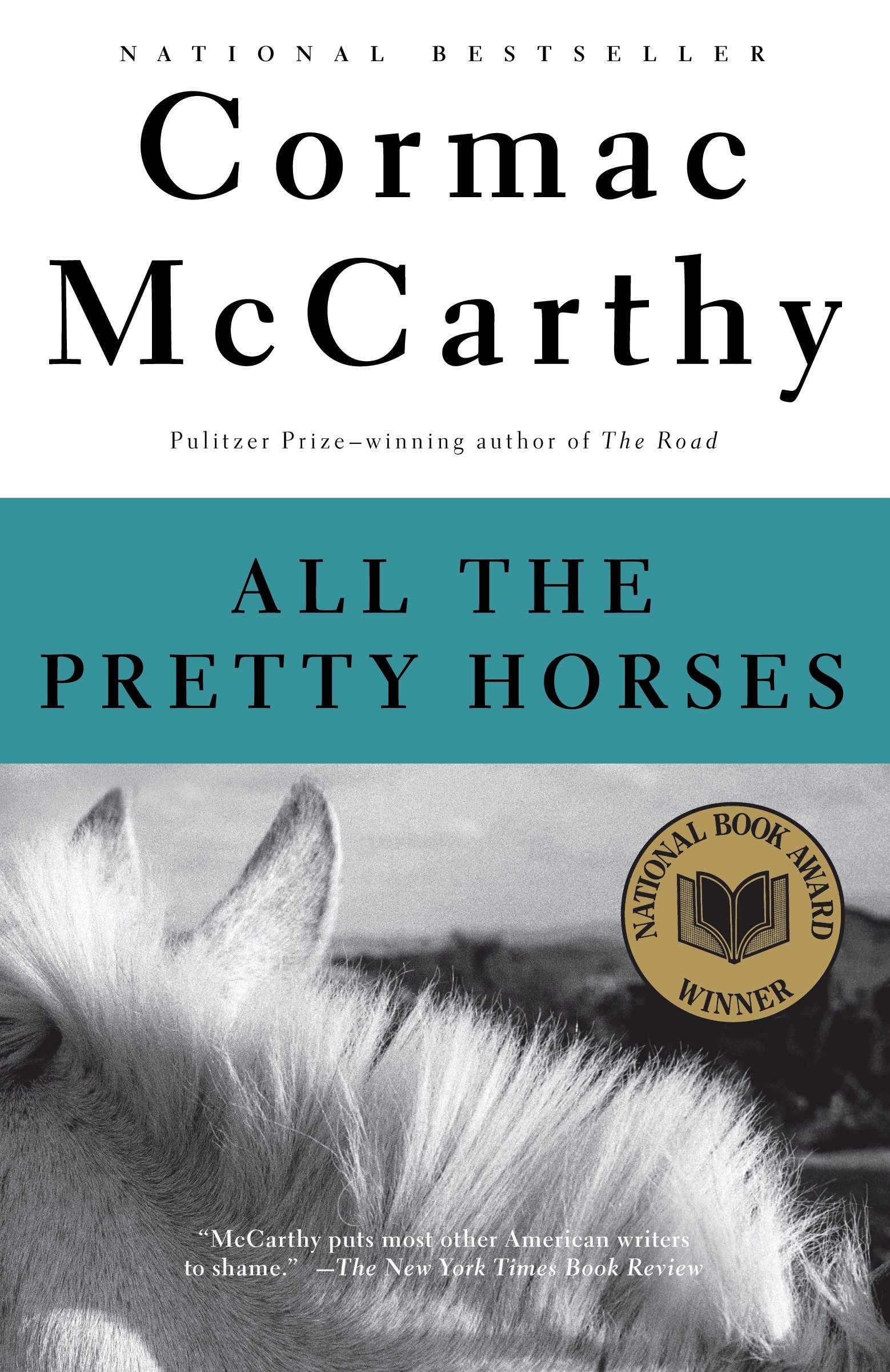
A great author left this world in June. We were fortunate to live in an age where Cormac McCarthy wrote so we could read his work as it arrived in our hands. Future generations will discover him and come to understand what important voice he was concerning reckoning with the darkness of America. This wasn’t my first McCarthy read. I’d previously read No Country For Old Men, The Road, and one of my favorite novels, Blood Meridian. I think Blood Meridian is one of the most remarkable pieces of American literature ever composed, such a poetic & harrowing odyssey across the Old West that shatters the myths and brings the reader to the edge of Hell and then over into it. With McCarthy’s passing, I decided to read another; he’s the sort of author I want to drip-feed to myself so that I always have something new. If I die one day with McCarthy books unread, I would not be as disappointed if I read the whole canon and there was nothing.
All the Pretty Horses, the book that finally opened the public’s eye up to this great writer at nearly 50, is said to be one of his more “reader-friendly” books. I would agree. Set in 1949, the novel relates the story of John Grady, a 16-year-old boy whose grandfather died. This was the only parent John knew, along with the Mexican family working on the Grady ranch. The property must be sold, and John heads to Mexico with his best friend, Lacey. They are young, and the world is laid out before them so invitingly. Along the way, they encounter a mysterious figure named Jimmy Blevins, who will bring them all sorts of trouble even after they part ways. The two boys eventually find good work at a ranch in Coahuila, but trouble compounds when John becomes infatuated with Alejandra, the owner’s daughter. Their brief time traveling with Blevins comes back to brutally bite them on the ass.
No one writes of the American West and Mexico more beautifully than McCarthy, in my opinion. Long stretches of this book describe the land and wildlife as the two boys ride across it, and it was a delight to read. The author manages to evoke the heights of beauty but balances it with brutalism on the part of man against man. He doesn’t hold back on how awful we can be to each other, and while nature is a harsh, cold presence, our behavior is not natural. The love between John and Alejandra is beautiful, but it is not strong enough in the face of what comes looking for the boys. There’s a moment that would break anyone when a person is taken away by the Mexican police, off around a corner where they can’t be seen, and we stay with the boys. The sound of the gunshot and the realization of what happened washes over them. Most writers often mishandled these primal emotions, but McCarthy could hold that tension, never allowing his work to become melodramatic or maudlin. He simply tells us what happens in a way that cultivates strong feelings within us. If you have never read any of McCarthy’s work, you should pick it up. These are not cowboy myths or celebrations of toxic masculinity. These are the works of a sensitive person who understood that “real men” weep over this world’s beauty and horror.
Inventing Reality: The Politics of News Media by Michael Parenti

Talking about how awful mainstream media in America is has been complicated so horribly by the Trumpian “fake news” angle. If you try to critique the ways “respected” institutions like the New York Times or CNN report on domestic and foreign events, you often get lumped into the same category of people that are anti-vaxxers or believe anyone in power really gives a shit about Hunter Biden. Growing up, I was bombarded with propaganda about how awful the media was in those Communist countries. They would willingly lie to their citizens to promote the dominant ideology. As if all of this couldn’t be said about American news media.
While Noam Chomsky’s Manufacturing Consent is often pointed to as THE book on this subject (and I do like that book), this is a far better work. Michael Parenti impresses me whenever I read his articles & books or watch one of his lectures. Blackshirts and Reds was my first Parenti read, and I knew I would have to put him into my rotation after that. In Inventing Reality, Parenti focuses on the fact that news is “presented” in America, not simply relayed. Many decisions are made about how stories will be shown to the public. Parenti lays out the stakeholders involved and how an often unspoken but silently understood loyalty to the upper classes is enforced from top to bottom. The news is owned by the wealthiest people, the editors want to keep their jobs and benefit from the distortion of reality, and the reporters have learned how to self-edit to not disturb the status quo.
Parenti can concisely lay out his arguments with a plethora of evidence and, most importantly, wit. This is not only informative but an engrossing, enjoyable read. I tore through it in a matter of days because the author is an excellent writer. He even lays out counterarguments he has faced or anticipates from the reader and respectfully shuts them all down. I’m not a fan of in-person debate as I see it as devolving into gish galloping at every turn; the best arguments are laid out in long pieces of writing because the ideas have adequate room to breathe and develop. Parenti is a perfect example of this very thing.
There are so many passages I was highlighting and copying to a notepad document as I read. Here’s one I found to get to the point of things so well:
NPR’s Susan Stanberg, interviewing two Arab intellectuals, asked them to comment on an association in her mind: “Arabs and death.” They patiently explained that, like everyone else, Arabs preferred life over death for themselves and their loved ones. Then she gave them another association: “Arabs and violence.” Stenberg was the citizen of a country in which 25,000 homicides occurred each year, along with millions of muggings, rapes, and assaults, a country that spent $300 billion yearly on the military and supported violent repression through much of the Third World, and which at that very moment was waging a murderous war against a vastly smaller and weaker Arab nation—and she was asking why Arabs were so violent.
Hinterland: America’s New Landscape of Class and Conflict by Phil A. Neel
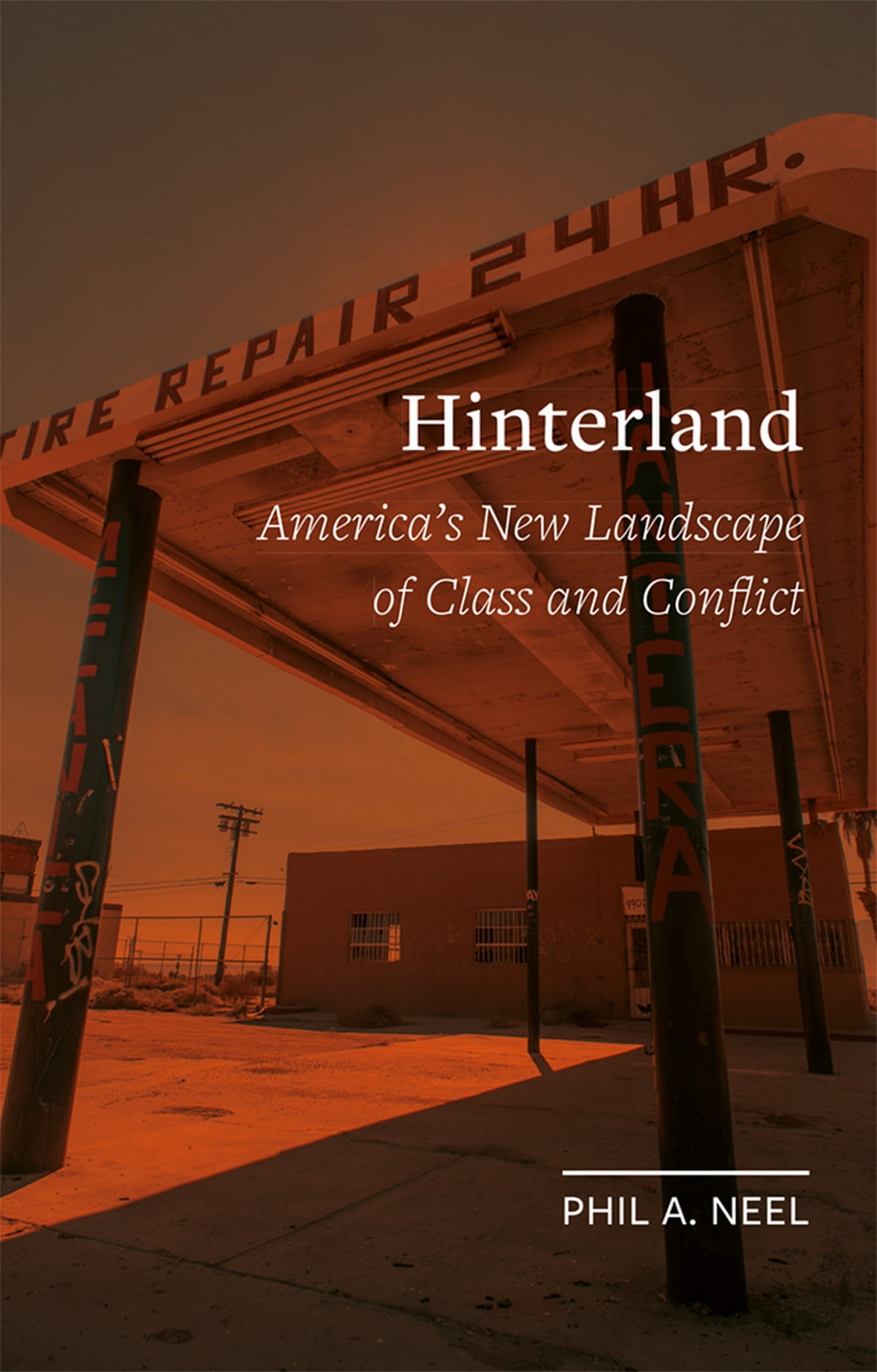
There is a gross distortion when people talk about who exactly it is that supports the growing tide of fascism in the United States. More often than not, the economically comfortable liberals point to “uneducated” people as the problem, and they mean the poor working class. This, in fact, is not the source of the reactionary rise, though a lack of education is a crucial piece because the roots of fascism have always been within the petite bourgeoisie. It is the working class that is just comfortable enough but still desperately clinging to these crumbs that fuel genocides and oppression. They are the outcome of the destruction of worker solidarity. Phil Neel knows there are more than enough books on the middle class, and instead, he gives us a front-seat view of the forgotten class: those people who live in the desolate regions of the United States where mono-industries dominate, whether it be mining, oil drilling, chemical processing, or any other activity that results in more wounds to the planet and its inhabitants.
Neel grew up in this type of working-class home, took part in Occupy Seattle, worked abroad in the industry in China, returned to the States where he was charged & arrested with rioting, served in a work-release program, and then “re-entered society” with less than he started with. He can describe those parts of America I’ve only ever flown over or driven past without a second thought. In illuminating these corners that traditional media ignores, we understand that all our comforts are built on the backs of breaking people, working them to the bone until they lose touch with their own humanity. We understand why speed and opioids are commonplace among these working poor. Neel connects what he sees outside of Seattle on the industrial fringe and witnesses the communal anger & police brutality in Ferguson, Missouri. He talks of medical centers in the outlands where cold storage shelters are brought in and filled with fentanyl-bloated corpses of people who worked themselves to death so another person could become obscenely wealthy.
I loved the meandering in this book. Neel refuses to simply relate data points and writes with a poeticism that reminded me of the beautiful horror in Cormac McCarthy’s books. There is a genuine love on the author’s part for every subject he tells about who struggles to survive in these conditions. Neel can explain how the threat of Oath Keepers and Three Percenters takes an understanding of the economic points addressed by Marxism and then warp it into a fascist perversion. They make sure poor & disabled *white* people in small rural towns are having their needs met with food banks and the construction of wheelchair ramps. But the goal is not to empower these people; instead, it is to construct a new hierarchy, a reversion to tribalism where they are the great chieftains upon whom these communities rely. They do not wish to conquer the world as Hitler and the Nazis did; they would instead carve out territories where they can rule. Neel doesn’t let his fellow Leftists off the hook, though, arguing that the myopic thinking of most anti-fascism in America is as reactionary as what they fight against. Tensions are high, and people are being dangerously short-sighted. Meanwhile, the liberal faction seeks only to protect institutions at the cost of all of us. This is still a hopeful read because Neel understands that growing empathy towards each other and a relentless hatred of institutions is the way we save humanity.
This passage beautifully sums up the Communist viewpoint of capitalism and the condition of the West in our current moment:
We are defined increasingly by work and debts and purchases, and each seems every year to resemble more the others until maybe sometime soon, all three will simply fuse into a single form of near-complete evisceration. Our families grow smaller, our groups of friends diminish. Our subcultures are evacuated of all sacrifice and intimacy until they resemble little more than many minor bureaucracies propping up the great palace of consumption. When some fragment of the communal does find some space to congeal in the world’s wastelands and factory floors—maybe in the midst of a riot, in the heat of a war, in the cold lonely life led in high steppes and deep mountain valleys not yet fully subsumed by crisis and capital—this fragment is ultimately found, pieced apart, drained of its intensity until it also can be thrown into that same dead, world-rending dance. The ritual has neither name nor mother tongue, but we communists call it the material community of capital.

 PopCult Reviews
One thought on “Book Update – May/June 2023”