
The Inconsolables: Stories by Michael Wehunt
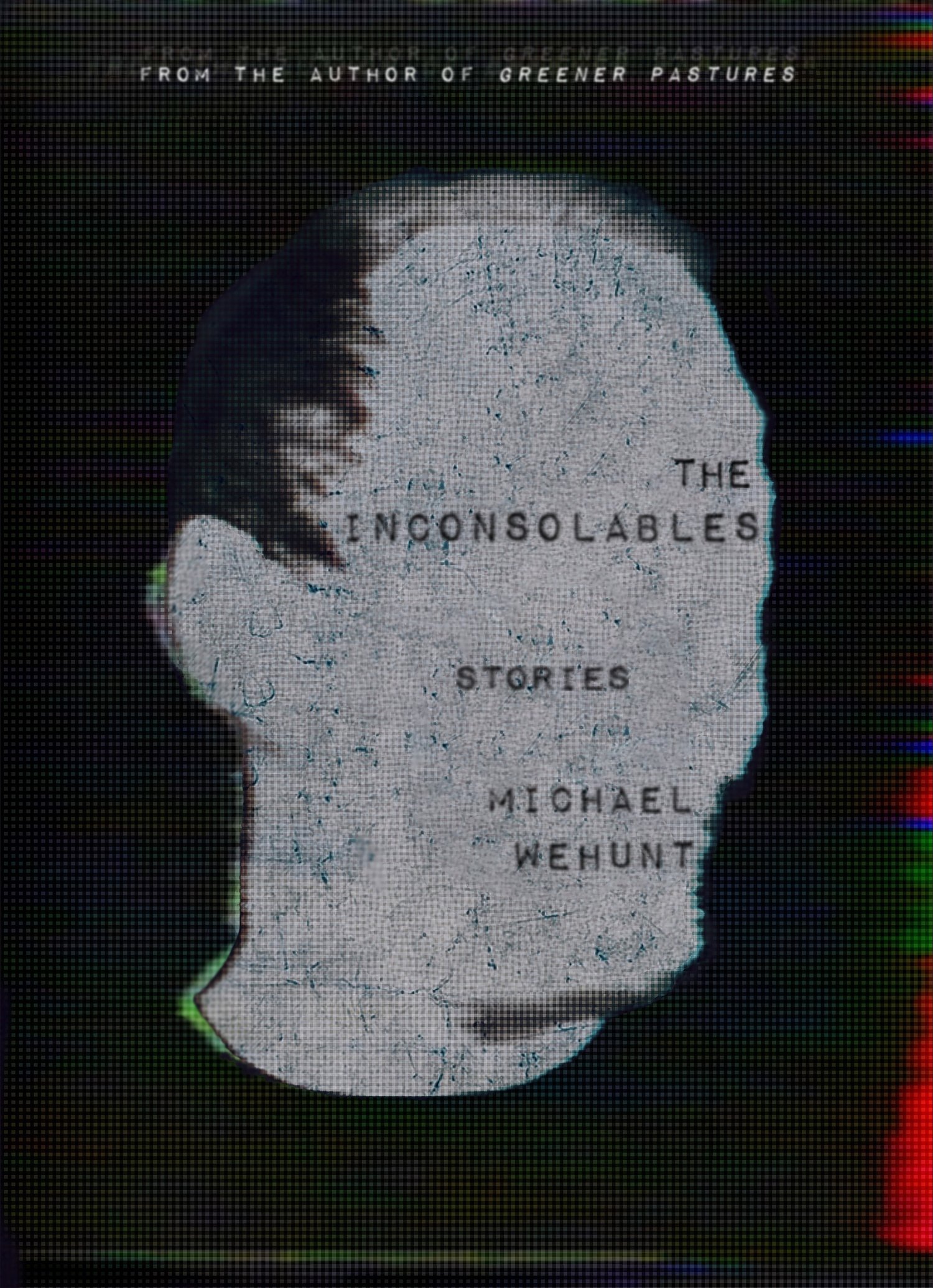
I was an instant fan of Michael Wehunt after reading his debut collection, Green Pastures, back in 2016. I’ve been waiting for more, and this year, we finally got his follow-up collection. What I found interesting is that he’s changed a lot since that first book. The two still have common threads, but these felt like a real development of those initial ideas. I would argue Wehunt is taking on a significant influence from Robert Aickman, creating supernatural scenarios where the exact nature of the dreadful presence is never detailed. It might be strange things happening in the window in the apartment across the way, as in “Holoow,” or haunting childhood memories resurfacing, as in “Vampire Fiction.” Wehunt returns to some slightly familiar territory with “The Pine Arch Collection,” which continues his fantastic work translating found footage into horror lit. Wehunt works better with words to evoke powerful images than most horror films. My absolute favorite in this collection was “The Teeth of America,” framed as various excerpts from books and news articles detailing a bizarre event in the Appalachians involving hundreds of white supremacists congregating for a ritual. Once again, Wehunt’s imagery is so strong I don’t want any of this ever adapted to a visual medium because, in my opinion, it would diminish the potent horror of the source material.
The Beast You Are: Stories by Paul Tremblay

The flip side of how much I loved Wehunt’s new book was how much I disliked Paul Tremblay’s latest short story collection. I’ve been a fan of most of Tremblay’s work; some books connected with me better than others. However, this one is a total disaster, in my opinion. I found a lot of the work to read more like partially developed fragments or not anything close to horror or weird fiction at all. There were undoubtedly creepy things that happened, but how the narratives were told created a distance for me, making it hard to become invested in what was happening. It got to the point where I found it a slog to get through. I am one of those people who won’t toss a book away once I’ve started it, forcing myself to make the march to the end. I dislike this collection so profoundly that it has made me second-guess picking up any of Tremblay’s future work. I support writers who go in new directions because, from a creative perspective, doing the same thing repeatedly would be exhausting. However, I am looking for a specific tone when I sit down with what is billed as a horror book, especially with short stories, and this one fell so far from the mark.
Daphne by Josh Malerman

I have only read one other Malerman book, Bird Box, which I thought was a pretty okay horror novel. Set in a small town in Michigan (I think that was where it was), the book follows a girl’s high school basketball team who have become the latest to awaken an evil that has plagued their community for decades. The night before the big game, one of the girls shares a story she heard about Daphne. She was a student at their school in the 1970s, was nearly 7 feet tall, wore denim everything, drove a muscle car, and was a big fan of KISS. She was accidentally killed by fellow students trying to pull a prank, and now the legend is that if you think about Daphne, she will come for you. Shortly after sharing the story, team members start dying in grisly ways, their skulls crushed by a massive bare hand. Malerman does a pretty good job constructing the ever-shifting legend of Daphne, and there are moments here that evoke some genuine horror. For my personal tastes, this type of horror story and writing style aren’t my favorite thing, but I enjoyed my time with the book. Daphne delivers a unique horror if you are looking for something that isn’t overly complicated.
Conflict is Not Abuse: Overstating Harm, Community Responsibility, and the Duty of Repair by Sarah Schulman

This is probably one of the more controversial books I’ve read, if the Goodreads reviews are any indication. Some people praise Schulman’s embrace of the complexity of human interaction, and others seem incredibly upset by her. Some of this pushback comes from her being a Jewish-American woman who went from blindly supporting the state of Israel to adopting a more logical stance of condemnation of the inhuman treatment of Palestinian people in the country. Schulman challenges many of the “protective” policies in recent years that don’t actually address systemic inequality but create comfy bubbles for people to live in, free of ever being presented with a contrary idea. She’s a big advocate of in-person conflict resolution, showcasing how modern modes of communication (text messages, email) allow the offended to quickly & efficiently shun the offender rather than work towards a solution.
Now, this doesn’t mean she puts the burden of things on victims. Schulman repeatedly defines the differences between conflict and abuse. Abuse is predicated on an unequal distribution of power and its habitual & intentional misuse. Most of us encounter conflict when there are disagreements, which can be worked through with both parties emerging better off than before. Schulman’s best chapters are those talking about toxic family dynamics. She identifies the two types of families present in American culture. The “good family” takes an us versus the world approach toward everyone outside the family being seen as a potential foe to overcome. The “bad family” is where they turn on each other, not maintaining a single-unit mind. The “good family” is also the one that protects abusers in their midst because “they are family.” Schulman’s what a true “good family” should be is one where we hold each other accountable for how we treat those outside the family unit, something that is rare to find in the United States. This book has so much to offer and is one of the best I’ve read in 2023. I highly recommend this if you are interested in how we grow towards the type of solidarity needed to create a better world.
The Reactionary Mind: Conservatism from Edmund Burke to Sarah Palin by Corey Robin

This is not a single book but a collection of essays from Corey Robin, a political scientist and journalist, on modern conservatism. The question at the start is, “What do conservatives actually believe?” not what they say. The answer, in short, is that they adhere to a strict, regimented hierarchical worldview. People are meant to live under the bootheel of a superior institution. Conservative is not the correct term for these people because they are disinterested in conserving anything. Instead, they are reactionaries; they have invested their identities in the established hierarchy, and therefore, anything that challenges or changes that system is a threat. The hierarchy can move the goalposts, and these people will mindlessly follow along because it comes from their “masters.” They speak of “Liberty” but do everything they can to limit people’s freedom, especially if they are outside the dominant class. Robin comes to some fascinating conclusions, most notably how these reactionaries, for all their clamor about tradition, are often the ones most responsible for destroying long-held traditions. Look at how this ideology ravages indigenous cultures and their traditions.
Reactionaries live in jealousy of the revolutionary who engages in conflict with the world, who is right in the middle of the tumult of life. Therefore, reactionaries will always adopt the language of those they perceive as their enemies because it is a language that addresses the reality of the human condition. They will corrupt that language until it loses all meaning and confuses people about what those words actually mean. Look at how the Republicans go on and on about “the elite” while cozying up to the wealthiest, most evil entities in the world. You can also see how “socialism” and “communism” have lost all coherent meaning in the reactionary lexicon, becoming stand-ins for “things I don’t like.” Robin’s essays on Ayn Rand and Antonin Scalia are particularly illuminating and well-written. Rand, especially, is a figure I find has garnered a completely undeserved amount of admiration in the States. Her entire philosophy is flawed down to the roots, and she’s also a terrible writer. If you want to understand what the reactionary mind is after, this is a must-read.

 PopCult Reviews
One thought on “Book Update – July/August 2023”