
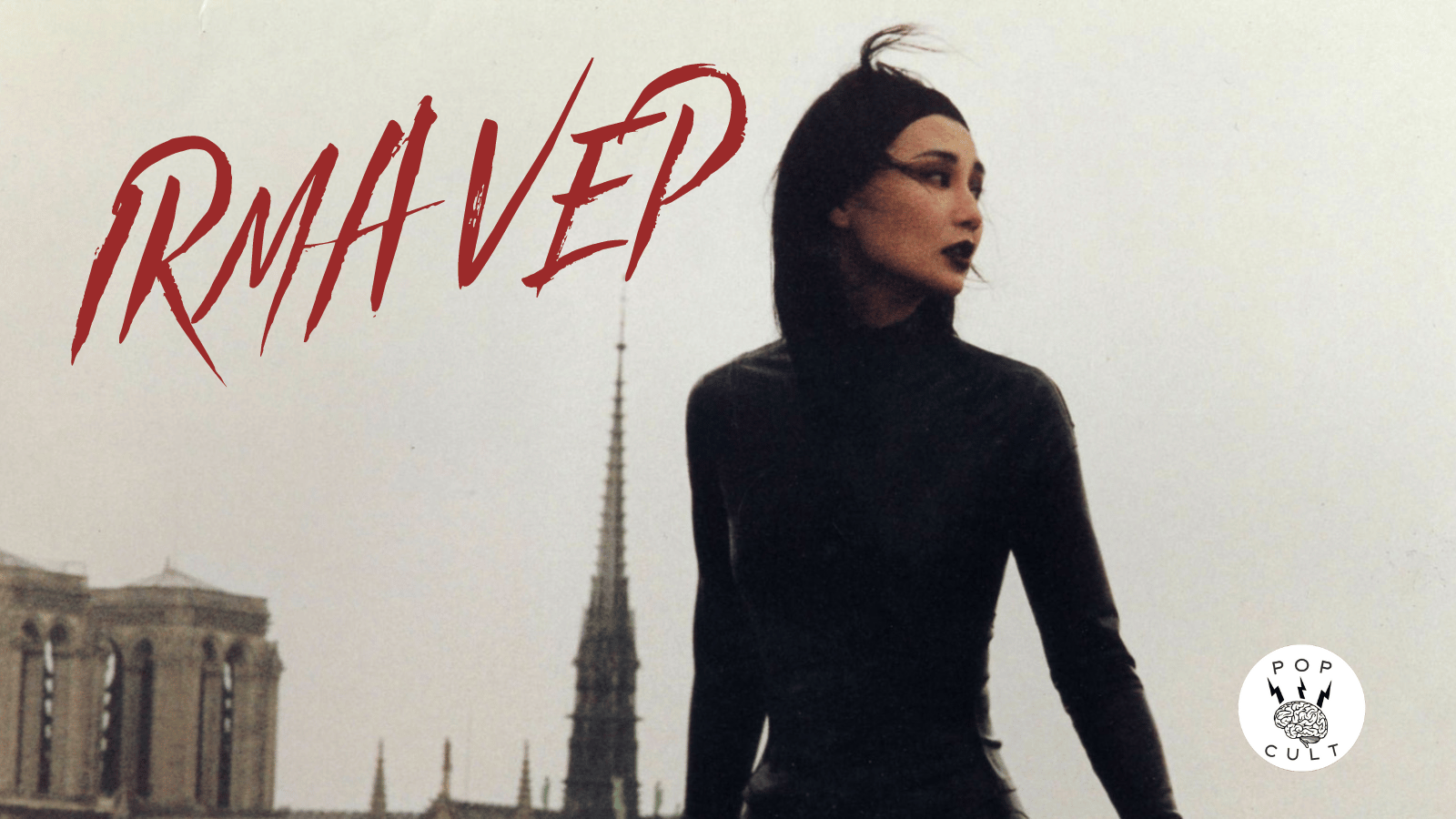
Irma Vep (1996)
Written and directed by Olivier Assayas
“Cinema” is a term used to describe the production of films as an art or industry. Now, those are two very different terms, art and industry. They are the two points of tension that films have endured since they became popularized. In reading Hollywood: An Oral History last year, I was fascinated with the early chapters in how the interviewees describe how American film enthusiasts were just slapping together things and figuring out what these “movies” were or could be.
It was much like YouTube or TikTok, where people making the thing either just hammered on the same formula over and over or, the more creative & experimental, started seeing what it would be like if you placed the camera in an unexpected place or you used editing to create tension, and so on. European filmmakers were going through a similar but different process. Where the American film industry ended up entirely in the hands of the monied interests, European cinema remained more closely tied to the art world. Yet money was still there, and questions about integrity would eventually come to the forefront.
Maggie Cheung (as herself) arrives at the offices for the film production of Irma Vep. She has been hand-selected by the movie’s mentally unstable director, Rene (Jean-Pierre Léaud), for the title role. He explains that it’s a remake of a French silent classic, the title being an anagram for “vampire.” Irma is a burglar and spy who wears a tight black catsuit & runs the criminal gang called The Vampires. The film follows Maggie’s first few days in the production, where she strikes up a friendly back and-forth with costume designer Zoe.
After Rene suffers a breakdown while watching the dailies, declaring them “soulless” and storming out of the screening room, the cast & crew disperse. Maggie goes with Zoe to a group dinner with other crew members, where we learn that the costume designer has an intense crush on the actress. This is just the first of many strange encounters and moments Maggie experiences as the production of Irma Vep appears to be falling apart.
I’ve noticed that almost every movie playing in Dutch cinemas is American. There are one or two Dutch language films every quarter, but otherwise, the screens are dominated by products from the U.S. Movies have become yet another commodity for most people. It’s now movie nerds and cinephiles who burrow into the depth of the art form and discover the overlooked gems. The internet has flattened the surface of movies to only project the most broadly produced ones while creating niches hidden away from anyone who doesn’t want to discover them. Olivier Assayas was keenly aware of the shift that was happening in the mid-1990s. It’s a rare thing to be so prescient that a monumental change is coming, even if you can’t detail exactly in what form it will emerge.
Rene represents what was left of the artistically driven French New Wave in 1996. He’s both revered by people aware of his original work but ultimately seen as a joke who has aged into the point of irrelevance. It’s not his physical age, but a seeming inability to create anything now that felt as jolting as his initial work. His most radical choice is to cast an Asian woman in a role played by a Parisian actress. Maggie comes into the production amid the chaos, noticing how disconnected many of the various departments seem. Rene is not helming the ship really, he makes demands, but he’s not leading this crew of creatives in any meaningful way. He’s so drunk on being the auteur, yet he doesn’t appear to have a clear vision for this movie.
The influence of American movies is ever-present. During Maggie’s costume fitting, she and Zoe visit a sex/fetish shop to look at latex bodysuits. While this proves to spark the sexual tension between the characters, there’s a conversation about how Rene wants the costume to look like Michelle Pfeiffer from Batman Returns. Zoe asks if Maggie has seen that particular movie; Maggie thinks she has. Zoe is far more enthusiastic about it than the actress.
Maggie Cheung’s performance is the core of Irma Vep; it’s something very difficult to define as she goes through many transformations throughout the picture. She’s outside the culture she’s familiar with, though she’s no stranger to traveling to Europe. In reality, this was the first film Cheung had made outside of Hong Kong, where she’s established herself for a solid decade doing various pictures. Maggie being an outsider in a French production of a French movie adds to the sense of dissonance. The catsuit becomes a way into this strange place for her. The film’s most memorable sequence sees her putting it on and prowling about her hotel at night, seeing how much she can become her character.
Tight-fitting black latex was going to become an industry standard. Assayas clearly noted the change in costuming brought about by the Batman films with their explicit reference. Three years later, black latex would become even more iconic in The Matrix film and even the X-Men movies with their take on the team’s costumes. While materials and colors may have changed with the popularity of the Marvel movies, this sleekness has permeated the industry. This choice in costuming objectifies the wearer as well as misleads the viewer. Think of the sculpted abs in those original Batman costumes, the appearance of highly toned muscle where there was none.
Throughout the picture we get bits of conversation that illuminated what people in the French film industry were saying as they saw the dominance of the blockbuster grow even more prominent than they imagined. The chat around the table at Zoe’s dinner party are questions of why everyone wants to remake what already exists. Yet, they also talk about how grating they find navel-gazing personal pictures. Maggie gets grilled by a critic who extolls the virtues of John Woo (Maggie had not been in any of his movies) and wants her opinion on just how bad the French cinematic landscape was at the moment (she isn’t that aware of their films).
By the end of the film, Rene has faded, and the producers have brought a new director to Irma Vep. This director wants the Irma Vep remake to adhere more closely to tradition and grumbles about Maggie’s casting, wishing for a more “traditional” actress. Rene sends over his most recent cuts, hinting at an act of sheer, raging rebellion or a once brilliant mind collapsed into insanity. These images are played over total silence, and the film ends in their space rather than pulling back to reveal the crew’s reaction. By abstracting these images to this extreme of a degree, they take on the ability to mean new things. They challenge what we classify as “movies.”
That’s what cinema lacks when it comes to what is shown in theaters. That American fare being plastered up on screen in Europe is just a cartoonishly nihilistic parade of violence & dehumanization. Sometimes, a filmmaker can squeeze some humanity in there or show us something that changes how we define the form, but most of what tops the box office charts has been this cacophony of color & noise. There are some cracks. The recent unexpected success of imports Godzilla Minus One and The Boy and The Heron point to a possible shift in the U.S.’s collective tastes. A former perennial favorite like Indiana Jones or the Marvel superheroes failed to make similar sales. I’m not getting my hopes up, but perhaps the cinema of the masses can be saved.

 PopCult Reviews
2 thoughts on “Movie Review – Irma Vep”