
Titicut Follies (1967)
Directed by Frederick Wiseman
These days, you wouldn’t be blamed for thinking the documentary is purely a vessel for true crime. The media landscape has become saturated with docs that are akin to a segment on Dateline NBC about spouses becoming homicidal or people joining cults. While those things happen, they are far outside the norm of human experience. This is why I gravitate to the documentarians of the 60s and 70s when the form flourished and we got some incredible films. Few filmmakers in this corner of cinema do it better than Frederick Wiseman. During the first half of March, we will look at six of his most highly regarded works, which turn his eye towards the institutions and offices of authority that direct life in the States.
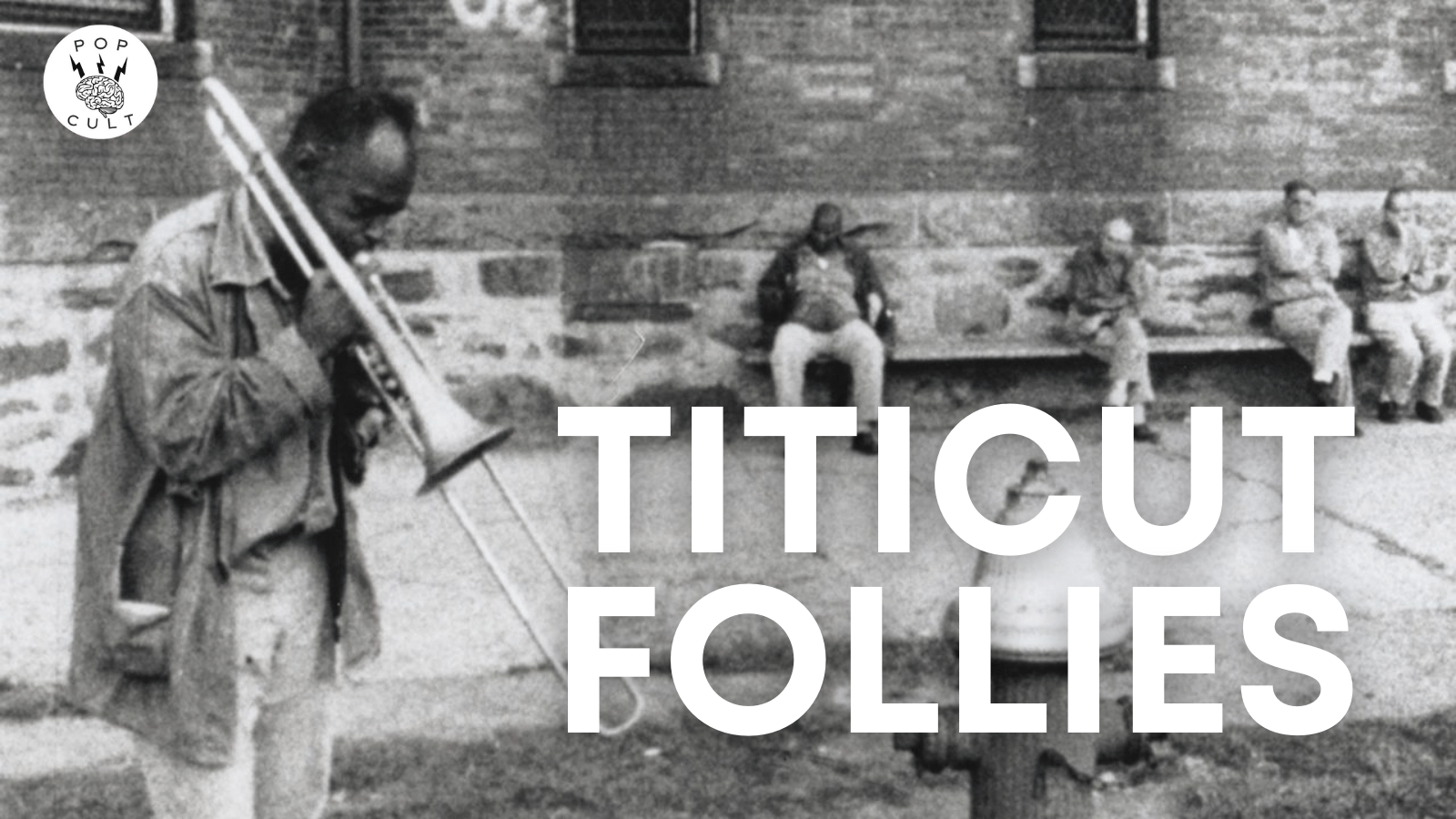
Titicut Follies was filmed at Bridgewater State Hospital, a Massachusetts state facility that houses the criminally insane or whose sanity is under evaluation by the criminal justice system. Like many asylums, this one began as a workhouse for inmates with short sentences in the mid-19th century. By 1968, a year after Wiseman’s documentary was released, Bridgewater was under investigation after it was found that 30 inmates were illegally committed to the facility. Most of these prisoners were held captive because they didn’t have the legal knowledge or the resources to fight for their release. During Wiseman’s filming, he met multiple men who made such claims and were clearly not listened to by the people in charge.
Wiseman has addressed the bizarre insistence on non-bias in filmmaking by saying people cannot escape their biases working on these projects. At some point in the process, whether it’s the decision to point your camera at one subject over another or decisions to make cuts in the editing bay. Instead, Wiseman says he has ethical obligations as a documentarian. These scenes are unstaged & unmanipulated by him and are accurate to the spirit of what was happening. In his own words, “My view is that these films are biased, prejudiced, condensed, compressed but fair. I think what I do is make movies that are not accurate in any objective sense, but accurate in the sense that I think they’re a fair account of the experience I’ve had in making the movie.”
While attending law school in Boston, Wiseman had visited Bridgewater for one of his classes. He became fascinated with the facility, but his only filmmaking experience was helping to produce someone else’s movie. However, he believed this place and the people who lived within it were worthy of being the focus of a documentary. Wiseman drafted a proposal approved by Bridgewater’s superintendent and began a 29-day shoot, resulting in 80,000 feet of film. A year of editing condensed this down to the final 84-minute doc that is available to watch today.
What you see in Titicut Follies is the apparatus of institutionalized mental health for all its ugliness and violence. If you feel that the images presented remind you of footage from Nazi death camps, I don’t think you’re too far off. They were also an institution of German society during that period, which was pushed as normal. How you kept the people from fully realizing the horror was to limit their exposure to day-to-day life in such places. The same is done for places like Bridgewater and the many prisons in the States. What we see from inside is curated to ensure the public has a view aligned with the establishment’s agenda.
Many human stories emerge throughout the documentary. Vladimir stands out as he is transferred here from prison. He can articulate to one of Bridgewater’s psychiatrists and a panel that reviews his case that being in the facility is doing more harm to his psyche than just being in prison. He’s being made sicker in this place. Vladimir points out the absurdity of questions he’s asked in evaluation, like how many times a day he and his friends use the toilet or if he believes in God. He rightfully argues these are irrelevant inquiries. The panel ultimately decides he’s showing signs of paranoia and prescribes more potent tranquilizers to keep him sedated.
There’s another inmate who admits to having inappropriately touched his daughter and other children. He knows he needs to be outside of society for a time to get help for his compulsions. The chain-smoking psych asks probing questions about the man’s background, and we learn he was sexually abused as a child. However, the doctor then starts asking questions and making implications about the man’s “latent homosexuality,” which is not part of the man’s compulsions or problems from the testimony we are witness to. It’s a reminder of how queer people were lumped in with child abusers by default, as they continue to be today, despite a grotesque body of evidence that points to men in positions of authoritative power, not people with same-sex attraction.
There comes a point where the audience will wonder how much damage these men entered Bridgewater with and how much damage was inflicted by the institution itself. Perhaps they would have had a chance in the outside world if this had not been the “cure” they were exposed to. The Massachusetts government attempted to ban the film, which was about to be shown at the 1967 New York Film Festival, claiming it violated patient privacy and dignity. Wiseman had an agreement with the superintendent that everything he did was allowed. Eventually, a court aided Mass by banning the film not for obscenity or immorality. They claimed it was for the patient’s dignity, but after viewing the movie, they clearly did not want this much light shined on people the way the state treated these human beings.
It wasn’t until 1987 that families of seven inmates who died at Bridgewater sued the facility and the state. Footage from the film was used as evidence of the facility’s cruel practices, including an extended scene where a patient is forcibly fed via a tube, the doctor looming over him with a cigarette hanging from his lip as the patient chokes & gags. Wiseman intercuts this scene with a later moment where the same inmate is found dead in his cell and is prepared to be buried at Bridgewater’s on-site cemetery. It would be 1991 when Titicut Follies was allowed to be released for viewing by the general public. In 1992, PBS broadcast the documentary for the first time on television, a quarter of a century after Wiseman finished making it.
Titicut Follies, titled that way because of the disturbing talent show inmates are encouraged to participate in, is necessary viewing. Mental health is an area where the United States has failed repeatedly. Even today, with some practices being seen as more positive and healthy, we are still far from where we need to be. Much of Western psychology is concerned about making people’s psyches conducive to living and laboring under an oppressive capitalist system rather than authentic mental health. Wiseman’s desire to chronicle the institutions that drive American society was just beginning with this film, and he would go beneath the many layers, as we will see in the reviews to come this month.

 PopCult Reviews
2 thoughts on “Movie Review – Titicut Follies”