
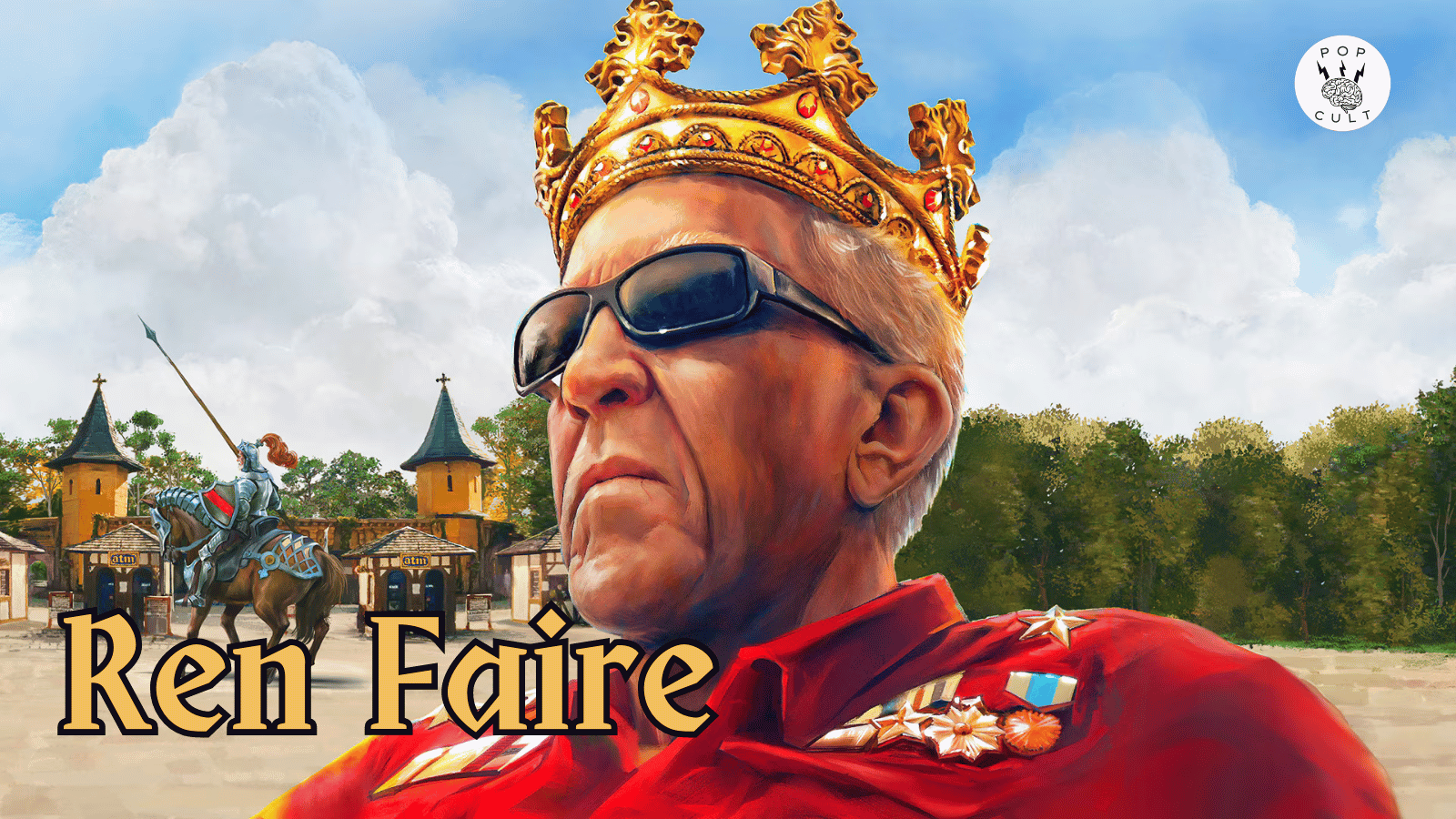
Ren Faire (2024)
Directed by Lance Oppenheim
The term “reality TV” is thrown around so liberally these days, when most of the programming under that umbrella is highly contrived, and its figures’ personalities are obviously contrived. The performative nature of “reality TV” seems to have leaked out into the real world, where we see those who shape their identity around a quirk or two. How do you make a documentary in a landscape where capturing authenticity has become much more complicated. Lance Oppenheim seems to have found it. His style layers melodrama over the mundane, embracing the audience seeking something heightened. Yet, it never feels as if its subjects are being misrepresented.
This three-part docu-series follows the drama surrounding the sale of the Texas Renaissance Festival, a permanent theme park founded by the obscenely wealthy George Coulam decades ago. He’s in his eighties and has become more interested in searching for a sugar baby online. However, being the owner of the fair makes many people grovel to him, and that’s a hard drug for old George to shake. He’ll regularly go on inspection tours of the Faire, which he lives next door to his gaudily decorated mansion. These visits allow George to punch down and feel like a big man, as do the weekly meetings where he has infamously fired several general managers while in a bad mood.
The current general manager, Jeff, is an honest-to-goodness true believer. He is a theater nerd, married to the park’s entertainment director, who has devoted his life to George’s Faire. But while Jeff has been successful in his job, George is moody & resentful and questions his GM’s ability to run the whole thing. On the other hand, we have kettle corn stall operator Louie. He’s developed several successful businesses within the fair and moves more in the rhythm of George. Louie is a creature of habit, always with a phone earpiece in his ear, always chugging down energy drinks, always looking for an angle. And then there’s vendor coordinator Darla, who operates with no thought other than how to increase her power within the organization, but the bolder she gets, the more in danger of pissing off George she becomes.
In many ways, Ren Faire attempts to expand upon themes you might find in other HBO fare like Succession or The Righteous Gemstones. Some rich old men like the power their privilege gives them, and they enjoy lauding it over desperate sycophants. Much like Oppenheim’s documentary Some Kind of Heaven, about residents in the Florida retirement community, The Villages, there are moments of such grotesquery that we’re not sure if the director is merely presenting these people as they are or laughing at them. I tend to lean towards the former because most people, as their authentic selves, have become hyperreal as we’re constantly inundated with false personalities presented as genuine.
George is an infuriating figure with rigid opinions on art and business. He’s a devotee of the Rococo style and expounds on anything past when his views solidified in the concrete of his mind as bad art. In one tense scene, he spits venom at Jeff, railing at the man for presenting evidence of things. It is the irrational mind of a monarch who has had his every whim catered to. Is Oppenheim playing things up & exaggerating them? Indeed, he adds a dramatic flare to the mundane. There are some other satellites in George’s orbit we don’t get much insight into; the assistant who spends hours every day updating George’s profiles across hordes of dating websites stands out as someone whose perspective I wish we had gotten more of.
When the film allows itself to capture the reality of George, it shines. The stylized re-enactments are great and produce melodrama, but letting the king be the king is so revelatory. We follow George to his meet-ups with potential dates, brides, and sugar babies, which always happen at the local Olive Garden. He and the woman sit on the same side of a booth; she often looks at him while he mainly stares off into space. The most common question we see him ask almost immediately is if her breasts are real or implants. This is vital knowledge for George. He has literal boxes of file folders of these women with information he’s printed off or written down. There’s a mechanical nature to how George approaches sex; it is no different than business in his head, but he can’t quite figure out why all that acumen isn’t paying off.
At the center of Ren Faire are observations on the intersection of art and commerce. Jeff genuinely loves the Faire because it provides an outlet for his theatrical aspirations. Louie sees the fair as a lucrative investment; he dresses up because he has to sneak Monster into his flagon, take calls on his earpiece, and try to hide it from the guests. Louie was the one who was closer in similarity to George, a person who sees the world as things to be manipulated and forced to deliver pleasures and power.
When standing back, it all feels ridiculous for there to be so much fervor over a Renaissance fair. However, Oppenheim manages to sell it by acknowledging the silliness but taking things seriously when they need to be. He did the same in Some Kind of Heaven, not hiding the absurdity of these people but also letting us see it from the subjects’ point of view. There is a madness rampant in the United States, not a new thing, but a beast that morphs and reshapes itself to fit the times. George is just a continuation of the mindless Horatio Alger/Ayn Rand/“pull yourself up by your bootstraps” bullshit that has simply never been true. I got into this more than expected, but I was disappointed it was only three hours. They are certainly worth your time.

 PopCult Reviews
2 thoughts on “TV Review – Ren Faire”