
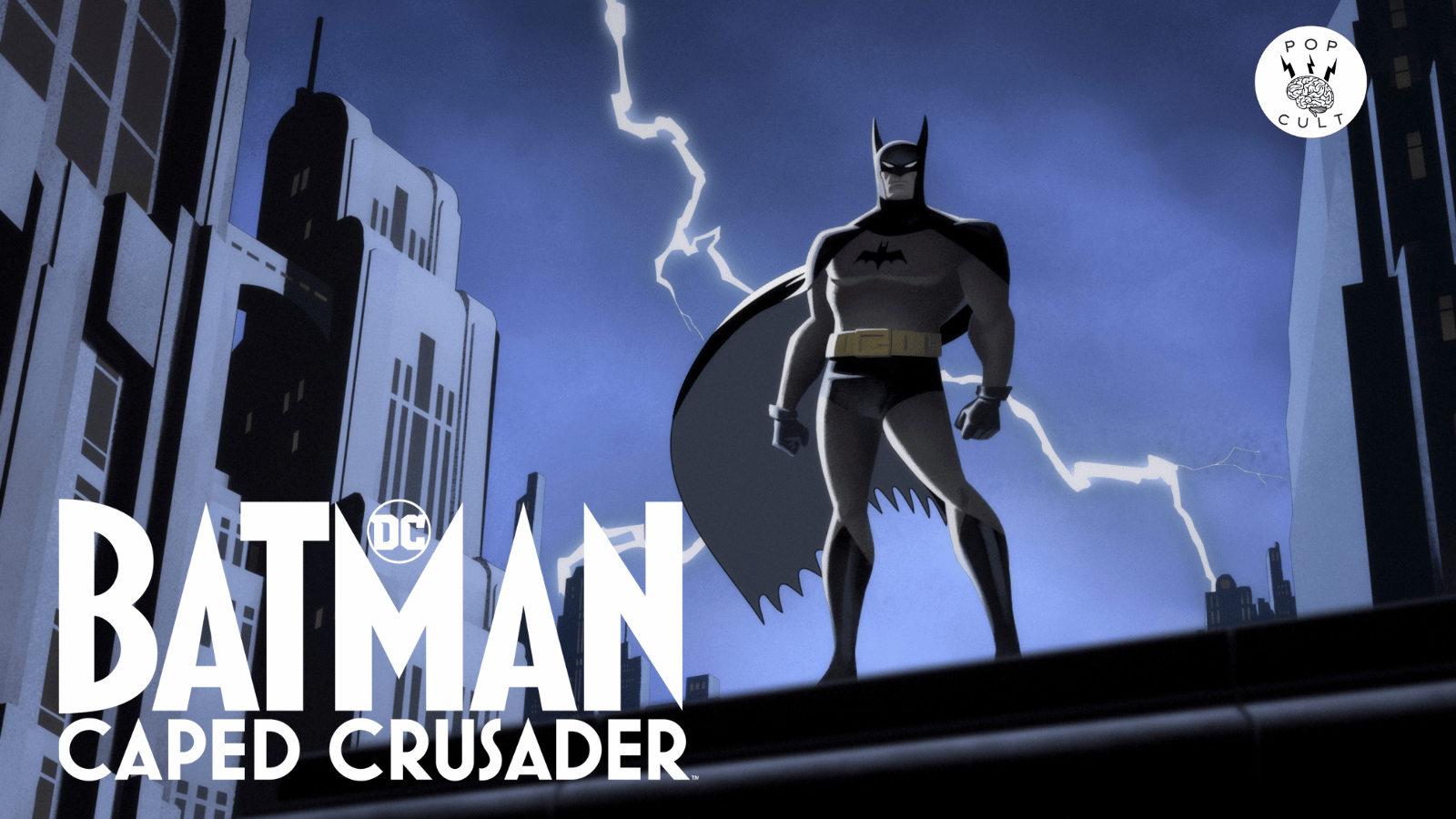
Batman: The Caped Crusader (2024)
Written by Jase Ricci, Bruce Timm, Greg Rucka, Ed Brubaker, Adamma Ebo, Adanne Ebo, Hailey Gross, and Marc Bernardin
Directed by Christina Sotta, Matt Peters, and Christopher Berkeley
Does the world need another Batman adaptation? Probably not, but that won’t stop Warner Discovery from pumping it out to make money. Thankfully, this animated series is helmed by the legendary Bruce Timm, the showrunner responsible for Batman: The Animated Series, a program that redefined superhero media on television. He brings that same moodiness and sense of place to this series, which follows Batman in an alternate 1940s/50s noir setting. With writers like Greg Rucka and Ed Brubaker onboard, that means you’re in for a show that focuses on Batman’s detective work and surprised me by making it more about the characters than big action set pieces.
Initially, I was going to pass this show by. My interest in Batman is mainly in the comics, but then I saw something that perked up my interest. In this version, The Penguin is a woman voiced by Minnie Driver. This was taking chances and playing with the tropes of Batman in a way most media shies away from. We get a Harley Quinn without a Joker, a more detailed backstory for Catwoman, and a season-long build-up to a payoff with a disturbingly realistic-looking Two-Face. It felt like this was a show that knew we’d seen the standards, so it was time to deliver something fresh and different. The result kept my attention for the entire ten episodes, and I’m looking forward to more.
The opening episode features Oswalda Cobblepot, owner and singer of the Iceberg Lounge, a Gotham showboat that delivers dinner and music while you travel around the city. Unbeknownst to the public, she’s the crime boss known as The Penguin and has a deadly rivalry with Rupert Thorne. There’s a leak inside her organization, and Oswalda is willing to kill it to find out who it is. Batman becomes involved and manages to catch her. The story is over, right? Nope. Batman realizes by removing Oswalda, there is a power vacuum that Thorne is happy to fill. Unlike Batman: TAS, this series has a tighter continuity where the actions of one episode ripple through the rest.
The show continues its unique take by presenting the Golden Age Clayface (albeit mixed with science fiction elements from the more modern version), the compulsive arsonist Firebug, the phantom Gentleman Ghost, the quirky assassin Onomatopoeia, and even the vampiric Nocturna. This isn’t a show that repeatedly uses the Riddler, Joker, Mister Freeze, etc. I’m sure, in time, those characters will show up, but the choices made to reimagine the villains of this season have me hopeful that when we meet the more familiar ones, they won’t be how we expect them.
This is a show with a robust supporting cast, too. Commissioner Gordon and his daughter Barbara, a public defender, clash over what law and justice should be like. Renee Montoya is at odds with the corruption in the Gotham police, represented by Harvey Bullock and Arnold Flass. Alfred has much more to do here than in previous incarnations, yet they don’t try to make him into some MI:6 operative the way a few adaptations have. He’s Alfred Pennyworth, who spent some time as a stage actor in England. The Gentleman Ghost episode provides some fun sequences. There’s also much more about the disturbed psychology of Bruce Wayne and how Alfred fears for his adoptive son.
There are nods throughout the season to other parts of the DC Universe: Lois Lane pops up as a reporter asking questions after a press conference, Waylon Jones/Killer Croc is part of a traveling carnival, Floyd Lawton/Deadshot is an assassin that makes a failed attempt on Barbara’s life, Eel O’Brien/Plastic Man is a photojournalist helping Batman blackmail Catwoman into getting caught in a trap. In the grand tradition of DC’s Elseworlds, familiar faces take on new roles in a remixed reality. I’m all for that, as it’s more fun than just seeing the same plots get rehashed for eternity.
Of course, there are complaints. When is there a piece of pop culture in the States that supposed fans don’t bitch about anymore? One of the loudest & most annoying bunch of bullshit comes from fanboys complaining that the show has “too much DEI.” This, of course, refers to the fact that some characters aren’t white or they are gay, as in the case of Montoya and Harley Quinn. With the ubiquity of Batman across media platforms to complain that one version of it doesn’t fit your straight white demands is so fucking stupid. If you don’t like this, you have, oh, say, dozens of other versions you can watch until your heart’s content. The energy I see these chuds put into something as meaningless as a fucking Batman cartoon infuriates me. It would be lovely for them to show up in the same way against the Palestinian genocide or the ongoing collapse of our planet. No, they save that to whine and bitch online about a Batman cartoon.
Batman: The Caped Crusader is the perfect mash-up of the style of the 1990s animated series with authentic noir stories and atmosphere. This Batman feels a bit more dangerous and mentally unstable. His villains have a bit of a grounding in reality. Two-Face is a great example of this. His facial scarring feels more medically accurate, and he doesn’t become a mindless coin-flipping villain. He seethes and becomes fueled by hatred and resentment towards the people in power he believes betrayed him. While the animation on the show can vary in quality (there is one episode near the end of the season; I was aghast at how bad it looked), this is the Batman show I’ve been wanting. I hope we get much more of it.

 PopCult Reviews
One thought on “TV Review – Batman: The Caped Crusader”