
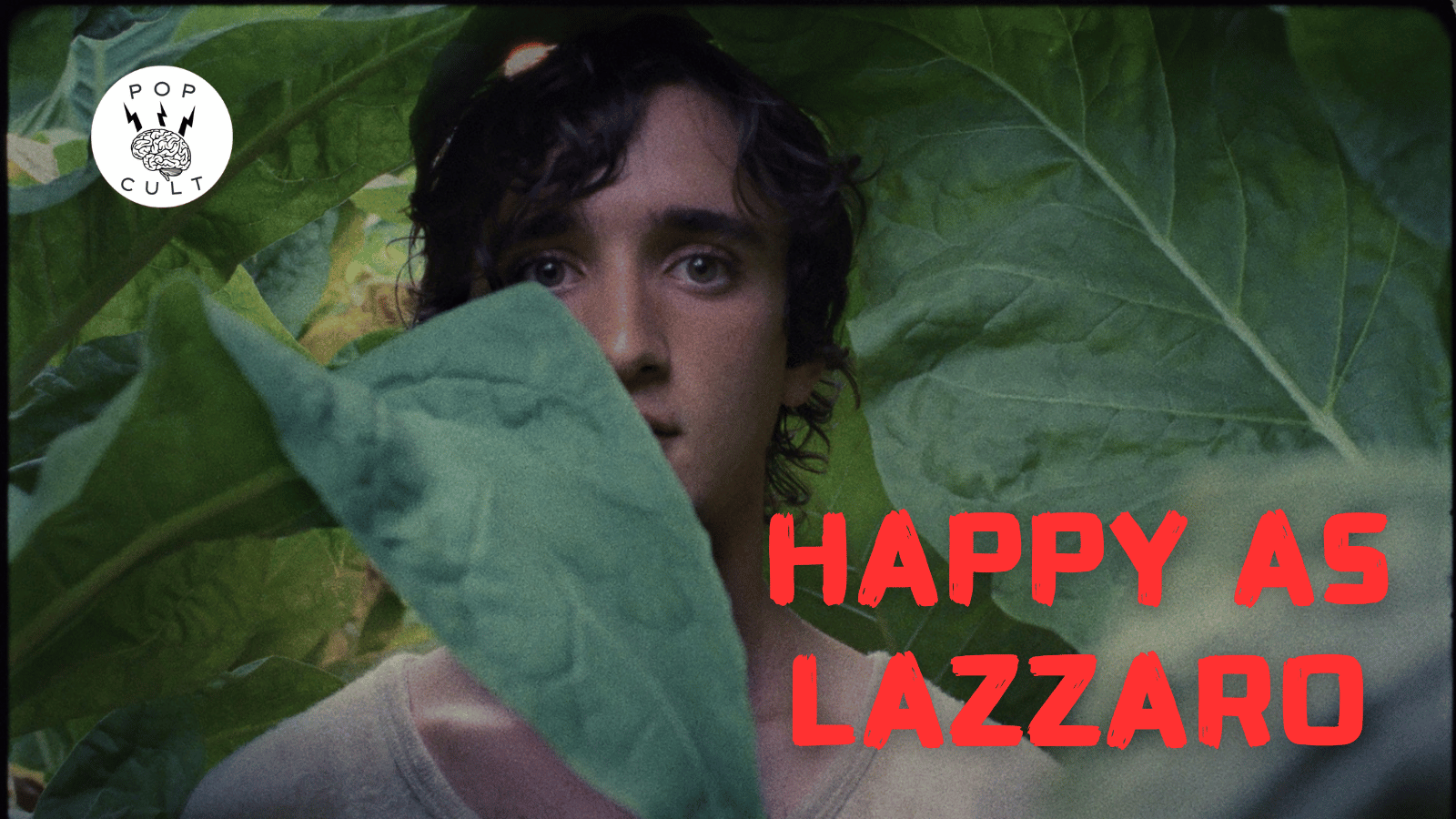
Happy as Lazzaro (2018)
Written and directed by Alice Rohrwacher
Since I saw Season Two, Episode Five, “The Betrayal,” of the Italian drama My Brilliant Friend, filmmaker Alice Rohrwacher has shot to the top of my must-watch list. That is hands down one of my favorite single episodes of television ever made. It so beautifully captured the transition of the show’s main character from a childlike perspective on the world to a more adult & fraught viewpoint. How Rohrwacher shot this character’s epiphany was one of the most realistic portrayals I’ve seen for that coming-of-age moment. I fell in love with her most recent film, La Chimera, which led me to put this film on the watch list for December.
On a remote Italian estate, 54 farmhands grow and harvest tobacco. They have no television or radio and have been told they owe a great debt to the Marquess who owns the plantation. This is what keeps them toiling for generations, seemingly forever. One of these works is Lazzaro (Adriano Tardiolo), a young man who toils dutifully, following every command. It seems implied that Lazzaro may have a cognitive disability and just goes with the flow to avoid conflict.
The Marquess arrives at the estate to stay for a period and brings her son Tancredi with her. Tancredi lives to aggravate his mother and strikes upon a plant to fake his own kidnapping, enlisting the ever-agreeable Lazzaro to help him. Lazzaro ferries food to his new “friend” and keeps his secret locked up tight. Meanwhile, Tancredi hides in the badlands beyond the estate, mimicking wolf howls with Lazzaro to scare his mother. Eventually, the kidnapping plot falls apart, and the film takes an unexpected and fantastic twist into the magical.
What Rohrwacher is exploring in Happy as Lazzaro is a question: What is the role of a saint in a world that worships capitalism? The debt the farmers are saddled with isn’t real. They have had their disconnect from the modern world exploited, leading them to believe indentured servitude is still legal in Italy. Eventually, when the authorities get involved, they have been lied to their whole lives. However, the people with power in the outside world aren’t offering the farmers much better. When we are reunited with them years later, they live in squalor, relying on theft to make ends meet.
The film is shot on 16mm, complete with little scratches on the celluloid. That adds to the film’s first half, set in the 1990s, by giving it the feel of a picture from that period. When we reach the present day, the film is still shot on 16mm, which helps with the sensation of being someone out of time. Instead of the warmly shot farm with constant sunlight, we’re in an urban environment with an overcast sky. Things appear much bleaker in the present. That isn’t to say that Rohrwacher is praising the old way of essentially enslaving people, but she is pointing out that as the already wealthy became wealthier, the people doing all of the labor to make that possible have slipped further into poverty.
The character of Lazzaro feels completely out of place in the modern world. He seems to quietly understand something about the world, a simple truth. When he wakes up in 2018, he’s quickly overwhelmed. He exudes a trust that has caused many reviewers on Letterboxd to compare him to Paddington, and I don’t think that’s inaccurate. You will come to care about Lazzaro, and his struggles on the farm will make your heart break for him. He is a living saint with no place to exist in our contemporary world.
This picture, like all Rohrwacher’s work I’ve seen, is so immersive and lived in. The houses we see feel very real, and these characters, thanks to a mix of casting professionals and non-actors, seem like they are sharing their lives with us. Rohrwacher and her cinematographer, Hélène Louvart, don’t miss a beat, crafting the two halves of this movie to have two distinct color palettes and visual textures. Louvart has been a longtime collaborator with Rohrwacher, having shot La Chimera and films going back into the director’s CV. I can certainly see why she has kept Louvart on the payroll; the images produced in these films are so captivating.
Some audiences might balk at the injection of magical realism at the halfway point, but I was all in. I was curious to see what Rohrwacher did with it, and she did not disappoint me. I’ve seen frustration in other reviews on how little attention the family puts towards Lazzaro, which I think is the point. He’s clearly a messianic figure, and the filmmaker is saying that capitalism has so consumed our every waking moment that even in the presence of God or Jesus or the deity of your choice, you’d likely not notice because your anxieties over money and making ends meet would cancel that out.

 PopCult Reviews
One thought on “Movie Review – Happy as Lazzaro”