
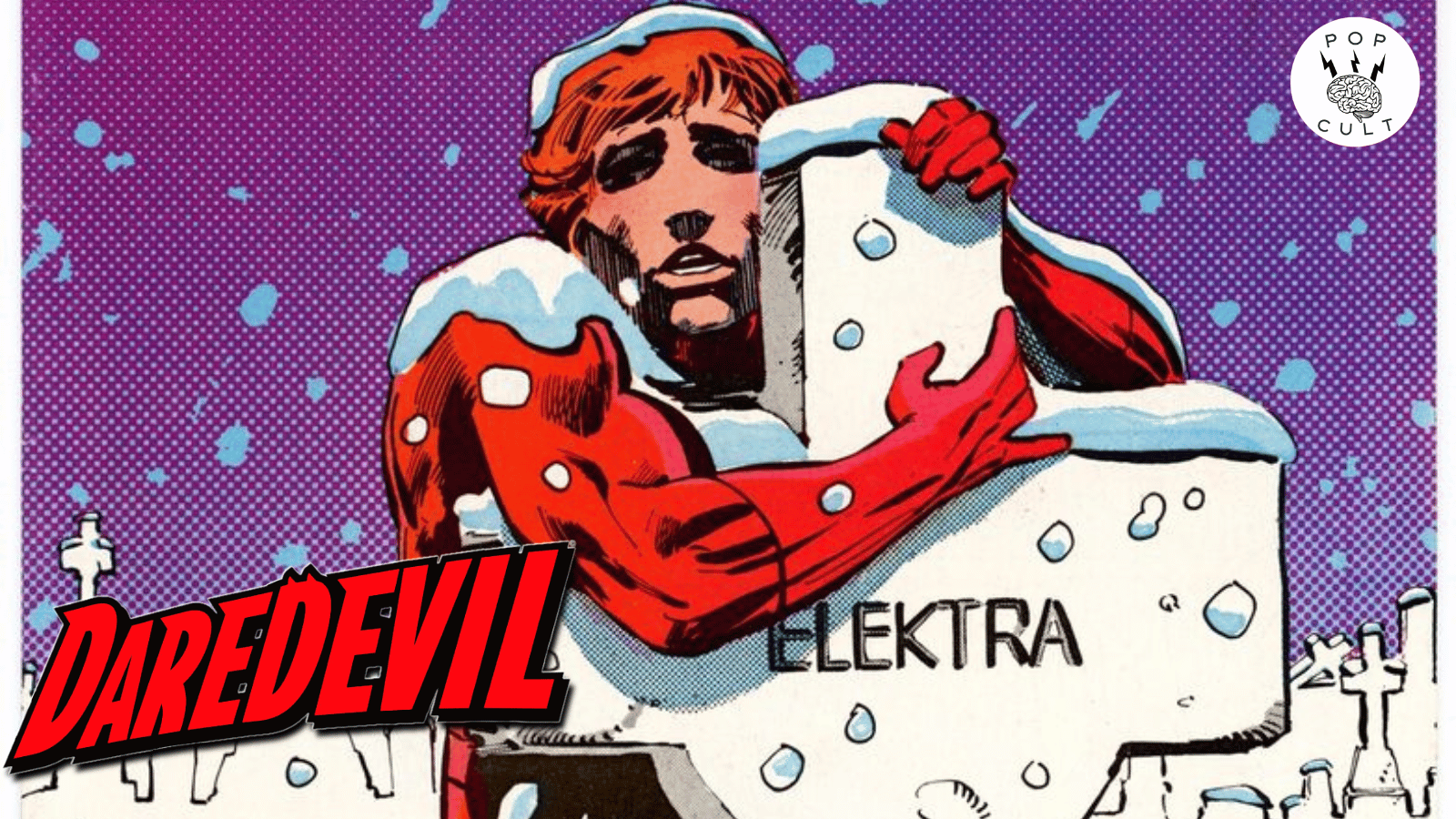
Daredevil Visionaries: Frank Miller Volume One (2021)
Reprints Daredevil #158-167
Written by Roger McKenzie with Frank Miller
Art by Frank Miller and Klaus Janson
Daredevil Visionaries: Frank Miller Volume Two (2021)
Reprints Daredevil #168-182
Written by Frank Miller
Art by Frank Miller and Klaus Janson
I knew at some point I would read this seminal run of Daredevil. As a kid, I first heard about it on the pages of Wizard Magazine, piecing together a rough version of it in my head. One of my favorite things about finally reading a book or comic or seeing a film I’ve heard about for decades is that the preconceived idea about the piece is destroyed and replaced with what it actually is. The result is that I now understand why the thing had such a profound influence on a noticeable portion of the culture. I felt the same when reading Chris Claremont’s Uncanny X-Men or watching the films of Fellini. It’s the sense of “Now I get it,” which must release some dopamine or something because it feels pretty nice. Reading Miller’s Daredevil was one of those, where I could see how comics were being changed as I read through it.
The first volume here doesn’t feature any of Miller’s writing, only his art. When he joined Daredevil, he was only a penciler, but after a few issues, he was co-writing the book with Roger McKenzie. McKenzie is a comic book writer whose best-known work is this Daredevil run, which lasted roughly 13 issues. Most of his work happened outside the Big Two (Marvel, DC), with McKenzie writing for companies like Gold Key, Pacific, and Eclipse.
I wouldn’t say McKenzie’s writing is bad. He clearly has ideas about the character’s direction, but his stories feel fairly rote. They are in the classic Marvel style, not pushing the character or medium further. At first, Miller is a little rougher around the edges, drawing in a more classic style, but that doesn’t work for long. The writing here is a lot of villains monologuing and heroes doing lots of inner or outer lamenting about their lot in life. It’s significantly influenced by Spider-Man, which makes sense as he is Marvel’s premiere street-level character. This can be seen in how The Daily Bugle is made a part of Daredevil’s world, particularly journalist Ben Urich.
Several loose ends end up resolved or carry over into Miller’s official tenure as lead writer but don’t really keep his interest. Daredevil’s romance/partnership with Black Widow is likely concluded to make way for Elektra, who would share a lot of similarities with the Russians in a Venn diagram. There are several supporting characters I was unfamiliar with who seem to be important to the story. Heather Glenn is Matt Murdock’s wealthy girlfriend. Becky Blake is the paraplegic secretary for Murdock & Nelson, and she actually plays an interesting role later in Miller’s run.
Daredevil fights characters outside his rogues (Hulk, Doctor Octopus). Those are fairly pat, but it’s issue 166 where I suddenly felt the book’s tone improve. This story features the return of Gladiator, a Daredevil enemy that debuted in the book in 1966. Here, we see a seemingly reformed Melvin Potter holding a group of schoolchildren hostage at a museum, where his costume is part of an exhibition of a villain’s technology. It’s a story where the villain is given dimensionality that humanizes him, one of those shifts that took over comics because of the work of creators like Miller. The art also starts to take on the details that readers will associate with Miller’s style, some facial work that reminds me a lot of Howard Chaykin.
It’s in volume two where the Miller run most of us know about properly begins. It’s also where nearly every interpretation of every future writer of Daredevil to come is shaped. They either write by bringing in elements established by Miller (Elektra, The Hand, Stick, Kingpin) or actively pushing back against that to create a markedly opposite tone (see Mark Waid’s fantastic run). It makes sense when you read these stories. They are charmingly uncomplicated compared to contemporary comics. Characters and their concepts are straightforward. Miller explores why Matt Murdock would be Daredevil while having a successful law practice. Elektra serves a purpose as she represents the relationship that works for Daredevil, while Heather feels a better match for Matt.
Miller also brings Kingpin into the world of Daredevil, a move I have difficulty finding another example. The Kingpin’s tenure as a Spider-Man villain is trumped by Miller’s transformation of the plump crime boss into Daredevil’s nemesis. The villain is given more complexity than he ever did under the pen of Stan Lee; his relationship with Vanessa is put front and center and serves as the motivator for everything he does in this book. Gladiator returns in a story that spotlights secretary Becky Blake and continues the arc started under McKenzie’s pen. I had never heard about this storyline and found it to be as good as anything Miller has done.
I was surprised by what an enigma Elektra remains for so much of this run. She makes a big debut but slips back into the shadows for a while. The introduction of The Hand and Stick shook things up quite a bit. Most of Daredevil’s villains had been fairly traditional urban baddies you might find in any Marvel book. The Hand changed things by folding in a new genre of storytelling into the Daredevil mythos. I could finally see how directly the Teenage Mutant Ninja Turtles were parodying Miller’s run. I’d heard TMNT’s The Foot was a play on The Hand, but when you read Miller’s run, you notice that the whole vibe of NYC in both books is extremely similar.
The big takeaway from the first half of Miller’s Daredevil work is that he is developing as a writer and artist, and the book shows that progression, with each issue being an improvement over the next. He doesn’t clutter the book with too many characters, and he gives meaningful depth to the ones he chooses to spotlight. Miller also managed to reboot Daredevil’s origin in ways that didn’t erase anything that Stan Lee established; instead, he finds blank spots and fills them in with a backstory that makes Matt Murdock a more complex character. In our next part, I’ll discuss the Daredevil stories where Miller goes far beyond these first steps.

 PopCult Reviews
2 thoughts on “Comic Book Review – Daredevil by Frank Miller Part One”