
Neptune Frost (2021)
Written by Saul Williams
Directed by Saul Williams and Anisia Uzeyman
American mass media is like a virus. It has infected the globe to the point that if you go to any movie theater that exists in this world, you will find US films playing, even if they are shown bootleg. This is not an accident, yet it’s not exactly a conspiracy. It is another salvo in the American Empire’s conquest of the planet since World War II. Neptune Frost is a Rwandan film and an Afrofuturist musical about living under colonialism. However, Lin Manuel Miranda and Ezra Miller produced the film. So, I have to wonder how authentic the film can be to Rwandan voices with these Westerners involved.
Miller has been involved in many controversies, which led to their last major project, the DC Comics film The Flash, coming out and bombing at the box office. I know Miranda still has his fans, but I have never thought Hamilton was anything other than an attempt to launder white supremacist American history through black and brown faces. I’ve also listened to several Puerto Rican voices who criticize Miranda for supporting colonial narratives and working with American corporations that exploit the island. It is impossible for this information to not shape how I view Neptune Frost.
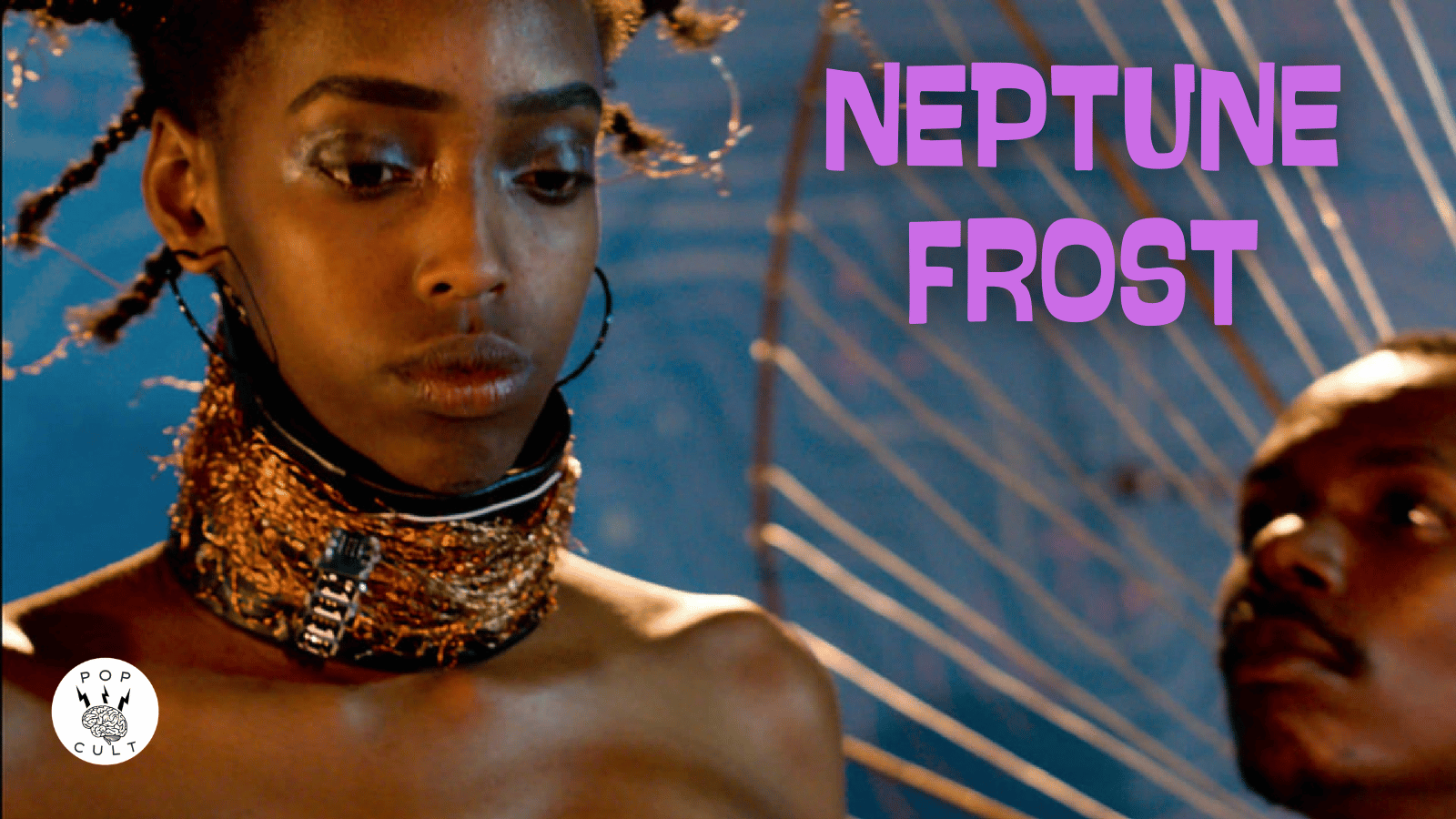
While financed by Rwanda production companies, the film takes place in Burundi shortly. Neptune, an intersex runaway, meets and becomes romantically involved with Matalusa (a portmanteau of martyr & loser), a coltan miner who joins a hacker collective. Neptune is played by two actors: one male and the other female. When Neptune first puts on heels and a red dress, they get strange looks from others who can’t see the person within. After encountering a priestess praying to the “Motherboard,” they physically transform into the image within her mind. Neptune wanders the countryside as Matalusa’s story plays out in the digital village of Digitaria.
Told & sung in a mosaic of languages (Kinyarwanda, Kirundi, Swahili, French, and English), the crux of Neptune Frost is a poetic cry from the most exploited corners of the world against capitalism. Everything that has been imposed on these people by the West, from strict notions of gender identity to the way technology is used to numb people’s minds, is confronted. This is a utopian view of the future, imagining when the most over-extracted people can turn the table on their oppressors and use tech to fight back. There are moments where the film becomes weighed down by polemics, but I can’t blame them. I would be just as furious living in their shoes.
Afrofuturism has always been a fascinating concept to me. My understanding of it is that because so much of history is about African people being exploited, they can’t really do nostalgia like the oppressive West, which has benefitted from the resources they stole. For African people and the Black diaspora, imagining a post-revolution future where they can enjoy their liberation is more comforting. The original Star Trek had lots of Black fans because it was one of the few television programs that even presented Black as a part of the future. Today, musicians like Janelle Monae adopt Afrofuturist aesthetics.
Neptune Frost presents a DIY take on Afrofuturism that feels beautiful because it isn’t overly sleek and clean. You can see how discarded tech, clothing, and wire pieces have been crafted into costumes and props. Matalusa wears a distinctive keyboard jacket that keeps drawing my eye. Neptune’s transformation also remakes their clothing, adding some unique-shaped wire headwear. I can recall the philosopher Slavoj Zizek talking about one way for humanity to engage with the increasingly polluted environments we are forced to live in to create an aesthetic where trash becomes material to create beautiful art. I think we can see that on display in this film.
The film is not concerned with tight plotting but focuses on the characters’ emotions and expressions of frustration and power against The Authority, the ever-looming violent presence in their world. We get a few sequences at the start in a coltan mine where we see the managers beating down workers who have already exhausted their bodies. Coltan is a metallic ore put through processing to become tantalum capacitors, a core piece of mobile phones, computers, automotive electronics, and cameras. This metal is behind the atrocities happening in Congo right now.
I’ve started to think in the last few years how my perception of the planet, humanity, and reality is shaped by my experience as a white man raised Christian in the States. In turn, that means my view is culturally limited, and I have to do work to push back against that. People like those portrayed in Neptune Frost have a robust understanding of my world, yet I have been deprived of learning more about them. This is no accident. In the same way, African people are saturated with media from my society; in turn, I have been deprived of seeing them. Traditionally, I have only seen a reductive version of their equally complex lives. Films like Neptune Frost showcase the rich artistry among people who are, at best, given our refuse. When I see contemporary voices in America throwing around ignorant terms like “suicidal empathy,” it troubles me. How many beautiful people have we deprived ourselves of seeing because of such limited points of view?

 PopCult Reviews
One thought on “Movie Review – Neptune Frost”