
It Was Just An Accident (2025)
Written and directed by Jafar Panahi
In 2022, Iranian filmmaker Jafar Panahi was arrested while inquiring about the status of two fellow filmmakers who had been detained by authorities. He became the third director taken into custody in less than three weeks. After initiating a hunger strike, Panahi was released 48 hours later. He was barred from leaving Iran while under investigation and was subsequently tried. It Was Just an Accident won the Palme d’Or at the Cannes Film Festival, but the filmmaker was not permitted to leave the country to attend. In December 2025, Iran’s government sentenced Panahi in absentia to one year in prison and imposed a two-year travel ban over alleged “propaganda activities.” During this period, he was also prohibited from joining any political or social organizations. This ruling came a decade after many previously banned Iranian film organizations had been allowed to reopen.
It Was Just An Accident begins with a family—a father, mother, and daughter—driving down a poorly lit road at night. They accidentally run over and kill a dog, damaging their vehicle in the process. They visit a nearby garage, where Vahid, one of the mechanics, hears the squeak of the father’s prosthetic leg. This sound is burned into his memory from his time as a political prisoner, incarcerated for attempting to organize a labor union. The next day, Vahid kidnaps the man and prepares to bury him alive, while the man pleads that Vahid is mistaken and has taken the wrong person. Torn and unwilling to punish an innocent man, Vahid seeks out others who were imprisoned in the same facility, hoping they can help him determine whether this is truly the person who tortured them.
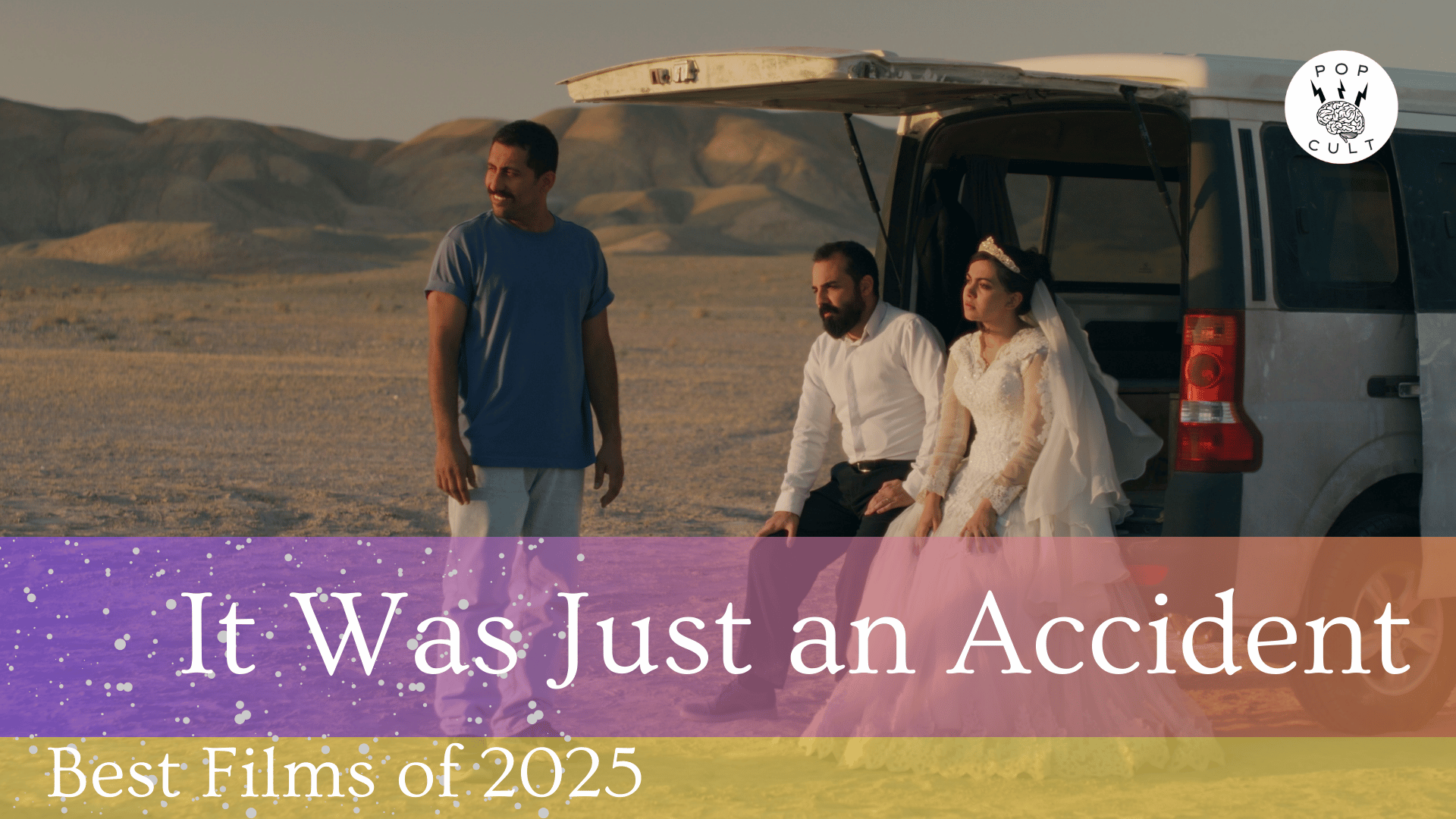
While the story sounds dark and heavy, the film is surprisingly funny. The interplay among the now-free prisoners provides moral weight alongside entertaining banter. Each person has been shaped differently by their experiences, leading to clashes. Shiva is a wedding photographer whom Vahid visits in the middle of a shoot. It turns out that Goli, the bride-to-be, was also imprisoned in the same facility. Where Shiva wishes to remain level-headed and discreet, Goli needs very little evidence to justify tearing the man to pieces. Unable to reach a consensus, they seek out Hamid, Shiva’s ex-partner and a former political prisoner. Hamid is the most volatile of the group, clearly suffering from PTSD that manifests as erratic behavior and extreme mood swings.
The central theme running through the film is the idea that prisons are not merely physical spaces. The purpose of authoritarian rule is to turn the mind itself into an unending prison. These people are free to pursue careers or even get married, but they will never escape the interrogations and torture. Shiva’s appearance reminded me of a war journalist in the field, and paired with her profession, it suggests she may once have been a photojournalist uncovering something the regime wanted hidden. She still takes photographs, but every action is measured; she constantly looks over her shoulder, cautiously hoping to avoid the authorities. Goli, meanwhile, cannot escape her rage, spending much of the film in her wedding gown as she and her groom tag along, trying to resolve the identity of the bound and blindfolded man in Vahid’s van.
Panahi also draws a parallel between the characters’ behavior and the methods once used against them. They slip into these actions as if by instinct. All of them have lost some part of their humanity as a result of their treatment, and no matter how much they attempt to return to normal life, these wounds remain. Panahi fragments his own self across the characters, embodying the possible reactions he might have had to his own mistreatment at the hands of the regime. In another Iranian film from this year, The Seed of the Sacred Fig, we see a recreation of similar interrogation tactics: the prisoner is blindfolded, facing away from the interrogator, while sound and movement are used to disorient them. Threats against the prisoner’s family are made—threats that can easily become reality.
Whether Vahid is correct in identifying the man as his former torturer is not really the point of the film. What Panahi explores is how quickly powerful and dangerous emotions resurface at the mere suggestion that he might be. Each former prisoner has a strong sensory memory tied to the man. Shiva cannot forget the sweaty odor she associates with him. Hamid feels scars on the man’s legs that he remembers from prison. Vahid, of course, cannot escape the squeaking hinge of the prosthetic leg. These sensory impressions often override rational thought, and it is well documented that intense emotional trauma can distort memory, particularly in those who have endured extreme horror.
As with much Iranian cinema, this is not a film about objective truth, but an exploration of ideas. Disagreements among the former prisoners reveal their differing perspectives. The claustrophobia of the van, as it fills with people, heightens the tension. The vast emptiness of the desert, where a grave has already been dug, offers no relief despite its openness. A late-night encounter with the kidnapped man’s young daughter raises further questions. In one scene, Vahid attempts to admit a woman to a hospital, but because he is not her husband, a receptionist insists it is illegal. A passing doctor overrides her decision, reminding us that the regime does not control everyone at all times.
Panahi has faced criticism for his post-arrest work since his initial imprisonment in the early 2010s. Some critics argue that his films have become overly self-reflexive and repetitive, with his identity as a political prisoner dominating his output. I would argue that It Was Just an Accident, while centered on political prisoners, does not feel limited to a single perspective, making it a fresher experience. There is also concern that Panahi receives disproportionate praise from Western institutions simply for opposing Iran, often framed as one of the “cartoon villains” of the U.S.-driven global narrative. That critique is valid and likely true to some extent. One wonders whether Panahi’s films would be as warmly received if he turned the same critical eye toward the West, as once-celebrated and now largely ignored Chinese artist Ai Weiwei has. My view is that this is a great film regardless of how it may be appropriated as propaganda within the neoliberal art-house sphere.

 PopCult Reviews
One thought on “Movie Review – It Was Just An Accident”