
While I am giving in-depth reviews to the Chaplin films I haven’t seen, I would be wrong in leaving out films of his I have seen previously, especially because they are some of his best work.
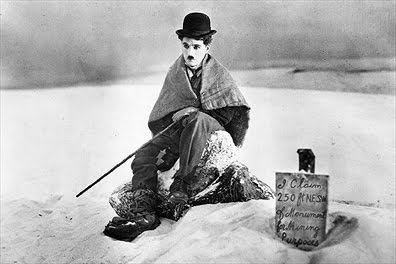
The Gold Rush (1925)
Starring Charlie Chaplin, Mack Swain, Georgia Hale
Made after the box office failure that was A Woman of Paris, Rush has Chaplin conjuring up some of his most iconic comedy moments. The dancing rolls bit, which has been referenced continuously in pop culture since. At one point starving miner imagines Chaplin transforming into a human sized turkey. We also have Chaplin boiling and eating a shoe. Chaplin originally intended to shoot the film on location in Alaska but nature had other plans. There is one on location shot in the film and its a gorgeous one. The rest was filmed on Chaplin’s United Artists sound stages. If you are looking to make a list of must see films for historical significance, this is a must for that list.
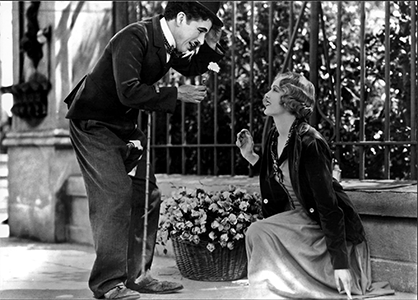
City Lights (1931)
Starring Charlie Chaplin, Virginia Cherrill, Harry Meyers
This is my personal favorite Chaplin picture and I think its one of the best romantic comedies ever made. The Little Tramp befriends a blind flower girl whom mistakes him for a millionaire. The Tramp promises he will raise enough money for the young woman to have a costly procedure. To do so he signs up for a boxing tournament and the crux of the comedic action revolves around that. The film features one of the best scenes in cinema at its climax when the young woman, now sighted, learns the truth about the Little Tramp. I actually brought a girl to tears in college simply by describing in detail this scene. A beautiful film with a big heart.
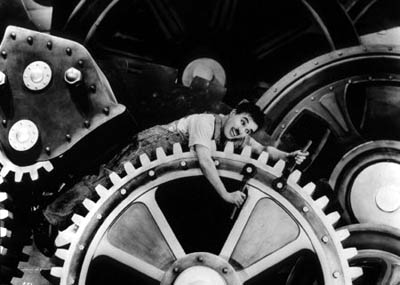
Modern Times (1936)
Starring Charlie Chaplin, Paulette Goddard
This is the last major American film to make uses of silent movie title cards (ignoring silent film parodies that would come after). Chaplin billed this as his first “talkie” but plays with audience expectations while making a point. The only voices heard come from the abstract machinery of the factory the Little Tramp works in. It was all part of Chaplin’s ideas about how technology was being used improperly and, instead of empowering mankind, it was being used to take their humanity away. Chaplin also wrote the film’s ending song “Smile”, which has become a standard since (“Smile though your heart is aching Smile even though its breaking”).
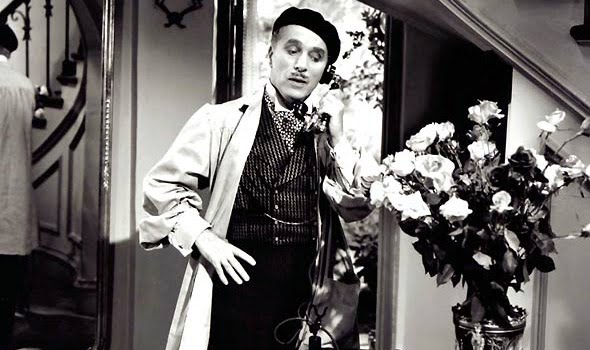
Monsieur Verdoux (1947)
Starring Charlie Chaplin, Mady Correll
This was a drastic departure for Chaplin. There was no Little Tramp present here. Instead, he plays recently fired banker Henri Verdoux. Struggling to support his family, he decided to begin marrying rich women, murdering them, and absconding with their money. Chaplin plays the picture as a pitch black comedy and had a lot of difficulty with the Production Code on this one. The point behind the picture came from the idea that if a man murders a few people for money he is a criminal, however if he mass murders as in a war he is a hero. The film proved that Chaplin had little concern for box office returns, and really want to make films that were of interest to him.
 PopCult Reviews