Asian Cinema Month – Hard Boiled


Hard Boiled (1992, dir. John Woo)
Starring Chow Yun Fat, Tony Leung

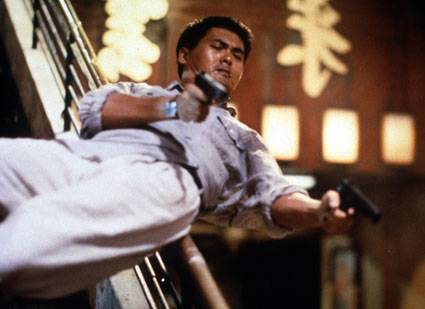
A man leaps through the air in slow motion, wielding twin semi-automatic pistols. Carnage ensues. This is the trademark of Hong Kong action director John Woo, who managed to pretty much invent his own sub-genre of action movies. These are stories where black and white are clearly defined, heroes are wise-cracking bad asses, and the villains are most definitely villainous. This was my first foray into the world of Woo, I skipped his Mission: Impossible sequel and shied away from Face/Off. So, after twenty years of hype, how did I find the master actioneer?

Hard Boiled is the tale of two men. Officer “Tequila” Yuen is a cop dedicated to bringing down the Triad gun running ring plaguing Hong Kong. Tony is a cop deep undercover who is the apple of crimeboss Hoi’s eye. Tony is recruited by upstart gangster Johnny Wong to take out Hoi and control crime in the city. Tequila and Tony end up reluctant partners in a crusade to bring Wong to justice. Along the way they form a rivalry over the same woman and end up indebted to each other. Also thrown into the mix is Mad Dog, Johnny Wong’s super hitman with a clear sense of honor in his profession.

Hard Boiled has an interesting problem. Barry Wong, the screenwriter died halfway through film, while he was still writing the screenplay. So Woo and his production staff had to cobble together some place for the film to go. Knowing this, it makes up somewhat for the rather random directions the picture goes in its latter half. There’s also the fact that the character of Tony started out as an incredibly sociopathic character, going so far as to poison baby’s milk. The actor wasn’t too comfortable with playing a character like that and convinced Woo to make him more likable. Alongside this is a very uneven love story between Tequila and fellow officer.

What the film does well is the way it tells its story. Woo is amazing when it comes to framing shots and setting up elaborate sequences that turn normally dull shoot outs into ballet performances. Several times Woo chooses to drop the typical camera shots and go into first person or into some unexpected tracking shot that slowly reveals information to us. He’s also influenced greatly by some unexpected sources, in particular Francois Truffat. If you’ve seen The 400 Blows, than you will recognize that same ending zoom in, freeze frame technique used here a handful of times. It surprisingly works and its impressive that Woo was thinking about such “arty” fare when composing a Hong Kong crime movie. Like I said before, Woo was inventing his own genre at this point in his career.

It’s nothing spectacular. The weak story definitely hurt the film, but there are a number of interesting set pieces, in particular a mob-owned hospital the last half of the film takes place in. The film make use of practical special effects via explosions in way CG just can’t ever mimic. A fun film that hearkens back to an era of uber violent and gaudy over the top crime movies.

Jolly Good Thursdays – Nil By Mouth


Nil By Mouth (1997, dir. Gary Oldman)
Starring Ray Winstone, Kathy Burke, Charlie Creed-Miles, Laila Morse

I didn’t plan it this way, but Nil By Mouth is the perfect co-feature for yesterday’s Harry Brown. Both films take place in the government funded estate housing and focus on some of the harsh and brutal realities of life there. While Brown goes for a more Death Wish, hyper-violent tone, Nil By Mouth is a documentary-like look at the people Harry so eagerly murders. The film’s violence is not constant but comes in explosive and jolting moments. Every thing orbits around a single act of violence that takes place in the middle of the picture.

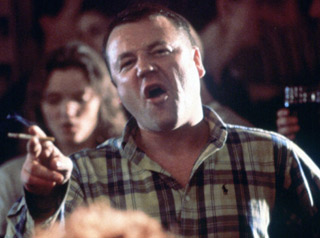
Ray (Winstone) is an ox, a violent brute of a man who is having his second child with Valerie (Burke). He maintains a disinterested relationship with her, going out at night with his mates, ingesting all sorts of drugs, drinking copious amounts of booze, and soliciting women at seedy strip clubs. When Valerie stays out to play pool with friends, Ray explodes. Also living in this war zone is Billy (Creed-Miles), Valerie’s brother and Janet (Morse), Valerie’s mother. Billy is a heroin addict who is constantly borrowing money from his mom and sleeping on a roulette wheel of couches. Janet is a helpless figure, standing back and watching her children’s lives decay and, in Billy’s case, driving him to drug dealers’ houses so he can score.

The most obvious element that carries the film is Ray Winstone. I’ve seen Winstone in films like Sexy Beast and The Proposition and in both of those he plays more of the simmering, muted type. Here he is like a British Jake Lamotta, exploding but never in a showy way, more of a man who has never seen men react anyway other than with violence. There’s a moment in the film when he has a conversation with his best mate Mark and talks about how unloving his father was. This monologue lays it out on the table that these men exist in a cycle of brutality. Why should we expect them to know how to show affection or control their rage when they have never seen a man do so, and when they live in a world where you prove yourself through the violence you inflict on others.

Not to be overshadowed is Kathy Burke as Valerie. Burke knows how to tap into the working class up bringing of her character. Valerie knows that her safety is dependent on Ray’s presence. She overlooks his nightly outings and has a pretty strong suspicion he cheats on her with other women. Their relationship has come to the point where she simply doesn’t care. She is pregnant with their second child and states that she wanted to have another child, but didn’t want to find a different father. There’s no love for Ray, he’s just there. And Ray is with her so he has an anchor point to return to at the end of the night.

The film is soaked in profanity, but that is an accurate depiction of this world and the natural grammar of the place. I was reminded of Mike Leigh’s films about the English working class and how often they are cited as “brutally true to life”. They really have nothing on the grim reality of Oldman’s directorial debut. It’s not an easy film to watch. The accents are thick and require the American viewer to play close attention, and the subject matter is not pretty. However, we have to see the full view of these people so that we don’t slip into the Harry Brown mentality.

Asian Cinema Month – Eat Drink Man Woman

All this month, in honor of Asian Heritage Month, I will be looking at some major films from the contemporary Asian cinema canon. While the term “Asia” can refer to areas as diverse as the Middle East, India/Pakistan, and the South Pacific, I will be focusing mainly on films out of China, South Korea, Japan, and Hong Kong. In the future I definitely plan on having a month devoted to Middle Eastern cinema….maybe not so much India, just not a fan of their pictures, too many crazy musicals.


Eat Drink Man Woman (1994, dir. Ang Lee)
Starring Sihung Lung, Kuei-Yei Yang, Chien-lien Wu, Yu-Wen Wang

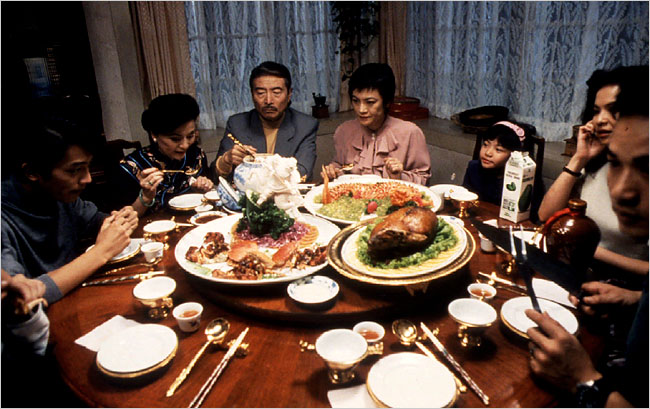
Mealtime is a proven way of bonding with others. Whether its over a campfire, at a booth in a diner, or around the family dinner table, the act of breaking bread with others unites people in a very beautiful way. Even many animals hunt and dine together in packs, with somewhat of an understanding of the bonding that occurs when they do. Ang Lee presents the story of how food and the act of eating cobbles together a group of disparate people into a family.

The film is set in Taipei, Taiwan and focuses on Chu, the partiarch of a family made up of three daughters. Chu’s wife died years earlier and now his three daughters live at home with him, each feeling the burden of watching after their obstinate and independent father. Every Sunday, Chu prepares a lavish feast of traditional Chinese cuisine, much more than enough for this small group. Chu has also unofficially adopted his middle daughter’s old schoolmate and her daughter. As the story progresses, his three daughters begin to find men with whom they contemplate leaving home for. In many ways, this story is a variation of Fiddler on the Roof, very much about family and tradition.

I really liked this film, much more than I anticipated. I’ve been sort of back and forth with Ang Lee (didn’t care for Crouching Tiger, Hidden Dragon but love Brokeback Mountain) so I wasn’t sure how I would feel about this picture. I think Lee is best when he is dealing with small, character driven stories. The family surrounding Chu are very complex and real. There are no easy solutions and no acts of serendipity. The high drama you would expect from a Hollywood version of this tale is non-existent, yet there are emotional stakes. Chu has lost his sense of taste and so the act of preparing this meal has a deeper meaning to it. The eldest daughter is also a wonderful chef, but no thanks to Chu. He makes sure the kitchen is off limits to his children, so she learned from Chu’s best friend and fellow chef when she was a child.

The way Lee films the cooking sequences is an example of a director at their peak. Everything about the methodical ways Chu prepares his dishes and the care he puts into them is absolutely apparent. The flavor of the dishes comes through the screen somehow and you can feel the steam coming off the dumplings and rich flavor of the stews and steamed fish. If you were putting together a list of films about food, this one definitely make it high on the list.

There honestly wasn’t much about this film I didn’t enjoy. It’s a little over two hours, yet I was so engaged by it I never felt like checking the timecode to see how much was left. I was completely absorbed in the world and especially the characters Lee was presenting. While he has gone on to make bigger budget films, my hope is that Lee can always remain close to his early roots, making films that found their wonder in people, rather than effects.

Wild Card Tuesday – The Last Days of Disco


The Last Days of Disco (1998, dir. Whit Stillman)
Starring Chloe Sevigny, Kate Beckinsale, Robert Sean Leonard, Mackenzie Astin, Chris Eigeman, Tara Subkoff, Matt Keeslar, Jennifer Beals

If watching the burgeoning yuppies of early 1980s Manhattan sitting around vapidly waxing philosophic about the inanities of their lives doesn’t sound appealing to you then you may want to skip this film. Despite its title its not at all about disco really. Its about a generation of people who came of age in the 1970s and are focused on self-gratification and the hierarchies and status related to social life in New York. Another of way of looking at it, and how director Whit Stillman was thinking when he made the film, is that this is contemporary take on the comedy of manners genre.


The protagonists of the film are Alice (Sevigny), a recent college grad and an assistant publishing editor and Des (Eigeman), the employee of a disco club which bears a more than passing resemblance to Studio 54. Alice balances a tenuous friendship with snarky roommate Charlotte (Beckinsale) and ending up in awkward social situations with immature men. One of these men is a manic-depressive FBI agent (Keeslar) who becomes a part of a sting on Des’ nightclub which has been funneling cash to a Swiss bank account and failing to report millions the IRS. The characters meander through the film, talking in a completely artificial manner and nothing really seems to happen.

It’s apparent that Stillman’s work (Metropolitan, Barcelona) had a profound impact on the filmmaking of Wes Anderson and Noah Baumbach. Stillman’s characters aren’t so much people as they are roughly painted facsimiles of humans who carry on in conversations peppered with Tarantino-esque pop culture references. One character explains that the reason why so many of his own generation are environmentalists is because of the 1958 re-release of Bambi in theaters. Another conversation involves how Lady and the Tramp teaches women to pursue the bad boy and is at fault for a multitude of bad relationships in their generation.

The characters are dull as hell though. They barely even qualify as characters, as Stillman loves introducing a new and even quirkier one as the film progresses. Yet we get nothing past their surface eccentricities and Stillman struggles to manage any sense of a narrative. He tries to create a partial drama with the illegal business practices of the nightclub but even when the arrests go down all parties involved seem aloof and uninterested. The first hour of the film has potential but the second goes off the rails and becomes a chore to wade through. Much like the decade it highlights the start of, its incredibly shallow with nothing to really say.

DocuMondays – Kurt and Courtney


Kurt and Courtney (1998, dir. Nick Broomfield)
Featuring Kurt Cobain, Courtney Love, and a cast of thousands…of junkies

I was thirteen when Kurt Cobain killed himself, and honestly the front man for Nirvana existed on my periphery. The whole grunge scene has never been a music genre I enjoyed, I’m more of a 90s BritPop fan (Oasis, Blur, The Verve). But I can understand why the movement was so big, as it was a big deviation from the musical norms of the time. This docu, by Brit filmmaker Broomfield seeks to stir up some of the conspiracy theories surrounding Cobain’s death and in the end isn’t really about Kurt or Courtney, but about famewhoredom.

What stands out most about the film is the shoddiness. Made on the cheap, the documentary is narrated by Broomfield who doesn’t do much to play the neutral observer, but pretty much interjects his personal opinions throughout. That doesn’t make the film any less fascinating though, especially with its parade of “friends” of the Cobains. In particular, one young woman who takes Broomfield to a club where Kurt performed during his early days, and whom talks with expertise about seeing the Cobain couple shoot heroin. She promises Broomfield photographic evidence, and when he returns to her apartment later she is anxious and befuddled and has a million excuses as to why she hasn’t been able to provide the photos. The woman is incredibly reminiscent of how Courtney Love is described throughout the documentary.

Broomfield pursues some wild leads, including the claim by S&M band member El Duce that Courtney offered him $50,000 to kill Kurt and “make it look like a suicide”. A less reliable source you couldn’t ask for. There’s Courtney’s former private investigator who now has “scientific” evidence that the amount of heroin in Kurt’s blood made it impossible for him to handle the shotgun. However, Broomfield provides actual scientific evidence proving that it is possible, to which the investigator simply ignores. The most awful of Broomfield’s interviewees is Courtney’s father, a man writing and publishing books condemning his daughter for the murder of Kurt in what he explains as a way to keep in touch with his daughter.

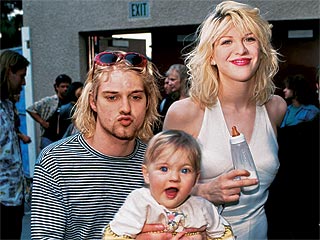
Broomfield reasonably comes to the conclusion in the film’s epilogue that Kurt most likely did commit suicide and that Courtney didn’t pay anyone to kill him. What the documentary revealed to me was that at the end of the day both people came from incredibly messed up homes where a strong parental presence was absent. Kurt seems like a very personable, intelligent guy in some of the interview archival footage, and Courtney seems like a sad woman who made a habit of latching onto local musicians in the hope of grooming them into the next Sid Vicious, as a compliment to her Nancy Spungeon. The person you feel the saddest for is poor Frances, their daughter, whose childhood couldn’t have been an easy one.

Kurt and Courtney is currently available to view on Hulu.com

Hypothetical Film Festival #11 – Ernest Saves the Film Festival

Yes, it’s a film festival dedicated to one of the greatest thespians of the late 20th century: Mr. Jim Varney aka Ernest P. Worrell. KnowhutImean?


Ernest Goes to Camp (1987, dir. John R. Cherry III)
Starring Jim Varney, John Vernon, Iron Eyes Cody, Gailard Sartain

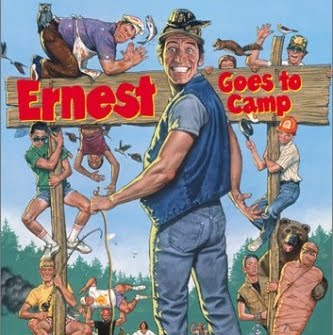
The Ernest character got his start as a pitchman for various local businesses in the Middle Tennessee and Kentucky areas. Eventually there were a series of straight to video skit compilation films that made way for this first theatrical endeavor. Ernest is a camp handyman, who wants to be a counselor. He gets his chance with a group of juvenile delinquents which leads to a series of slapstick sight gags. Meanwhile, an evil mining corporation wants to buy and shut down the camp to get to a rich vein of the fictional petrocite underneath it. Ernest rallies the juvies together for a big showdown with the corporate head, where our hero displays the Native American combat skills he learned along the way. A great start to the Ernest franchise.


Ernest Saves Christmas (1988, dir. John R. Cherry III)
Starring Jim Varney, Gailard Sartain, Billy Byrge, Douglas Seale, Oliver Clark

Arguably the high point of the entire Ernest franchise. In the same way The Godfather, Part II outshines its predecessor, so too does the first Ernest sequel trump the original. A jack of all trades, Ernest is now a cabbie working in Orlando, Florida who happens to pick up an old man from the airport claiming to be Santa Claus. It appears Santa is in town to name local children’s television host Joe Curruthers as his replacement. Joe of course doesn’t believe and is duped into starring in a Xmas themed film which betrays his ethics as a role model for children. The film actually has a very interesting meta-commentary on what Hollywood producers try to do to children’s films like this one, by interjecting foul language or gory violence to appeal to older audiences. The one thing about the Ernest films is they never sold out on their trademark live action Looney Toons feel.


Ernest Goes To Jail (1990, dir. John R. Cherry III)
Starring Jim Varney, Gailard Sartain, Billy Byrge

This is my personal favorite out of all the Ernest films. Here our protagonist works as a bank janitor who is a double for death row inmate Felix Nash (also played by Varney). Ernest ends up in prison with Nash on the outside with plans to rob the bank. Two things makes this film phenomenal: Gailard Sartain and Billy Byrge as Chuck and Bobby, the Rosencrantz and Guildenstern to Ernest’s doofy Hamlet, and Ernest gaining magnetic superpowers during the jailbreak sequence. The Ernest franchise amped up the similarities to Pee Wee Herman in this film as well, with Ernest owning a home filled with Rube Goldberg-like devices.


Ernest Scared Stupid (1991, dir. John R. Cherry III)
Starring Jim Varney, Eartha Kitt, Billy Byrge

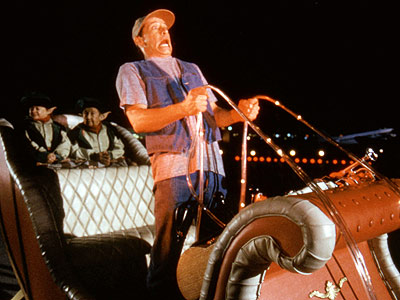
Meant to be a Halloween companion piece, Scared Stupid was shot in the Nashville, Tennessee like all the previous films (except for Saves Christmas). Ernest is a garbageman tasked with cleaning up the land owned by a strange old woman. Through a series of mishaps, Ernest releases a group of trolls that have cursed the land and finds out the old lady is a sorceress. The film’s plot gets a lot more complicated than it deserves to be and makes it one of the weaker entries in the Greater Ernest Oeuvre. It is also hurt by the absence of Gailard Sartain as Chuck, yet keeps Bobby and gives him a new partner. They needn’t have bothered. The series goes downhill from here…


Slam Dunk Ernest (1995, dir. John R. Cherry III)
Starring Jim Varney, Kareem Abdul Jabbar

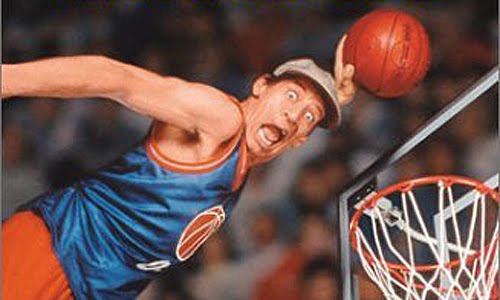
Two films were released before this one (Rides Again, Goes To School) and they were lackluster. This picture isn’t great compared to the first few films but was one of the last highlights in a dying franchise. Ernest is laundry worker, employed by the Charlotte Hornets, who dreams of becoming a pro-basketball player. He’s visited by an angel (Jabbar) who gives him magic shoes that make Ernest a phenom. Of course Ernest dominates with the shoes, realizes the importance of teamwork and ends up scoring without the magic shoes. Hoorah! This was to be followed by the woefully racist Ernest Goes to Africa and the final Ernest in the Army.

Wild Card Tuesday – Eve’s Bayou


Eve’s Bayou (1997, dir. Kasi Lemmons)
Jurnee Smollet, Samuel L. Jackson, Meagan Good, Lynn Whitfield, Debii Morgan, Diahann Carroll, Vondie-Curtis Hall, Branford Marsalis

The thesis statement of Eve’s Bayou is declared early on in the main character’s voice over as an adult, recalling the events that transpired in her 10th year. “Memory is a selection of images, some elusive, others printed indelibly on the brain”. This is a story told through the filter of years gone by and originally seen through the eyes of a child. Adult Eve tells us that when she was 10 she killed her father and the film gives us a couple explanations for this, emphasizing the distortion that occurs as a result of experiencing time passing.

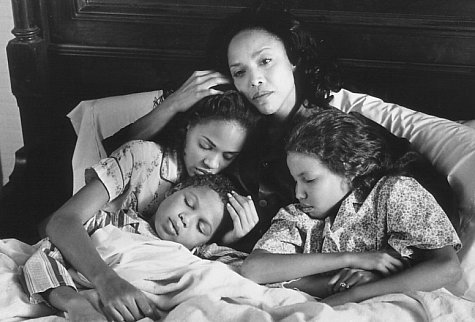
The story begins with young Eve (Smollett), a resident of a Creole parish in Louisiana who lives comfortably on the estate of her doctor father (Jackson). It’s the early 1960s and the patriarch of the family is caught by Eve having sex with one of his patients in the carriage house during a party in the home. He negotiates with the little girl afterwards, trying to convince her she didn’t see what she thought and making promises of lavishing her with more attention than her older sister, Cicely (Good). More and more people in their small town become aware of what is going on within Eve’s family and it becomes apparent that things will end on a dark note.

Eve’s Bayou is full of classic Southern Gothic atmosphere, yet evoked a lot of European slow paced family dramas. Think William Faulkner meets Ingmar Bergman. The film is stylistic rich and uses the Creole religious practices as a framework for foreshadowing and mixing the dreamed up with the real. When Eve is told stories by her family we see them acted out around her, the characters appearing suddenly in mirrors and Eve standing in the middle of them. The film can can delve into the overly melodramatic at times, but because of the setting and general tone it doesn’t seem too out of place.

Eve’s Bayou isn’t a perfect film, but for a first time venture into directing it is incredibly impressive. Director Simmons uses many African-American female crew member (including an amazing cinematographer) and focuses her story around the women of the family. What is so fascinating to me is the otherworldly nature of the place and time Simmons is capturing. The Creole culture has always occupied a different place in the racial history of our nation, and it is interesting to see a pocket of America where the economy and culture were driven by African-Americans. Eve’s Bayou is about these places that seem unreal and about how our minds retain and discard the details of our history.

The Burton/Depp Collaborations – The 1990s

Tim Burton and Johnny Depp are a cinematic pair that will probably be working together, till both of them are in their old age. The duo have made seven pictures together of varying success. We’ll be looking at these films by decade and see of their collaborations are gaining value or zero-ing out.


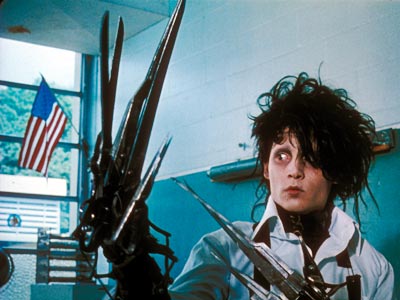
Edward Scissorhands (1990)
It was quite a surprise to see teen heartthrob and star of 21 Jump Street working in a film by the director of Batman. Even though I was only eight at the time, I remember thinking it was weird that the Johnny Depp guy would be in this movie. I was also deeply obsessed with Burton at the time because of Pee-Wee’s Big Adventure, Beetlejuice, and aforementioned Batman. Scissorhands didn’t appeal to me at that age though, its a deeper film, meant for an older audience. Yes, it has elements of a fairy tale, but its satiric take on Southern California suburbia, its bittersweet love story, and its affection for the wonderful Vincent Price is sort of lost of a 3rd grader. This is the film Depp broke out with, and I feel he’s always felt a strong closeness to Burton because of it. Deep delivers a wonderfully muted performance, I can’t say I’ve seen him deliver anything like this since. While Jack Sparrow has flowery dialogue and free reign to go over the top. That’s a style of acting that can be a sort of cakewalk. Edward doesn’t get to speak much, but has those wonderful props on his hands, that give a truly unique form of expression. Burton is also at the top of his game, delivering the gothic landscapes as well as a neon suburbia. I hope that with Burton’s upcoming Frankenweenie feature film we can see some more of this.

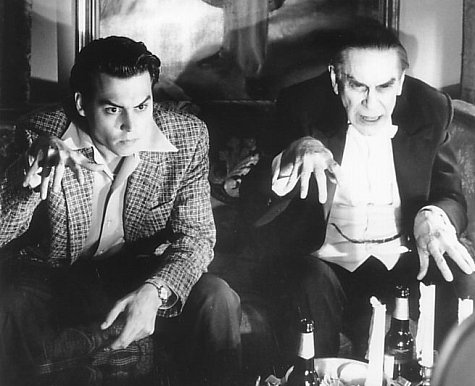
Ed Wood (1994)
A lot of Burton/Depp fans have missed this one, and I personally think it is the best film Burton has ever made. There are references to his deep love of classic horror films and a darkly wicked sense of humor. The performances here are spectacular as well. Depp, who is such an adept chameleon, takes on the wackiness of Ed Wood completely. In addition, Martin Landau as Bela Lugosi is one of the best pieces of acting there has ever been in a Burton picture. Lugosi comes across as sympathetic, yet constantly acerbic and unlikable. It’s the only film Burton has done which was based on real events, and makes me curious to see what other visual flair he could add to another famous figure. Wouldn’t it be amazing to see a Burton directed film about Vincent Price? Or Edgar Allen Poe? Bill Murray also has a perfect performance as Wood’s homosexual producer and has one of the best scenes in the film during a mandatory baptism by financial backers from a church. Burton and Depp have come close only once to the level of perfection this film achieved.

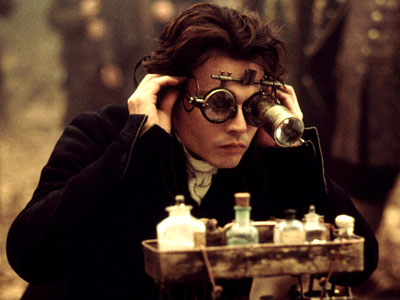
Sleepy Hollow (1999)
Burton and Depp finished out the decade with the first of many adaptations. I am not a fan of the majority of Burton’s adapted works, the scripts are never written by him and bear a lot of the clichéd story beats of typical Hollywood work. Here we have Ichabod Crane turned from a schoolteacher to a pre-forensics crime investigator. That character tweak has always come off as insulting to me. The studio believed Crane had to be “sexier” and so he had to be a detective. It would have been simple to have Crane’s intellectual curiosity spurring him on to investigate the goings on in Sleepy Hollow. Depp felt very blank in this film as well, I never felt a true sense of personality in him. Yes, there are some wonderful visuals, but it is at about this point things begin to feel stale in Burton’s aesthetic. He draws on the classic Corman horror flicks of his youth but seems to recycle a lot of visuals from Nightmare Before Christmas. This staleness would continue into the next decade.

Next: The Corpse Bride, Charlie and the Chocolate Factory, and Sweeney Todd.

Jolly Good Thursdays – Naked


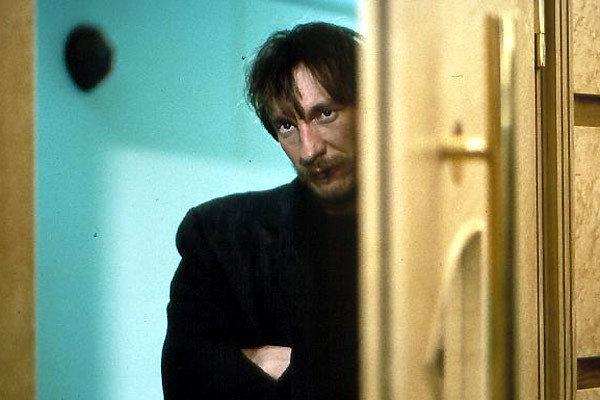
Naked (1993, dir. Mike Leigh)

Starring David Thewlis, Lesley Sharp, Katrin Cartlidge, Gregg Crutwell, Claire Skinner
When viewing a Mike Leigh film you typically expect to see a slice of life portrayal of contemporary England. The focus will on the ins and outs of daily life for working class people. However, with this picture, Leigh creates an abrasive, violent, surreal universe which does adhere to the tenets of his standard films: there are no big illuminating answers or moments.
We first see Johnny (Thewlis), the film’s protagonist, in the middle of raping a woman in an alleyway. Hardly a way to endear us the character we’ll be following through the rest of the movie. The woman runs away saying she’s going to get brothers and they will beat Johnny to death. Johnny runs home, grabs a few things, steals a car and heads to London where he imposes himself on old flame Sophie (Sharp). Johnny gets involved with Sophie’s flatmate (Cartlidge), leaves in a huff and encounters a series of strange characters living and working in London. Johnny is paralleled by Jeremy (Crutwell) an utter misogynist and sociopath that gives Patrick Bateman a run for his money.
Director Leigh seems to be using Naked as sandbox in which to play with the audience’s expectations of their characters and the flow of plot in film. There is a palpable trajectory to the film for its first 30 minutes, and then suddenly it veers off into an episodic series of encounters between Johnny and other random characters. The introduction of Jeremy is intentionally confusing and appears to have no bearing on the overall plot of the film. Jeremy’s abusive exploits don’t feature any characters from Johnny’s portion of the film and seem as if they were cut in from another film. When the two plots cross into each other in the last 40 minutes of the film there is no explosive conflict or release of tension.
Naked could easily be seen as an extremely misogynistic film, but that would be selling short. Yes, women are brutalized numerous times throughout the film, Jeremy himself rapes about three women. However, I think Leigh is testing us to see what we will accept from characters in a film. What is the line they cross that makes them intolerable for us? In addition, every single characters is away from home: Johnny is on the run, Sophie is sub-leasing, her friend Sandra (Skinner) is off traveling through Zimbabwe. The moment the film finds its resolution is when all the characters have assembled in Sandra’s flat after she has returned home. It’s in this moment the genre of the film becomes rapid fire and even more absurd. There are elements of farce, romance, drama, and in the end it all falls apart. Johnny ends up even more broken than he had been at the start and where is going is now unknown and inevitably even further into the gutter.

Wild Card Tuesday – Reality Bites


Reality Bites (1994, dir. Ben Stiller)

Starring Winona Ryder, Ethan Hawke, Ben Stiller, Janeane Garafalo, Steve Zhan, Swoosie Kurtz, John Mahoney
Have you ever gone back and read some piece of poetry or short story you wrote as an adolescent or early 20-something and cringed at how naive and oblivious its sentiments and ideas were? A similar feeling is felt when watching Ben Stiller’s directorial debut 16 years past its time. Intended to be a thesis statement of post-grad Generation X, Reality Bites feels like the standard love triangle movie with a 90s-grunge facade.
Our protagonist is Lelaina, a wannabe documentarian and resident of Austin, TX who wants to produce work of substance about real life issues. She employed by an inane morning show who cannot stand her and lives a typical pseudo-slacker existence with her roommate (Garafalo) and their two guy friends (Hawke and Zahn). Into Lelaina’s life steps Michael (Stiller), an upper class yuppie and executive for a music television channel “like MTV but edgier”. Hawke’s Troy becomes jealous of Michael’s presence and thus the love triangle centered around poor Lelaina.
The deck is unfairly stacked in Troy’s favor from the get go as the film plays into every romantic stereotype in the book. Troy is the philosophy reading, lead singer in a grunge band, pretentious artsy guy who has typical abandonment issues (dad left when he was young and Troy had been rebellious ever since as a result). Michael is a materialistic geek who “just doesn’t get” the “real” disaffected Gen X youth. I found myself rolling my eyes an unusual number of times because of how broad these characters are played. Not for a second did I believe Lelaina would end up with anyone BUT Troy. The film telegraphs this from the characters’ first scene together.
At the time, this film may have felt surprisingly fresh but now it feels like an attempt to cram everything that defined the 90s slacker type into an hour and half. That doesn’t leave much room for honest character development. The two poignant moments in the film (Garafalo’s AIDs scare and Zahn coming out to his mother) last all of a few seconds and then its back to the completely uninteresting trails and tribulations of Lelaina. The characters seem to be oblivious to how terrible they are at their lives: for a documentary filmmaker Lelaina doesn’t know how to hold a camera that isn’t askew and Troy is complete and utter asshat. At the end, the love story here feels like it has as much depth as the Twilight films.