Movie Review – Locke

a24 visions

Locke (2014)
Written & Directed by Steven Knight

locke

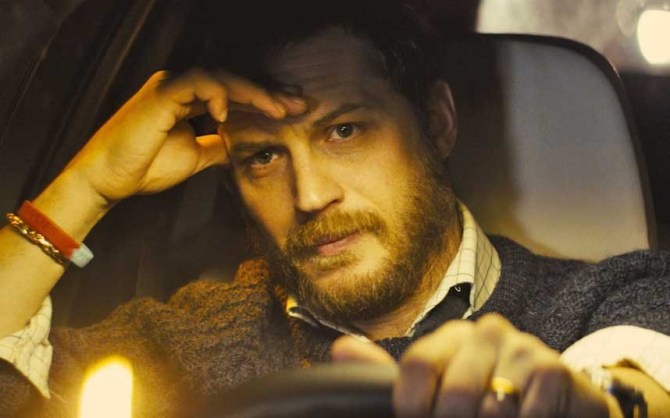
Ivan Locke has just ended a day of work as a foreman on a construction site in Birmingham, England. He embarks on the drive home…or is he? Locke phones his wife while on the motorway between Birmingham and London to tell her he won’t be coming home tonight. Meanwhile, he calls another woman, Bethan who inquires about his whereabouts and how long it will be before he gets to her. He makes calls between his supervisor and a colleague in an attempt to ensure the concrete pour the next morning goes off without a hitch. Whatever Locke is doing and where ever he is going it will completely upend his life as he knew it. During this two hour drive, he attempts desperately to bridge his present with this uncertain future.

Continue reading “Movie Review – Locke”

Movie Review – Horsehead

Horsehead (2014)
Written by Romain Basset & Karim Chériguène
Directed by Romain Basset

horsehead

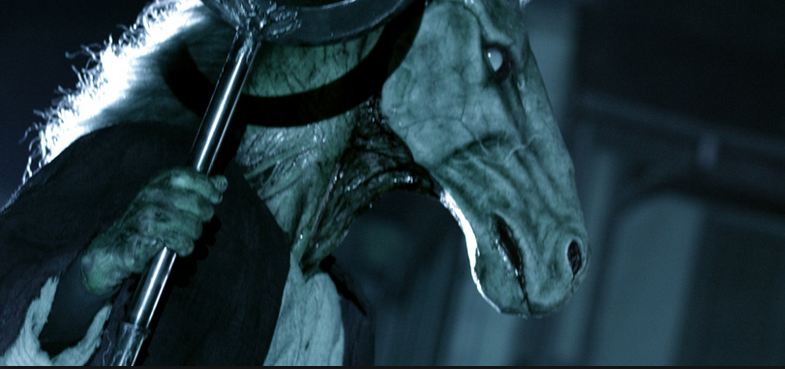
Jessica is a college student studying the psychology of dreams due in part to her lifelong night terrors and intense nightmares. She must return to her childhood home after her mother calls with news of her grandmother’s death. Jessica and her mother have always had a strained relationship, one primary reason being the unknown identity of Jessica’s father. She has a stepfather though, who seems much more understanding, but also unaware of old family secrets. Her first night home, Jessica falls into a lucid dream where she meets the spirit of her grandmother and begins a dream odyssey to uncovering the truth behind her family.

Continue reading “Movie Review – Horsehead”

Movie Review – Blue Ruin

Blue Ruin (2014, dir. Jeremy Saulnier)

blue ruin

Blue Ruin opens on the image of a bearded man in a vulnerable state. He’s settled in for a bath when the sound of a door disturbs him. We quickly learn he doesn’t belong in this house and is, in fact, a homeless man. Dwight Evans is living along the East Coast, foraging from dumpsters and sleeping his car. An empathic police officer who knows Dwight lets him know a man convicted of murdering people close to Dwight has been released back home in Virginia. Dwight makes the decision to travel back and get revenge. But, to the film’s enormous credit, this man is not a trained assassin and is not taking into account the disastrous series of events he is about to trigger.

Before Green Room, director Jeremy Saulnier helmed this meditation on the price of retribution. Saulnier did not have many films under his belt, but his technical prowess is already apparent here (and if you have seen Green Room). Light and shadow are used effectively to set the tone, and figures emerge from shadows in a way that adds to their menace. Saulnier shows he has an excellent relationship with editor Julia Bloch (also on Green Room). Together they construct such palpable tension and anxiety through minimalistic cutting techniques. Shots linger for just the right excruciating amount of time and cut to the perfect reaction or follow-up shot. That strength in editing connects to the pacing of the script. The story doesn’t get too heavy too earlier. The dissemination of information to the audience is also heavily controlled. The full details of the crime committed that sent Dwight into a reclusive state isn’t revealed until over halfway into the picture.

The lead performance rests on the shoulders of Macon Blair, a loyal Saulnier collaborator. Blair delivers what audiences might misconstrue as “too subtle” or “non-emotional, ” but there is a density of emotion and history in what he is doing. Dwight is a character who crossed a line of emotional exhaustion years ago. He couldn’t survive in the world if he didn’t pass through the tears and rage. So now Dwight approaches each obstacle with a cold duty. He doesn’t care if he lives or dies anymore, he only feels he has to keep living to carry on an obligation. You might not notice, but he barely speaks for the first 20 minutes of the film, about only one line in that time. So the story is being told in his face, and thankfully Blair has a face, particularly eyes that tell a story.

What hit me hard about Blue Ruin is how relevant its themes are personally and globally. At first, this seems to be a straightforward revenge film, but the revenge comes very early in the movie. I found myself shocked at what the rest of this film would be about. Then both the audience and Dwight realize his first error which compounds into more and more. This compounding of errors leads to Dwight forced into killing more people, and this breaks him down. He seeks out help only to keep himself long enough to try and remedy his errors. When the full revelation of the inciting crime comes to light, we enter a space of moral ambiguity. People Dwight believes are guilty of things may not be the ones who did it. They are not innocent by any means, but the circumstances are significantly more complicated than first revealed.

In a world where we hear the phrase “good guy with a gun” uttered often or people spending hours of their lives attempting to justify an assault on people, they disagree with politically, Blue Ruin, without being didactic, asks us to question this. Someone most definitely harmed Dwight and people he loved, there is no doubt about this. But for every act of violence, he commits he doesn’t honor the memory of the people he lost or bring any peace to himself. Violence compounds violence, as I’ve talked about before in the context of Arya Stark. The film ends with a character who makes a choice not to commit violence. They walk away as others destroy each other. This character’s future, and could end up in the same situation we find Dwight in at the start, but by choosing not to kill they are free of the curse, two families have inflicted on each other for years.

PopCult Book Club Review: March 2017 – Bird Box

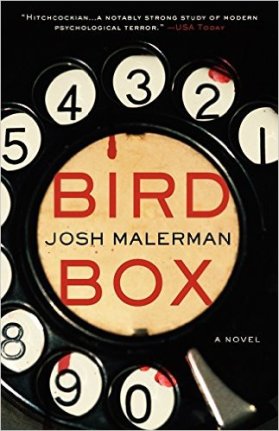
Bird Box by Josh Malerman
(Ecco, 2014)

51bin6sub1l-_sx321_bo1204203200_

The day society collapses Malorie learns she is pregnant. No one can say why everything has fallen apart, but there are some theories. The most prevalent are that the people who have gone murderous and crazed saw something, creatures or entities, that broke their minds. By the time Malorie heads to the safe house in Detroit people are boarding up their windows and only going outside equipped with blindfolds. Humanity is slipping into darkness. Josh Malerman’s debut novel jumps between Malorie’s pregnancy in the safe house to her blind journey down a river with her equally blinded children. She’s been told that somewhere down the river lies a place where the three of them can be safe. But is something stalking them on the shore?

Bird Box gets a lot of things right. First, it builds tension incredibly well. The concept of something you see, possibly even from the corner of your eye and can drive you to a homicidal rage is terrifying. The book introduces the apocalypse in the background, just a few strange piecemeal stories out of rural Russia. Then more and more incidents are reported until everything has crumbled. It also hits Malorie personally as early on she comes across a loved one who has seen whatever is causing this mental break. Malerman’s smartly leaves the exact nature of what is going a mystery. Characters wildly speculating is much scarier than the book spelling out what is happening outside the doors of the safehouse.

By building a paranoid tension, the author also develops his characters based on how they react to their circumstances. This is an excellent way to let your readers quickly get to know Malorie and the six or so supporting figures around her. As soon as she arrives at the safe house, we are aware who these people are right away. We see who is keeping a level head and trying to come up with workable solutions. We are aware who is petrified with fear about the change. We see who is quick to anger and irritation. I’m not a huge fan of The Walking Dead television series, but I do think Bird Box treads similar ground in its focus on ensemble character interaction. Malerman juxtaposes Malorie against another pregnant survivor. The house’s de facto leader Tom is mirrored and contrasted by a couple of other characters, one of whom comes late the story and could be considered the antagonist of the novel.

There is also something to be said for how smart it is to handicap your characters with the apocalypse, and then on top of that take away their chief sense. Malorie’s blindfolded odyssey out to a local bar to gather supplies is a grippingly tense sequence. Everything takes longer to do, and these stretched out moments allow us to immerse ourselves in the scene. We know as much as Malorie knows. When she discovers the trapdoor in the floor and the subsequent stench of horror that comes from it, we receive the same sensory input she does. This particular mode of information delivery is at it’s best during the journey down the river. Malorie has spent four years adapting herself and her children to the world without sight. As their boat floats down the waters, every sound is a potential threat. A brief encounter with another human on their trip is paranoid and suspenseful. Everyone is a danger, and she begins to speculate about the creatures and if they can now mimic human speech.

Overall, Bird Box is a very breezy exciting read. I wouldn’t place it up there with the type of horror I treasure, but it is a read very worthy of your time. I guarantee it will keep you glued due to his narrative momentum. When the horrific finale in the safe house finally comes about in the last two dozen pages, you’ll not be able to stop until you find out how it concludes. When Malorie and the children are within hearing distance of the new haven, her paranoia will overtake you, and you won’t be sure if they will make it.

Movie Review – Spring

Spring (2014, dir. Aaron Moorhead & Justin Benson)

spring-alley

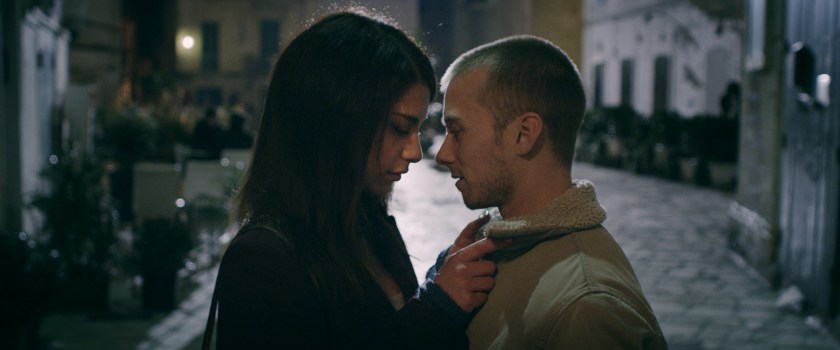
I began the filming expecting one thing but ended up delighted and surprised with what I got. Evan’s mother dies in front of him, succumbing to a two-year battle with cancer. He feels lost and without purpose, so this leads to a spontaneous trip to Italy, the place his parents wanted to take him before they died. Evan wanders to a small town on the coast where he meets Louise, a young student. The two click right away but there is something mysterious about her, for all her charm and wit she remains cagey about certain parts of her life.

I remember seeing the trailer for Spring before its release and got the sense it would be a dark, horror film. However, it ends up becoming a romance story without any traces of cynicism. It is a dark film, but there is an emotional truth underneath the surface. Early in the first act, after Evan first arrives in Italy there is a sense of Eli Roth’s horrid Hostel films, that creeping sense of dread. We worry Evan is winding his way down into a trap. The filmmakers establish a very gloomy mood. However, I find the film has more in common with Linklater’s Before Sunset. It ends up being lots of conversations about relationships and the nature of love between Evan and Louise. Yes, there is gore and violence, but it never overtakes the film and become the focus. Instead, character work is the meat, with violence punctuating dramatic moments.

Spring is a gorgeous looking film. Directors Moorhead and Benson previously worked on Resolution, a small indie horror flick that did similar genre play. It’s very clear they have developed their technique with some truly beautiful and well-choreographed shots. There is an explosive argument in the streets of the small village after Evan discovers Louise’s secret. It is a single take, but it is a dizzying race through the back alleys and narrow streets. They also make use of drones to produce some stunning, sweeping shots of the coastal town that stand up to an expensive crane and helicopter shots.

The bulk of the film rests on the shoulders of the two lead actors, Lou Taylor Pucci and Nadia Hilker. I have never been overly impressed by Pucci. I’d seen him in his early work (Thumbsucker, The Chumscrubber, Southland Tales) and felt he was fairly flat and have noticed him popping up from time to time. Here he reaches depths in his character I wasn’t expecting. Hilker was a discovery for me and is a perfect match for Pucci. You get caught up in the chemistry these two genuinely have. That chemistry, more than the horror elements, is what makes the film. While Spring is a definite play on genres, it teaches a valuable lesson that horror is stronger when it relies on the more human and character-focused elements of storytelling.

Spring is a film that benefits from mystery. I would highly encourage you to read as little about it as possible and just know that it’s a movie that is body horror, but also something more. It’s a film about a young man working past grief and aimlessness and the risk of love. Its whole concept is a metaphor about what we give up when we allow ourselves to fall in love, and weighing if that is worth the risk.

Movie Review – Dawn of the Planet of the Apes

Dawn of the Planet of the Apes (2014, dir. Matt Reeves)
dawn-of-the-planet-of-the-apes-caesar-hold

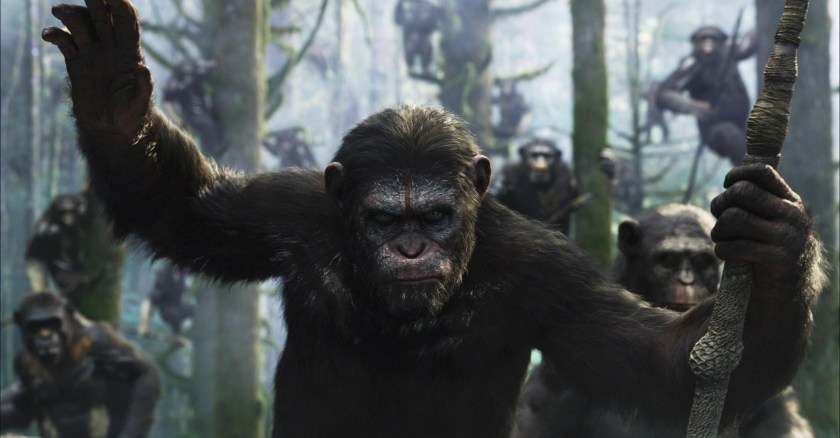
Ten years has passed since the outbreak of the “Simian Flu” and humanity has dwindled to extinction level numbers. In the Muir Woods outside of San Francisco, Caesar leads a tribe of apes granted intelligence by the same scientists that created the flu. Their life is relatively peaceful until human intrude and kill one of them. Tensions mount between Caesar and the human colony in the ruins of the Bay City. One tribe member, Koba, becomes increasingly angry as his trauma at the hands of humans is reawakened, and everything heads toward a tragic ending.

Dawn is a film about two sides, arguably justified in their anxieties, who make terrible decisions that attempt to say the ends justify the means. Now past the origin story of Rise of the Planet of the Apes, we get into the meat of this series that makes it interesting, the conflict between humans and apes. The Apes, under Caesar’s leadership, have a non-aggression agreement. Caesar has established inter-tribal rules about how they will treat each other when an emphasis on doing no harm to each other. As the film goes on, this non-violence pact is tested and, depending on your reading of the film, abandoned. One theme throughout the film is Caesar’s self-reflection on his personal views. He seems assured of what he is doing at the start, and by the end, he seems profoundly resigned to going down a path that likely leads to oblivion and definitely leads to no possibility of man and ape allying.

Koba represents a very different perspective than Caesar’s. In the first film, Koba is brutalized by human scientists as part of their experimentation to develop an Alzheimer’s cure. He still bears the physical scars of their work across his body. Koba is entirely justified in hating the humans. Dreyfus, the leader of the San Francisco colony, is also justified in his hatred of the apes. His entire family was killed as a result of the Simian Flu outbreak. The greater world around him crumbled as the virus led to violence between desperate humans and their governments. Every character has a reasonable justification for their actions against others, but the film is not going to let them off that easy.

Koba’s actions cause hundreds of apes to be killed, and he is even called out on this. One ape tells him he is allowing his personal hate to be disguised as a great revolt. Caesar points out that the only thing Koba learned from the humans was hate. And it is Caesar who has the larger scope of understanding. In Rise, he has an adopted human father and has experienced the empathy and caring that humans are capable of. Koba ends up a tragic character, so broken down by his traumas and unable to find a way out, he is consumed, and his hatred damns him. The hard part is that he isn’t necessarily wrong because from his perspective humanity is this destructive monster. His fall begins when he decides that the ends justify the means and that he must do anything he can to “prove” all humans are liars by nature.

It’s almost impossible to watch Dawn without thinking of our current political climate. There are two tribes so amped up on fears and assumptions and misinterpretations that they live in a ticking time bomb. Caesar’s strength is that he is willing to listen to people that he should rightly run from or make an example of. In the early moments of the film, a human shoots, a young ape and Caesar could have easily killed the man. He chooses to let the man go because he looks at the larger picture. He sees where the path of violence would lead his people and it wouldn’t be to an ultimate victory.

The weakest part of the film were the humans. But this is sort of a common trend in the Apes movies. The human characters are merely plot vehicles. It’s in the development and growth of the apes that fascinate us. Dawn showcases strong CG motion capture that doesn’t muddle the performance but allows actors to break free of the constraints of oppressive makeup. The highlight here are the performances of Andy Serkis and Toby Kebbell as Caesar and Koba, respectively. They cause the potentially unreal to become more dimensional than the humans on screen.

Movie Review – Mommy

Mommy (2014, dir. Xavier Dolan)

mommy-two

The film opens with title cards that explain we are going to be viewing an alternate 2015 where a new political regime has come to power in Canada and passed a law titled S-14. The law allows for parents of emotionally troubled children who are in low socio-economic conditions to send their children to hospitals and mental health care facilities without regard to fundamental justice. Fundamental justice is a much broader sense of civil rights, designed to anticipate unknown future laws that might try to violate the rights of individuals by being intentionally vague. In this situation, we meet Diana Després (Anne Dorval), a widowed journalist who is forced to remove her emotionally unstable son, Steve, from a juvenile detention facility after he burns another child. From there, their living situation becomes more complicated as work dries up and tension between Diana and Steve intensifies. Into this mix is thrown their neighbor across the street, Kyla (Suzanne Clément). This trio makes up a very different family unit, and they experience highs and lows ending up in a bittersweet place at the end of the film.

This is the last Xavier Dolan film of the month, and it is fascinating to see his growth as a filmmaker in a relatively short time. I Killed My Mother came out in 2009 and next year he has his seventh film coming out. He has also developed a stronger sense of aesthetics since that first feature. In an interview about Mommy, Dolan explained the importance of fashion in his work and how designing the costume of his characters is a crucial element in his writing and directing. In Mommy, each character tells us their story through their clothes, before a single word is even spoken.

The element of the film that you’ll immediately notice is the 1:1 aspect ratio, meant to resemble a cell phone camera filming. The movie is not found footage, but Dolan explained that he believes the aspect ratio to feel incredibly intimate. This seemingly unimportant and possibly pretentious element of filmmaking actually plays a crucial role in conveying the emotional conditions of the characters. Twice in Mommy, the screen expands to a 2:35:1 ratio. The first time this happens, it is to convey a sense of exhilaration and the second is to communicate Diana’s internal pain and struggle near the end.

Not enough can be said about the performances of Anne Dorval and Suzanne Clément in this film. Both actresses have been with Dolan in four out of his now seven films. Each time they play a prominent role they reveal a different facet of themselves. Dorval has played a mother in three films (I Killed My Mother, Heartbeats, and Mommy) and each portrayal is of an entirely different character. Clément is amazing to watch in light of her performance in Laurence Anyways. Kyla could not be a more different character, but the actress brings layers of depth and leaves ambiguity as to what has left Kyla with her speech impediment and why she has gone on sabbatical from teaching.

What is most important about Mommy is it’s honest and heartbreaking portrayal of how poverty destroys a family’s ability to get quality mental and emotional care. Financial hardship creates barriers to getting a lawyer, paying the bills, and generally living life. Diana struggles with creating a sense of hope for Steve and succumbing to the stresses of life and lashing out at him. Diana sums it up in a speech that can be read in some different ways:

“[…] I’m full of hope, okay. The world ain’t got tons of hope. But I like to think it’s full of hopeful people, hoping all day long. Better off that way because us hopeful people can change things. Hopeful world with hopeless people…that won’t get us far. I did what I did, so that way there is hope.”

Movie Review – At the Devil’s Door

At the Devil’s Door (2014, dir. Nicholas McCarthy)

SONY DSC

A teenage girl caught up in a new relationship plays a dark game where she barters away her soul. Decades later, Leigh, a real estate agent gets a new property with a dark history. At the same time, her angsty younger sister Vera is busy at work on her upcoming gallery show. Woven throughout these women’s lives is a demonic presence that seeks to use one of them to bring itself into the world through a vessel. Where this story ends up is surprising and how it gets there can be incredibly frustrating.

The work I saw from director Nicholas McCarthy was his 2011 short film The Pact and then his subsequent feature film adaptation of that short. I was very impressed with the surprising direction that movie took, the way it subverts audience expectations while telling a story from multiple perspectives. McCarthy’s most recent work was the Easter short in the Holidays anthology which was one of the more enjoyable pieces in that incredibly flawed collection.

At the Devil’s Door is an interesting concept that ultimately fails in its execution and commits the worst crime a horror film can: it’s so boring. Conceptually we have a very ambiguous demonic possession story that doesn’t hit all the familiar tropes. There were moments where I was genuinely hooked and the film did a great job reeling me in, only to plod on with dull and shallow characters for the next 20 minutes. The idea of a fragmented narrative could work in the film, but it’s handled in a confusion and ultimately distancing manner. We never get enough of a sense of who any of these characters are so it’s hard to care. I saw a comment that summed it up, this is a trilogy that has been compressed into one film. As a novel with the ability to get have an omniscient narrator the story would be something I’d eat up. It just fails as a film.

The positives are that McCarthy knows how to frame a shot. He loves to evoke and build atmosphere and the film is dripping with it. The atmosphere just doesn’t have a strong enough plot to take it anywhere. McCarthy has a love of suburban homes and lights them in ways that play up the creepiness of hallways and bedroom corners. The demon is very obscured and we get two glimpses of it throughout that are masterful. Once it is in the background, out of focus and the second is a quick glimpse as it hides in a cabinet. The design isn’t what you would expect.

At the Devil’s door biggest problem is that it doesn’t understand how to make a good ambiguous horror film. You need details in the world while the horror is kept ambiguous when you don’t have those world and character details the story never feels alive.

The Purge: Anarchy (2014, dir. James DeMonaco)

the-purge-anarchy-default-1920

Whenever I’m playing through a video game and it suddenly forces me to engage in an escort mission, bringing a character I can’t control from point A to point B and keeping them alive, I will groan and slog my way through it. The Purge: Anarchy is a video game escort mission as a feature length film. I have not seen the first Purge film but was told it was unnecessary viewing and that this second film would fill me in. That was true, they deliver a lot of first act exposition to explain what is going on.

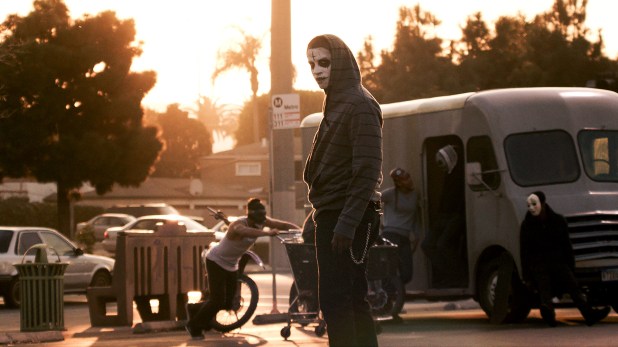
The film tells the story of the night of the sixth Purge. The Purge is an annual event instituted by an upstart extreme Libertarian political party as a way to help people release their rage. For twelve hours, all crimes are legal and the use of most weapons in committing these crimes is permitted. In Anarchy, we have an unnamed man (Frank Grillo) embarking on a mission of revenge. On his way, he makes the decision to help out a mother and her daughter and his Purge night takes an extreme divergence from his plans. A couple more characters join up with the group and they make their way across Los Angeles trying to survive the slaughter and mayhem around them.

It was probably not a good idea to make this my very next film after Green Room because the former definitely highlights the huge problems with the latter. Read my review of Green Room here. The Purge: Anarchy has five protagonists and none of them die until the last 15 minutes of the film and then it is only one. If the goal of the film is to make me feel that the event is the most dangerous and insane thing I could go through then it fails big time. Green Room kills off the most well prepared and confident character in a snap of your fingers. Here we have Frank Grillo essentially playing The Punisher and making it to the end and, spoiler, he’s the main protagonist of the third one currently in theaters. The film undercuts any sense of true fatality by keeping its main character alive the entire film.

Then we get to the metaphor of the film, and by god, it’s pretty hard to miss because they have shaped it in the form of a Mack truck. When I was in college, I stumbled across the film Mississippi Burning about the murder of three civil rights activists and directed by Alan Parker. I was astonished at how on the nose and disingenuous the message of the film felt. They kept beating you over the head with “Racism is bad”. Yes, I know that. But what interesting avenues in regards to racism do you plan to explore? Oh, none. Ok. Then why make this movie? But at least Parker’s film had a cogent message. I can’t tell you what Purge: Anarchy was attempting to say about anything. I suspect writer/director James DeMonaco is a little confused himself.

The first guess you might have is a message about Americans and their addiction to guns and the violence in our culture. Well, we have an allegedly anti-Purge group led by Carmelo (the always awesome Anthony K. Williams) telling us that the Purge concentrates its violence on the poor and minorities. Okay, a little on the nose, but let’s go with it. However, in the third act Carmelo and his group show up at a warehouse where One Percenters are hunting people down and state “It’s our time to Purge”. And the film portrays this as good and justified. I don’t think messages can get more mixed than that. They’re moments where we find young black men rounding up people from their own communities and selling them to the rich. We have two battling sisters who end up spilling blood over their shared love, one of the sister’s husbands. There’s a dude in an American flag baseball cap traveling around in a semi-truck with a personal army and mowing people down with a minigun. But the film never manages to compose a semi-cohesive point about any single thing it brings up. They’re bits of fictional media sprinkled throughout that build up the world but I never saw an underlying statement to any of it.

Even without a coherent thesis, the film could have done something stylistically interesting. The cinematography is sloppy and derivative. The pacing is dull and it becomes a movie where you are checking the time to see how much is left. If they had gone the route of Pulp Fiction-esque anthology that could have been interesting, playing with time and narrative order. They could have had the main character in one story as mere cameos in another. There were some points where we could have delved deeper into the racial impacts of the Purge but the film never has the guts to. I think having a late 40s white male director is going to keep the film from exploring those elements in any interesting way. I thought of a very different film, Lawrence Kasdan’s Grand Canyon (1990), that wanted to say something about race relations and came off as one the most insultingly dumb movies I’ve ever seen. This is sort of like Grand Canyon but with more guns, and even then I never felt the flinching and queasy sense of danger I got from Green Room.

The only moment in the film that got me truly interested were the final moments between Grillo and his target. There could have been some amazing themes explored there, some really complex and challenging performances. But then it just whimpers out and we cut away. The resolution is implied but I frankly would have rather seen a one room film set on the night of The Purge about Grillo and his target. Explore how people use the Purge to enact revenge and explore the psychological effects on those who do purge. The film just ends up being less than the sum of its parts. It didn’t make me interested in watching the newest film. Even looking at it as an ultra-violent escapist film you have to note it took the whole movie for even one of the five main characters to die! It just feels like a very surface level dip into sociology that other films have explored in more interesting ways.

John Wick (2014, dir. Chad Stahelski, David Leitch)

john wick

I remember seeing the trailer for John Wick a couple years ago and thinking “You can’t be serious. Because they killed his dog?” Now that I’ve seen the film, I sit here thinking…well, I’m not sure. The film tells the story of retired assassin John Wick, played by Keanu Reeves. His wife died suddenly and not long after he receives a dog that was her last gift to him. The dog is brutally killed by Iosef Tarasov (Alfie Allen), the son of a Russian crime boss, and this pulls Wick back into the game he thought he had left behind. Throw in supporting roles from a bevy of character actors: Ian McShane, John Leguizamo, Willem Dafoe, Adrianne Palicki, Lance Reddick, and David Patrick Kelly (Warriors! Come out and play-ayyy!).

This film felt like a comic book. That is it felt like I picked up the collection of “John Wick Returns”, a mini-series wherein a popular crime comics character was brought back after an absence of a few years. The way we were introduced to the world and its inhabitants without tons of exposition to explain themselves, made me feel like this was a world I could go back and read about in other titles. Of all the places and characters the world was peppered with, I enjoyed the Continental, a hotel that caters exclusively to assassins and paid killers, the most. I also loved the sense of history John had with everyone. We have no idea what the details are to these connections, but it felt like there would be dozens of stories to tell. Marcus (Willem Dafoe), John’s mentor, held a lot history in his interactions with John and, like any good comic book universe, I am sure the equivalent of “John Wick Begins” detailing his training under Marcus would be amazing.

I would never say I was a huge action movie fan so I was not the target audience of this film. Not being an expert on the craft and technique behind movie fights, I thought everything felt realistic. Nothing John did was too incredibly unreal. If you’re used to more hyper-stylized fighting you might think this was a more toned down version, but it looks like the way someone like John Wick would really fight. It’s funny now that I think about it; the action which you would expect to be the exaggerated element is played fairly real while it’s the world building that goes over the top.

There’s definitely some nods to classic action directors: The shooting out of the glass walls made me think of John Woo. Wick is your archetypal silent, stoic killer along the lines of a lot of French noir crime films.The acting is fine. I didn’t see any performances that blew me away, everyone sort of knew who they were playing and did that. I always love seeing David Patrick Kelly in anything and I did really enjoy the mannerisms he brought to his “clean up crew” character.

There’s a sequel on the horizon and I’m interested to see what they do. This film really plays like “the final John Wick” story and the stakes used to pull him back into action are about as intense as they get. Something taking place before this would work but I would like to see this older, broken Wick continue however they decide it might work. This isn’t going to be one of my favorites of the year, but it is an enjoyable film that kept my attention the whole run time. If you enjoy films with sense of a deep, developed world then I definitely think John Wick will deliver.