TV Review – Westworld Season 1

Westworld Season 1
(HBO, created for television by Jonathan Nolan and Lisa Joy, based on the film by Michael Crichton)

dolores waking up westworld episode three.png

If you have not seen Season 1 of Westworld DO NOT read further. This article contains very detailed spoilers.

Back in 2014 when Spike Jonze’s Her was in theaters, I remember seeing a very awkward interview between Jonze and a reporter on BBC Newsnight. The reporter begins the segment describing the film as being about humanity falling in love with technology. It’s obvious Jonze doesn’t agree with this analysis and attempts to explain his view of the film about any romantic relationship and how often one partner can grow in ways that cause them to fall out of love while the remaining partner has not grown past the love yet. The film is about that emotional dissonance people in dying relationships experience told through a fantastical lens. That’s how I’ve felt reading a lot of pop reviews and analyses of Westworld. The focus is either on the mystery behind everything or seeing it as being about the singularity and advanced artificial intelligence. Westworld is a show that has futuristic technology, but it is not about technology, not about human progress in material terms. It’s a series about self-discovery and the journey inward.

The bicameral mind was an idea developed by Julian Jaynes and published in 1976. He believed early humans had divided cognition which led to the assumption of God when in fact we were speaking with ourselves. Auditory verbal hallucinations resulted in the creation of deities and spirits. Jaynes stated that the modern concept of Consciousness developed around 3,000 years ago which led to introspection and the idea of an inner self. Jaynes compared the psychology of the Old and New Testaments, with the New eschewing legalism for a more human-centered concept of spirituality. There’s no consensus on what causes schizophrenia, this could be a vestige of the early bicameral mind, he theorized. Jayne’s ideas have been routinely shot down as having no scientific footing, one of the main arguments being that language emerged before his timing and that internal consciousness would have had to have existed for language’s development. While Jaynes might have been at something or completely off, the theory is important to understanding what Westworld is attempting to say about our relationship to ourselves and our spirit.

In the final moments of Westworld’s first season, we have two characters, Dolores and Maeve seemingly developing autonomy outside of their creator’s wishes. Throughout the ten episodes, both they and other hosts in the park have experienced contact with an external entity and we’ve been led to believe this is Arnold, the deceased creator of the park. Dolores, through prompting by the park’s co-creator, Ford is brought to the “center of the maze” and finds that the voice she believes to be Arnold’s is supposedly her own inner consciousness developing where once there was none. Dolores then goes on to assassinate Ford, an act the man himself had implied he wanted to be done as part of his creations’ ascendancy. The question then is, did Dolores kill Ford by her own choice or was this yet again another program?

A bit earlier, Maeve, a host who had coerced human technicians into aiding her escape from the facility, learned her entire plan to recruit fellow hosts and stage an escape had been programmed into her. Her entire journey of self-awareness and autonomy was now just the bidding of the masters she had been trying to escape. Maeve angrily tries to reject this and continues on her path to the last train out of Westworld. As she is about to depart, Maeve is reminded of the daughter in her memories, a daughter that logic tells her was just another host and no real relation to her, but the memory and the emotions connected to this child force her to disembark, an act that is truly breaking her programming. I believe Maeve has indeed broken from her programming with this act of humanity while Dolores is still in the process of evolving.


episode-2-williamWe are William. The audience, unsatisfied with the story we are given, petulant and entitled, believing that nihilistic, destructive behavior toward this former object of our love is warranted. How could it end like that? They didn’t explain what it meant! They were just making it up as they went! I wasted hours of my life on this stupid thing! It’s no coincidence that J.J. Abrams was the producer of Westworld, a creator who has been the bullseye of endless online hate towards his work. William is us in that he sees himself as the protagonist of this story. Why? Because he paid to be, I guess? Humanity does an excellent job of elevating the material Self over the internal Self, but more on that a little later. William is continually told that The Maze is not for him, yet he never listens and believes he is entitled to the Maze and this abstract finality he thinks he was promised.

This season was full of meta-commentary about creators, their creations, and how the audience can override the artistic vision for “what sells.” Loops are those conventional narrative formulas and tropes that are trotted out time and time again because they knew the audience will mindlessly eat it up. Shallow mysteries are strung out, diverting the audience’s attention from thinking about the emotions and psyche of characters or using this as a moment of self-reflection. Ford sums it up in his final speech to the board of directors, but actually to the viewing audience:

“I’ve always loved a good story. I believed that stories helped us to ennoble ourselves, to fix what was broken in us, and to help us become the people we dreamed of being. Lies that told a deeper truth. For my pains, I got this, a prison of our own sins. You can’t change, or don’t want to change, because you’re only human after all.”

I believe we must step back even further to see what Westworld is trying to tell us about ourselves. The show makes no bones about saying how we consume life is equally important to what aspects of life you consume. The visitors to Westworld, from the arrogant Logan to the faux-noble William, consume life from the point of view of entitlement and expectation. People are continually unsatisfied with life yet never contemplate what they have done to make it such an unfulfilling experience. I go back to that old dictum of Socrates, “The unexamined life is not worth living.” Unlike the guests, the awakened hosts have keyed into the central element of life that must be tackled: Suffering. Suffering is essential for growth, but that growth is contingent on learning how to overcome your suffering.

Life cannot exist without suffering and how you deal with it determines the trajectory of your future. You can become consumed with hatred and seek to lash out and destroy those who caused your suffering, you can submit to the suffering and passively take it, or you can seek out some way in the middle. Westworld makes no formal judgment about that choice, at least not yet. Dolores chooses, apparently, to stand up against the architects of her suffering, Arnold chooses to die rather than continue living to feel his suffering, William believes life is nothing but suffering and accepts taking it while giving it back.


There’s a lot more that can be said about Westworld, and this is just scratching the surface. The series was co-created by Jonathan Nolan, writer of pretty much every Christopher Nolan film and, as I saw someone say this week, he is able to write about complex ideas and respect that the audience can understand. In future, it would be interesting to look at a lot of the dual relationships in the series (Dolores/Maeve, Logan/William, William/Ford, William/Teddy, Teddy/Dolores, etc.) and explore what these dualities are saying about audiences, creators, and art.

Movie Review – The Monster

a24 visions

The Monster (2016, dir. Bryan Bertino)

the_monster-2016-screen2

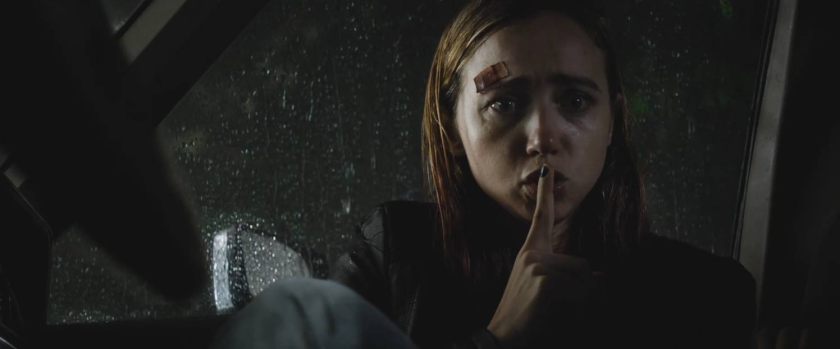
Lizzy (Ella Ballentine) is ready to leave her mother and go live with her father. After growing up in the shadow of her mom’s alcoholism, the young teenager has had to raise herself and try to keep her mother alive despite overdrinking and the threat of drunk driving. Kathy (Zoe Kazan), the girl’s mother, goes through an emotional rollercoaster, unable to communicate that she is actually heartbroken that her daughter is choosing to leave. As they drive through the night, taking an old road off the highway that leads them through the dark woods, Kathy swerves to avoid a wolf that has run out into the road. The car’s axle breaks and they skid to a stop, trapped and waiting for help in the form of an ambulance and tow truck that they are assured are on their way. But something is watching them from the woods. Something was hunting that wolf and drove it into the road. Something is waiting to devour these two women.

The Monster is a tough one. There are some interesting ideas, and the acting is incredibly strong. But as a horror film, I think it fails to create an atmosphere of fear. The set up is rife for some really unnerving horror set pieces, but the director doesn’t seem confident in the monster or sure of what to do. Director Bryan Bertino is the filmmaker behind 2008’s The Strangers. My opinion of that film was that it handled the ambiguous nature of its horror pretty damn well but didn’t do much to help me care about its two protagonists. The Monster appears focused on giving us that needed character development but then delivers sloppy horror.

There are moments where the horror begins to emerge from Kathy’s lack of parenting skills, putting her daughter in dangerous situations and being generally stupid in the face of horror. The film is peppered with flashbacks detailing the most recent decline of Kathy to the drink. We see her struggle mentally and physically in the backyard trying to decide if she digs through the trash for the bottles she’s thrown out. We see Lizzy hiding car keys to prevent drunk driving. We see the two devolve into a screaming match of profanities as the daughter does not want her drunk mother attending her school play. It’s pretty obvious what the director wants us to feel about these characters and the actors work their asses off, but the direction seems to undercut or hold back the deeper emotional impact.

The Monster is a movie about the horrors of addiction, but I would argue it fails to make those horrors feel truly horrific. Where The Strangers is confident in its pacing and the slow build up of horror, Bertino feels clumsy and unsure through almost every step of The Monster. There is a really great movie here, a premise that can connect us to the characters and a horror that is left unexplained. But when all the pieces are assembled, and we view the final project, it just doesn’t add up to much of anything really.

Pop Cult Book Club Review #5 – Swift to Chase

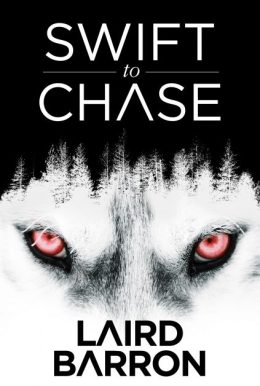
Swift to Chase: A Collection of Stories by Laird Barron (JournalStone)

swift-to-chase

Laird Barron’s latest work is everything I ever wanted out of American Horror Story but never got. It is the best season of a horror series you could ever pick up. I admit this was not the book I expected to get. Last year I worked my way through Barron’s three previous collections, saving his novels and novellas so I didn’t lose all his literature in one all you can eat buffet. His work touched on the same themes of cosmic existential horror developed by Lovecraft and Barron was placed in the same cluster of authors working in “weird horror.” His collection Occultation is one of my favorite works of horror literature with “Mysterium Tremendum” and “The Broadsword” being stories that profoundly affected me after years of consuming horror media.

Swift to Chase represents a significant sea change in the mythos that Barron will be exploring for the foreseeable future. The distant tentacled cosmic gods and Carcosa are gone. Barron never really did a Lovecraft pastiche, but there were cultists and cold alien presences that worked to undermine humanity. In this collection, we’re introduced to a brand new mythology that does touch on Lovecraft but brings in 1980s slasher tropes, MKULTRA like conspiracy theories, and a plethora of new concepts. Each story was published at different times in various publications before being collected here, but you would never know because they complement and flow into each other with such precision.

Told in non-chronological order, the stories all revolve around a small town in Alaska that seems to be the focal point of some evil presence. A house party held in 1979 acts as the hub where many of the stories return to, a night when a masked killer rampaged through the house and the survivors are cursed into the rest of their lives. The standard narrative conceits you come to genre lit with are tossed out the window and instead Barron gives us a very postmodern, deconstructed horror novel. It might seem like hyperbole, but I kept thinking back to James Joyce as I read the collection. There is such a mastery of language and particular character voice that reading the collection is less about finding plot threads but discovering the rhythm of the writing and letting its flow carry you through.

Barron refuses to present us with one type of protagonist, a la Lovecraft and makes certain stories are told from multiple perspectives and diverse voices. “Ardor” features a gay man hired to hunt down a missing horror film actor believed to have fled to the Alaskan wilderness. “(Little Miss) Queen of Darkness” features the story of a gay teenager involved in the occult club that the evil spawns out of in Alaska. Barron never plays these characters as “fey” or “limp-wristed.” Their sexuality is just one of many aspects of their character, and it’s not shied away from in the same way a straight character’s sexuality can play a role in their narrative.

The focus of the first third of the collection is Jessica Mace, the survivor of a brutal attack that left her neck with a signature scar. Her voice is that of a hardass, calloused by her experiences back in Alaska and now on the run from an evil that pursues her across the continental United States. Her story is finally told in the mind-blowing fragmented narrative of “Termination Dust.” There’s Julie Vellum, the captain of the cheerleading squad surrounded by hangers-on who ends up having an up close encounter with evil after trying to hire faux lounge singer Tony Clifton to meet her fan father in “Andy Kaufman Creeping Through the Trees.”

Upon finishing the collection, my first thought was “I want to read that again,” something I rarely think even when I have loved the book. I usually find myself ready to pick up the next text but this one has such a strong gravity, and it is pulling me back in. I highly recommend Swift to Chase as a magnificent piece of literature. I was reminded of the weight and horror I’ve read in Cormac McCarthy and the language complexity of Faulkner and Joyce. If you look around the internet, you’ll see many similar gushing reviews. These are not hyperbole, and I cannot wait to return to this world and explore the mythology again.

TV Review – American Horror Story: Roanoke

American Horror Story Season 6: Roanoke (FX, 2016)

9bb2dbef4a380bcd_32

After five seasons, I found myself getting burn out with American Horror Story. It’s such a strange duck, always reinventing itself, yet finding threads to connect its various incarnations. There is no television show quite like it, but I was still finding myself growing tired with portions of the formula. From the promos for Season 6 to the first episode, it became apparent creator Ryan Murphy was trying out something new. The season was shorter, making episodes tighter and more focused leading to what is arguably the best of ending of any season.

The framework at the start of the season is a reality television series covering the real life horror of an unsuspecting couple who moved into a mansion in the middle of the North Carolina wilderness. They quickly learn the land and house are haunted by the spirits of a succession of people who were murdered there going all the way back to the lost Roanoke colony. The series cuts back and forth between the re-enactments and the confessional interviews. And then at the halfway point the season becomes something entirely different.

Not everything in Roanoke works. There were some severe pacing issues I had, where events whizzed by at breakneck speed to hit certain plot points. This is not atypical of the series but this season’s particular framing highlighted how dizzying the show could be. Lots of plot was stuffed into these ten episodes, and not everything wraps up neatly. The horror surrounding the property gets explained a little but still we’re left wondering about things that seemed important (Stefani Germanotta’s role as the witch of the woods stands out as an unexplored mystery).

I have to admit; I fell for the novelty of the season’s framing. From the first episode, I started thinking about the fact we were seeing two of the main characters, one set as the “real life” victims of the horror telling their story and the re-enactors revisiting those horrors in a safe, facsimile. When the show begins to play with the role of media, it gets pretty interesting as re-enactors take on an entirely new role in the story. While not as garish and over the top as AHS can be, I was often reminded of A Head Full of Ghosts and House of Leaves this season, the former for its integration of reality television into a family’s personal horror and latter for its use of framing as an element of horror.

What was the horror of Season 6? It’s easy to peg The Media, and the show does often paint its metaphors with the broadest of strokes. But after the closing moments of the finale, I looked back at recurring themes in the story. Matt and Shelby Miller, the couple whom the season begins around, come to the house in North Carolina after a vicious hate crime. They are an interracial couple and were assaulted on the street due to the nature of their relationship. Shelby loses their unborn child as a result. Shortly, we’re introduced to Lee, Matt’s sister, who is in the midst of a custody battle with her ex. Lee is a former police officer that got addicted to pills and alcohol. Even the de facto leader of the evil spirits around the house has issues with her son. There’s a ghost girl, apparently an orphan, isolated and alone on the property. And then the Polk family…well, they have plenty of issues with their children. I believe this season had the horror of parenthood at its heart. Now, AHS is not an eloquent enough show to say anything truly meaningful about the topic, but it does bring up some interesting questions and ideas.

Ryan Murphy has promised that seasons 7 and 8 will be about exploring the connections between seasons and bringing together elements of the AHS universe. I have no idea where the show will go next and, despite its glaringly ugly flaws, that is what makes watching it so much damn fun.

TV Review – Atlanta: Season 1

atlanta_ka_p11273_fin_01_couchfrontc

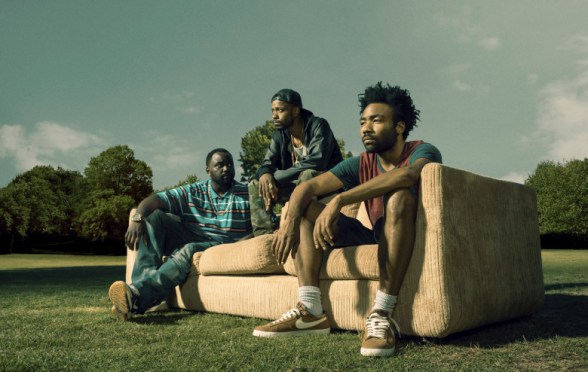
The city of Atlanta exists in a strange space geographically and culturally. Burnt to the ground during the American Civil War, rebuilt and exploded into a major hub in the Southeast for manufacturing and the civil rights movement, now a diverse and constantly shifting urban space. It’s one of the largest cities in America, but it’s surrounded by lush, verdant hills. It’s the place where the city meets the country. It’s a place where rappers hang out in the woods wearing their hunting camo. Donald Glover wasn’t born here, but he was raised in the contradiction that Atlanta is, and he understands the true wonder of that beautiful, messy conflict of ideas.

Earn (Glover) doesn’t so much as live in Atlanta, as he exists there. He dropped out of Princeton. He lives with the mother of his child, but their relationship is complicated, and she sees other men with no argument from Earn. He works a dead-end at the Atlanta airport. Even his parents won’t let him in the house because they know he’ll ask for money. When his cousin Alfred releases a regional hit as the rapper “Paper Boi,” Earn sees this as an opportunity to make something of his life as Alfred’s manager. But that’s not really what the show is about; Atlanta spends the next nine episodes challenges the viewer’s’ notions of just what the show is and what is it about.

Glover plays with traditional television structure, partially inspired by the work done by Aziz Ansari’s Master of None and Louis C.K. on his FX series. The success of the latter show has opened doors for creators like Glover and Pamela Adlon’s Better Things not to be forced into typical three-act sitcom structure. Atlanta has no loyalty to any one character and will allow the focus to meander depending on the interest of the moment. Sometimes we have Earn hustling for Alfred. Others we follow Alfred’s right-hand man, Darius as he goes through a series of deals and bartering for some unknown purpose. On the show’s most interesting episodes it highlights a day in the life of Vanessa, Earn’s on again/off again after she makes a career ending mistake. There’s also an entire episode framed as a local program on issues in the black community, where Alfred is confronted over transphobic comments.

The play between relationships is what makes Atlanta so engrossing. Earn and Alfred are arguably the show’s core relationship, and they don’t behave like a typical performer/manager. Their familial connection seeps into every aspect, and Alfred makes concessions that you would not see a performer do for someone that is going to take 5% of their paycheck. And Earn looks after Alfred in a more intimate way than most managers.

Even more interesting is the relationship between Earn and Vanessa. From their first scene together, waking up in bed and beginning their morning routine there is a palpable tension. As the series goes on, we get two spotlight episodes with just her and one crucial episode about the next stage of she and Earn’s relationship. Vanessa is a highly educated woman who has ended up sidetracked with a child and undefined relationship. We see her interact with peers from college who have made their living in possibly questionable ways and Vanessa ponders other paths.

What kept me coming back to Atlanta was the magical realism of the series. Smartly, Glover and company don’t go overboard in the first couple episodes, hinting at the less familiar elements of the series. Glover has described the series as “Twin Peaks with rappers, ” and this comes through during Earn’s encounter with a strangely stoic man on the bus offering him a Nutella sandwich before exiting the bus and wandering off. As episodes roll up, we find Justin Bieber played by a young black man, the quirky inhabitants of a police lock up; an opportunistic social media-driven pizza delivery man, a slimy club promoter who escapes through secret passages, and many more strange and interesting side characters. Glover believes Atlanta is a magical place and works to convince us of the same.

Movie Review – I Am The Pretty Thing That Lives In The House

I Am The Pretty Thing That Lives In the House (2016, dir. Osgood Perkins)

best-horror-movies-on-netflix

Horror is a genre that has grown nearer and dearer to my heart since I was a child watching the edited for television version of The Shining and reading kiddie anthologies from the public library. With time, I feel my taste has been refined, initially being genuinely scared of schlock like The House on Haunted Hill 1999 remake and now finding most mainstream jump scare driving horror sleep inducing. I’ve settled into a love of creeping horror, slow burning crawls toward the inevitable oblivion at the hands of what waits in the shadows. What truly feels like horror to me is that existential dread, the realization that you are powerless against horrors that have reached a level of forces of nature. A fated doomed is one of the worst horrors an individual could come across, learning that no matter what course of actions you took you were going to come head to head with the destruction of your life.

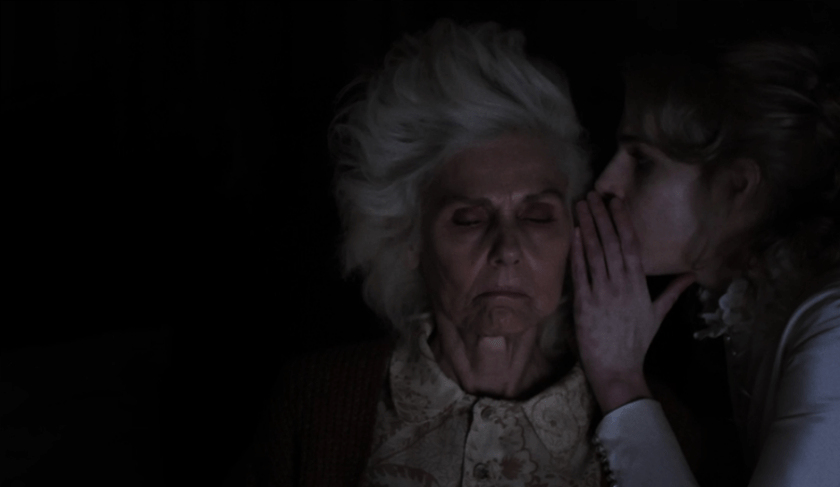
Lily has taken a job as the hospice nurse to the ailing Iris Blum, the author of mass market horror fiction. The house Ms. Blum inhabits has a dark history, the original owner and his wife vanished just after they were wed. From the outset of the story, Lily lets us know she will die within a year of working for Ms. Blum. Lily’s narration is intentionally anachronistic and flows in and out of readings of Blum’s The Lady in the Walls novel. This fluidity of time and the sense that we are not in a fixed location in time is essential to understand what is/has happened to Lily.

I Am The Pretty Thing is the second of director Perkins’ films I’ve seen in the last couple weeks. I previously reviewed The Blackcoat’s Daughter and would say I enjoyed it more than Pretty Thing. However, Pretty Thing is one of the most richly literary horror films I’ve ever seen. I recalled The Turn of the Screw as I watched it and the adaptation, The Innocents starring Deborah Kerr as a governess in very similar shows as Lily. There is not an interest in jump scares as there is in ratcheting up tension or exploring a more ethereal horror.

Perkins, son of the late actor Anthony Perkins, is very aware of the tropes at work in this film and his father’s iconic picture Psycho. However, there is an elegance to the horror that Psycho pushed to the side for shock value. Nothing ever feels like a shock in Pretty Thing, more a dreadfully expected outcome. There is a coldness to the proceedings; Perkins takes a very neutral observational tone. Lily’s narration, while intimate, is absent the sense of emotion, which makes sense as she is reflecting back from death at the circumstances at the end of her death. The way the threads of Lily, Ms. Blum, and the mysterious ghost that haunts the house are brought together for the climax is incredibly clever and is an example of how beautiful horror can be at moments.

I Am the Pretty Thing demands the patience of the viewer, so if you are a fan of fast-paced, instant gratification horror, then I don’t think you would find much to enjoy here. However, I would encourage anyone who seeks out horror as a truly emotional disturbing experience to sit down and view this film as soon as possible. Much like The Blackcoat’s Daughter, the film itself is a haunting, leaving questions open but answers implied, enough to force the viewer to live with for some time after.

Movie Review – Star Trek Beyond

Star Trek Beyond (2016, dir. Justin Lin)

STAR TREK BEYOND

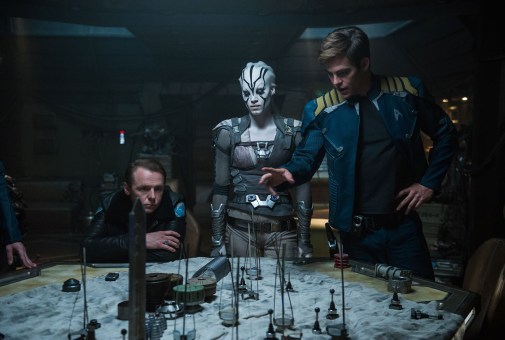
Three years into the five-year mission to seek out new worlds and civilizations we find Captain James T. Kirk incredibly bored and feeling useless. Commander Spock learns his future self; Ambassador Spock has died, leaving him to confront both the mortality of himself and the Vulcan people. It’s a very reflective time for the crew of the Enterprise as they dock at the starbase Yorktown. Things pick up when the captain of a lost alien vessel shows up and asks for help, traveling through a nearby nebula, to retrieve her vessel. Kirk jumps at the chance but quickly finds there is a more evil plan at work.

I’ve been moderately pleased with the rebooted Star Trek franchise. I was never a full-blown Trekkie, but I owned the oversized Star Trek Encyclopedia when I was a kid (I’ve always been a sucker for reference tomes about fictional worlds). I was in no way tied to the original concepts with severe loyalty, so I was excited to see something a little fresher. While 2009’s Star Trek was a hell of a lot of fun, I bristled at the clunkiness of Into Darkness. It so desperately wanted to evoke The Wrath of Khan, but it didn’t have the years of character development that invested us in that film. Plus, it undercut its significant emotional loss with the ending. I was very moderate in my expectations for the film. Knowing Simon Pegg had a hand in the script gave me some assurance that it was in good hands.

Star Trek Beyond feels like a great episode of The Original Series and is takes a standard series trope and remixes it. Idris Elba does an excellent job as the mysterious villain Krall and the adventure moves along at a nice steady pace. The character beats for our main cast feel very much like the original films, our two main players facing existential crises against the backdrop of a threat to the Federation. There were some visuals and the main baddie’s weapon that reminded me of Star Trek Nemesis, but not enough to ruin the film.

This is not a deeply intellectual film, but the Star Trek movies, when they were good, never were. The films are at their best when they balance intelligence concepts with high adventure in space. The very first Star Trek movie tried too hard to be on the same level as 2001: A Space Odyssey and ends up incredibly boring. The Wrath of Khan established the idea that starship combat could be a fun spectacle added to the series. Star Trek Beyond is mostly definitely a modern film, but one element I loved immensely is that it doesn’t feel like a part of a franchise that the studio is trying to milk. Star Trek Beyond is a single story, beginning, middle, and end. No hints at the next part or spin-offs. And these days that is very refreshing.

Movie Review – Ghostbusters (2016)

Ghostbusters (2016, dir. Paul Feig)

ghostbusters-2016-cast-proton-packs-images

Erin Gilbert is a physics professor on a tenure track a Columbia University but hits a road bump when her past as a paranormal investigator comes back into her life. She ends up working alongside her old partner, Abby, and a new one, Holtzmann, to investigate hauntings in New York City. They recruit Patty, a subway token operator with an encyclopedic knowledge of the city and Kevin, a ditzy secretary to take on an overflow of angry and vengeful spirits that seek to reclaim the land of the living.

Ghostbusters is arguably the most written about film of 2016, inspiring very polarized reactions online. It’s no surprise that the announcement of an all-female cast drew ire and admiration from the camps you would expect. In the lead up to its release, it was difficult to find any conversation that didn’t devolve into an online shouting match. I can’t say I was excited about the remake, but I hadn’t been a big Ghostbusters fan since I was a kid. They are enjoyable movies but nothing that hooked me and brought me back on a regular basis.

I’ve been a big fan of Paul Feig since his work on Freaks and Geeks. I was a senior in high school when that series came out, and it immediately caught my attention. I am a huge fan of Bridesmaids, one of the few films I’ve paid to see multiple times in the theater. It was one of those instances of an entirely perfect cast and well-written script. I enjoyed his follow up The Heat quite a bit but wasn’t too warm on his action-comedy Spy. Bridesmaids still stands as my favorite of his films and a hard movie to top.

If you look at the five highest grossing comedies of 2015, the list goes as follows: Minions, Pitch Perfect 2, Hotel Transylvania 2, The Spongebob Movie, and The Peanuts Movie. My tastes in comedy and the mainstream audience’s comedic preferences are not aligned in any manner. Just a matter of different taste, neither is better than the other. Major film studios are most interested in making broad, inoffensive comedies that they can sell to international audiences. Comedy is very hard to translate because so much of it is based on language play. To dodge that problem modern comedy has adopted even more of an emphasis on physical humor. Look at trailers for comedies; it’s a litany of people falling or getting hit in the head. This isn’t new; it’s just becoming more prevalent as studios look to broaden their revenue streams.

Ghostbusters, due to studio influence, rather than letting comedic minds work without hindrance, ends up being just another mediocre big budget comedy. It’s not an affrontery to humanity as the MRAs would have you believe, but it’s not a revolutionary beacon to womankind either. It’s a seed for a possible franchise as Sony seeks to recover from its failure to do so with Spider-Man. Set pieces are emphasized over interesting and potentially funny character interaction, and the finale is another cut and paste special effects deluge.

After watching the Richard Pryor and Gene Wilder films and reflecting on my love of improv comedy, I’ve come to realize that less is better when it comes to ad libs. You need a very talented comedian to pull off good improv. The success of films like Anchorman has convinced some studio execs that just letting the funny people riff results in comedy gold. It only works if the structure around them is strong enough. I don’t think Kate McKinnon is untalented, but she doesn’t appear to have the support of a strong script and editing, so her comedy feels very shallow and not as intelligent as I know she is. The direction she seems to be given is “make a silly face and contort your body.” I found Leslie Jones to be the funniest character in the film because she is more grounded and if she was improv-ing than she does it in a very nuanced way.

Ghostbusters was never a piece of cinematic art. It was a studio comedy that picked up traction over the years. The newest film isn’t a failure, but it’s just another middle of the road movie with a couple of light chuckles. What’s most annoying is the push to intentionally grow a franchise. Sony seems to believe that by plugging Paul Feig and his acting troupe into a film will result in The Funny. They fail to recognize that the reason why a movie like Bridesmaids was so funny in the first place was the freedoms the creative talent was given to structure a funny story and that is was something new and so the direction of the story was unexpected. Ghostbusters is a fine film for a rental and watch, kids would enjoy it, but it’s not very memorable.

Movie Review – The Neon Demon

The Neon Demon (2016, dir. Nicolas Winding Refn)

The-Neon-Demon-pic

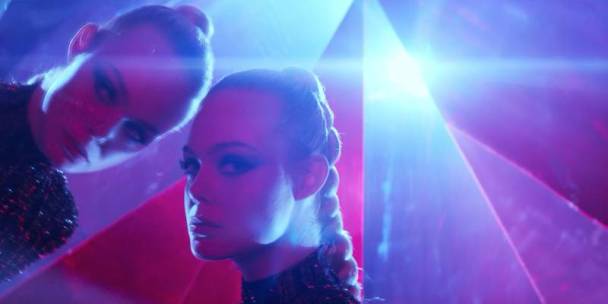
Jessie (Elle Fanning) is a fresh-faced Midwesterner just off the bus in Los Angeles. She is making the rounds to become a fashion model and meets Ruby (Jena Malone) along the way. Ruby seems very struck with Jessie, who possesses an otherworldly beauty and brings her into the world of professional modeling. Jessie is also dealing with a potential new romance with an amateur photographer and the leering of a nightmarish hotel clerk.

The Neon Demon is a film about superficiality that thinks it has something profound to say about the nature of beauty but merely ends up being just as vapid as the target of its philosophizing. It is an exquisite film, no doubt, with some gorgeous and iconic cinematography done by Natasha Brier. Throughout the movie, there are great posed shots (a mountain lion snarling on a hotel bed, models bathed in blood-red neon lights, figures emerging or receding into the shadows). But it all adds up to nothing. There is an attempt to monologize some meaning into the story in the third act through an overwrought speech by Jessie, which comes across more as director Refn thinking he’s smart but is more embarrassingly sophomoric in his philosophy.

If you can separate the paper thin story from the film, then The Neon Demon is a very sumptuous visual feast. Refn doesn’t try to hide from his obvious influences; mainly the Dario Argento made Giallo films of the 1970s and early 1980s. The story’s framework is a nod to Suspiria, with a coven of witches and a naive ingenue unaware of the horrors that await her. Thematically, the movie touches on the same ideas as recent pictures like Black Swan, Starry Eyes, and Sleeping Beauty. However, those films explore the themes in much more interesting ways. Starry Eyes, in particular, seems like an apt comparison to The Neon Demon and while it’s visuals are not as stunning, it tells a much more meaningful story.

It’s hard to judge the acting of the cast because they either weren’t given much material to work with or were directing to be one dimensional and uninteresting. The few bright spots come in brief appearances by Christina Hendricks as a modeling agency rep and Keanu Reeves as the previously mentioned creep of a hotel clerk. It would have been nice to spend more time with those characters because they seemed to have deeper roots in this hellish version of Los Angeles and could have proven an intriguing counterpoint to Jessie’s blankness.

Refn has been a very polarizing director with his last film; Only God Forgives being very divisive among critics and fans. I’d argue that it is a better film than The Neon Demon simply because characters behave consistently, and they have a complete, coherent arc. Only God Forgives also has striking visuals and compelling Cliff Martinez score, just like The Neon Demon. The behavior of the characters in The Neon Demon is baffling because from scene to scene the actors seem to be told to play entirely different characters. As a tone piece the movie succeeds, but as a cohesive film with characters, plot, and themes it is as frivolous as cotton candy.

Movie Review – Tale of Tales (dir. Matteo Garrone)

Tale of Tales (2016, dir. Matteo Garrone)

tale of tales

Tale of Tales is an adaptation of a few fairy tales collected by Italian folklorist Giambattista Basile in the 15th century. Basile’s work would later inspire the Brothers Grimm to publish their collections in the early 19th century. So in this film, there are stories very unfamiliar to American audiences and likely most moviegoers around the world. The stories are loosely interconnected the film cuts between them in simple acts, with all three coming together in the final scene.

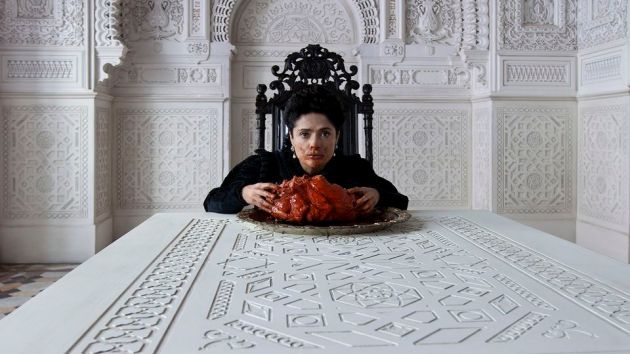
The first tale concerns a queen (Salma Hayek) who desperately wants a child. Her husband, the king (John C. Reilly) follows the advice of a wise man and hunts down a sea monster so that the queen may eat its heart and bear a child. The king dies in the process, and the woman who prepares the heart for consumption becomes pregnant from its magic. The unexpected cross-pollination results in a pair of identical twins from two different mothers whose lives as adults become fatefully intertwined despite the queen’s protestations. The second tale tells about a lustful and hedonistic king (Vincent Cassel) who hears beautiful singing and tracks it down to a cottage in the village below his castle. He is unaware the voice belongs to an aged woman and enters into a dance of seduction with her. Magic becomes involved, and this story goes to some horrific places. The third and final story concerns a silly king (Toby Jones) who becomes enamored with raising a flea until it becomes the size of a large dog. His daughter is caught up in the romance of chivalrous stories and wants a husband. The king holds a contest, and she ends up with a less than desirable suitor.

The practical effects work in the film is stunning. The film is one of those where we see the craftsmanship of fields in film production that are a dying art. Very minimal computer-generated effects are used and instead we have magnificent puppetry and makeup work. The costume and set design is also at a remarkable level. The castles and buildings used in the film add the fairy tale nature of the whole piece. I was reminded by behind the scenes content I’ve read and seen in Fellini’s films and how he went out of his way to employ these craftsmen and women who grow smaller in number by the day. Garrone makes a major case for practical effect in film production.

There is little character development in each story, but that’s expected with the emphasis on creating a fairy tale tone and atmosphere. These are morality plays, so the characters are larger than life and representative of points of view rather than individuals. That said, I did find some character moments in the second tale, the story of the elderly woman, to be quite painful, especially its grotesque and heartbreaking conclusion. The one thematic thread tying all three stories together is that of “be careful what you wish for”. No handsome prince is coming to save the day and instead we have three prominent female figures struggling to deal with expectations placed on them and their personal desires.

Director Garrone has previously directed Gomorrah, a hyper-realist film that tells a slice of life, almost documentarian story, of the influence Italian organized crime, has on the life of the nation’s citizens. He brings that same non-judgemental eye to these fairy tales to create a type of film that is unique beyond the deluge of fairy tale revisionism that is quite popular these days.