Movie Review – Full Metal Jacket

Full Metal Jacket (1987)
Written by Stanley Kubrick, Michael Herr, & Gustav Hasford
Directed by Stanley Kubrick

Full Metal Jacket was seemingly accepted at face value by critics and audiences alike, and this is one of the most baffling moments in Stanley Kubrick’s directorial career. It shouldn’t surprise us though, as A Clockwork Orange was assumed by so many to be the filmmaker’s endorsement of rape and youth violence. Never underestimate people’s ability to not want to put in the work to think about a piece of art beyond its basic presentation. I have known “Chad” types who have quoted Full Metal Jacket with glee, and I can remember the first time I saw it not understanding why they thought this was a movie glorifying the Marine mindset. In the context of Kubrick’s full body of work, this rewatch has helped clarify for me that this is not the “funny” movie those sociopaths seem to think it is.

Continue reading “Movie Review – Full Metal Jacket”

Movie Review – The Shining

The Shining (1980)
Written by Stanley Kubrick & Diane Johnson
Directed by Stanley Kubrick

The Shining is usually the first Kubrick film a person sees as it is the most popular and one of the most accessible. It connects with people who like Stephen King (and don’t realize how much Kubrick made this his movie) and fans of horror in general. At some point, the picture became part of a quasi-fandom with Steven Spielberg recreating the Overlook Hotel in Ready Player One, inspiring a fake documentary called Room 237, and having a sequel in the form of the King novel and subsequent Mike Flanagan picture Doctor Sleep. It remains a powerfully affecting horror film that leans into its ambiguity to create an authentic atmosphere of resonant horror.

Continue reading “Movie Review – The Shining”

Movie Review – Barry Lyndon

Barry Lyndon (1975)
Written & Directed by Stanley Kubrick

I think Stanley Kubrick was one of those rare directors who could dramatically shift tone & aesthetics between films without losing his core themes. On a material level, the differences between A Clockwork Orange and Barry Lyndon is a vast gulf. Sex & violence is still present, but it’s meted out in a much more measured fashion. The goal of Barry Lyndon is to communicate with subtlety, to control the camera to an almost ascetic degree in how it delivers information about the characters & conflict. Kubrick also plays with structure creating two very distinct halves that tell us different things about the same character.

Continue reading “Movie Review – Barry Lyndon”

Movie Review – 2001: A Space Odyssey

2001: A Space Odyssey (1968)
Written by Stanley Kubrick & Arthur C. Clarke
Directed by Stanley Kubrick

Film does not work without images. In the same manner, music does not work without sound, and comics do not work without illustration. With 2001: A Space Odyssey, Stanley Kubrick dove deep into the very heart of what gives cinema form. The result is a movie that is actually an incredibly traditional narrative, shaking off all the unnecessary exposition and focusing its lens on movement, space, both the presence & absence of sound, color, lighting, every essential component of the craft. I get entirely if someone doesn’t like 2001, and the first time I saw it, I felt very dissonant with the picture. It took some additional viewings, reading & hearings others’ thoughts, and forming a picture of what the movie represented for myself.

Continue reading “Movie Review – 2001: A Space Odyssey”

Movie Review – Dr. Strangelove

Dr. Strangelove (1964)
Written by Stanley Kubrick, Terry Southern, and Peter George
Directed by Stanley Kubrick

There is comedy in the horror of humanity destroying itself. That is what Stanley Kubrick realized while penning the script for Dr. Strangelove alongside Peter George. Initially, they planned to make a serious film about a nuclear accident based on the simmering Cold War fears of the day. The more Kubrick delved into the policies surrounding mutually assured destruction, the more he found it all to comically absurd. Once Kubrick realized he was making a comedy about nuclear annihilation, he brought in writer Terry Southern who had written the comic novel The Magic Christian, which the director and Peter Sellers both loved. Southern punched up the story using real scenarios and protocols for comedy, and thus we have the dark humor of Dr. Strangelove.

Continue reading “Movie Review – Dr. Strangelove”

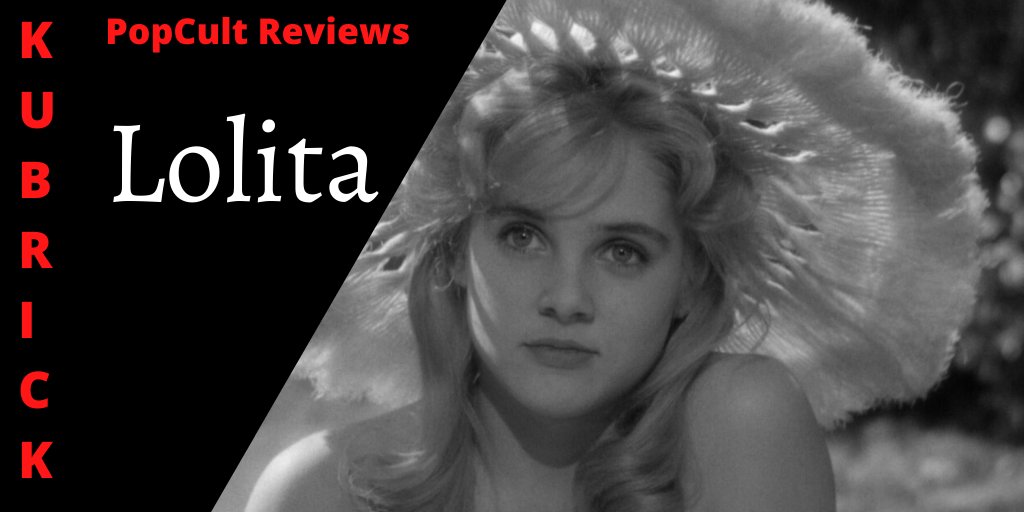
Movie Review – Lolita

Lolita (1962)
Written by Vladimir Nabokov (but really by Stanley Kubrick & James B. Harris)
Directed by Stanley Kubrick

As both the film’s trailer and poster asked, “How did they ever make a movie about Lolita?” To say this is an extremely controversial book is an understatement, but also to say that the controversy surrounding the book is overblown would be as well. Lolita is sometimes categorized as an erotic novel, and, as someone who has read Nabokov’s book, I didn’t find anything erotic in the whole text. It’s a first-person narrative told by an unreliable narrator whom the author has called “a vain and cruel wretch.” The novel Lolita is a literary text dripping with irony. There’s a bizarre penchant for modern American culture to assume “protagonist” is equivalent to “hero,” and I guess our popular media has pushed that paradigm aggressively. I don’t think that is the case, and often the most interesting stories are the ones told from a villain’s point of view, which does not mean we are expected to agree with the narrator.

Continue reading “Movie Review – Lolita”

Movie Review – Spartacus

Spartacus (1960)
Written by Dalton Trumbo
Directed by Stanley Kubrick

Spartacus helped to end the Hollywood blacklist. As a result of The House Un-American Activities Committee beginning in 1947, radical right-wing legislators sought to root out Communism in the nation, and this led to artists working in the film industry to be placed on a blacklist. Being placed on this list meant you were considered unhirable because your presence would lead to suspicions of Communist sympathies. 151 American entertainment professionals were put on this list and suffered greatly as a result. Dalton Trumbo was one of those people, and the combination of Kirk Douglas getting Trumbo hired to write Spartacus and director Otto Preminger doing the same for Exodus was a signal that over a decade long blacklisting was over. President John F. Kennedy crossing the picket lines of anti-Communists to view the film further spread the message that this horrible period should end.

Continue reading “Movie Review – Spartacus”

Movie Review – The Killing

The Killing (1956)
Written by Stanley Kubrick & Jim Thompson
Directed by Stanley Kubrick

Just a year after Killer’s Kiss, Stanley Kubrick directed this heist film that dripped with noir. It should be noted that starting with this film, every movie Kubrick ever made was based on a novel. For the most part, his films would come to overshadow the books he adapted because Kubrick didn’t believe he was chained to the source material. I think that is an excellent thing because film adaptation is like language translation, you do not go for the exact 1:1 meaning, you shape the content to communicate the ideas and themes best. Kubrick made this picture under the banner of the Harris-Kubrick Pictures Corporation, a producing partnership he would continue for two more films (Paths of Glory & Lolita).

Continue reading “Movie Review – The Killing”

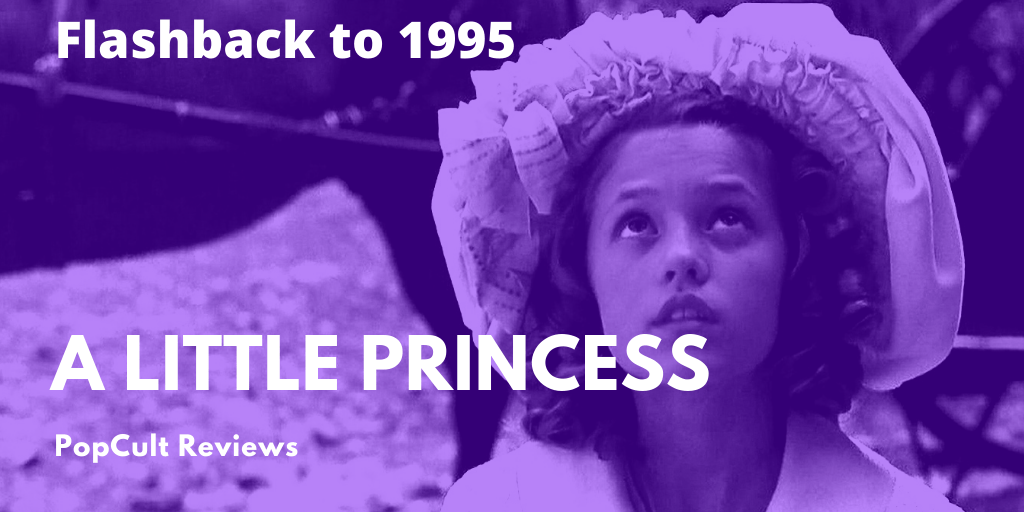
Movie Review – A Little Princess

A Little Princess (1995)
Written by Richard LaGravenese & Elizabeth Chandler
Directed by Alfonso Cuaron

When I watch films intended for families or children, I always focus on the theme or lesson being communicated. I think, as an elementary teacher, I want to know what this picture is telling kids about the world and humanity. I’d heard very positive things about A Little Princess, mainly from the perspective that Alfonso Cuaron did a great job directing. From that technical perspective, the film is well done, save for some poorly aged computer special effects. But I actually found the lesson of the picture to be deeply troubling yet very much in line with many of the films that come out of Hollywood for kids.

Continue reading “Movie Review – A Little Princess”

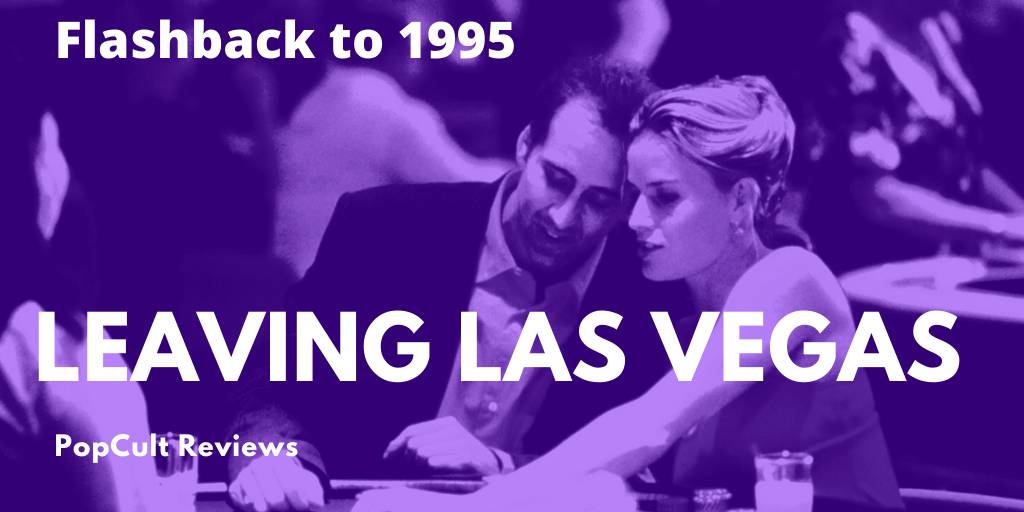
Movie Review – Leaving Las Vegas

Leaving Las Vegas (1995)
Written & Directed by Mike Figgis

Leaving Las Vegas was based on a novel of the same name written by John O’Brien. O’Brien moved to Los Angeles in the early 1980s with dreams of becoming a screenwriter. By 1992, his marriage had fallen apart, and he had become severely depressed. He was still writing though, even using a connection through his ex-wife to pen an episode of Nickelodeon’s Rugrats, which was subsequently edited to the point of being unrecognizable. O’Brien published his first novel in 1990, Leaving Las Vegas, which was sold to become a film in 1994. Within weeks of the deal, O’Brien died from a self-inflicted gunshot wound to the head. He was 33 years old. He died alone in his apartment.

Continue reading “Movie Review – Leaving Las Vegas”