Director in Focus: John Cassavetes – Opening Night


Opening Night (1977)
Starring Gena Rowlands, Ben Gazzara, John Cassavetes, Joan Blondell

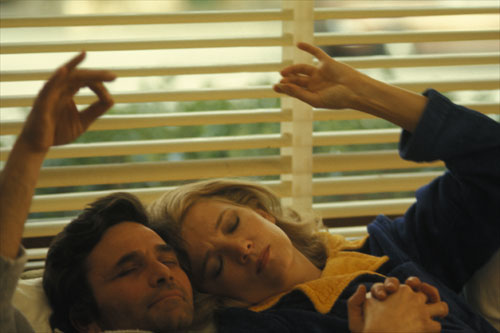
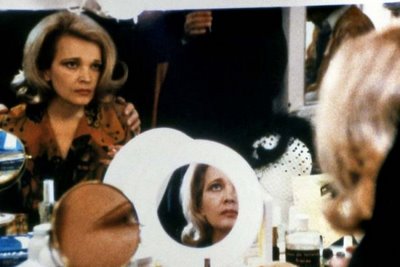
Some times you just want to punch Cassavetes in the face. His actors always give their all, but Cassavetes, as director, has a very hard time focusing his films. I’d hate for it to be my conditioning by contemporary cinema to be keyed into a storytelling formula, I have to say I enjoy a lot of the less plot focused directors of the independent cinema (Terence Malick comes to mind). However, Cassavetes has a big problems shaping his films into some thing at all. Its like a sculptor who keeps changing their mind as they chip away at large stone monolith, and the end product is more like the rock he started with than an enjoyable film. Rowlands is great, she always is, but in the end the film is a few moments of genius mired in a pit of dragging.

Myrtle Gordon (Rowlands) is working the kinks out of her new play, “Second Woman” in New Haven, Connecticut, and in a few days it will premier on Broadway. One night, after a preview performance, Myrtle meets a young fan of her’s, Nancy. After their encounter, Nancy is hit by a car and killed, and Myrtle begins to have a nervous breakdown. On stage, she is forgetting lines and showing up drunk to rehearsals. The rest of the cast are either infuriated with her or employing different methods to get her back on track. Maurice Aarons (Cassavetes), her co-star, treats her with cruelty while the play’s director, Manny Victor (Gazzara) works to fix Myrtle more for himself, than her.

The concept of the film is an incredibly relevant one today; the aging actress dealing with the fact that she isn’t going to be the first picked anymore. The play she is in is getting attention, and she’s still recognized, but there’s a sense that Myrtle’s time has passed. She’s terrified of the idea of no longer being relevant. The film ties right in to Rowlands’ last great work with her husband, A Woman Under the Influence. In both pictures we have women relegated to a single role (wife, actress) and when the time comes that they feel constrained by these labels there’s no effective support system to help them explore their options. Those around them grow frustrated and angry at these women for not simply continuing down the path. Rowlands plays the hell out of these roles and I always have to wonder if this came from her own life with Cassavetes or if she was simply a great actor who could key into the mindset of her characters. I know that the artist is not necessarily their art, but I think every artist has some part of themselves present in the work.

Cassavetes meanders way too much. The film clocks in at two hours and thirty minutes, and feels like it drags on for forever. A lot of moments are improvised and he just lets the camera run and see where the actors go. I wish he would have edited more, though. I am all for not holding the actors feet to a script where every line and moment is plotted, but after you have the footage it seems that chopping it down the moments that are the truest would be beneficial. I believe Cassavetes released films that he wasn’t always happy with. Shadows has a first cut that he pulled and replaced with the current, shorter version. And The Killing of A Chinese Bookie’s shorter, 1978 director’s cut is the version Cassavetes approved. It’s a novel idea, to produce a film and then recut it after some time has passed. George Lucas has been accused of ruining his work by doing just such a thing, but I like that an artist can continue to work and reveal something more. I just wish Cassavetes has returned to this particular stone to chip away again, so that Opening Night might be a film with a clearer trajectory.

Director in Focus: John Cassavetes – The Killing of a Chinese Bookie


The Killing of a Chinese Bookie (1976)
Starring Ben Gazzara, Seymour Cassel, Timothy Carey

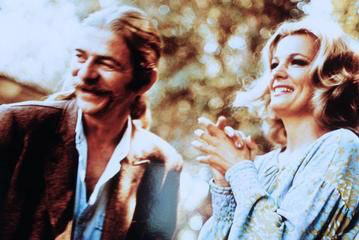
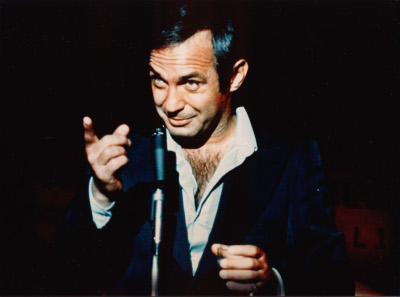
Cassavetes was doing for cinematography and story pacing what Mamet attempts to do with language: try to make it so real it can be almost unbearable some times. Stories are not told in beats and there are no real “plots”. Cassavetes is interested in character studies, without any real arcs. Just a slice of this characters life, and in his later works the slice included a definitive moment. Here Cassavetes is reunited with Ben Gazzara whom he last worked with on Husbands. Gazzara is giving an understated performance to match the understated filmmaking of Cassavetes. When I watched this film I went with the Director’s Cut, released in 1978 and preferred by Cassavetes himself. The original cut was 134 minutes compared to the DC’s 108 minutes. When it comes to Cassavetes more is not necessarily better because he is always allowing his camera and scenes to meander until they figure out where they want to go.

Cosmo Vitelli (Gazzara) is a strip club owner and chronic gambler who is in the midst of paying back his debts to the mob in L.A. He’s so excited to have this debt gone that he spends an expensive night out gambling and ends up $23,000 in the hole. His debtors come up with a creative way for him to pay it off, they tell Cosmo to kill a bookie in Chinatown that has been giving them trouble. The mob refrains from telling Cosmo the whole truth about this man and sends the sad sack in to do their dirty work. Of course some things go wrong and we follow Cosmo for the rest of the night as his life is altered forever. There’s no moments of suspense or climax, but just the camera following this man. Where the film ends is abrupt and we can assume what becomes of Cosmo, but still open to interpretation.

Bookie is very much the American cousin of French gangster films, and I was constantly reminded of Le Samourai with Cosmo’s stoic calm during his assassination of the Chinaman and the resulting fallout. There’s the same slapdash style Cassavetes employs in all his work. Along with Cosmo, there is are some very interesting characters decorating the fringes of the picture. The dancers in Cosmo’s clubs are briefly glimpsed and a few feel like they have histories well beyond the walls of the club. The most fascinating figure in the club is Mr. Sophistication, the master of ceremonies who is a pathetic sort of showman. His nightly shows are themed around exotic locales and he sings pitifully as the women emerge from behind the curtain and undress. Mr. Sophistication is at times angry at his circumstances and others broken by them. A common theme with every character in the film, wanting to get out but eventually giving in to what they see as fate.

While Bookie is far removed from the suburban ennui Cassavetes typically followed, Cosmo is really no different than those characters. Everyone is a person fighting against an overwhelming tide. It might be their failing marriage, mental stability or a bullet, but every person is face to face with inevitability. But Cassavetes forces us to question whether these people are out of control of their lives or the ones completely responsible for their circumstances.

Viewing Habits

Here’s what my weekly tv habits look like. Feel free to comment on what you think about my choice of shows, or recommend something you think I would like. Remember, I am not a fan of the procedural drama.

Sundays
Mad Men (AMC)
True Blood (HBO)
Hung (HBO)
Delocated (Adult Swim)
Childrens Hospital (Adult Swim)

Tuesdays
Ideal (BBC)
Louie (FX)
Big Lake (Comedy Central)

Wednesdays
Top Chef (Bravo)

Netflix
Dexter (Showtime)
The State (MTV)

Director in Focus: John Cassavetes – A Woman Under the Influence

A Woman Under the Influence (1974)
Starring Gena Rowlands, Peter Falk

Every film since 1959’s Shadows feels like a warm up act for this masterpiece. Cassavetes frequently played with the themes of infidelity and crumbling marriages, as well as featuring characters whose grip on sanity was weak to say the least. Once again we have Cassavetes’ wife, Gena Rowlands as the female lead and alongside her is Peter Falk as the harried husband. Both actors bring the naturalism that Cassavetes strove to have in all his films. This is a film born out of emotional truth, given a framework and allowed to grow and stretch in the directions it finds comfortable. There’s a lot changing aesthetically in Cassavetes’ work at this point, bits of artifice are becoming more apparent, most notably a soundtracks that doesn’t come from music in the environment. The dialogue is delivered with a real tongue though, people stutter, people start into a sentence only to abandon it half way through. In the same way Altman created naturalistic satires, Cassavetes was defining the naturalistic slice of life drama.

Nick Longhetti (Falk) is a construction worker in Southern California who is forced to spend most of the day away from his family. His wife, Mabel (Rowlands), is a frenzy of a mother, both desperately wanting intimacy with her husband but terrified to leave her kids for one night. Over a period of a few days, it becomes more and more obvious that Mabel is suffering from a complete mental breakdown. Her moods are changing on a dime, she is forgetting the names and faces of people she has known for years, and she is so angry with Nick all the time. How this family deals with mental illness is presented in a brutally honest way. There’s no heroes in this film, only very damaged people. While Mabel’s condition is more obvious, it becomes apparent by the end of the film that Nick’s grasp on sanity may be just as weak, he’s just learned how to hide it better.

The core of the film is Gena Rowlands’ performance. Rowlands is one of those beautiful leading women you see rarely in Hollywood now. There’s a lot of pretty faces in the movies that hit your cineplex, but its not often they carry the depth of acting chops Rowlands shows off so effortlessly in A Woman. Not even Nicole Kidman, who has followed a similar career of offbeat films, can rise above the coldness of her portrayals. While it would be easy to make Mabel out as either cold or over the top, Rowlands walks an incredibly fine line with the intent to show that Mabel is a loving wife and mother. She demands that the audience withhold from judging the character and let her stand on her own. The structure of the story starts us in the last few days before Mabel is committed, and Nick has suspected something. Nick uses physical violence to “smack it out of her”. Cassavetes seems to be making a statement against the macho conceit of the time (and sadly even still today) that a woman needed to be handled like a child. If his films are anything to go on, in Husbands he seems to be stating that the true adult children are the men, with their unease when dealing with the pain of reality and mortality.

It’s hard to watch a Cassavetes film and not think about Mad Men. These films of the early 1970s feel like many of the character types from that series and possibly previews of where they might be headed emotionally. Mabel came across as very much in the same situation as Betty Draper, yet the other end of the spectrum. Mabel is very much a blue collar girl, and she has an effervescence of life that makes her a great wife and mother and charming flirt to the workers her husband brings home from time to time. Betty is an East Coast blue blood, who sees the people around her as fitting into a personal caste system established by a cold, intolerant mother. Yet as drastically different as these women’s backgrounds and personalities are, they are victims of the 1950s culture. They were young and pretty then, and were objects for men to have. Their identities revolved around being a wife and eventually a mother. Each of them breaks down in their own way: Mabel literally and Betty through her confrontation and divorce from Don. Cassavetes has to applauded for making a film so complex and honest about women in his society, when from an entertainment standpoint it went against everything that works.

Next up: The Killing of a Chinese Bookie

Director in Focus: John Cassavetes – Minnie and Moskowitz

Minnie and Moskowitz (1971)
Starring Seymour Cassel, Gena Rowlands, John Cassavetes, Timothy Carey, Val Avery

The first time I ever remember being aware of Seymour Cassel was in Wes Anderson’s Rushmore. When I look back, I realize it was one of those instances where an actor has an incredibly distinguished career in film, but, because its not mainstream cinema, you don’t discover them until they appear in a contemporary movie. In Anderson’s films Cassel is so muted, always a background player, with not much to do. In Cassavetes’ Faces, Cassel plays a young hipster, and this is that same character a few years down the road, a little older, but still full of energy and oddity. This is also the first (but definitely not last) film where we get to talk about Gena Rowlands, Cassavetes wive and figurehead of independent cinema in her own right. This is a film where we start to see the cinéma vérité elements pushed away for just a little bit more structure.

Seymour Moskowitz (Cassel) is a parking garage attendant in New York City who not only enjoys his job, he loves it. Moskotwitx happily jogs from one care to the next, bringing them to their owners. He visits his mother on ocassion and, as the film opens, borrows $400 to move to Los Angeles on a whim. In L.A. he meets museum curator Minnie Moore (Rowlands). Moore’s most recent relationship has been with a married man and her personal life is a shambles. Moskowitz is the last guy you would expect her to end up with, but through their bickering and frustration they see the better parts of each other and very strange romance takes root.

With Minnie and Moskowitz, Cassavetes took the bickering couple sub-genre made popular in the 30s and 40s and recast it with a 1970s filmed on the fly aesthetic. Moskowitz is his mother’s angel but lives as if he is a ramblin’ hippie. Minnie is a woman who has had nothing but problems with men, and when she meets Moskowitz its during a fight with her overly aggressive and manic date (Avery) in a restaurant parking lot. It’s Moskowitz who is the fickle one in the relationship, Minnie is typically exasperated by him. And then, through trial and error, after working through their problems everything clicks. Its a romantic comedy done in non-cliched manner, it ends on a happy note, but it also ends on an honest note.

Once again, Cassavetes is not a filmmaker who would ever appeal to a mass audience. But for people who feel that today’s romantic comedies are being spat out of a screenplay factory, his work can provide a fresh breath of air that keeps you surprised and presents characters who behave just irrationally as we all really do. There’s also great little side moments that have nothing to do with the overall narrative but still work. In particular, Moskowitz visits a diner at the beginning of the film and has a conversation with a vagrant (Carey). This scene alone could be cut out and framed as its own short film and the homeless man is a rich character unto himself that never gets fully explored.

Next up: A Woman Under the Influence

Director in Focus: John Cassavetes – Husbands


Husbands (1970)
Starring Ben Gazzara, Peter Falk, John Cassavetes

Husbands is a very flawed, self-indulgent picture. And it is hard to talk about without bringing up the only Cassavetes film I had seen before this spotlight, Faces. So for this review we will look at where Faces gets right what Husbands fails on. Just like Shadows, both Husbands and Faces adopt the cinéma vérité style, though only Faces really lives up to the tenets of the form. Where Faces is an honest examination of the horrible cruelties couples visit upon each other, Husbands is a self-indulgent mess with occasional moments of brilliance that are snuffed out by moments that drag on without purpose for too long.

Husbands‘ opening credits are a series of still photos of four male friends in their early forties. The photos cut to a cemetery where we learn one of the men died of a heart attack. From there, the three remaining men embark on a series of drunken escapades that typically involve them bothering other people, and eventually traveling to London where they attempt to sleep with some women and fail. In a lot of ways these men are where I see Don Draper headed on Mad Men, except there it will be comprehensible and not a messy blur of film. In Faces, we follow a middle-aged couple who are on their last straw. In the course of one night, they both become involved in trysts that end with their lives changed forever. Both films incorporate loosely improvised dialogue and scenes. In the case of Husbands its a complete and total mess.

Husbands could have said a lot about its time, and the role of husbands and fathers coming out of the 1960s, but it completely fails. It ends up coming across as a Mailer-esque Machofest, where women are treated as objects without a second thought. Yes, Cassavetes doesn’t seem to condone that behavior, but the narrative thread of the film is such a mess its hard to figure out what he intends. I think Cassavetes got so caught up in the aesthetics of the film, he forgot to put a story in there. Both Shadows and Faces are the same cinéma vérité style and have heavy improvisation, but they still had stories you could follow. With a film like Husbands you expect some sort of realization on the part of the characters, they don’t necessarily have to change or grow, but the audience at least should understand something about them better. We get none of that, one man stays behind in London, the other two come home, stocking up on trinkets for the kids and preparing to be chewed out by their wives and that’s it.

I know my mother’s father died when she was twelve and he was only forty-five. His death was around the same time of this film and, after seeing certain shows like Mad Men and other period pieces, you can see that excessive drinking and smoking were a common part of the culture. It would have been interesting for these three to be forced into some self-analysis in the wake of their friends’ death, and this could have been played out in the same settings and scenarios, just reigned in by a tighter story structure. This was the last generation to have participated in a war they believed was honorable in America (The Korean War) and in the time that followed military service became just one way of defining manhood. For these men, hard drinking, hard smoking, and promiscuity outside their marriage was what defined them. Despite their friend, who surely engaged in these behaviors, dying as a result, they indulge and learn nothing. And the story is told in a way that challenges us to even keep watching. A missed opportunity.

Tube Time: The Lost Room


The Lost Room (2006, 3 episodes)
Starring Peter Krause, Julianna Marguiles, Kevin Pollak, Elle Fanning

Something happened in the motel room in New Mexico back in 1961. But no one is quite sure what it was. The scientific minded believe some sort of event that bent space-time. Others say that God died in that motel room. Whatever happened the room vanished from our reality, but some how the small everyday trinkets inside made their way into the world. A ballpoint pen. A plastic comb. A wristwatch. A room key. They appear to be nothing special. But they are. This is the universe created in the Sci-Fi Channel mini-series The Lost Room. While Sci-Fi has an incredibly erratic track record for original programming, see sawing back and forth between incredibly horrible movies about giant animals killing people and thoughtful, interesting series. The Lost Room definitely belongs in the latter category, but sadly, as much as the mini-series serves as a pilot to an ongoing program Sci-Fi passed. Even though not all of its plot threads are tied up, The Lost Room is an incredibly interesting program that does exactly what great sci-fi should: throw a ton of ideas at you.

Detective Joe Miller, Pittsburgh PD, responds to the scene of homicide. The two victims are covered in horrible burns and appear to be partially phased through the walls and ceiling. Miller investigation leads him into the possession of a motel room key that, when inserted in any tumbler lock door, opens on a motel room existing outside of natural space time. Any object left in the room vanished when the door is closed, the room resetting itself. Powerful forces want this key and as a result Miller’s daughter is in the room without the key when the door closes. She vanishes into thin air and the detective abandons his career to find her again. This journey leads him to discovering the story of the room, the violent cabals that seek to possess the magical items in the room, and finally to a figure whose essence is tied to the birth of this modern legend. Parallel to Joe’s journey is his colleague and forensic scientist Dr. Martin Ruber who becomes obsessed with tracking down objects and believe he has a higher calling. These two stories intersect in some interesting ways and its Ruber’s story that appears to have been the plot line that would have fed into a regular series.

What makes The Lost Room work is that it is unafraid to be science fiction in that it worldbuilds with expertise and presents ideas that you would never think of, but that make complete sense when you think about them. I was reminded by classic sci-fi writers: Bradbury, Ellison as well as a heavy dose of Stephen King as well. The writers cleverly worked to not overpower the Objects, an example being The Comb. The plastic comb can stop time, but only for 10 seconds, and if used in succession too frequently induces vertigo in the user. To use the Objects successfully a person must be able to think outside of typical thought. There’s also the added twist of what happens with objects are used in conjunction, having properties that are unpredictable. The mini-series really left me wanting to know more about this world and what clever Object combinations could be.

Acting wise you have Peter Krause doing an excellent job. Julianna Marguiles has never been an actress I cared for and her character just doesn’t fit in this story very well. Kevin Pollak is one of those solid character actors who, despite or because of his strong comedy background, can play a character as walking the tenuous line between good and evil. Dennis Christopher (Breaking Away), a wonderful character actor was the standout for me. His role of the obsessed Dr. Ruber really hooked me and wanted me to learn where that character would go in the regular series. This is a a great overlooked science fiction story that has begun to find its audience on DVD. The creators recently announced at the San Diego Comic Con that a comic book continuing the story of The Lost Room is in the works so we may very well get a continuation of Dr. Gruber’s story.

Shadows in the Cave: The World of Henry Orient


The World of Henry Orient (1964, dir. George Roy Hill)
Starring Tippy Walker, Merrie Spaeth, Peter Sellers, Angela Lansbury, Tom Bosley

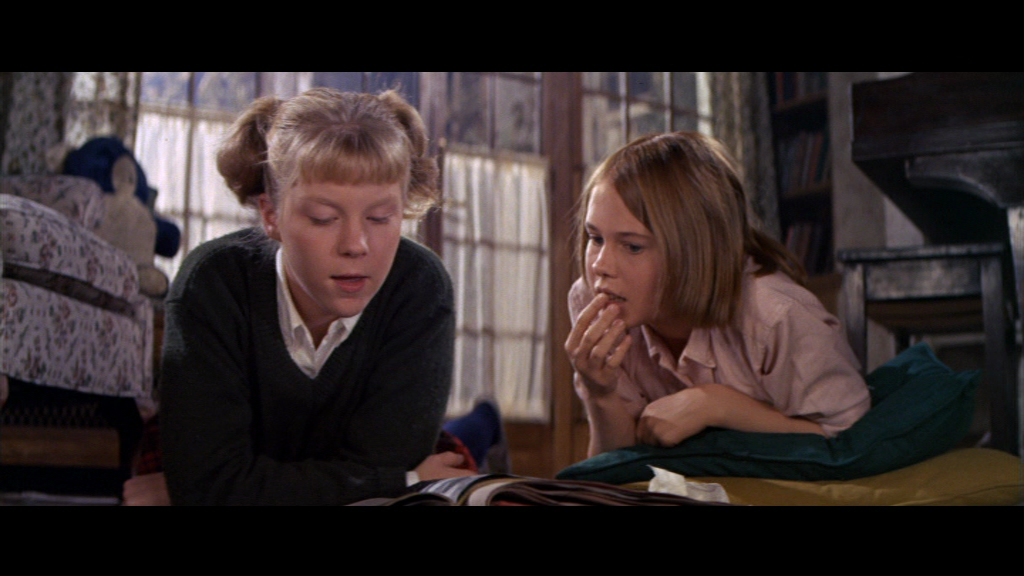
When I see George Roy Hill’s name I think of The Sting or Butch Cassidy and the Sundance Kid. I never expected this small, delightful film. This is one of those pictures where New York City is a player along with the actors. There’s that sort of innocent magic about the city as seen through the eyes of our adolescent protagonists. And despite Peter Sellers receiving top billing, this is most definitely not his film. While I love Sellers, I would have hated for his character overshadow the performances of the two young women in the leads. He works perfectly as the awkwardly charismatic pianist paranoid over the two young girls he believes are stalking him. And as life imitates art, Sellers was actually dealing with a real life stalker during the filming of Henry Orient.

Marian (Spaeth) meets Val (Walker) one morning on the first day of school at St. Mary’s. The two hit it off splendidly and Marian quickly learns of Val’s highly imaginative nature and penchant to go on adventures in the city. During an excursion in Central Park, they happen across a man and woman in the throes of passion. The man spies them and they run off. Later the same day, they run into the man again and eventually learn this is Henry Orient (Sellers), a well known avant garde pianist. Val becomes obsessed with him and dreams that she will eventually woo the befuddled man. From Henry’s perspective these two little girls are harbingers of doom and possibly spies for the husband of the woman he is seeing. The film perfectly balances the comedic misunderstandings and the coming of age story that centers around Val. Her parents (Lansbury and Bosley) come into town and we immediately see that Val’s mother exhibits a strong coldness around her.

The film lives and dies on the performances of the two female leads, and thankfully they picked two great unknown actress for the roles. There’s some interesting elements, particularly in the third act that feel very much of the time, but I’d like to think director Hill was going against the grain up until that point in the film. The girls are very much kids, while parents pressure them to socialize with boys, they really have no interest. They would rather play and, when Val does develop a “crush” on Henry, its never done with any seriousness. Its simply a continuation of the imagined world she and Marian have invented. You can tell Hill actually cares about these two and shows them as three dimensional, intelligent young women, not yet bogged down by the seriousness of the adults. Its reflected in how scenes featuring adults in the movie are never as interesting as the ones with the kids.

It’s interesting to note that rather than casting “superstars”, Hill opted to go with two unknowns and Sellers who was famous, but not as much as other comedic actors. Originally, it looked like the three roles would go to Hayley Mills, Patty Duke, and Dick Van Dyke, and while they are all great actors, the film would not feel as special. The movie evoked such strong emotions of happiness from me, reminding me of the way it feels when summer starts to turn to fall and how intimate and safe the worlds you imagine as a youth can feel. The film has been retold with a contemporary slant in Ghost World (the film moreso than the comic book) and a poster for Henry Orient even pops up in that picture. The film’s greatest feat is balancing adult themes and ideas while never diminishing the sense of joy and play. A great picture that deserves to be known by a larger audience.

In Theaters Now: Life During Wartime


Life During Wartime (2010, dir. Todd Solondz)
Starring Alison Janney, Shirley Henderson, Ciaran Hinds, Dylan Riley Snyder, Paul Reubens, Ally Sheedy, Charlotte Rampling

I can’t see anyone who hasn’t seen Solondz’s 1998 film Happiness being able to get much from this movie. It is about a direct sequel as you can get, making references to plot points from the first film in ways that makes it un-enjoyable for someone unfamiliar with the older picture. It’s not a bad film, I enjoyed it a lot, it just is not made for the uninitiated. What it does is revisit some familiar faces, some in a more interesting way than others, and offer different perspectives on their personalities. It’s very sad and at times very funny, probably Solondz’s most restrained film to date, but also has me worried about his lack of new characters or material. Life During Wartime also shares elements with Palindromes, as not a single one of the actors from Happiness reprise their roles here, which I suspect is a choice made by Solondz.

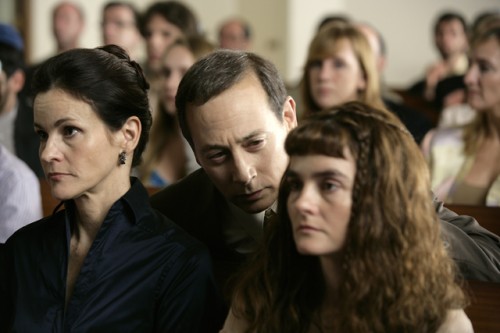
Joy (Henderson) has dinner with her husband, Allen in a scene that mimics the opening of Happiness. The entire affair has her remembering that first dinner with Andy (Reubens) who killed himself after she rejected him. It’s decided she will take a trip to visit family in Florida, and Joy ends up in the company of her divorcée mother and single parent sister. Trish (Janney) is getting involved with a new man and helping her middle child, Timmy (Snyder) prepare for his bar mitzvah. Up the coast, Trish’s ex and convicted child rapist, William (Hinds) is released from prison. He also wanders down to Florida sneaking into the house just for glimpses of the family he lost. Joy ends up in California at the home of her other sister, Helen, a pretentious and self-obsessed writer. Where ever she goes she is haunted by the ghost of Andy, who always starts out gentle but becomes violent. It’s a large ensemble movie where characters are connected, but rarely interact.

Solondz seems to have a very strong personal connection to these character types, and I suspect they come from his own family and acquaintances, an exaggerated cinematic sheen spread over them. I found his criticisms of the East Coast Jewish community very interesting. At one point, Trish is talking about her new beau, a middle-aged New Jerseyian and says that he voted for Bush twice and McCain, but only because he knows they support Israel. From many of the more liberal Jews in America, this has been an issue of frustration, how the right has co-opted the pro-Israel cause as their own. So, there’s a lot personal issues in this and all of Solondz’s films. The film has three central figures: Joy, William, and Timmy. All three of these characters are haunted (some literally) by the past. Joy is visited by Andy, whose suicide she spurred forward. William, newly released from prison, has lost every thing and wanders down the east coast and eventually to the pacific northwest searching for something. Timmy has been told William was dead his entire life and has just now learned his father was a pedophile. This warps his sense of intimacy with others, and will have a profound effect on his mother’s burgeoning relationship.

While the film is seen as an exaggeration of real life, I suspect it is closer to realism than most films. Solondz appears to be a very good listener, especially for interactions between family members. In almost every conversation between a mother and daughter, sisters, etc. no one is every asking about or talking about the other person they are with. While Helen may be the most outwardly self-absorbed, every character here only talks about themselves, is only concerned with what they need. The only exception I would say is William, the pedophile. There’s a couple moments where we gasp, thinking he may be tempted, but he abstains. He contemplates stealing from his family to pay his way, but stops. William eventually ends up at his eldest son, Billy’s college in Oregon and explains he sought him out just make sure Billy didn’t inherit his father’s predilections. Once he is assured Billy is “normal”, he says goodbye, and the implication is that he goes off somewhere private and kills himself.

Wartime is a heavy film, to be sure, but also surprisingly funny in very dark moments. Not a movie for the cinematic light at heart, but for the viewer who wants to have their ideas about “good” film challenged, then I think there is definitely some thing here for you.

In Theaters Now: Inception


Inception (2010, dir. Christopher Nolan)
Starring Leonardo DiCaprio, Ellen Page, Joseph Gordon-Levitt, Cillian Murphy, Tom Hardy, Ken Watanabe, Dileep Rao, Marion Cotillard, Tom Berenger, Michael Caine, Pete Postlethwaite, Lukas Haas

Don’t think about elephants. What are you thinking about? Elephants, right? That is a very basic form of an inception, mentally influencing another person’s thoughts. But for a more complex idea, an idea that will cause someone to make a life-altering decision you have to do something a little more elaborate. As Cobb (DiCaprio), an expert dream infiltrator tells us early on, its much easier to steal an idea than to insert one in a person’s subconscious. With his seventh film, director Christopher Nolan takes the heist film formula and tosses it into an imaginative blender. The result is yet another highly complex and intelligent film that respects the intelligence of the audience, a rarity for a summer film.

Dominic Cobb is a professional dream infiltrator. Along with partner Arthur (Levitt), they use a special device to sneak into the subconscious of others and steal their ideas, primarily working in corporate espionage. However, Cobb is visited by his wife, Mal (Cotillard) in these dreams and she always seems to foil his plans. During the opening heist, Cobb loses his architect, the person whose job it is to design the key structure in the dream. He visits his father in law (Caine) who hooks him up with a young architecture student named Ariadne (Page). Cobb teaches Ariadne how to manipulate dreams, but warns that the subconscious will attack like white blood cells if an invading consciousness is detected. Their new job is much more difficult than an extraction (taking an idea), they are hired to perform an inception, planting an idea in the heir to vast corporation to split it up. Cobb gathers his team and begins the heist which involves multiple dream layers, but Cobb may be his own worst enemy.

Inception plays like a wonderful literary science fiction novel more than a film. It is so dense and full of ideas you can’t help but feel overwhelmed at first. Nolan has definitely produced a film that begs for multiple viewings and intelligently leaves its ending open for interpretation. So often that twist in a film comes off a as sloppy writing, but here the ambiguity is the trigger for Nolan’s inception on us. The seed of questioning our own reality begins, and is much better presented that The Matrix. Here there is no hard sci-fi overlords, rather we are our own jailkeepers, constructing realities that make us feel safe, when we knew if we woke up we’d deal with unpleasantness. The dream infiltrators all have a totem, an object that no one else should touch, that they carry in the waking and dream world. If the object obeys the laws of physics when used then they know they are awake. Cobb’s is a small silver top, he spins it and, if it doesn’t wobble and fall over, he knows he is still trapped in a dream. The dream layers in the film are incredibly complex and amazing. At one point they are in four separate layers of consciousness.

The performances here are stellar. While Nolan doesn’t ask for incredibly emotional performances, he does push his characters to show depth wordlessly. Both Page and DiCaprio give complex performances where a lot is told to us about them and they never go into expository passages of back history. The supporting cast is excellent as well, and I enjoyed the smarminess of Tom Hardy’s character, as well as the straight to the point workman Levitt plays. Cillian Murphy also delivers, with a bit of very believable emotion in one of the final scenes. Marion Cotillard was one of the biggest standouts in the supporting cast, both her performance and her characters play such a huge part in the story. This is one of those film you have to see, not an “if you like this then”, no. Go see this! You have to! No questions asked!