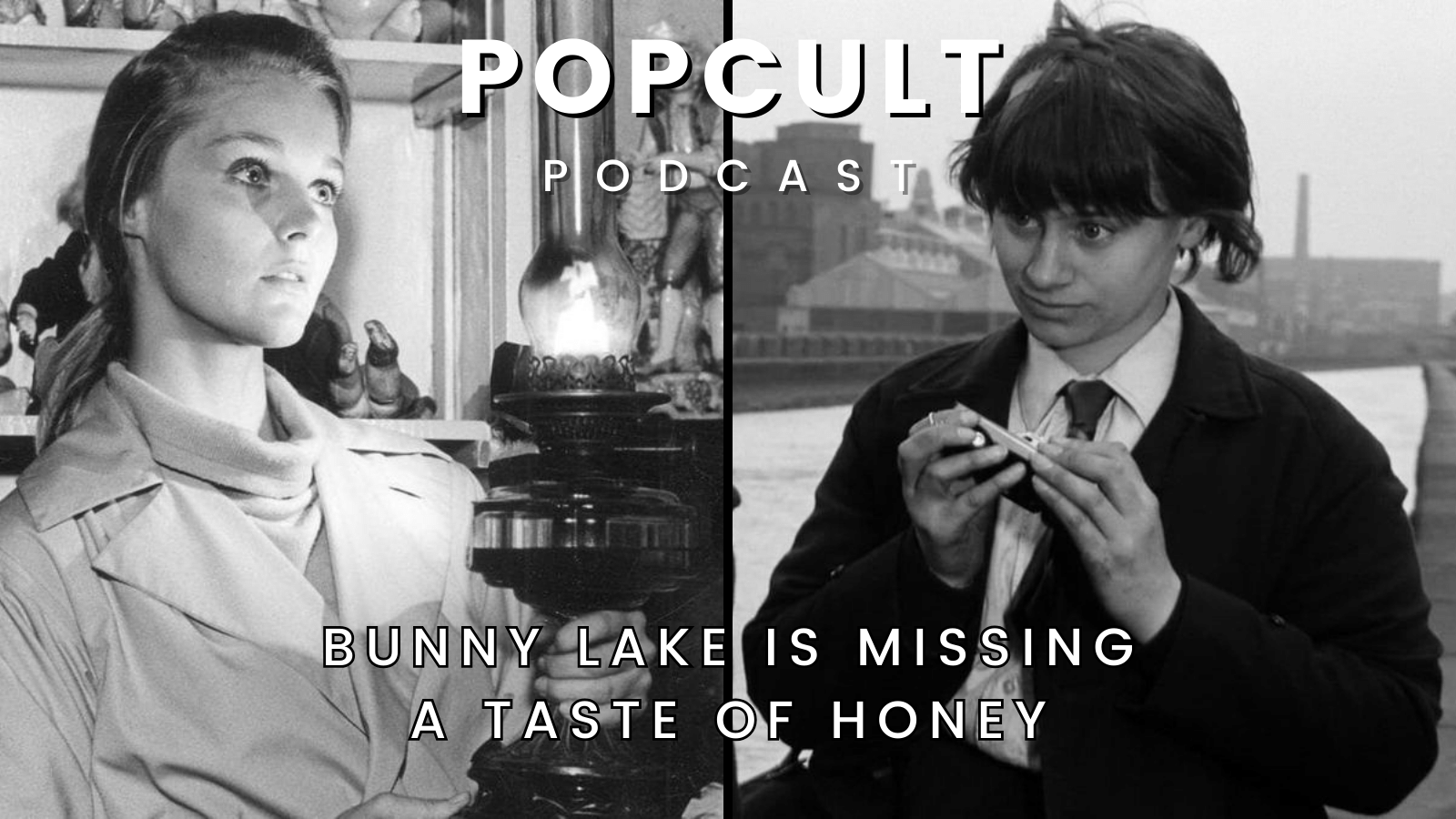
PopCult Podcast – Bunny Lake Is Missing/A Taste of Honey

It’s another week of pulling from the Letterboxd Watchlist, this time with the theme being the 1960s and England. One film is a thrilling mystery about a lost girl and the other is about a girl lost about what to do with her future.

Continue reading “PopCult Podcast – Bunny Lake Is Missing/A Taste of Honey”

Patron Pick – The Last of Sheila

This special reward is available to Patreon patrons who pledge at the $10 or $20 monthly levels. Each month those patrons will pick a film for me to review. If they choose, they also get to include some of their thoughts about the movie. This Pick comes from Matt Harris.

The Last of Sheila (1973)
Written by Anthony Perkins & Stephen Sondheim
Directed by Herbert Ross

Once upon a time, the man who would direct Footloose and Steel Magnolias made a film based on a screenplay by “Norman Bates” and the guy who wrote Sweeney Todd. This film would significantly influence Rian Johnson’s Benoit Blanc/Knives Out movies. For the first time in a long time, I had an American film suggested to me I had never heard of before. I attribute this to the fact that I’m not a big mystery-Whodunnit fan. I can’t pinpoint why, but those stories don’t appeal to me, so I rarely seek them out, likely due to their formulaic structures. I was pleased about this suggestion because it plays out and delivers an ending with a lot more dramatic heft than I anticipated.

Continue reading “Patron Pick – The Last of Sheila”

Movie Review – Bad Education

Bad Education (2004)
Written & Directed by Pedro Almodóvar

Few directors working today seem to enjoy the richness of film images more than Pedro Almodovar. Every film he puts out is always full of bold color and intriguing framing & blocking. His stories are complex labyrinths where narratives are rarely linear, the past often haunting the present. Much of Bad Education is set around what the audience doesn’t know, putting us in the protagonist’s shoes. They are learning about the line between fiction and truth, letting the audience enter their imagination and then see how what they pictured matches with the people and events as they actually happened. I wouldn’t blame someone watching this for the first time for feeling confused; it takes at least a couple viewings to fully grasp what is happening in the picture. 

Continue reading “Movie Review – Bad Education”

Movie Review – Glass Onion

Glass Onion (2022)
Written & Directed by Rian Johnson

I’ve been a Rian Johnson fan since his feature debut, Brick. I was 24 at the time and very into discovering interesting new directors with an emphasis on stylization. Brick was a stylized film noir set among high school students. It’s still a clever movie, especially now that I’ve seen the films Brick is referencing. I didn’t really care for The Brothers Bloom, but Looper had enough creative ideas to keep me entertained. The great discourse around The Last Jedi annoyed me. It’s a perfectly fine movie for a Star Wars picture and one of the few that surprised me in good ways. Knives Out was fun. So going into Glass Onion, I think I had moderate expectations. Rian Johnson isn’t going to be remembered as some pioneering force in cinema; he makes easily consumable pieces of candy that taste alright. 

Continue reading “Movie Review – Glass Onion”

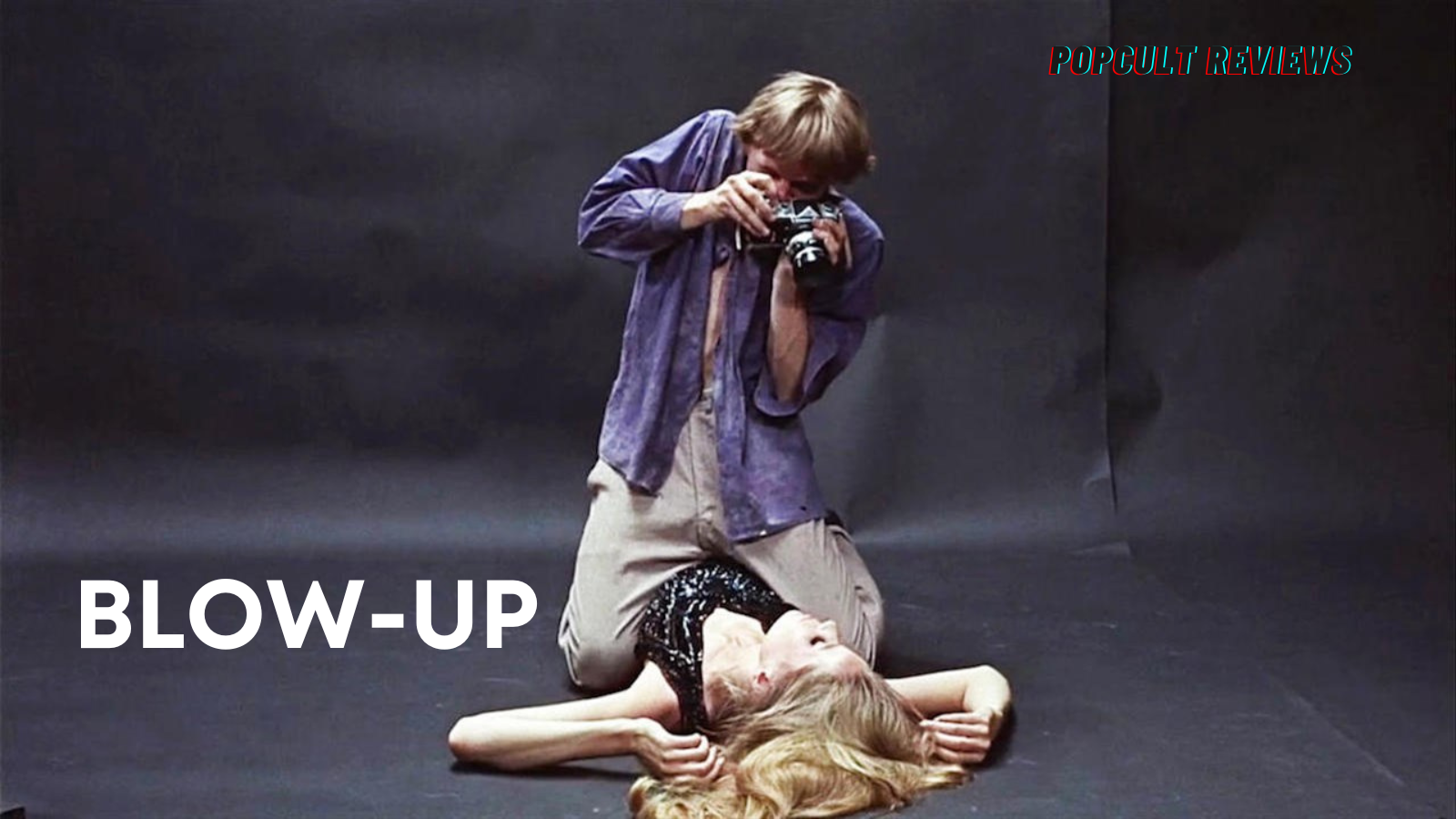
Movie Review – Blow-Up

Blow-Up (1966)
Written by Michelangelo Antonioni and Tonino Guerra
Directed by Michelangelo Antonioni

For some reason, I keep drawing parallels between Michelangelo Antonioni and Alfred Hitchcock, despite their radically different filmmaking styles. Even their narratives are different in structure. The connection I’m seeing is that, thematically, they are touching the same ideas, just in radically different manners. Hitchcock is devoted to the suspense thriller narrative and uses it to spotlight modernity-related anxieties. Rear Window, Vertigo, Psycho, etc., are all about people confronting horrors within the context of the mid-20th century. Where Hitchcock provides us with concrete antagonists to focus our anxieties on, Antonioni keeps things ambiguous, the horror is existential, and thus his conclusions feel bleaker.

Continue reading “Movie Review – Blow-Up”

Movie Review – The Parallax View

The Parallax View (1974)
Written by David Giler, Lorenzo Semple Jr., and Robert Towne
Directed by Alan J. Pakula

Since the colonial period, conspiracy and paranoia have been foundational to the American psyche. Europeans crossing the Atlantic to rape & pillage grew to fear Indigenous people whether they were an actual threat or not. This would continue as closed religious communities struck out against themselves (see the Salem Witch Trials), and Westward Expansion bolstered bootstraps ideology which led to further social atomization.

Continue reading “Movie Review – The Parallax View”

Movie Review – Vertigo

Vertigo (1958)
Written by Samuel A. Taylor, Alec Coppel, Maxwell Anderson, and Thomas Narcejac
Directed by Alfred Hitchcock

In my opinion, Vertigo is Hitchcock’s greatest film. It contains all those elements associated with his work but perfectly distilled to their most impactful essence. Hitchcock collaborator Jimmy Stewart gives his best and final performance for the director. Bernard Herrmann composes a gorgeous musical score that haunts the picture. Vertigo is also Hitchcock’s most honest film about himself, revealing many of his own obsessions and the way he tormented his actresses, especially foreshadowing what was to come with poor Tippi Hedren in just a few years.

Continue reading “Movie Review – Vertigo”

Movie Review – The Gift

The Gift (2000)
Written by Billy Bob Thornton & Tom Epperson
Directed by Sam Raimi

I noticed that, without planning, every Flashback to a year I’ve done in 2020 has included a Sam Raimi picture. There had been no desire to do a look at his work specifically, but through these series, I’ve had the opportunity to see how he grew as a director over the years. The Gift is the most jarring of these films because it’s so unlike anything else I’ve seen from him. It’s a much more muted picture and feels like an independent film from the late 1990s/early 2000s. It seemed like he was becoming more over the top and stylistic with pictures like Darkman and The Quick and The Dead, but here everything is so sedate with mild touches of Raimi’s aesthetic.

Annie Wilson (Cate Blanchett) is a widow living in a small Georgia town who makes ends meet with her late husband’s social security and a side gig as a clairvoyant fortune-teller. Her readings for Valerie (Hilary Swank) lead her husband, Donnie (Keanu Reeves), to become irate with Annie and threaten her life if she keeps putting what he sees as evil thoughts in his wife’s head. Annie is also becoming close with her eldest son’s principal, Wayne Collins (Greg Kinnear), engaged to a wealthy local socialite, Jessica (Katie Holmes). Things turn tragic when Jessica goes missing, and Annie has visions that the woman has been killed and tracks her down to a specific location outside of town. Annie realizes that, while the law believes the killer’s identity is apparent, things are much more complicated than she first thought.

Raimi definitely leans into many Southern-fried cliches, and his actors don’t necessarily capture the accent’s essence. The cliches are pretty abundant with swamps, weeping willows, the class divide between the wealthy and poor, and even a To Kill a Mockingbird-esque trial with Annie’s son secretly watching from the balcony. Raimi is pulling back with only some uses of his tropes. There’s a scene early on where Annie has a vision while in the principal’s office, and a supernatural wind blows her hair while the camera pushes in, and you can see just a little touch of the director’s aesthetic there. Otherwise, I see this falling more in the camp of pictures like Sling Blade and The Apostle. It plays things pretty low key.

Cate Blanchett does the best job of things and plays Annie with total believability, which helps ground the sometimes silly proceedings. You can see how this role could very easily be hammed up by a lesser actor, someone who overplays into farce. Her abilities are represented through short quick visions, a pencil rolling off a desk, falling into a puddle of water, which reveals a character’s corpse-like foot, hinting at their fate. Blanchett finds ways to play Annie as vulnerable but can pull herself up when circumstances become dangerous to her and her family.

There is a lot of plot here, and not all the arcs feel like they belong together initially. By the end of the film, characters’ stories begin to flow together so that the finale is incredibly satisfying and provides a reason for every person’s presence in the narrative. Surprisingly, this film didn’t do well at the box office because it had the star power to get people’s attention and deliver a very well-plotted mystery story with classy special effects. I wouldn’t say I hope Raimi makes more films like this one, as I love it when he goes insane (see Darkman), but it is a pleasant surprise in his filmography. The Gift appears to have become one of those overlooked gems that people will hopefully rediscover from time to time.

The Best of Moonlighting Part One

Moonlighting is a show that doesn’t often enter the modern discourse on television, but I’m here to argue that it is a remarkable television achievement that opened up the door for other hour dramas to be comedies and to experiment with their format. Moonlighting allowed flights of fantasy to take over the show and engaged continuously in Fourth Wall-breaking and meta-conversation about being a television show. 

Continue reading “The Best of Moonlighting Part One”

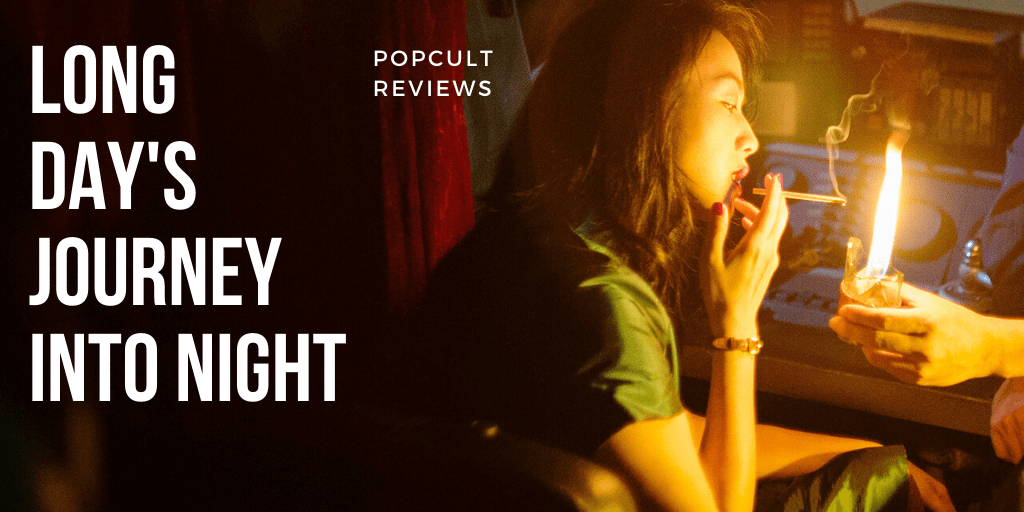
Movie Review – Long Day’s Journey Into Night

Long Day’s Journey Into Night (2019)
Written & Directed by Bi Gan

There are two starkly separated halves to this film. The first half is nothing too remarkable, some beautiful cinematography and a noir story that will feel very familiar, no real surprises. The second half is a shock; the visuals are the focus, yet somehow they still keep the narrative going. Bi Gan takes some significant risks in this latter section, banking his entire film on what could easily have just been a gimmick. Instead, he turns this into a remarkable feat, something rarely attempted in filmmaking, but Bi Gan sticks the landing.

Continue reading “Movie Review – Long Day’s Journey Into Night”