
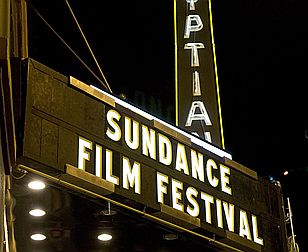
Right now the 2010 Sundance Film Festival is in full swing in Park City, Utah. American films of all sorts are being rolled out every day till January 31st. For the blog, I’ll be looking at the general history of Sundance here in part one, and then in part two I’ll look at some of this year’s films that I’m most excited to see.
The Sundance Film Festival began in 1978 as the Utah Film Festival. At the time there was no prominent American filmmaker-only festival in the existence and the hope was that this small gathering in Utah would provide a focal point for the iconoclastic film being made at the time. The festival was originally held in Salt Lake City and its biggest event was the awarding of the Frank Capra Award, given to filmmakers who worked outside the mainstream Hollywood system. The first year it was awarded appropriately to Jimmy Stewart, who worked with Capra on It’s A Wonderful Life and Mr. Smith Goes to Washington.
In conjunction with the festival, the Sundance Institute was formed, named for Robert Redford’s iconic character and chaired by the actor. The Institute provided young filmmakers with funding for their projects. It was Redford’s involvement in the program that raised the prominence of the film festival. In 1981, the festival moved to its current location of Park City, suggested by director Sydney Pollack due to the resort and tourist nature of the area.
Originally, the festival only dealt in incredibly obscure films but in the late 80s and early 90s, a few young directors gained a large amount of attention. Steven Soderbergh’s sex, lies, and videotapes hit the festival in 1989, followed by a huge year in 1992 with the debut films of Quentin Tarantino (Reservoir Dogs), Kevin Smith (Clerks), and Robert Rodriguez (El Mariachi). Even Wes Anderson’s short film, Bottle Rocket (the basis of the later feature) debuted in the 90s at Sundance.
As Sundance grew in prominence, many argue that its dedication to burgeoning filmmakers waned. Big money is to be made from distribution sales at the festival now, especially in 2001 when Mariah Carey’s Glitter debuted. Many independent filmmakers saw Sundance as becoming more interested in the business and paparazzi side of things. In response, the rival Slamdance festival started in 1995. Slamdance has discovered its own fair share of talent, including Marc Forster (Monster’s Ball), Jared Hess (Napoleon Dynamite), and Christopher Nolan (Memento).
Up Next: A Look at 2010’s Sundance line up


 PopCult Reviews