
As temperatures drops, skies get cloudy, and the somber pallor of late autumn into winter creeps in, here are some wonderful audio horror stories to get lost in.
The Dry Man
Lumpy
I’ve Had My Dog Since the Day I Was Born
The Witches and The Circle
As temperatures drops, skies get cloudy, and the somber pallor of late autumn into winter creeps in, here are some wonderful audio horror stories to get lost in.
The Dry Man
Lumpy
I’ve Had My Dog Since the Day I Was Born
The Witches and The Circle
Swift to Chase: A Collection of Stories by Laird Barron (JournalStone)
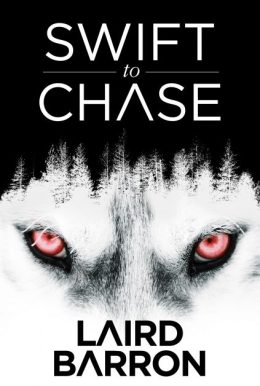
Laird Barron’s latest work is everything I ever wanted out of American Horror Story but never got. It is the best season of a horror series you could ever pick up. I admit this was not the book I expected to get. Last year I worked my way through Barron’s three previous collections, saving his novels and novellas so I didn’t lose all his literature in one all you can eat buffet. His work touched on the same themes of cosmic existential horror developed by Lovecraft and Barron was placed in the same cluster of authors working in “weird horror.” His collection Occultation is one of my favorite works of horror literature with “Mysterium Tremendum” and “The Broadsword” being stories that profoundly affected me after years of consuming horror media.
Swift to Chase represents a significant sea change in the mythos that Barron will be exploring for the foreseeable future. The distant tentacled cosmic gods and Carcosa are gone. Barron never really did a Lovecraft pastiche, but there were cultists and cold alien presences that worked to undermine humanity. In this collection, we’re introduced to a brand new mythology that does touch on Lovecraft but brings in 1980s slasher tropes, MKULTRA like conspiracy theories, and a plethora of new concepts. Each story was published at different times in various publications before being collected here, but you would never know because they complement and flow into each other with such precision.
Told in non-chronological order, the stories all revolve around a small town in Alaska that seems to be the focal point of some evil presence. A house party held in 1979 acts as the hub where many of the stories return to, a night when a masked killer rampaged through the house and the survivors are cursed into the rest of their lives. The standard narrative conceits you come to genre lit with are tossed out the window and instead Barron gives us a very postmodern, deconstructed horror novel. It might seem like hyperbole, but I kept thinking back to James Joyce as I read the collection. There is such a mastery of language and particular character voice that reading the collection is less about finding plot threads but discovering the rhythm of the writing and letting its flow carry you through.
Barron refuses to present us with one type of protagonist, a la Lovecraft and makes certain stories are told from multiple perspectives and diverse voices. “Ardor” features a gay man hired to hunt down a missing horror film actor believed to have fled to the Alaskan wilderness. “(Little Miss) Queen of Darkness” features the story of a gay teenager involved in the occult club that the evil spawns out of in Alaska. Barron never plays these characters as “fey” or “limp-wristed.” Their sexuality is just one of many aspects of their character, and it’s not shied away from in the same way a straight character’s sexuality can play a role in their narrative.
The focus of the first third of the collection is Jessica Mace, the survivor of a brutal attack that left her neck with a signature scar. Her voice is that of a hardass, calloused by her experiences back in Alaska and now on the run from an evil that pursues her across the continental United States. Her story is finally told in the mind-blowing fragmented narrative of “Termination Dust.” There’s Julie Vellum, the captain of the cheerleading squad surrounded by hangers-on who ends up having an up close encounter with evil after trying to hire faux lounge singer Tony Clifton to meet her fan father in “Andy Kaufman Creeping Through the Trees.”
Upon finishing the collection, my first thought was “I want to read that again,” something I rarely think even when I have loved the book. I usually find myself ready to pick up the next text but this one has such a strong gravity, and it is pulling me back in. I highly recommend Swift to Chase as a magnificent piece of literature. I was reminded of the weight and horror I’ve read in Cormac McCarthy and the language complexity of Faulkner and Joyce. If you look around the internet, you’ll see many similar gushing reviews. These are not hyperbole, and I cannot wait to return to this world and explore the mythology again.
Funny About Love (1990, dir. Leonard Nimoy)
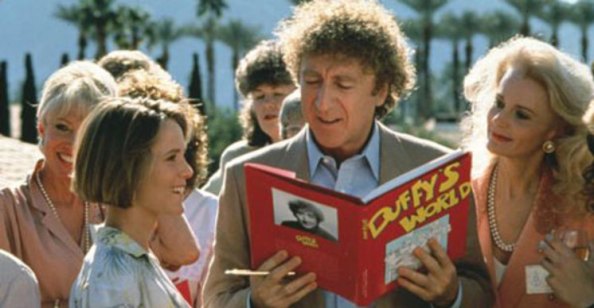
There was a kind of movie made in the late 1980s through the mid-1990s that grates on me. These films were usually set in New York City and focused on a wealthy white person experiencing some mid-life crisis or first world problem. The soundtracks were bouncy and goofy in the beginning and then when some maudlin moment occurred, they would switch to a mournful and grating harmonica to underscore the wistful turmoil. Of course, the films would ensure a happy ending for their already entitled protagonist leaving the audience with little to nothing to think about. These films have evolved over the years now star actors fishing for dollars apparently. They are films made by directors like Nancy Meyers (It’s Complicated) or Charles Shyer (Father of the Bride). They are not intentionally offensive movies, but their whitewashed landscapes and conflict based on economic lives that are living at the peak of Maslow’s Hierarchy ring incredibly false. Funny About Love is one of those films.
I can’t say what possessed Wilder to take this role. He has chemistry with Christine Lahti, but the material he is given to work with is horrendous. In comedy, it is important to establish the tone you are going for early on. Audiences want to know if this will be a light comedy, cerebral, dark, etc. Funny About Love veers back and forth through its interminable one hour and forty-seven minutes. There is the soft, playful banter between our co-stars which signals a light, romantic tone. Twenty minutes later a character is crushed by a falling stove, and this is played for laughs? The film is based on an article from Esquire titled “Convention for the Love Goddesses” where writer Bob Green gives a speech at a sorority convention. That does happen in the film, the third act for about 15 minutes. I strongly suspect we are dealing with a script that was butchered, reshaped, and revised by studio executives. The impetus of the plot revolves around having children and with the style of the film’s poster I suspect Look Who’s Talking had an influence on the film’s direction. While we remember Leonard Nimoy’s passing as the man who played Spock, we must also acknowledge the incredibly terrible films he made outside of the Star Trek franchise, this being chief among them.
There is no reason to dwell on this particular film; it does not merit much study or discussion. However, due to it being the second to last Wilder feature film, we can use it as a point of meditation. How did Gene Wilder go from being in the golden era of Mel Brooks and commanding a very charismatic leading man performance in films like Silver Streak to a procession of milquetoast WASP-y duds? There was a moment in the late 1970s/early 1980s where his career took this turn. Post-Silver Streak, his films had middling success, Stir Crazy was the one box office success in a sea of bombs. I suppose it could just be an instance where an artistic eye and mind change over time, influenced by the movie business, encouraged to make decisions because of the prodding of others.
Wilder’s final theatrical film, Another You which I reviewed here, is such a horrible period on the sentence of Wilder’s career. It was likely a good thing he began to fade from the spotlight at this time. He’d do a single-season run of an NBC sitcom in the 90s, Something Wilder, which I nostalgically remember with positive vibes but suspect I’d hate if revisited. When he passed, Wilder was talked about in the context of Willy Wonka and Young Frankenstein. We have a remarkable penchant to cling to the positive images of those film faces from our past. And that’s a good thing. The worst of Wilder’s career has been forgotten, the only drug out occasionally by people like me, but then to quickly fade from memory again. It is better that we hold with fondness our memories of Wonka and Dr. Frankenstein because that is the Gene we love.
Haunted Honeymoon (1986, dir. Gene Wilder)
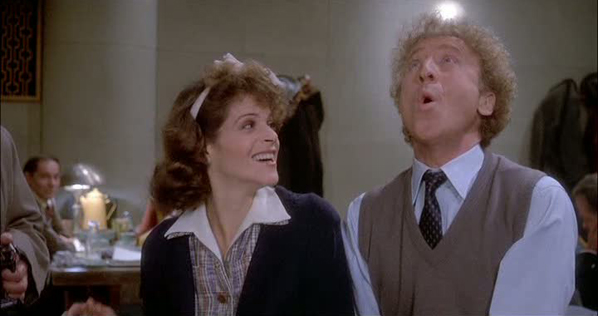
Larry Abbot (Wilder) is a famous radio actor and heads to his family’s palatial estate in upstate New York for his wedding to Vicki (Gilda Radner). Larry has been plagued by strange speech problems and goes into fugue states upon hearing certain words. His Uncle Paul has an idea for radical therapy where he will scare Larry into being cured. However, there is a werewolf stalking the property and a murderous conspiracy afoot.
Haunted Honeymoon starts with quite a bit of potential. The tone set by the music and the introduction to the mansion is very reminiscent of Young Frankenstein. We’re teased with some interesting horror and mystery, but then the plot kicks in. The story of Haunted Honeymoon is so overly convoluted and unfunny that the film falls apart within moments. There is the plot thread of Larry’s psychological ailments, a conspiracy to get control of the matriarch’s will, a werewolf stalking the grounds, a mesmerizing magician, Larry’s ex-girlfriend showing up as his cousin’s new girlfriend, the impending wedding of Larry and Pearl and those are just a few. At one point, as members of the family begin arriving there is little to no formal introduction to who these people are and how they are connected so the narrative crumbles. It gets even more confusing when Larry’s therapy begins, and it’s not made clear what’s the therapy and what is part of the murderous conspiracy.
Wilder and Radner’s personal love story seems to be the engine for the film, but it is just not enough to make the movie entertaining. In retrospect, the film is quite sad because the chemistry between the two is apparent. Jonathan Pryce stars as the cousin and does a fine job; he’s one of those actors that always seems to do well. The standout of the cast is Bryan Pringle as the family’s drunk butler. His interactions with Wilder are the closest the film gets to actual comedy. The film has an overall feel of a movie out of the 1940s and attempts that style of comedy but it never quite hits. The only moment that captures the clever physical comedy of the era involves Wilder pretending to own the legs of a person he has knocked unconscious, very apparently inspired by Charlie Chaplin.
The film also highlights a major problem Wilder has in the majority of the films he writes and directs (his work as the writer of Young Frankenstein not included), a lack of firm conclusions. Haunted Honeymoon, much like The Woman in Red, just sort of ends. But even worse than The Woman in Red’s utterly disrespectfully unfunny ending, Haunted Honeymoon doesn’t know how to end itself, so it pulls a “Gotcha! We were just joking”. Then the finale is topped off with a final scene that leaves the audience scratching its head and wondering what the hell the point of all this was.
Gilda would pass away two years later. Wilder’s life during this time was focused solely on her care, and there were no films made until 1989’s See No Evil, Hear No Evil. It began to feel like Wilder just didn’t have many films left in him. Between Gilda’s death and poor reception of his films, he was becoming more and more disenfranchised with the industry. He would make two more movies, never directing another: Funny About Love and Another You. Next time, we’ll look at Funny About Love.
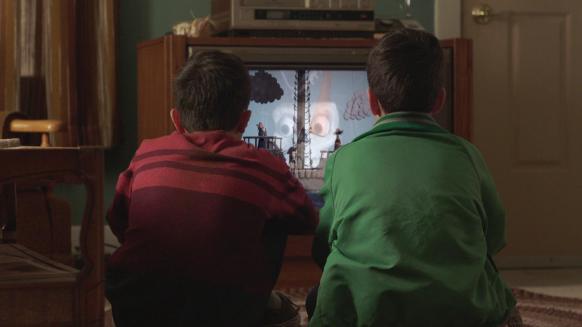
Channel Zero: Candle Cove (Syfy, 2016)
I don’t remember where I first discovered Creepypasta or which one was my first. What I remember is that fearful exhilaration recalled from my childhood cracking open Scary Stories to Tell in the Dark. Short, sweet bursts of dread and horror. Horror cinema has attempted to capture that sense of growing unease with mixed returns and recently mainstream horror films have found themselves in a conceptual rut, churning out the same staccatoed jump scares over and over again. Creepypasta (or NoSleep) are not a new invention, but a remixing of the stories told around the campfire. At their best, they incorporate aspects of modern life into their horrors. With Candle Cove, the horror is that of nostalgia.
Mike Painter is a renowned child psychologist who has a deep trauma in his past. His hometown of Iron Hill was the sight of gruesome child murders in 1988, with one victim being Mike’s twin brother Eddie. As an adult, Mike is suffering from a mental breakdown and believe that returning to Iron Hill and confronting his past will help heal the wounds. Instead, he is welcomed back by something long forgotten: Candle Cove, a cheaply produced pirate-themed puppet show for kids. Mike and his now-grown childhood friends all remember these strange broadcasts that popped up and then faded away that bloody summer of 1988. A connection begins to form between this ominous show and the unsolved killings that bring Mike face to face with disturbing and mind-shattering horrors.
Candle Cove was directed by Craig William Macneill who made The Boy, an atmospheric and subtle horror film I previously reviewed. One of the strongest aspects of Candle Cove is slow, paced cinematography. I can’t recall any jump scares, and Macneil prefers the dread and tension built by a slow pan to reveal. Landscapes are broken down and large rural industrial spaces, signs of life that aren’t there any longer. The camera begins distant in many scenes and slowly zooms and pans to reveal small figures moving across grassy fields near the edges of woods. The camera peers around corners of quiet living rooms, children sitting in the blue glow of staticky televisions.
The acting in Candle Cove is restrained, not quite to the point of the stoic absurdity of Wes Anderson but not too far. Character react in stunned silence; no one breaks down in hysteric screams or tears. This one little touch adds to the eeriness and terror of the story. It also feels more real, how people, when confronted with unimaginable horror, can do nothing but stand in silence in awe of it.
The horror of Candle Cove is the horror of nostalgia and remembrance. Mike Painter is the most haunted character in the story because he remembers what happened while the other citizens of Iron Hill have chosen to forget. When Candle Cove is discussed, it sparks memories in his friends, but it remains a pale and fragmented ghost. For Mike, Candle Cove revisits him as vivid, realistic nightmares. In his dreams, the monsters can hurt him and so memories are dangerous. It is only by confronting the nostalgia, seeing through how he remembers it to the ugliness that lives underneath the skin can he find peace.
The series goes far beyond the original short story. The first episode encapsulates the entirety of the Creepypasta, so the rest of the series is developing a larger mythology and giving just enough explanation to the mystery of Candle Cove. By the end of these six episodes you will know what Candle Cove is and where it comes from, but through that revelation lies more unanswered questions. We’re left with that beautiful ambiguity that makes horror such an enthralling genre. Channel Zero’s next outing starts in January and will adapt the series of stories called No-End House. I am excited to see how stylistically different each iteration of Channel Zero will be as it plays with the horror genre.
American Horror Story Season 6: Roanoke (FX, 2016)

After five seasons, I found myself getting burn out with American Horror Story. It’s such a strange duck, always reinventing itself, yet finding threads to connect its various incarnations. There is no television show quite like it, but I was still finding myself growing tired with portions of the formula. From the promos for Season 6 to the first episode, it became apparent creator Ryan Murphy was trying out something new. The season was shorter, making episodes tighter and more focused leading to what is arguably the best of ending of any season.
The framework at the start of the season is a reality television series covering the real life horror of an unsuspecting couple who moved into a mansion in the middle of the North Carolina wilderness. They quickly learn the land and house are haunted by the spirits of a succession of people who were murdered there going all the way back to the lost Roanoke colony. The series cuts back and forth between the re-enactments and the confessional interviews. And then at the halfway point the season becomes something entirely different.
Not everything in Roanoke works. There were some severe pacing issues I had, where events whizzed by at breakneck speed to hit certain plot points. This is not atypical of the series but this season’s particular framing highlighted how dizzying the show could be. Lots of plot was stuffed into these ten episodes, and not everything wraps up neatly. The horror surrounding the property gets explained a little but still we’re left wondering about things that seemed important (Stefani Germanotta’s role as the witch of the woods stands out as an unexplored mystery).
I have to admit; I fell for the novelty of the season’s framing. From the first episode, I started thinking about the fact we were seeing two of the main characters, one set as the “real life” victims of the horror telling their story and the re-enactors revisiting those horrors in a safe, facsimile. When the show begins to play with the role of media, it gets pretty interesting as re-enactors take on an entirely new role in the story. While not as garish and over the top as AHS can be, I was often reminded of A Head Full of Ghosts and House of Leaves this season, the former for its integration of reality television into a family’s personal horror and latter for its use of framing as an element of horror.
What was the horror of Season 6? It’s easy to peg The Media, and the show does often paint its metaphors with the broadest of strokes. But after the closing moments of the finale, I looked back at recurring themes in the story. Matt and Shelby Miller, the couple whom the season begins around, come to the house in North Carolina after a vicious hate crime. They are an interracial couple and were assaulted on the street due to the nature of their relationship. Shelby loses their unborn child as a result. Shortly, we’re introduced to Lee, Matt’s sister, who is in the midst of a custody battle with her ex. Lee is a former police officer that got addicted to pills and alcohol. Even the de facto leader of the evil spirits around the house has issues with her son. There’s a ghost girl, apparently an orphan, isolated and alone on the property. And then the Polk family…well, they have plenty of issues with their children. I believe this season had the horror of parenthood at its heart. Now, AHS is not an eloquent enough show to say anything truly meaningful about the topic, but it does bring up some interesting questions and ideas.
Ryan Murphy has promised that seasons 7 and 8 will be about exploring the connections between seasons and bringing together elements of the AHS universe. I have no idea where the show will go next and, despite its glaringly ugly flaws, that is what makes watching it so much damn fun.
The Woman in Red (1984, dir. Gene Wilder)
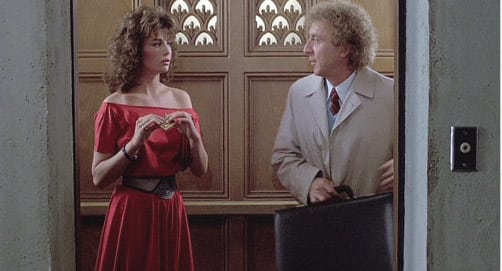
Teddy Pierce (Gene Wilder) begins the film standing on a ledge, just outside a window. Through voiceover, he takes us back to his fateful meeting with the Woman in Red (Kelly LeBrock) and how it led him to this place. He was a faithful husband and a doting father, comfortable in his job as an advertising executive. At first, Teddy’s gestures towards The Woman are scrambled around, and co-worker believes they are aimed at her (Gilda Radner). When the relationship finally does get off the ground, it becomes a series of lies and comically awkward scenarios where Teddy tries to dodge and mislead his wife (Judith Ivey).
One of the biggest wrinkles for me as I watched this film was the way Teddy’s infidelity was played for laughs. I can’t imagine this film being made today without some genuine pathos being written in for Teddy’s wife. There is a single moment in the third act that seems slapped in to handle any dislike the audience had for our protagonist, but it didn’t make me feel that he was justified in any way. I kept thinking about the culture Mad Men depicted and how this felt like the last vestiges of that, crumbling away in the early 1980s. Teddy has a cohort of buddies (Charles Grodin, Joseph Bologna, and Michael Huddleston) he pals around with and engages in raucous pranks on unsuspecting people. It appears that the intent was to make us think this was cute. Instead, it comes across as obnoxious and beneath characters that are supposed to be grown, professional men.
Despite the odd dismissiveness of the wife’s feelings, there are some moments of real consequence for side characters. Joseph Bologna’s character is notorious for his infidelities and early on in the film his wife leaves him. It feels like this will be handled seriously, as a counterpoint to what Teddy is contemplating. But then the film undercuts this plot halfway through, and it leaves Bologna’s character as having learned nothing from the ordeal. These are not “manly-men” per se though; they are a type of “fraternity of men” in their dynamic. So it shocked me that around the halfway mark it is very subtly and very honestly revealed that Charles Grodin’s character is gay. The words “gay” or “homosexual” are never spoken, the rest of the guys never rib him about it and the fact is just something they all knew and accepted. Grodin’s partner learns he’s been cheating on him and leaves their home. Grodin has a very real, emotional moment contemplating how his philandering has affected his life. For 1984, I was honestly shocked that a gay relationship was shown with such acceptance.
Wilder adapted the film from a French picture titled Pardon Man Affaire but infuses it with the Wilder tropes (red-faced hysterics, sad puppy-faced mugging, bawdy nebbish-ness). It just doesn’t work in the end. Reflecting on the films Wilder directed (Sherlock Holmes’ Smarter Brother, The World’s Greatest Lover, and this) it becomes a parade of diminishing returns. His work has moments of brilliance, but as a whole, they are muddled, confusing, and rarely funny. It’s clear to me Wilder has a very distinct point of view throughout his work, it is just messy and meandering. The one bright spot in The Woman in Red is Gilda Radner in a nearly wordless performance as a co-worker who mistakenly believes Teddy is after an affair with her. Where in Hanky Panky she is cast as “generic female supporting character” here she is allowed to flex her comedy and acting chops, proving what a great talent she was just with her face.
At this point in his career, Wilder has settled into the role of the WASP-y milquetoast, and it is clear that his greatest performances were behind him. He would direct one more film, though, Haunted Honeymoon, which is what I’ll be reviewing next time.
Hanky Panky (1982, dir. Sidney Poitier)
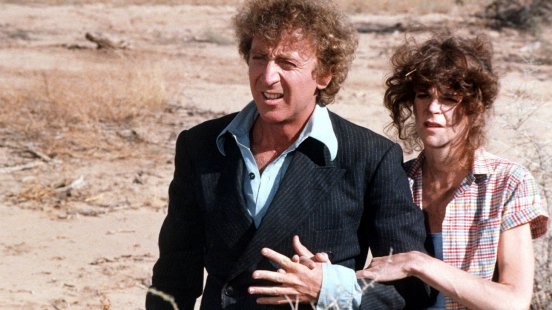
A Chicago architect named….(wait for it) Michael Jordan (Gene Wilder) is headed back to his hotel after brokering a deal in New York City when a woman on the run from a couple menacing fellows stumbles in. He quickly becomes involved in an international game of spies and espionage. He gets help from a reporter (Gilda Radner), and the two go on the run after Jordan is framed for murder.
Much like I felt about Poitier’s previous Gene Wilder venture, Stir Crazy, this movie is an utter failure as a comedy. And it’s not too great of an action/thriller film either. The MacGuffin that drives the whole plot is very confusing and unclear, and even at the end, I was still trying to figure out what the big deal was. Things start out interesting enough. A mysterious man wakes up, disoriented, sees a strange painting of a Southwestern landscape on his bedroom wall and proceeds to hang himself. It’s a pretty intense hook. Then we move to Kathleen Quinlan as the woman whose path crosses Jordan’s. She is playing it straight, which is perfect for an action comedy. The comedy comes from moments in the story but the story itself takes things seriously.
I kept thinking back to how good Silver Streak was, how it balanced genuine situational comedy with a legitimately exciting and interesting conspiracy story. Lots of things happen in Hanky Panky and the two leads go to lots of locations, but it never feels like it amounts to anything. It is a lot tighter in its structure then Stir Crazy but still misses the mark on the actual comedy. There’re some instances of Wilder’s trademark outbursts, but they hit too frequently and don’t feel appropriate for the scenes.
The strangest thing to me throughout the whole production was how underused Gilda Radner was. She was known for being a very high energy comedic talent, and she is a fine actor. They just never give her anything to play off of or do other than eventually become the damsel in distress. I got similar feelings from when I see Kristen Wiig in certain productions that seem to ignore her comedic talents.
As far as Wilder’s career, this was near the point where it was beginning to slow down regarding hits or highly memorable work. From interviews I’ve read, he seemed to be a particular actor, so I assume he was looking more at films that interested him rather than would do well. He also began his relationship with Gilda Radner at this point. We’ll see the pair again in his next film, The Woman in Red as well as Haunted Honeymoon. I’ll be posting about both of them very soon.

The city of Atlanta exists in a strange space geographically and culturally. Burnt to the ground during the American Civil War, rebuilt and exploded into a major hub in the Southeast for manufacturing and the civil rights movement, now a diverse and constantly shifting urban space. It’s one of the largest cities in America, but it’s surrounded by lush, verdant hills. It’s the place where the city meets the country. It’s a place where rappers hang out in the woods wearing their hunting camo. Donald Glover wasn’t born here, but he was raised in the contradiction that Atlanta is, and he understands the true wonder of that beautiful, messy conflict of ideas.
Earn (Glover) doesn’t so much as live in Atlanta, as he exists there. He dropped out of Princeton. He lives with the mother of his child, but their relationship is complicated, and she sees other men with no argument from Earn. He works a dead-end at the Atlanta airport. Even his parents won’t let him in the house because they know he’ll ask for money. When his cousin Alfred releases a regional hit as the rapper “Paper Boi,” Earn sees this as an opportunity to make something of his life as Alfred’s manager. But that’s not really what the show is about; Atlanta spends the next nine episodes challenges the viewer’s’ notions of just what the show is and what is it about.
Glover plays with traditional television structure, partially inspired by the work done by Aziz Ansari’s Master of None and Louis C.K. on his FX series. The success of the latter show has opened doors for creators like Glover and Pamela Adlon’s Better Things not to be forced into typical three-act sitcom structure. Atlanta has no loyalty to any one character and will allow the focus to meander depending on the interest of the moment. Sometimes we have Earn hustling for Alfred. Others we follow Alfred’s right-hand man, Darius as he goes through a series of deals and bartering for some unknown purpose. On the show’s most interesting episodes it highlights a day in the life of Vanessa, Earn’s on again/off again after she makes a career ending mistake. There’s also an entire episode framed as a local program on issues in the black community, where Alfred is confronted over transphobic comments.
The play between relationships is what makes Atlanta so engrossing. Earn and Alfred are arguably the show’s core relationship, and they don’t behave like a typical performer/manager. Their familial connection seeps into every aspect, and Alfred makes concessions that you would not see a performer do for someone that is going to take 5% of their paycheck. And Earn looks after Alfred in a more intimate way than most managers.
Even more interesting is the relationship between Earn and Vanessa. From their first scene together, waking up in bed and beginning their morning routine there is a palpable tension. As the series goes on, we get two spotlight episodes with just her and one crucial episode about the next stage of she and Earn’s relationship. Vanessa is a highly educated woman who has ended up sidetracked with a child and undefined relationship. We see her interact with peers from college who have made their living in possibly questionable ways and Vanessa ponders other paths.
What kept me coming back to Atlanta was the magical realism of the series. Smartly, Glover and company don’t go overboard in the first couple episodes, hinting at the less familiar elements of the series. Glover has described the series as “Twin Peaks with rappers, ” and this comes through during Earn’s encounter with a strangely stoic man on the bus offering him a Nutella sandwich before exiting the bus and wandering off. As episodes roll up, we find Justin Bieber played by a young black man, the quirky inhabitants of a police lock up; an opportunistic social media-driven pizza delivery man, a slimy club promoter who escapes through secret passages, and many more strange and interesting side characters. Glover believes Atlanta is a magical place and works to convince us of the same.
The World’s Greatest Lover (1977, dir. Gene Wilder)
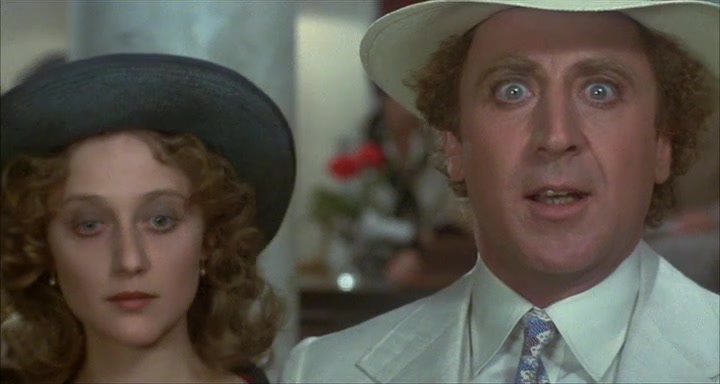
Rudolph Valentino is the sex symbol of the century! Rainbow Pictures executive Adolph Zitz (Dom DeLuise) is furious over Valentino and Paramount Pictures’ success. He strikes upon an idea: hold a contest for The World’s Greatest Lover, a man who they will make into the new star of the ages and get the female moviegoers to forget about Valentino. Cue Rudy Valentine (Gene Wilder), a man incapable of holding down a job due to his nervous tic of sticking out his tongue when he’s nervous. Rudy and newlywed bride Annie (Carol Kane) travel from Milwaukee to Los Angeles for his chance to become a star. A wedge is driven between the couple after they arrive and mishap piles upon disaster to impede Rudy from reaching his goal.
From the opening scene of The World’s Greatest Lover, I was laughing. And the laughs came pretty consistently throughout, probably the funniest of the Wilder films I’ve watched in this batch so far. There is the playing up of Wilder’s manic rage for comedy. And while in some films it befits this character, in this one it is the perfect tone to take. The absurdity of Wilder competing with Valentino is apparent off the bat, but having the character be so arrogantly assured of himself makes it that much funnier. It also doesn’t hurt that here, like in Silver Streak, Wilder is so naturally damn charming.
On the same level as Wilder in the picture are DeLuise and Kane. I can’t say I saw too much of DeLuise’s work in the past, but he just brings such a massive level of energy to his performances that it overwhelms you. He has got to be one of the better blowhards I’ve ever seen in a film. Much like Wilder, the sort of manic switch from furious to inviting creates a wonderfully tense comedy in each scene. Kane is unlike anything I’ve seen her in before. If you’re more familiar with her later work (The Addams Family, Kimmy Schmidt) then you’ll be stunned by how demure and innocent she can play. You don’t question for a second why Rudy is in love with Annie, and you also don’t ask why she is falling out of love with him.
The World’s Greatest Love is not Wilder’s finest work. Regarding directing, it is an improvement on Sherlock Holmes. He feels very comfortable with large set pieces and manages to balance comedy and sentiment well. There are some moments where the plot goes off track and Wilder indulges in some scene he cooked up that isn’t necessarily essential. There is also a love of an older style of comedy from the 1920s and 30s that is being recreated in the 1970s and viewed in the 2010s may not translate.
This was Gene Wilder at his peak. He’d just made Silver Streak and was a full-fledged movie star at this point. From here on out his career would be a mixed bag with a lot of less than stellar vanity projects. The Frisco Kid with Harrison Ford would come in 1979, Stir Crazy in 1980, and then the big moment of his life: meeting Gilda Radner on Hanky Panky, which is what we’ll look at next time.
 PopCult Reviews