

Every year, I watch a lot of movies. My total for 2023 is 270, most of which were released in previous years. In fact this year marked my 4,000th film viewed in my lifetime. Of all the older films I watched, these were the pictures and filmmakers who stood out to me the strongest. These are the pieces of art that I’ll carry with me into the new year and beyond. They are works of such beauty & humanity, movies that made me laugh & cry & most importantly think about my own life and the world we all inhabit. Here are my favorite film discoveries of 2023.
The Out-Of-Towners (1970)
Written by Neil Simon
Directed by Arthur Hiller

From my review: “Sometimes you watch a film that makes you feel seen. While watching The Out-of-Towners, my wife and I turned to each other about 15 minutes into the picture and laughed with full recognition. The two people on screen were way too much like ourselves, making this one of the best comedy experiences we’ve had in a long time. It takes a lot of security in oneself to admit that you have some awful, neurotic traits, but I’ve come to a point in my life where I have to be able to laugh at my flaws and do my best to improve in the ways that I can. However, it is hilarious to watch these characters, completely absurd people, in the middle of a simple yet infuriating situation that is still relatable fifty-three years later.”
Killer of Sheep (1978)
Written and directed by Charles Burnett

From my review: “It’s a character study about the type of guy you’d come across in South Central Los Angeles. Crime isn’t a big deal because it’s so typical, not because the people there want it; the society they live in has no interest in doing anything about it. […] Despite the bad stuff, there’s a lot to celebrate in the lives of these characters. Pierce’s parents undoubtedly love him, but his father is passive, and his mother is too aggressive. Even Sonia, the future sister-in-law, isn’t evil; Pierce just has well-founded anger about class. Burnett brings us into this world without hand-holding; he’s making a movie for himself and other Black people. The cinematic language is familiar but slightly different, fitting with a rhythm we don’t often see in media where the white experience is centered. I cannot emphasize enough how funny this movie is. It’s humor in little moments, not complex set-piece joke constructions, but just the comedy of living, the laughs that can be found in small failures.”
The Shop Around the Corner (1940)
Written by Samson Raphaelson, Ben Hecht, and Miklós László
Directed by Ernst Lubitsch

I wasn’t expecting the film that served as the basis for You’ve Got Mail to be this good. It’s incredible and my introduction to the work of legendary filmmaker Ernst Lubitsch. Alfred (James Stewart) is the top employee at Matuschek and Company, a leather goods shop in Budapest. Work is his life, but one morning, Alfred reveals he’s been corresponding with a woman he met anonymously through the newspaper. Shortly after this, Klara (Margaret Sullavan) comes in looking for work, but she’s able to impress the boss, so she’s hired, to Alfred’s dismay. You can probably see where this is going. Despite that, the film is such a maturely written piece. These feel like real adults with complex inner lives, and their interactions reflect that. I could also see the evident cinematographic influence Lubitsch had on later filmmakers like Martin Scorsese and Wes Anderson. It makes sense why the director was called “the most sophisticated and elegant” filmmaker of his time. This is such a clever movie that never talks down to the audience. If only the 1990s remake was as good.
Touch of Evil (1958)
Written and directed by Orson Welles

From my review: “The film has so many thematically perfect moments; a kiss synced up with a bomb stands out at the start. Welles is highly talented at knowing when to cut and when to let a moment linger into discomfort. Of all the noir films I watched for this series, we end on the highest possible note. Welles isn’t associated with noir, but the themes of his movies overlap. There are no good people in this perpetual night; there are just people not as bad as others. Uncle Joe seems like he will be the central villain, but even he ends up a henchman to the morally vile Quinlan. There’s a track record of successes to keep up that is more important than justice being served, and it sits at the core of the film.”
Alice in the Cities (1974)
Written by Wim Wenders & Veith von Fürstenberg
Directed by Wim Wenders

From my review: “The American media is terrified to present a child as a whole human being. To make the public view a child as a complicated collection of aspects would break down the oppressive structures everything is built upon. Wim Wenders manages to get a performance out of Yella Rottländer that is unlike any you’ve seen in an American film. This is not a child performing precociousness for the collective “awww” of the audience, but a little girl who doesn’t know what happens next in her life. She is dragged along by adults who often don’t care to ask her what she thinks. It doesn’t surprise me that Wenders drew much inspiration in this period from the domestic slide of life family dramas directed by the great Yasujiro Ozu. Ozu also refused to see children as props in a scene but fully realized human beings.”
Wendy and Lucy (2008)
Written by Jon Raymond & Kelly Reichardt
Directed by Kelly Reichardt
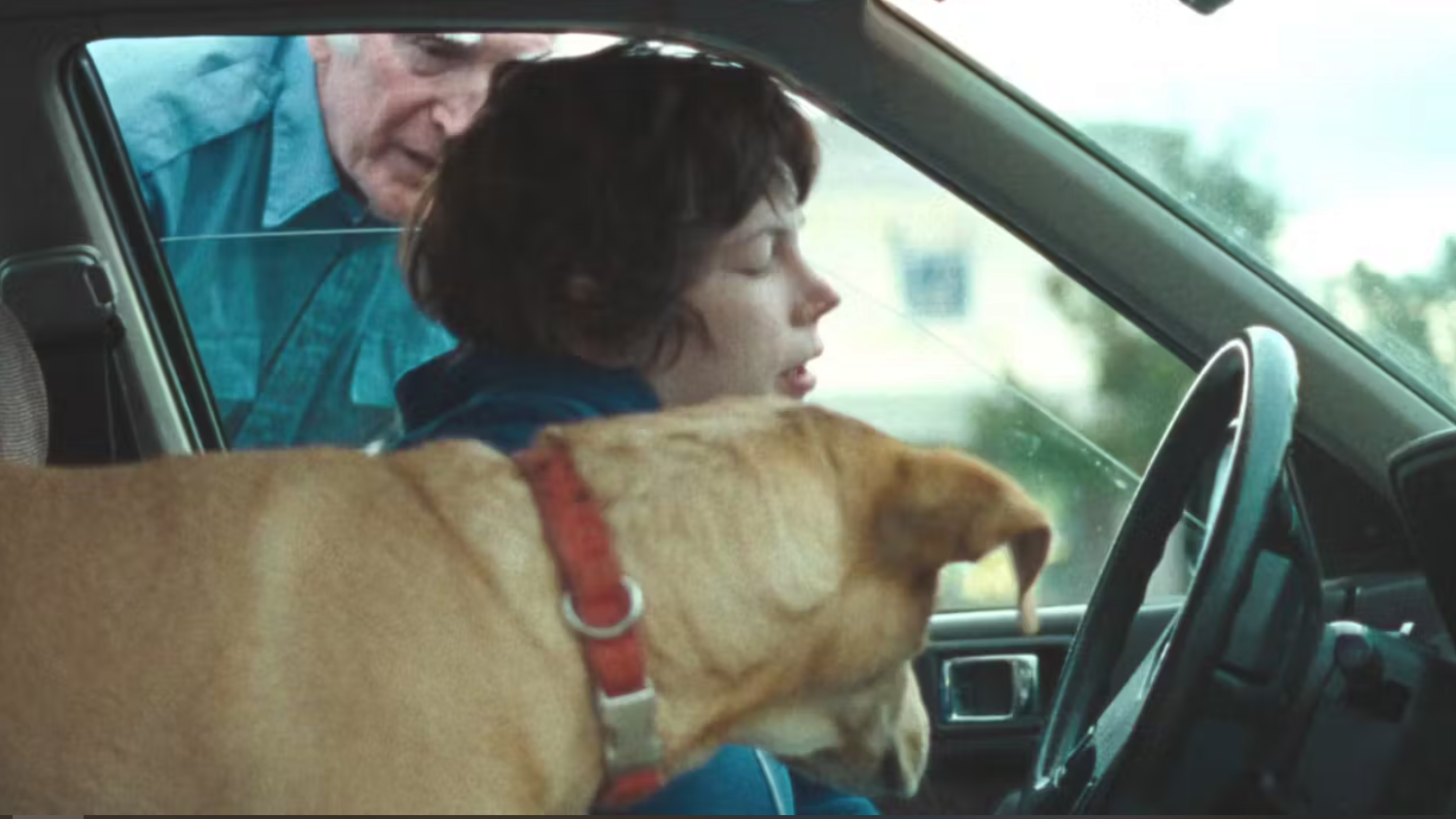
From my review: “Like all of Reichardt’s work, the film is structurally straightforward. I won’t say simple, but I don’t think anyone will get lost in the plot of Wendy and Lucy. The complexity comes from the human connections and emotional toll on the central character. Michelle Wiliams is at her best when she’s in a Reichardt film. The closest I’ve seen her to giving this naturalistic, humane performance would be Derek Cianfrance’s Blue Valentine. The actress does a lot of work before shooting, constructing her characters and their backstories, thinking about how they engage with the world and other people. This means that when the cameras start rolling, we are deceived into believing what happens on screen is effortless. Williams is busting her ass, and we know this because we forget that it is her, she is Wendy.”
A Nos Amours (1983)
Written by Arlette Langmann & Maurice Pialat
Directed by Maurice Pialat

From my review: “It is evident that Sandrine Bonnaire had a lot of conversations with Pialat and did a lot of thinking before and during filming. In later interviews, she talked about being a virgin when they began shooting and how she had sex with a friend for the first time between shooting days. She and Suzanne were experiencing significant life events around the same time. Bonnaire has also spoken about Pialat as a father figure who became good friends with her father. In turn, she said her father was profoundly moved watching his daughter’s performance in this film, resulting in them talking to each other in a way they never had before. In essence, Bonnaire’s father was forced to see her not as just a girl or even “his” daughter but as an autonomous human being with the same flood of thoughts and confusion that everyone wrestles with.”
My Own Private Idaho (1991)
Written and directed by Gus van Sant
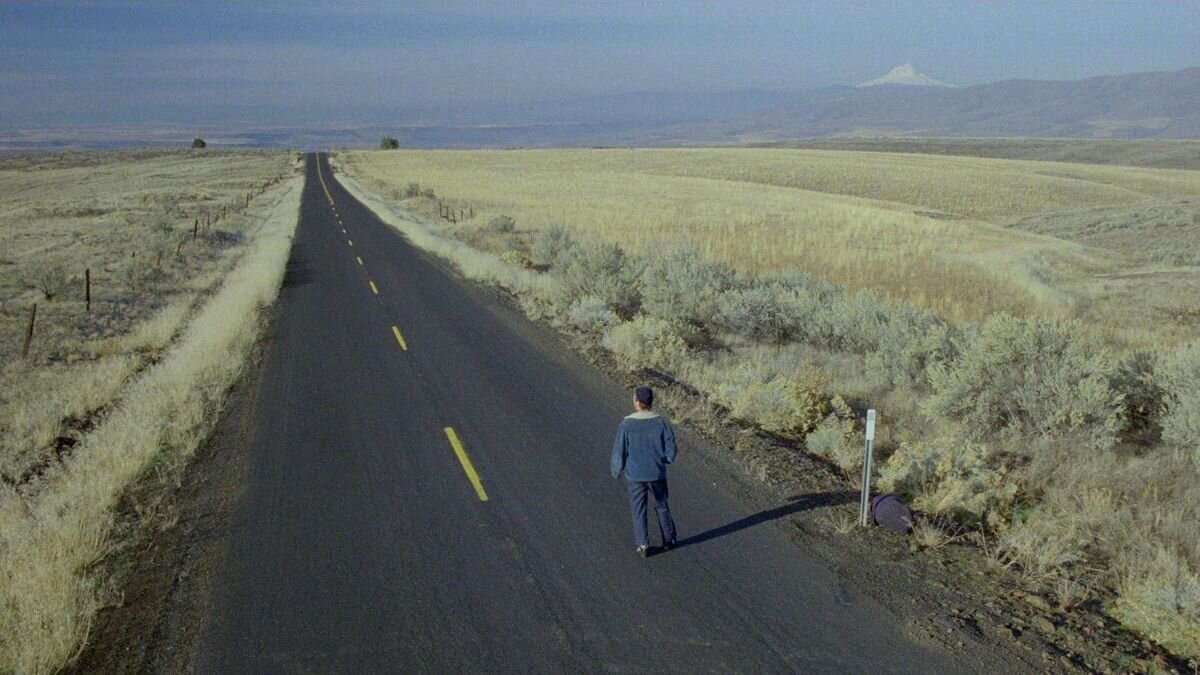
From my review: “We’re left with many questions and many things that will always be up to the viewer to interpret. Who picked up Mikey in the end? […] Director Gus Van Sant leaves all of this to us, but a somber reading of the film will be the most accurate from my perspective. Mikey continually has visions of salmon swimming against the stream when he has his episodes, and this image explains a lot about his character. Salmon do this to return to their spawning grounds, where they were born, to lay & fertilize eggs. Mikey isn’t interested in procreation but fixates on finding his mother. He dreams of her comforting him, protecting him as he struggles through life. Every change of scenery is about getting closer to her, yet he never even glimpses the woman outside his sleep.”
The Writing of Eugene O’Neill
Films viewed – Long Day’s Journey Into Night and The Iceman Cometh
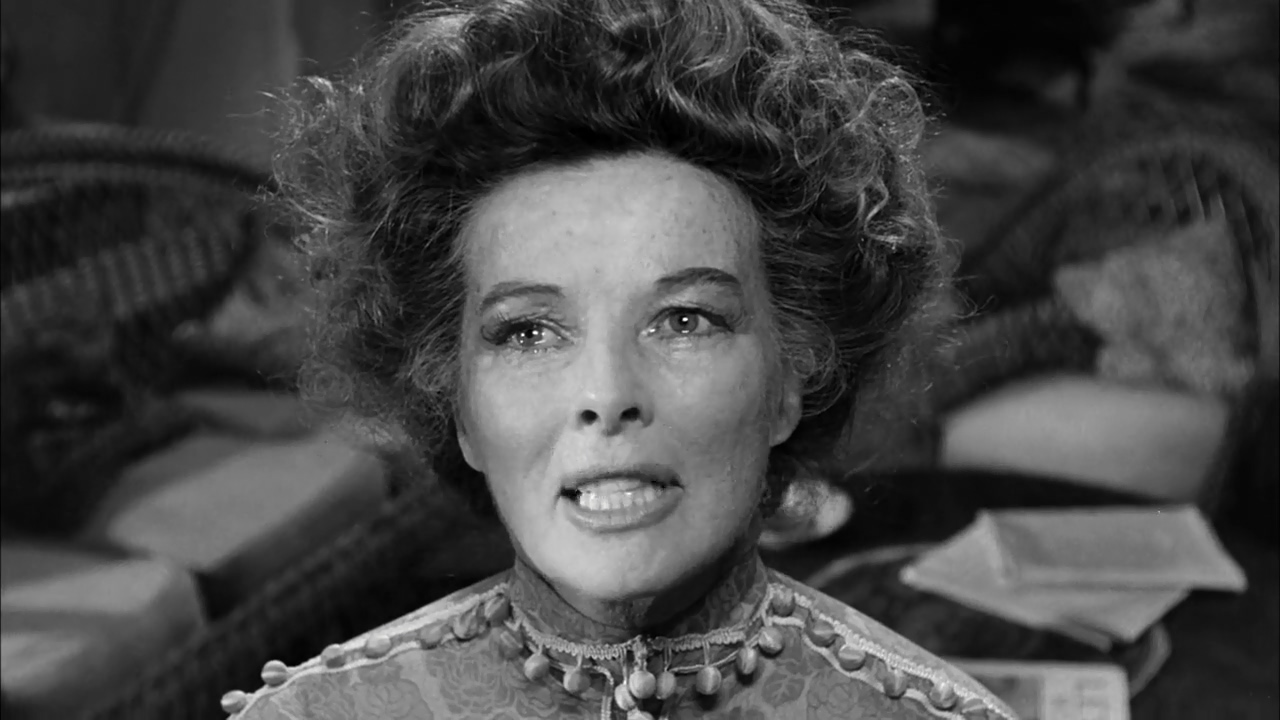
From my review of Long Day’s Journey: “Every character is stuck in a loop; all they can do is observe each other or lash out when anger boils over. It is both easy to live life on repeat but also spiritually draining. This isn’t living so much as it is existing. […] Layered on top of this perfect piece of writing are director Sidney Lumet’s decisions on blocking and cinematography. It’s hard to present Long Day’s Journey without being stagey, and this sometimes feels like a filmed play. However, Lumet cleverly seeks moments to inject the story with cinematic elements. The final speech of the picture delivered by Hepburn is one of the best examples, with all the lights out except for a spotlight on Mary. The camera slowly zooms out, turning her into the smallest point of light on the screen before a hard cut to an extreme close-up as she gives the play’s last lines.”
The Three Colours Trilogy (1993-1994)
Blue, White, Red
Written by Krzysztof Kieślowski and Krzysztof Piesiewicz
Directed by Krzysztof Kieślowski

From my review of Red: Kieślowski was labeled a “mystic” by some critics and former fans during this latter period of his career. In their opinion, he was becoming too esoteric, far too interested in the immaterial nature of life. I don’t mind it; finding ways to weave the unknown into cinema is crucial […] The mystic emerges in Red as the story Kern tells Valentine of his troubled past, reflecting elements of her life and of the enigmatic Auguste, who seems entirely out of place from the rest of the film. This implies a pattern to life: people often follow pre-worn paths and make the same mistakes as those before them. The film doesn’t necessarily frame this as bad or an inability to learn but as something necessary. We have to make these mistakes because we learn something vital; it cannot be told, so we have to go through it. Kern’s final encounter with Valentine also has an air of the mystic. He comes to see her last fashion show before she hops on a ferry headed to England to finally meet up with her boyfriend. Kern stays behind to speak to her but cannot explain why he feels compelled to do this, just that he has to.
La Haine (1995)
Written and directed by Mathieu Kassovitz

It’s been nearly thirty years, and La Haine hasn’t aged a fucking day. Everything about this film feels as urgent & relevant as it was when it was first released. A Paris suburb erupts into violence when a local man is sent to the ICU by the cops. A police officer’s revolver goes missing in the wake of the previous night’s riots and ends up in the hands of Vinz (Vincent Kassel) when he comes across it in the trash. Vinz and his buddies Said & Hubert hang out and wander the streets, charged up on the adrenaline of the previous night and the explicit promise that the police will be back. Writer-director Kassovitz plays every scene like a gun about to go off, letting the tension build. Yet, he’s playful and shows these young people reveling in their community and comradeship. It’s the arm of the law that hovers around the edges, peering through from time to time, that reminds us this day won’t end well. There’s a loaded gun. There are angry people. Someone is going to get hurt.
The Films of Douglas Sirk
Films viewed – Magnificent Obsession, All That Heaven Allows, Written on the Wind, Imitation of Life

From my review of Imitation of Life: For Sirk to address colorism in a “women’s picture” in the late 1950s is a stunning feat. At the time, the film was quickly overshadowed by a scandal unfolding in the actress Lana Turner’s life […] The film feels like the end of a particular era of cinema. Sirk wasn’t pulling his punches anymore, framing Lora, our “protagonist,” as a fairly cruel, cold person. She tells Annie to act like they are friends but treats her and Sarah Jane like employees half the time. There’s an incredible scene where Lora makes Sarah Jane bring out food for her party guests and the young woman uses an exaggerated accent to point out how she is being treated like a second-class citizen in her home. Lora knows that Sarah Jane is struggling with her identity and still forces her to do this. Sirk wasn’t here to present an aspirational film where Black and white people lived harmoniously. Instead, he was showing an honest picture of how Black people were treated in post-WWII America, how Jim Crow didn’t just happen in the South.
The Films of Agnes Varda
Films viewed – Cleo from 5 to 7, Le Bonheur, One Sings the Other Doesn’t, Vagabond, The Gleaners and I, The Beaches of Agnes, Faces Places, Varda by Agnes

From my review of Cleo From 5 to 7: “I can confidently say this: I have not seen a filmmaker with such instant confidence about their work since Federico Fellini. Varda is equal parts playful & majestic in how she uses the camera. Her eye for how to make each & every shot enthralling and beautiful is unmatched in the cinema I’ve experienced. The first few scenes of Cleo feel like Varda going through film school exercises but executing in the most perfect way a director could. In that sense, the film represents a piece to be studied by people getting into movie-making. Varda showcases camera movement, angles, and lighting with immaculate precision. There are moments where, from a technical perspective, I felt I was watching a film made in the present day.
Cleo From 5 to 7 is not just a technical marvel. Varda explores the tension between objective & subjective time. We’ve all experienced this where 30 minutes can feel like an eternity, or hours can slip by without notice. The film is objectively 90 minutes long, but Cleo’s experience of that time is variable. There are moments where she disassociates, allowing the narrative to become another’s. However, this is her story, and the test results have the potential to reshape her entire life.”

 PopCult Reviews
One thought on “Seth’s Favorite Film Discoveries of 2023”