
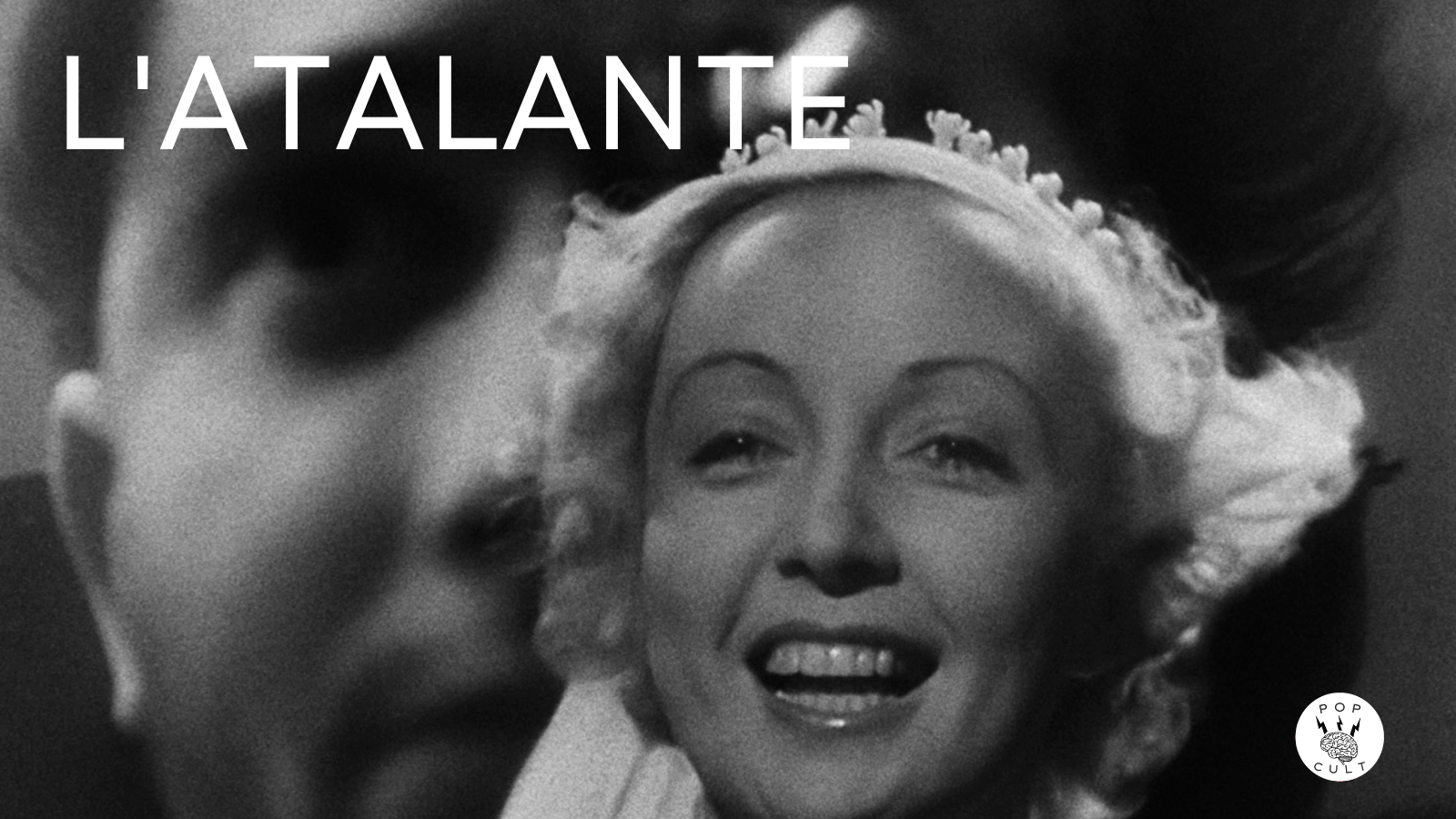
L’Atalante (1934)
Written by Jean Vigo and Albert Riéra
Directed by Jean Vigo
Jean Vigo was born to parents on the run. His father was a militant anarchist, and so much of his early life involved hiding from authorities with his parents. When Vigo was 12 years old, his father was murdered in prison, but the officials tried to pass it off as a suicide. Vigo would spend his teenage years in a boarding school under an assumed name for his protection. He got married at 26, had a daughter, and died at 29 from tuberculosis, which he’d had for eight years. As a filmmaker, he’s seen as establishing poetic realism in cinema and would inspire many of the French New Wave directors nearly thirty years after his death. Despite not living for that long, Vigo’s work exudes life and a rich understanding of the human experience.
Jean is the captain of the canal barge L’Atalante. He’s just married Juliette in her village, and she walks off with him to begin a life of sailing up and down the canals with Jean and his crew. There’s scruffy and eccentric Pere and Jules, a cabin boy. Having a woman around is strange for these other men, but they try to make their cramped home amenable to her. Jean promises his bride a night out when they arrive in Paris, but when Pere and Jules leave to consult a fortune teller, Juliette has to stay because someone has to watch the boat. Later, she gets her chance, but the flirtation of a street peddler causes Jean to drag Juliette back to the boat. Furious, she sneaks away, and Jean allows the ship to leave without her. Their love appears to be in peril, but this is a fairy tale, and something is bound to happen after all.
Classic fairy tales are often tragedies. They were created to communicate a moral, and sometimes that is delivered through sad moments alongside the happy ones. Hansel & Gretel are abandoned by their parents and almost eaten by a witch, but they get a happy ending. At their core is a desire to tell the human story, often intertwined with love. Sometimes, love feels overwhelming. Others may feel like the flames of love have been extinguished. These don’t have to be epic; they mean more when they are grounded and simple every day. Two people newly married forced to live in a non-traditional setting means we will see a lot of conflict. This film, in particular, cherishes the dirtiness of life and how messy it all can be.
For a long time, the public couldn’t access the director’s cut of L’Atalante. Instead, from 1934 to 1990, all that had been available was a 65-minute version, cut from the original 89-minute runtime. There are interesting things Vigo chooses to leave out: the wedding. The film opens with Jules and Juliette walking from the chapel to the shore where his barge awaits. The townsfolk follow, waving goodbye and exuding sadness for their departing daughter. This means we also never see the courtship of these two lovers. When you see the living conditions, you realize Juliette must truly love Jean and choose to live this way.
Juliette has never been to Paris, so the promise of visiting the city while traveling in such a strange manner makes life exotic and exciting for her. But that’s what the movie is about, how the things that tantalize us from afar in all their glittery splendor become faded and dull upon closer examination. Jean also fails to consider what it means to bring this woman into his life and live in this manner. The result is a film that is less about plot points and more about human interaction.
I was reminded of how much love is a journey of discovery. You never fully know someone, even when you marry them, but you learn them over time. I know Ariana better now than I did sixteen years ago when we first started dating. I understand her far more as a complex human being, not just the person I love. She knows me more than any other person on this planet. It’s through these years that our love has grown, and we are truly devoted to each other. But along the way, just like in this film, there were bumps in the road. It’s how you weather those bumps that determine whether it really is love that binds you together.
Jean Vigo uses camera dissolves to significant effect, allowing two images to partially merge and communicate a new idea through the combination. Jean & Juliette kissing on the barge deck is partially dissolved, with Jules wrestling himself for comic effect. Vigo’s camerawork for 1934 and his health, which declined throughout production, is a true testament to the beauty of cinema. L’Atalante is a triumph of early filmmaking, a picture that shaped its corner cinema. I wish this type of poetry was still present in movies today.

 PopCult Reviews
One thought on “Movie Review – L’Atalante”