My Top 1o Favorite Television Series I Watched in 2016

Westworld Season 1 – Not a show just about man and technology, but something deeper about what it means to be human and the role suffering plays in our humanity. Check out my full review here.

My Top 1o Favorite Television Series I Watched in 2016

Westworld Season 1 – Not a show just about man and technology, but something deeper about what it means to be human and the role suffering plays in our humanity. Check out my full review here.
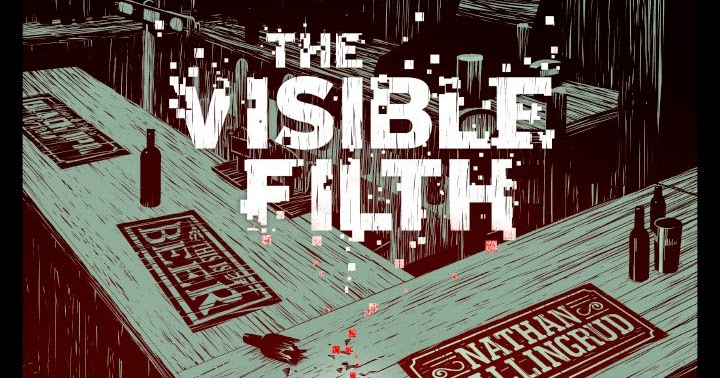
The Visible Filth by Nathan Ballingrud (This Is Horror, 2015)

One trend I’ve noticed almost my entire time on the Internet in places like 4chan or seedier corners of Reddit is gore posting. Not once has the idea of looking at the human body in various states of mutilation struck me as intriguing. The times I’ve accidentally stumbled upon these pictures have left me frantically trying to scrub their afterimage out of my brain.
In The Visible Filth, Will, the bartender at a dive in New Orleans stumbles across a bedazzled cell phone after a fight in his place of work. Taking it home with the intention of finding the owner he stops in his tracks when text messages and strange images are sent to the device. Eventually, Will and his live-in girlfriend see a series of images that imply a ritual killing. Despite the mystery, the story is not concerned with solving the case, rather looking at the way we get lost in despair and pain.
Will comes home to find his girlfriend lost in an internet rabbit hole of investigating a book glimpsed in one image. She is never close to finding any closure or answers and seems to be physically deteriorating as a result. Ballingrud grounds the work by continually shifting the focus back to Will’s feelings for a frequent bar patron, the person whose relationship status never seems to line up with yours. There’s also one of the participants in the bar fight who lives in an apartment over the bar. Will visits and finds the man refusing to go to the doctor as the wound from a broken glass bottle festers and grows worse. The story would also suffer if we didn’t have a believable character making believably foolish choices. In this situation, we would all be tempted with curiosity to look again. It’s a lot packed into 68 pages.
The Visible Filth delivers something imperative that a good horror story needs: Incompleteness. A piece of mystery writing gives you a series of steps and then an answer. Horror should give you some of the steps but never answer. The horror is the ambiguity of what you witness. The story behind the photos on the phone are never going to be explained, and as a result, they haunt you and keep picking away at your sanity, at your trust in the reality of the external world. And Ballingrud’s external world is very textured and visceral. The opening of the text lays out a tactile space where the story will unfold:
The roaches were in high spirits. There were half a dozen of them, caught in the teeth of love. They capered across the liquor bottles, perched atop pour spouts like wooden ladies on the prows of sailing ships. They lifted their wings and delicately fluttered. They swung their antennae with a ripe sexual urgency, tracing love sonnets in the air.
I can’t think of too many better ways to convey a sense of filth. We’ve all been in this bar. The sticky floors our shoes cling to. The every present stench of background cigarettes. The watery slosh of cheap beer. The sense of place is so strong and claustrophobic at times. Similar scenes take place at Will’s apartment with briefly glanced figures in the shadows. The Visible Filth will put you in the shoes of its protagonist: uncomfortable, left without answers, everything a good horror story should be.

My 10 Favorite Video Games I Played in 2016

Civilization VI – For some foolish reason, I didn’t think I would get hooked on this sixth installment in the series. How wrong I was. 36 hours may not be most for some people, but for my more restrictive gaming schedule that is quite a bit. I have barely scratched the surface of Civ VI but I know it will be a game that eats up my life in big chunks.
Continue reading “2016: My Favorite Video Games, Music, and Books”
Blair Witch (2016, dir. Adam Wingard)

It’s been 20 years since Heather Donahue and her fellow filmmakers disappeared in the woods around Burkittsville, Maine while in the pursuit of the legend of the Blair Witch. In 2014 her brother James found footage online that appears to show Heather alive and well in a rundown house. He takes off to investigate for himself along with three friends, one of whom is making a documentary on the process. They join up with two Burkittsville locals and begin what will be their last days working closer to discovering the secret of these haunted woods.
I was excited when I heard director Adam Wingard and his writing partner Simon Barrett were behind this Blair Witch sequel I was more excited than I might have normally been. I am a big fan of their previous films You’re Next and The Guest, both of which take their genre tropes seriously while having still having a sense of fun about the proceedings. I have been relatively lukewarm about the Blair Witch films. When the original came out, I was 18 and completely got caught up in the faux-realism the filmmakers used via the internet to promote the story. When I finally got to see the film I was pretty let down, and it began my decades-long dislike of the found footage genre. The second Blair Witch film is best left unmentioned as it is just a terrible and un-scary movie.
Sadly, this iteration of Blair Witch ends up being another dull entry into the franchise. My biggest issue with the entire film is the conceit behind the found footage storytelling. There is absolutely no reason why this couldn’t have been a third person film. We get a scene attempting to justify the constant recording where Lisa, the film student friend explains to another character why it is so important she records everyone. She ends up bringing along a drone camera and little ear piece cameras so that coverage can be a bit more expansive. But like all found footage horror films it devolves into either dreary boredom intend to convince us of “how real” the story is or shaky images so incomprehensible there’s no point in watching.
The seeds for a good horror story are here though. The film embraces the role of social media in horror by having the inciting video for the investigation come to James via social media. The mythology of the Blair Witch is restated from the first film, but with a little more clarity. Characters ask the kind of questions we would when told stories like these and get answers that make sense. There is an interesting angle of time not moving in a standard linear fashion once you reach a certain point of the woods and that is a fantastic element of the picture. Rustin Parr’s vanishing house is another classic horror trope that has lots of potential. I was reminded, albeit very briefly, of House of Leaves.
The acting is not atrocious, it feels perfectly adequate which is a pretty big disappointment compared to films like You’re Next and The Guest which had some very solid performances. I’m not sure how choreographed or improvised the film was because of its found footage moments but I can’t help but think that hindered the actors from doing better work. The final moments of the film continue the same well-tread formula we see in found footage horror constantly. The characters are worked up into a frenzy as they have finally confronted the Big Evil so all we get is screaming, barely audible dialogue, and overly shaky camera footage.
For now, I think the Blair Witch franchise should go back to being dead. There is not much meat on the bones because it feels at the end like pretty much any generic local legend. The one element that interested me the most, the concept of time moving at different speeds in the woods for different people had potential but wasn’t enough to make this movie even remotely enjoyable.
Star Wars: Rogue One (2016, dir. Gareth Edwards)

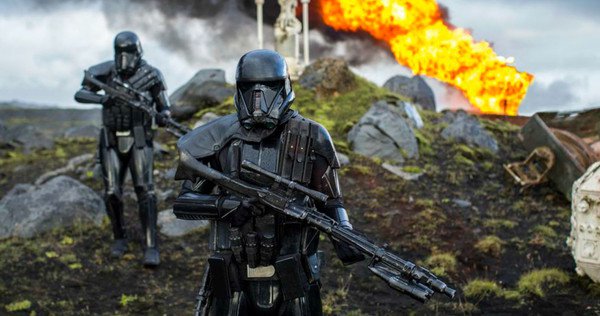
Jyn Erso is an orphan, the daughter of a man vital to the success of the Galactic Empire. Her whole life has been spent on the run and now, forcibly united with the Rebel Alliance, she has a chance to reunite with her father do some good. She’s partnered with Rebel officer Cassian Andor and droid K-S20 with more joining along the way. Rogue One is Disney’s first dip in the water with the idea of doing Star Wars films outside of the standard trilogy format. This particular story focuses on the events that led the Rebels to obtain the plans for the Death Star in the first Star Wars film.
The visuals of Rogue One are possibly the best we’ve ever had in a Star Wars film. Director Gareth Edwards has a background in special effects which he has used extensively in his previous two films, Monsters and Godzilla. He seems quite adept at conveying scale through his camera and likes to have large monolithic objects looming menacingly in his backgrounds. The Death Star looks the best it ever has and feels like a truly powerful construct which helps understand the Rebellion’s deep fear. Many of the battle scenes are shot from the ground troops’ point of view, so machines like the Imperial Walkers feel like the colossal weapons of devastation they are intended to be. The final battle sequence taking place on the ground of an Imperial controlled planet and in the space above is full of momentum and energy. The Rebellion’s gear and ships looked perfectly weathered and worn evoking the iconography of the original trilogy.
Rogue One also does some of the most world building a Star Wars film has done in awhile. In the first 15 minutes, we visit five planets, four new and one familiar to fans of Episode IV. We see locales probably spoken about in expanded universe media but never seen on the big screen. As a result, the galaxy feels even more expansive and dense. There are hundreds of alien species glimpsed in crowded bazaar type locations. We see the larger operations of the Empire and get the sense of a truly dominant widespread force to be reckoned with. The film manages to connect up with the moments right before the opening crawl of Episode IV, and I think it adds to the momentum of events in that original film. We understand the anger and frustration of Vader and the urgency of the Rebellion.
The problems with the film lie in character development. I can say that when the film concluded, I didn’t feel any connection to a single one of our main characters or side characters. Jyn Erso is the most problematic because the character never establishes a goal or purpose. She only gets pulled along by the Rebellion but never actually seems to get fed up enough to leave. The biggest pain I had was the lack of a believable bond between her and her father. The first scene we see them in they are getting torn apart by the Empire. It would have been nice to have had a scene, maybe a flashback, that showed the relationship they shared. Instead, we get a brief, poorly written moment on Coruscant where her father just says “He’ll always protect her.” A scene on their moisture farm where he teaches her some childhood lesson tied to the theme of Hope might have helped.
Rogue One does touch on the effects of war on soldiers when Cassian Andor speaks about how he’s done morally reprehensible things in the name of the Rebellion, and this haunts him. However, he pretty much just says this rather than the film showing us how PTSD affects him. That’s a big problem throughout the movie, all of its themes and messages are delivered with such a blunt hammer they lack any emotional weight. Now, I know Star Wars is not known for its complexity, but for a film that is choosing to take on a dark, heavy tone it fails to deliver acting or plotting that matches that tone. It seems to be a common problem with Gareth Edwards’ work that he can give us beautiful, massive visuals but doesn’t really know how to direct a great performance out of his actors. Instead, we get some laughable corny speeches, an element that has never really had a place in Star Wars. Typical military briefings and conversations have been pretty to the point with one newbie (Luke or Finn) chiming in about how they could help.
Because of this lack of character development and connection with the audience, I started to see the film as a whole as a collection of incredibly impressive fan films. The battle in Jedha. The first test of the Death Star. The X-Wing fight above Scarif. These are the types of short films made by people in the special effects industry or who love to make props. Very impressive feats of skill and craftsmanship but the heart of the story and the characters is lacking. There were some very distracting fan nods which you’ll know when you see them. A lot of viewers have negative feelings about the CGI used to put Grand Moff Tarkin in the film, and I agree it looked like a character from a CG-cutscene in the middle of a live action scene. They recast Mon Mothma with an actress who didn’t exactly resemble her and it worked fine. I think they could have done the same with Tarkin and it would have been less distracting.
There’s been a pretty obnoxious trend to quantify Rogue One in the canon, particularly in opposition with The Force Awakens. That placement is all going to depend on your own personal metrics for what makes these films good. In my personal opinion, TFA is a better film than Rogue One because it has charismatic, complex characters in Rey and Finn. Jyn is a blank wall of a character, and I suspect this lies more in the script and direction of Edwards than it does Felicity Jones. But at the end of the day there just is no point in trying to say one Star Wars film is better than another. I think the more valid metric is to ask “Did this film accomplish what it set out to do?”
The Force Awakens was a reboot, not of continuity but of tone. It was intentionally made to follow so many original trilogy beats as a way of re-establishing the franchise and bring both old and new fans into the fold. From what I have read about Rogue One the intent was to tell a very personal, darker story about the War side of Star Wars. And in my opinion, it failed because it never made me care about the characters. Rogue One failed to tell a more human story set in the Star Wars universe. But we have to accept that as with all studio franchises there will end up being such a large pool of films that some will be missteps, people will have different preferences as to what they like. Hell, I could care less if a 20-something says they love the prequels. Everyone can have the films they like.
Rogue One was an incredibly tentative experiment with Star Wars. My hope is that the Han Solo film pushes the boundaries further and that we have additional films that increase the quality and play with what Star Wars can be. From early buzz and interviews with Rian Johnson, he is primed to make Episode VIII go beyond what we have become used to, and I can’t wait.
La La Land (2016, dir. Damien Chazelle)

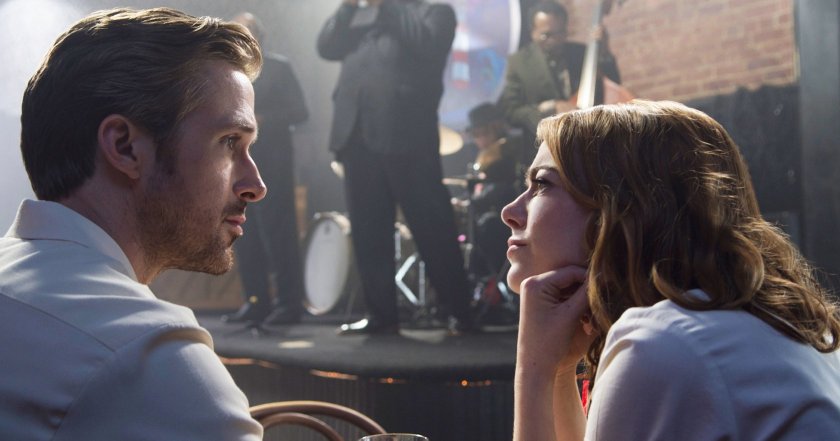
Two aspiring young people in Los Angeles, Mia and Seb pursue their individual dreams and their paths continually cross. Mia (Emma Stone) is an actress who seems to never get a callback to a single audition and when she does she’s dismissed before getting a chance to read. Seb (Ryan Gosling) is a jazz pianist who wants to live up to the quality of his idols but ends up playing Christmas carols at a cozy dinner spot in the evenings. The duo isn’t sure if they want to be a couple and the story is rife with an interesting variety of musical styles, many reminiscent of Leonard Bernstein.
La La Land is unashamedly a musical. The opening moments are a sweeping crane shot of a traffic-jammed freeway where the motorists depart their vehicles for a song and dance number that evoke a slick Gap commercial. Eventually, the music settles down when the story of Mia and Seb comes into focus, and we don’t really get a showstopping number for the rest of the pictures. Instead, we have duets that appear to have been filmed in very intimate and loose ways. The piano duet of “City of Stars” has the actors sharing a piano bench and it’s obvious that Gosling flubs a couple lines eliciting a chuckle from Stone.
Director Chazelle paints his film in Cinemascope, a 2:35:1 aspect ratio that evokes the iconography of 1950s studio cinema. Set pieces embrace artifice with stages covered in grass apparent as the two soft shoe across them. There are fantastic flights of fancy, particularly during a date to the Griffith Observatory, where Mia and Seb end up waltzing across the galaxy. The whole tone of and look of the picture doesn’t so much as resemble Singin’ in the Rain, but rather films like The Umbrellas of Cherbourg. It’s a very stylized French palette, especially in the film’s dreamlike final number. In fact, the film feels much more of a tribute to dance once it gets past its opening numbers than old Hollywood Musicals.
The weight of the film rests on the shoulders of Gosling and Stone. There are supporting characters, but the film refrains from developing any b plots. We have Gosling’s sister and just the lightest touch of her engagement and subsequent marriage. There’s Stone’s trio of fellow actress roommates who show up for a bit but then fade from the story. It never feels like sloppy writing, though. The intent that this is Mia and Seb’s story feels tightly focused. The chemistry between the leads is excellent. They seem like a real couple, and a scene that serves as the pivot in the plot shows just how real this relationship can feel. We’re witness to such an intimate, cringing personal argument between the two. The choking back of tears, the narrowing of eyes in anger, words spoken to cut deep then immediately regretted. Painfully real.
What I loved most about La La Land was the theme of compromise threaded throughout. The opening number, “Another Day of Sun” might have the tone of an upbeat, showstopping musical number but a closer listen to the lyrics reveals the central conflict of the film:
I think about that day
I left him at a Greyhound station
West of Santa Fé
We were seventeen, but he was sweet and it was true
Still I did what I had to do
‘Cause I just knew
Summer: Sunday nights
We’d sink into our seats
Right as they dimmed out all the lights
A Technicolor world made out of music and machine
It called me to be on that screen
And live inside each scene
Later we have Seb walking alone along a pier quietly singing “City of Stars” to himself with these darker lyrics standing out:
Is this the start of something wonderful and new?
Or one more dream that I cannot make true?
The entire focus of La La Land is on having big dreams and the compromises and choices involved in making those dreams come true. In a lot of ways, the film is saying “You can’t have it all” so you need to prioritize and figure out what is important to you. It is also speaking out the people with dreams to know that life will be challenging and that finding the core of why you had this dream in the first place is essential to getting through the hard times. La La Land does not have a happy ending. Characters make some of their dreams come true, and they learn something about what’s important. Damien Chazelle has made what I’d dare say is a perfect film, visually rich, sonically beautiful, and a story that acknowledges the romantic nature of dreams and the grounded way we have to live life.
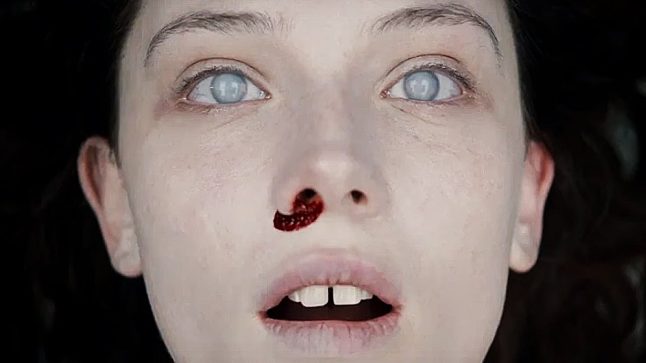
The Autopsy of Jane Doe (2016, dir. André Øvredal)

Our film opens with a scene that immediately ropes us in. Triple homicide. The old couple who lives at the residence. A plumber who was servicing the house. No signs of forced entry. The strangest thing in a very strange crime scene turns out to the half-buried body of a young woman, not a mark on her. The protagonists of our story are Austin Tilden (Emile Hirsch) and his father Tommy (Brian Cox), the latest in a family line of morticians. They have a contract with the local police to do forensic work in their morgue with an emphasis on just determining the cause of death. The body of Jane Doe arrives late one night, and they begin to find strange marks and injuries on her that lead into a night of terror.
Autopsy marks the follow-up feature by director André Øvredal who last brought us, Troll Hunter, a Norwegian horror film that offered a smart take on the found footage genre. Whereas Øvredal wrote Troll Hunter, this time he directs a script by a writer from Once Upon a Time among other television work. The premise for this horror flick is great. Tons of questions are raised from the crime scene alone, and the first half of the film compounds those questions as strange things are discovered in the body. However, when the horror tropes start to kick in the film begins to feel painfully formulaic. There is one particular misdirect/death that happens about ⅔ through the film that had my wife and I both, groaning. It comes out of nowhere and feels logistically impossible that this person could have been in this place at that time. Definite plot convenience to shock the audience with a twist kind of territory.
The film does offer a few jump scares but overall chooses to focus on the creeping dread the autopsy causes. The condition of individual organs don’t make sense. Objects are found in her stomach that should have been digested by now. Bones are broken in very specific ways. We also spend a lot of time developing the father/son dynamic but that seems to peter out when the script decides it’s “horror time” and we have dead bodies wandering around. These are two very good actors that aren’t given much more than moments to react in the script.
Owlen Catherine Kelly plays Jane Doe, and it is a very challenging role because it would seem she just has to lay there naked and motionless for the runtime of the film. Øvredal takes advantage of a film technique called the Kuleshov effect. The idea is that by juxtaposing an expressionless face with other images, you can influence the audience’s perceptions of what emotion the face is showing. Very clever cuts are made from supernatural, spooky events, to the morticians, and finally to Jane’s face causing that expressionless face to feel more and more sinister as we get deeper into the film.
Overall, I was incredibly disappointed by this film. The clips that had been shared online came from the first half which is brimming with potential and has a lot of the elements in place to be a great horror film. My only guess is that the writer didn’t know where they were going with that first half and, instead of working out some clever way to bring these elements together, just went with tired old horror cliches and an incredibly unsatisfying ending.
Traits
Knowing all this I was ready to start assigning points to Cano’s Traits. Traits are essentially the same as Abilities in other RPGs, the primary attributes of all characters. All Traits start with a score of 2, with 2 additional points to spend. Your Nationality also gives you a choice of two stats to bump up by 1. I decided Cano was more of an agile fighter than pure muscle so increased Finesse to 3. His faith steals his mind, so Resolve was changed to 3. As a native of Castille, he could add to Finesse or Wits and decided his emphasis on diplomacy over combat made Wits the appropriate Trait to go up. This left Brawn and Panache at their standard of 2 points.
Backgrounds
Backgrounds allow you to flesh out your character’s past and add more mechanical pieces. Each Background provides Skills that your character can pull from. They come with a Quirk, an Advantage and then a suite of skills.
The first Background that seemed like a given was Soldier. The Quirk is that I earn a Hero Point when I stick to a plan disregarding any danger that might come to me. My first advantage as a Soldier is that I am an Able Drinker, meaning that alcohol will never affect me not matter how much I drink. The second Advantage will be that I’m a Riot Breaker, meaning as an individual fighter I can take on hordes of minion-like enemies without taking much damage. As a Soldier, the skills I get are Aim, Intimidate, Notice, Warfare, and Weaponry.
The second Background I chose was Orphan. My reasoning was that Cano’s father died when he was young and his mother became so devoted to the Vaticine that Cano was for all intents and purposes left to survive on his own. His Orphan Quirk is that I gain a Hero Point when I put myself in danger to befriend or accompany a person who is alone. My two advantages are Brush Pass and Reckless Takedown. Brush Pass gives me the ability to take from or place on a person a small handheld object. Reckless Takedown lets me immediately take down a Brute Horde of enemies taking 1 Dramatic Wound as a cost. Being an Orphan, the skills I acquired were Athletics, Brawl, Empathy, Hide, and Intimidate.
Skills
You get 10 points to spread out amongst the build of skills acquired from your Background. I decided that Cano is a very aware person and so Empathy, Intimidate, and Notice are his top Skills at 3 points each. Everything else will be set at 2 points except for Brawl which is at a 1 because Cano chooses to resort to that last.
Aim 2
Athletics 2
Brawl 1
Empathy 3
Hide 2
Intimidate 3
Notice 3
Warfare 2
Weaponry 2
Advantages
You are given 5 additional points to buy more Advantages. Indomitable Will seemed like a natural fit due to Cano’s devotion to his faith. With Indomitable Will Cano may spend a Hero Point to immediately resist seduction, intimidation, or any type of coercion.
The second Advantage for Cano will be Quick Reflexes. This Advantage lets me choose a Skill and lets me have an additional Raise when using it. I decided on Notice, emphasizing Cano’s heightened awareness of his surroundings, due to both the paranoia of being pursued by occult elements in the Vaticine and his own combat training.
Arcana
Every hero has a Virtue and Hubris decided by the Sorte Strega, a Witch’s Tarot deck. I decided that The Devil would be an appropriate choice for Cano. His Virtue, Astute, will be that after a Villain spends a Raise for an Action. The Action will fail, but the Raise will still be lost. Cano is always aware of his enemy’s actions and heads them off at the pass. His Hubris will be Trusting meaning Cano will receive a Hero Point when I accept a lie or lopsided deal, an interesting counterpoint to my Indomitable Will.
Story
One of the most interesting pieces of character creation in 7th Sea is your ability to develop a story path for your character. It reminded me a lot of Fronts in Apocalypse World but player-created rather than by a GM. The first step is establishing a goal. My story concept is to Cleanse, specifically to purge the evil from The Vaticine and this will involve finding sympathetic parties who can help me flush it out and destroy the corruption. My Goal is that Cano would be heralded by the Hierophant for saving the Vaticine and be made the Lord of the Holy Guard. The mechanical Reward at the end of the story would be that after passing through four steps, I would earn the 4 point Hard to Kill advantage. It’s not necessary to detail all steps at the outset so my First Step will be to locate Sister Romona Paquita, an exiled nun who was already aware of the occult sect.
Cleanse: The Vaticine is beset by evil from within. I must find those who can help me flush it out and destroy it.
Goal/Ending: My hero is heralded by the Hierophant for saving the Vaticine from the corruption and made the Lord of the Holy Guard.
Reward: This is a four step story that will earn my hero the 4 point Hard to Kill advantage.
First Step: Find Sister Romona Paquita, the exiled nun whose writings on the demonic sect were forbidden.
Details
The last few elements are Details that flavor out the character further. Cano’s reputation is of a Faithful man. This would be how others who know him describe him. He knows the languages of Old Thean, Castille, and Montaigne. He has 2 favor with Močiutės Skara and 0 wealth points to begin.
Creating a character in 7th Sea has made me much more interested in playing a campaign or even one-shot in this system. Before I cracked the pages open I was very lukewarm about playing in a “pirate game, ” but after reading more about the world and seeing how involved creating story is on the player side, I would love to jump in a game.
Next: Unknown Armies Third Edition.
Mommy (2014, dir. Xavier Dolan)

The film opens with title cards that explain we are going to be viewing an alternate 2015 where a new political regime has come to power in Canada and passed a law titled S-14. The law allows for parents of emotionally troubled children who are in low socio-economic conditions to send their children to hospitals and mental health care facilities without regard to fundamental justice. Fundamental justice is a much broader sense of civil rights, designed to anticipate unknown future laws that might try to violate the rights of individuals by being intentionally vague. In this situation, we meet Diana Després (Anne Dorval), a widowed journalist who is forced to remove her emotionally unstable son, Steve, from a juvenile detention facility after he burns another child. From there, their living situation becomes more complicated as work dries up and tension between Diana and Steve intensifies. Into this mix is thrown their neighbor across the street, Kyla (Suzanne Clément). This trio makes up a very different family unit, and they experience highs and lows ending up in a bittersweet place at the end of the film.
This is the last Xavier Dolan film of the month, and it is fascinating to see his growth as a filmmaker in a relatively short time. I Killed My Mother came out in 2009 and next year he has his seventh film coming out. He has also developed a stronger sense of aesthetics since that first feature. In an interview about Mommy, Dolan explained the importance of fashion in his work and how designing the costume of his characters is a crucial element in his writing and directing. In Mommy, each character tells us their story through their clothes, before a single word is even spoken.
The element of the film that you’ll immediately notice is the 1:1 aspect ratio, meant to resemble a cell phone camera filming. The movie is not found footage, but Dolan explained that he believes the aspect ratio to feel incredibly intimate. This seemingly unimportant and possibly pretentious element of filmmaking actually plays a crucial role in conveying the emotional conditions of the characters. Twice in Mommy, the screen expands to a 2:35:1 ratio. The first time this happens, it is to convey a sense of exhilaration and the second is to communicate Diana’s internal pain and struggle near the end.
Not enough can be said about the performances of Anne Dorval and Suzanne Clément in this film. Both actresses have been with Dolan in four out of his now seven films. Each time they play a prominent role they reveal a different facet of themselves. Dorval has played a mother in three films (I Killed My Mother, Heartbeats, and Mommy) and each portrayal is of an entirely different character. Clément is amazing to watch in light of her performance in Laurence Anyways. Kyla could not be a more different character, but the actress brings layers of depth and leaves ambiguity as to what has left Kyla with her speech impediment and why she has gone on sabbatical from teaching.
What is most important about Mommy is it’s honest and heartbreaking portrayal of how poverty destroys a family’s ability to get quality mental and emotional care. Financial hardship creates barriers to getting a lawyer, paying the bills, and generally living life. Diana struggles with creating a sense of hope for Steve and succumbing to the stresses of life and lashing out at him. Diana sums it up in a speech that can be read in some different ways:
“[…] I’m full of hope, okay. The world ain’t got tons of hope. But I like to think it’s full of hopeful people, hoping all day long. Better off that way because us hopeful people can change things. Hopeful world with hopeless people…that won’t get us far. I did what I did, so that way there is hope.”
In setting up this session, I started looking through some Dungeon Crawl Classics and settled upon The Dreaming Caverns of the Duergar. I made some notes to modify, mainly taking out the dragons (Ariana decided not to include them as part of our world) and put in the Remnants, the original inhabitants of this world. I printed out four pieces of grid paper, fired up the laminator, and then used packing tape to affix the four together into one large foldable map. Printed out a hex map as well to plan the overworld and I had all the pieces together.
The story hook involved our PC, Ella Pips the Halfling Mage, discovering a wounded Psionic Dwarf from the planet Odrion on her family’s shipwhale ranch. Because of the remote location of the ranch, Ella’s father had to ride his tapir into town for the local doctor. The wounded Dwarf, Groobor spoke through a fevered haze and told Ella his companions were trapped in an old cavern to the South of the ranch. He emphasized that his friends only had a limited time before something terrible happened to them. Ella checked the shipwhale she was in the process of midwife-ing, Belle, and saw she was still 36 hours away from birthing. So, Ella and her brother Griffo set off the caves in the South.
Once they were deep in the tunnels a cave-in occurred and left them seeking an alternate way out. As they ventured further they found dwarves that looked corrupted by some unknown sickness or entity. Some of them had been driven mad but it was apparent these inhabitants had been here for awhile and were not the friends of Groobor. On the second floor, Ella and Griffo encountered Sorethin, a Lizardfolk being held captive by these twisted dwarves. Our hero successfully discovered a trap door that allowed the trio to pass into a deeper portion of the cave where Remnant ruins were found, particularly those related to the worship of long-forgotten deities. They shut down a massive drill machine one of the dwarves was piloting and became pinned down on a narrow bridge by crazed dwarves sniping with crossbows.
Sorethin made a run for it, abandoning Ella and her brother. She suddenly realized she had heard of this Lizardfolk before on trips into town with her pop. He was a mercenary from the native Lizardfolk population that had killed two diplomats from the Kaphis colony. Apparently he decided to hide out in the cave and became the prisoner of these mad dwarves. The merc takes one poisonous arrow too many and falls as Ella and Griffo make there way to the next level of the caves. They also discover hundreds of wooden crates containing high quality swords and daggers, enough to arm a military force.
In this humid portion of the cave Ella discovers mushroom and fungus forests as well as the Vegepygmy tribe that harvests and lives off these resources. They are very non-confrontational and run when approached, seeking reinforcements. Ella and Griffo decide to skip that confrontation but she ends up sprayed with spores from a poisonous flower whose roots take up an entire chamber. Not sure of the long-term effects, she pushes on until they find the full ruins of a lost Remnant civilization as well as…a living Remnant! They fail to defeat the powerful being and when Ella wakes up she is in the clutches of Jernum, the leader of these twisted Psionic Dwarves who has plans for her and Griffo.
It was definitely a session about getting comfortable with the OSR style of play after years of Powered By the Apocalypse. Though I did use the Fronts mechanic from Dungeon World as it is pretty much system agnostic. I’m also looking to incorporate pieces of The Perilous Wilds into our overworld gameplay and world-building. All in all, I am looking forward to seeing where this story goes. For now, I will be cannibalizing pre-made modules and as I become more comfortable maybe writing up my own adventures.