Podcast Recommendations: Comedy and Everything Else

Comedy and Everything Else

I am a big podcast nerd, particularly comedy podcasts. I love hearing my favorite comedians on a weekly/monthly basis instead of waiting for their next album, which might not ever come. I came across Comedy and Everything Else by accident while browsing through the podcasts on iTunes. What caught my eye was that it featured one of my favorite comedians, Todd Glass. The other two names attached (Jimmy Dore and Stefane Zamarano) were completely new to me at the time. What I discovered was a podcast that was both funny, but also explored the nuances of comedy and how comedians view their craft. The episodes are long, many topping over two hours, and I love it. The conversations these people are having are the kind I want to listen to for hours and hours more. The earlier episodes are a little rough in terms of sound quality, but they improve quickly.

The focal point of CEE is Jimmy Dore. Dore is a Chicago transplant to L.A. and comes from your typical large Irish-Catholic family. He’s worked with Doug Benson and Arj Barker’s Marijuna-logues and a highly rated Comedy Central special, Citizen Jimmy, in 2008. Dore’s focus in comedy is on the political, though he works to keep from becoming didactic and aims for a tone of satire in his work. His paramour is fellow comedienne and improvisationalist, Stefane (pronounced Steh-fuh-nay) Zamarano. The duo collaborate on the regular feature “Tuesdays With Moron”, wherein Jimmy has a conversation with himself as the ultra-conservative, Fox News uber-fan Moron. Stef plays Moron’s constantly nagging in the background wife, Terese. Sadly, Todd Glass left in the fall of 2009 after a falling out with Dore. The details of the bad blood has not been publicly released but the absence of Todd was definitely felt while the show worked to redefine and regroup. Glass recently returned to the show as a guest for the 100th episode and, since he suffered a heart attack a few months ago, has reunited with Dore and Zamarano and the conflict seems to have passed.

On the most recent episode, Dore has tackled a controversy in the comedy community surrounding a “Comedy Boot Camp” run by comedians Kyle Cease and Louie Anderson. The program came under fire after Doug Stanhope posted a strong missive about it on his blog, calling up notorious comedy class shills from the past. Dore’s three hour interview with Cease is very interesting and allows the comedian to explain what his program is. Cease doesn’t come off in a great light though, and at time sounds awfully defensive towards hypothetical criticisms Dore throws at him. Dore is also very upfront about his feelings towards comedy classes, particularly ones that cost upwards of $3000 for a week of workshops. There’s some interesting talk about when a comedian is ready to sell himself to the television/film industry and about how a comedian pays their dues and learns their craft. If you are a comedy geek like myself, and appreciate comedy as an art and craft, then I think you will enjoy the topics covered and guests who pop up on CEE.

Comics 101: Booster Gold

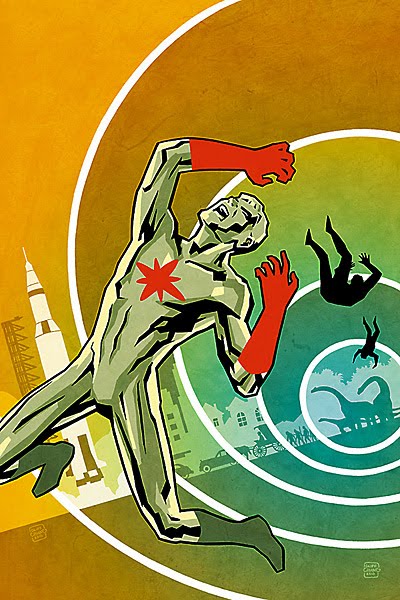
Superheroes are honorable and trustworthy figures of great upstanding morals, right? Not in Booster Gold’s case. The hero from the distant future has always been an opportunist, looking for a way to parlay his heroism into corporate endorsements. He came about in the mid-1980s, the perfect super capitalist for the Reagan era. In the two decades since, Booster has gone through many changes and volleyed back and forth between being a humorous or serious character. His partnership with Blue Beetle is legendary, and his ties to the history of the DC Universe are epic. But in the end, he’s just a guy looking to make a buck.

Booster’s story starts in Gotham City of the 25th Century. Michael Jon Carter grew up without a father, his was a drunk who left when he was a child. The pressure to provide for him family started early and Michael eventually gets into Gotham University on a football scholarship, with dreams of going pro. At this point, Papa Carter shows up and convinces Michael to throw his games so his father can win big on bets. Michael tentatively agrees and gets caught, thrown out of the university and forced to get a job as a night watchmen at the Metropolis Space Museum. After getting a good look at all the devices on display, Michael realizes he could take them, use the Time Bubble that is kept in the museum and start a lucrative career in the the past. Employing a security robot named Skeets, Michael jumps back to the late 20th century where he debuts as the superhero Goldstar. When he gains the accolades of President Ronald Reagan, he receives a name change due to the president’s growing senility. Michael’s nickname as a football player was “Booster”, and the president confusingly introduces him as Booster Gold.

During Booster’s early years, he teams with his little sister Michelle Carter who takes his original name “Goldstar” as her own. Booster amasses a large quantity of wealth through his fame, but suffers two tragedies: first, Michelle is killed in battle and second, the CEO of Booster Gold International embezzles all the funds leaving the hero broken and on the streets. His luck changes when businessman Maxwell Lord approaches Booster to join a new incarnation of the Justice League. This allows him to fight alongside such legends as Batman, Martian Manhunter, and Black Canary as well as beginning his long-running friendship with Blue Beetle. Booster and Beetle frequently steal Max’s money to invest in get rich quick schemes, like building Club JLI on the living island of Kooey Kooey Kooey. Booster leaves the Justice League at one point to form the corporate team The Conglomerate, but quickly finds his way back to the JLI. Another dark period began for Booster with the arrival of the alien Doomsday on earth. As the behemoth trudged toward Metropolis, the Justice League tried to stop him. Booster’s futuristic suit, the source of his power was damaged beyond repair. Blue Beetle, a tech whiz ala Tony Stark, builds a bulkier armor for Booster to use.

For a short time, Booster joins an offshoot of the Justice League led by Captain Atom. He goes back to being a solo hero and is able to get a replica of his original costume made for him. The current period of Booster’s life kicked off with the brutal murder of his best friend, Blue Beetle. The murder was the work of their former boss Max Lord, and Booster set off to learn what was going on. He found that Max was working to eliminate superhumans from the Earth, and used normal humans unwittingly fused with a nano-virus. When activated, these humans became OMACs (Observational Metahuman Activity Constructs). A global battle followed, that pitted Earth’s heroes against the OMACs and the giant satellite controlling them, Brother Eye. Booster teams with Batman and the new teenaged Blue Beetle to take down the satellite and they succeed. In the aftermath of this battle, Superman, Wonder Woman, and Batman all take a leave of absence causing Booster to attempt to fill the void of Superman’s absence in Metropolis.

Booster had always relied on Skeets historical database to give him the edge against the enemies, but suddenly Skeets is reporting the wrong information. He also receives competition when the mysterious new superhero Supernova appears in Metropolis and quickly becomes beloved. Looking for answers, Booster travels to the desert bunker of DC’s chief time traveler, Rip Hunter. There he finds a photo of himself circled with the words “All his fault” written next to it. While Booster thinks it is about him, it is revealed Rip has discovered that Skeets has been compromised. The robot sidekick turns on Booster, trapping him in a time loop and beginning a hunt for Supernova and Rip Hunter. When he finally finds Supernova, the enigmatic unmasks himself as…Booster Gold?! Booster escaped the time loop with help from Rip, then traveled back a few weeks to debut as Supernova. It turns out Skeets is actually carrying the minute alien villain Mr. Mind, who has evolved into a new more dangerous form. The monstrous new Mr. Mind chases Booster and Rip through time, accidentally birthing the multi-verse (parallel universes). Skeets is restored, Mr. Mind is defeated, and Booster and Rip begin a partnership.

Most recently, Maxwell Lord has returned from the dead and manipulated Booster and his former Justice League teammates into reuniting. Max has shown a less villainous side, telling Booster he considers him his friend and that all of this has a purpose. It remains to be seen whether Max is playing his former employee or legitimately trying to help him.

Page to Screen: Batman – Under the Red Hood

In Page to Screen I look at comic books adapted to film.


Batman – Under the Red Hood (2010, dir. Brandon Vietti)
Adapted from Batman: A Death in the Family by Jim Starlin and Jim Aparo, Batman: Under the Hood by Judd Winick and Doug Mahnke
Starring Bruce Greenwood, Jensen Ackles, Neil Patrick Harris, John Dimaggio

I’m never one to be against resurrecting comic book characters. It does happen way too often now for the impact of it to amount to much, but if done well it can make for some brilliantly interesting development for the characters affected by the return. In 1988, through a rather callous and cynical phone-in vote, the fans voted for the second Robin aka Jason Todd to be killed off in the current story arc of Batman. Todd was a polarizing character, who started out simply as a blank slate replacement for Dick Grayson. As time went on, Todd was revamped into a counter to Grayson, a rebellious teen who didn’t listen to the advice of Batman. It was a much more interesting take on the Robin character than Grayson had ever been, frankly. But the fans at the time seemed to balk at this brazen rebellion towards the Dark Knight and got young Jason beaten to death by The Joker. Fifteen years later, a new criminal figure appeared in Gotham, calling himself The Red Hood, a blatant reference to the costumed identity the man who would become The Joker wore on the night of his transformation. As Batman investigated further, he would learn The Red Hood was tied to what he saw as his greatest failure.

This latest from DC Comics high end animated film department takes the very end of the Death in the Family story and merges it with a “greatest hits” compilation from Winick’s run on Batman. I was surprised that some more esoteric elements were included, particularly, Batman and Nightwing’s battle with the super android Amazo. In the original comics, that story was tied to both The Red Hood and plot development for Infinite Crisis, the big event at the time. Winick, who handles scripting duties here as well, reworks the moment as a part of the more condensed plot of the film. He also takes his epically long struggle between Red Hood and Black Mask and turns into a much more satisfying and shorter story. Despite the film’s length of 75 minutes, it feels like we got at least a treatment for what could be a longer live action film story.

This is the first true solo Batman comic story since the animated series ended. In a lot of ways, it could be shoehorned into The Animated Series continuity; in TAS we eventually got Tim Drake as Robin and Grayson as Nightwing. It could be said this story takes place in between the Fox version of TAS and the WB follow up, a sort of untold tale of the lost Robin. The voice acting is very well done and Bruce Greenwood sounds so much like Kevin Conroy (Batman in TAS) I thought for a second it was him. Neil Patrick Harris does an excellent job providing comic relief in the first half as Nightwing, but it was disappointing that the character sort of vanishes from the story. John DiMaggio (Bender from Futurama) tackles The Joker and reminded me how strange it is to not hear Mark Hamill’s voice coming out of the animated villain. He’s good, its just a different style and laugh than I suspect myself and my peers are used to. Jensen Ackles rounds out the cast as Red Hood and does a decent job.

What I saw here was how two stories that are important to the canon, but have always felt poorly executed, can be retold in a way that shows its all about the craftsmen behind the scenes. I’ve been surprised by Judd Winick twice in the last week, first by the latest Justice League: Generation Lost issue and now this. I suspect when he is made to really collaborate with others we see the weaknesses in his storytelling diminish. Instead of these stories coming off a cynical and mean, which they do on paper, a lot of redemptive qualities are brought to the front in the animated film. Where Batman and the other characters are left at the end of the story is a very interesting place and serves as a reminder as to what separates Batman from the gun-toting vigilantes that followed in his footsteps. It’s also nice to see a Batman affected by mistakes, something we rarely get in any medium he shows up in. To see Batman as a vulnerable and human figure, a father wracked with guilt, provides an incredibly deeper picture of the character.

Across the Pond: Snuff Box

Berry. Fulcher.

Odd words on their own, but when you know them in the context of Matt Berry and Rich Fulcher they mean “absurdist comedy”. In the great tradition of Monty Python and Cook & Moore comes this duo of such obscene and pointless humor. The two came to the public’s attention through other projects where they played supporting roles. For Matt Berry it was work on Garth Marenghi’s Darkplace, and Fulcher was an American out of the UCB comedy culture. They met while working on The Mighty Boosh and went on to make a single season of Snuff Box together. The result is some of the best, and often times completely confusing comedy out of Britain. It is definitely unlike anything you would ever see presented on American television, including the most obscure cable channels.

What is the premise of this series? Good question. At the surface level you have Berry and Fulcher, professional hangmen. Throughout the six episodes they will occasionally hang someone, but for the most part they hang out in a wood paneled gentleman’s club, sipping brandy. There’s a hallway they use to get from the club to the execution room that contains doors to other dimensions (?). There’s also skits that feature the actors but as one off characters. It’s a hard show to describe because it actively works to be difficult. And that’s part of the fun. There is really no way for a viewer to predict where a scene will lead. It’s definitely not a series for anyone who’s sensitive about language or sex. Snuff Box pushes boundaries and presents a beautifully dark parallel universe.

It’s hard to say which performer I enjoy best, I believe Matt Berry just barely edges out Fulcher. Berry plays himself as a suave and arrogant ladies’ man, and some of his best scenes are when he tries to woo a woman, discovers she is already taken, and has an incredibly harsh reaction to the news. There’s also a recurring series of skits with Berry entering a clothes shop to inquire about silver cowboy boots on order. Each visit a new, yet equally unhelpful employee calls Berry a name under his breath, Berry lashes out, and the whole thing ends with Berry bloodied in the fight. Fulcher is the dimwit to Berry’s pompous ass, he is constantly duped by Berry, and their is an ongoing mystery as to whom Fulcher’s deceased mother is that he receives a check from her estate every month. Fulcher also discovers a door that sends him back in time, allowing him to meet Berry’s ancestors. Each episode is a total surprise and, because of the amount of jokes packed into each one. Below I’ve posted a couple clips to give you a flavor for the show, because of Berry’s musical leanings the show has a lot of songs.

Shadows in the Cave: The World of Henry Orient


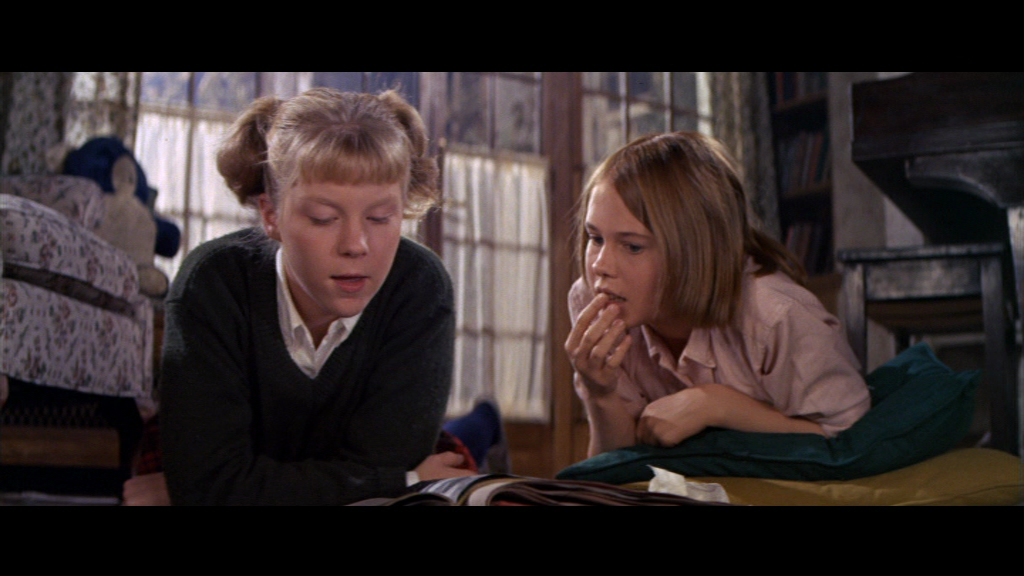
The World of Henry Orient (1964, dir. George Roy Hill)
Starring Tippy Walker, Merrie Spaeth, Peter Sellers, Angela Lansbury, Tom Bosley

When I see George Roy Hill’s name I think of The Sting or Butch Cassidy and the Sundance Kid. I never expected this small, delightful film. This is one of those pictures where New York City is a player along with the actors. There’s that sort of innocent magic about the city as seen through the eyes of our adolescent protagonists. And despite Peter Sellers receiving top billing, this is most definitely not his film. While I love Sellers, I would have hated for his character overshadow the performances of the two young women in the leads. He works perfectly as the awkwardly charismatic pianist paranoid over the two young girls he believes are stalking him. And as life imitates art, Sellers was actually dealing with a real life stalker during the filming of Henry Orient.

Marian (Spaeth) meets Val (Walker) one morning on the first day of school at St. Mary’s. The two hit it off splendidly and Marian quickly learns of Val’s highly imaginative nature and penchant to go on adventures in the city. During an excursion in Central Park, they happen across a man and woman in the throes of passion. The man spies them and they run off. Later the same day, they run into the man again and eventually learn this is Henry Orient (Sellers), a well known avant garde pianist. Val becomes obsessed with him and dreams that she will eventually woo the befuddled man. From Henry’s perspective these two little girls are harbingers of doom and possibly spies for the husband of the woman he is seeing. The film perfectly balances the comedic misunderstandings and the coming of age story that centers around Val. Her parents (Lansbury and Bosley) come into town and we immediately see that Val’s mother exhibits a strong coldness around her.

The film lives and dies on the performances of the two female leads, and thankfully they picked two great unknown actress for the roles. There’s some interesting elements, particularly in the third act that feel very much of the time, but I’d like to think director Hill was going against the grain up until that point in the film. The girls are very much kids, while parents pressure them to socialize with boys, they really have no interest. They would rather play and, when Val does develop a “crush” on Henry, its never done with any seriousness. Its simply a continuation of the imagined world she and Marian have invented. You can tell Hill actually cares about these two and shows them as three dimensional, intelligent young women, not yet bogged down by the seriousness of the adults. Its reflected in how scenes featuring adults in the movie are never as interesting as the ones with the kids.

It’s interesting to note that rather than casting “superstars”, Hill opted to go with two unknowns and Sellers who was famous, but not as much as other comedic actors. Originally, it looked like the three roles would go to Hayley Mills, Patty Duke, and Dick Van Dyke, and while they are all great actors, the film would not feel as special. The movie evoked such strong emotions of happiness from me, reminding me of the way it feels when summer starts to turn to fall and how intimate and safe the worlds you imagine as a youth can feel. The film has been retold with a contemporary slant in Ghost World (the film moreso than the comic book) and a poster for Henry Orient even pops up in that picture. The film’s greatest feat is balancing adult themes and ideas while never diminishing the sense of joy and play. A great picture that deserves to be known by a larger audience.

Tune-age: Arcade Fire – "Suburbs"

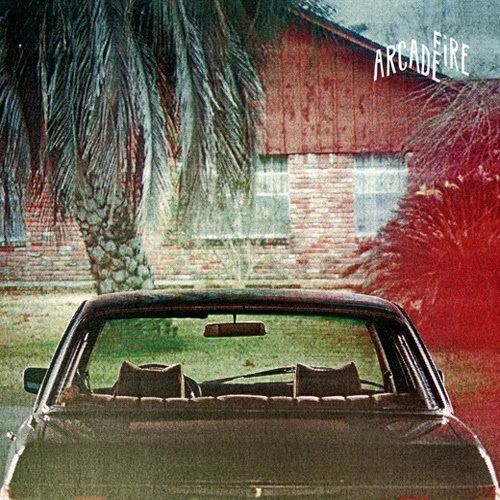
Arcade Fire – Suburbs (2010, Merge Records)

To try and define the Arcade Fire’s sound is an impossible task. When I first heard “Wake Up” in Brent Hamric’s car in the spring of 2004 I immediately thought of The Flaming Lips. One track later and that was changed. Three albums later and they are still too eclectic to pin down. A lot of music critics wait like vultures for the bands they love or others love to slip up, so that they can pounce and claim that the grandeur that once was is lost. Arcade Fire seems to dare them to try it, by dropping the dark gloom of Neon Bible and adopting a more pop-folk vibe. There’s some familiar sounds to bring you back in, but then suddenly things change up and we hear some arrangements and instruments that show the band is still testing its limits.

It seemed a natural fit for Arcade Fire to score a film, and they did so last fall for Richard Kelly on The Box. While the music there resembled Bernard Hermann more than any of their typical music, they still have a cinematic sound in this latest album. It’s a very West Coast, bouncier collection of songs. Every few tracks there’s that dark underscoring that comes through, but for the most part this is a pop-ier album, very much music you could dance to. Like all their work, the cinematic qualities come from the story being told in the lyrics. Each album has felt like a dystopian novel, touching on themes of the end of our civilization. It sounds like heavy material to be working with, but they manage to make tracks that you tap your foot to. The voices in these song stories are typically disaffected twenty-somethings reflecting on the desolation around them.

The opening track “The Suburbs”, has a bouncy piano underscoring the song which came as quite a jolt when I started the album. For the first time on their albums, I find lead singer Win Butler sounding like a spiritual successor to Neil Young. And this opening song, like a couple others, have a folk-rock element to them. “Ready to Start” is the track you expect to hear on an Arcade Fire album, there’s pounding drums and alt-pop guitar riff. References are made in the lyrics to “the kids”, a recurring noun in all their albums, that seems to represent youth in general who has an awareness above the adults. “Modern Man” is back in Neil Young country, but also made me think of some of The Talking Heads’ work in the early 1980s and is a song I would not have guessed was an Arcade Fire song if I didn’t already know it. “Rococo” seems to be a mix of expected elements and this new West Coast folk sound being incorporated now. “The kids” are back again, a force of apathetic destruction, constructing massive pillars of junk to burn down. “Empty Room” begins with some wonderfully light strings and then turns into a classic right out of the standard playbook, with some very Kate Bush like vocals led by Chassagne Butler. “City With No Children” evokes thoughts of *gasp* Bruce Springsteen, a comparison I never thought I would make. There’s a strong of sense of small town nostalgia woven through the song and even the arrangement feels like a track off Thunder Road.

“Half Light I” and Half Light II” continue the nostalgia trip, and I have a feeling the band made this album as homage to their own youths growing up in the 1980s and the music that filled their lives during that time. It is a good explanation for how the album is able to evoke memories of so many different artists of that time, yet is still able to not go off the rails. “Suburban War” comes back to Springsteen but not as heavily, its much more Arcade Fire gloomy. “Month of May” is yet another splash of ice cold water as the band is backed by the unceasing guitar of what could easily be a Ramones song and more mentions of “the kids” as a defiant force of purity. “Wasted Hours” is back to folk pop guitars and continues the themes of adolescents tooling around the desolate wastes of Southwestern small towns and looking back on this time as something to be missed. “Deep Blue” is one of the few tracks where Win stands alone, his voice turned into an echo-y voice mourning the past, but also makes use of that same bouncy piano rhythm from the first track. “We Used to Wait For It” continues on from “Deep Blue”, now talking about the time spent by youth in anticipation of the future, only to look back on their youth as adults and want to somehow return to it. “Sprawl I (Flatland)” is Win Butler returning to his childhood home, singing out from open landscape and becoming lost looking for it. This is a track so full of narrative elements, it makes you want the band to compose an opera. And where that songs leaves us mournful, “Sprawl II (Mountains Beyond) is a chorus of angels beyond the hills that surround this small town lifting our protagonist up and away. The album wraps up with a short and haunting track, reprising the opening song, where Win states that if he could have the time back he wasted as a child, he’d simply waste it again.

Arcade Fire proves that they are about revisiting the same ideas thematically, but constantly experimenting with their sound. This by far the most listener friendly album they have released and every track could easily find a place in the radio rotation. They take a lot of chances and flirt with mainstream sounds, only insomuch as they hearken back to brothers Win and Reg Butler’s youth in the suburbs outside of Houston. For all its slightly dark atmosphere at times, there’s a revelry in being a kid without responsibilities or being forced mete out time as a valuable commodity. A great album from one of the best bands of the 21st century.

In Theaters Now: Life During Wartime


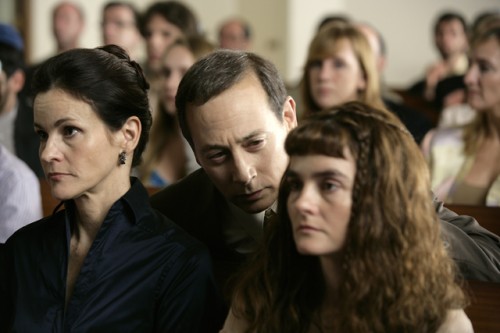
Life During Wartime (2010, dir. Todd Solondz)
Starring Alison Janney, Shirley Henderson, Ciaran Hinds, Dylan Riley Snyder, Paul Reubens, Ally Sheedy, Charlotte Rampling

I can’t see anyone who hasn’t seen Solondz’s 1998 film Happiness being able to get much from this movie. It is about a direct sequel as you can get, making references to plot points from the first film in ways that makes it un-enjoyable for someone unfamiliar with the older picture. It’s not a bad film, I enjoyed it a lot, it just is not made for the uninitiated. What it does is revisit some familiar faces, some in a more interesting way than others, and offer different perspectives on their personalities. It’s very sad and at times very funny, probably Solondz’s most restrained film to date, but also has me worried about his lack of new characters or material. Life During Wartime also shares elements with Palindromes, as not a single one of the actors from Happiness reprise their roles here, which I suspect is a choice made by Solondz.

Joy (Henderson) has dinner with her husband, Allen in a scene that mimics the opening of Happiness. The entire affair has her remembering that first dinner with Andy (Reubens) who killed himself after she rejected him. It’s decided she will take a trip to visit family in Florida, and Joy ends up in the company of her divorcée mother and single parent sister. Trish (Janney) is getting involved with a new man and helping her middle child, Timmy (Snyder) prepare for his bar mitzvah. Up the coast, Trish’s ex and convicted child rapist, William (Hinds) is released from prison. He also wanders down to Florida sneaking into the house just for glimpses of the family he lost. Joy ends up in California at the home of her other sister, Helen, a pretentious and self-obsessed writer. Where ever she goes she is haunted by the ghost of Andy, who always starts out gentle but becomes violent. It’s a large ensemble movie where characters are connected, but rarely interact.

Solondz seems to have a very strong personal connection to these character types, and I suspect they come from his own family and acquaintances, an exaggerated cinematic sheen spread over them. I found his criticisms of the East Coast Jewish community very interesting. At one point, Trish is talking about her new beau, a middle-aged New Jerseyian and says that he voted for Bush twice and McCain, but only because he knows they support Israel. From many of the more liberal Jews in America, this has been an issue of frustration, how the right has co-opted the pro-Israel cause as their own. So, there’s a lot personal issues in this and all of Solondz’s films. The film has three central figures: Joy, William, and Timmy. All three of these characters are haunted (some literally) by the past. Joy is visited by Andy, whose suicide she spurred forward. William, newly released from prison, has lost every thing and wanders down the east coast and eventually to the pacific northwest searching for something. Timmy has been told William was dead his entire life and has just now learned his father was a pedophile. This warps his sense of intimacy with others, and will have a profound effect on his mother’s burgeoning relationship.

While the film is seen as an exaggeration of real life, I suspect it is closer to realism than most films. Solondz appears to be a very good listener, especially for interactions between family members. In almost every conversation between a mother and daughter, sisters, etc. no one is every asking about or talking about the other person they are with. While Helen may be the most outwardly self-absorbed, every character here only talks about themselves, is only concerned with what they need. The only exception I would say is William, the pedophile. There’s a couple moments where we gasp, thinking he may be tempted, but he abstains. He contemplates stealing from his family to pay his way, but stops. William eventually ends up at his eldest son, Billy’s college in Oregon and explains he sought him out just make sure Billy didn’t inherit his father’s predilections. Once he is assured Billy is “normal”, he says goodbye, and the implication is that he goes off somewhere private and kills himself.

Wartime is a heavy film, to be sure, but also surprisingly funny in very dark moments. Not a movie for the cinematic light at heart, but for the viewer who wants to have their ideas about “good” film challenged, then I think there is definitely some thing here for you.

Between the Panels: REBELS v2


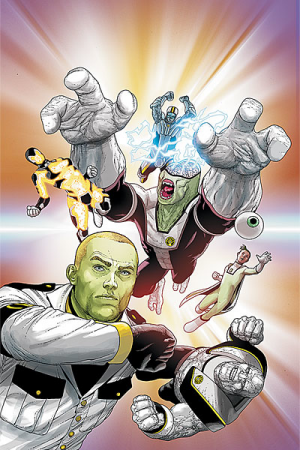
REBELS v2 #1-18
Written by Tony Bedard
Art by Andy Clarke and Claude St. Aubin

DC Comics has been building a rich science fiction mythos since the 1950s with characters like Captain Comet and Adam Strange. In the 1960s, we were given the futuristic teen team the Legion of Super-Heroes. In the 1980s, elements from the present day DC Universe and alien races introduced in Legion stories came together in an event called Invasion! In this story we were introduced to Vril Dox and a group of aliens all imprisoned by beings bent on invading the Earth. By the end, Dox and company escaped and would go on to form LEGION (Licensed Extra-Governmental Interstellar Operatives Network). These galactic peace-keepers would eventually be usurped by Dox’s rapidly intelligent newborn, Lyrl and form the REBELS (Revolutionary Elite Brigade to Eradicate L.E.G.I.O.N. Supremacy). The entire series met with cancellation in the mid-90s, though the characters would continue to pop up from time to time. Recently, the concept was revived and it is hitting on all cylinders, making sure to avoid the mistakes of its predecessors.

The new series opens with Vril Dox being chased to Earth by his soldiers that used to work for him in LEGION. It’s quickly revealed that the majority of planets under LEGION’s protection have been taken over by the Star Conqueror, a parasitic species of starfish parasites that attach themselves to humanoid hosts and communicate collectively. Dox goes about recruiting aliens who have escaped the infestation, including his now adolescent son, Lyrl. The group works to defeat the Star Conqueror through schemes developed by Dox. Along the way he recruits Captain Comet, Adam Strange, Starfire, and many obscure alien species. The entire first year of the series is taken up by the battle with the Star Conqueror and, while that seems like a long time to stretch a story out it is very entertaining.

Vril Dox is one of those anti-heroic characters that is so much fun to read. He’s the son of Superman villain Brainiac, but instead of going for galaxy conquering through mechanical beasties like his pop, Dox has opted for using diplomacy and backroom deals to conquer. He does offer peace for the systems that get LEGION protection, but there always seems to be an interesting catch. More often than not, his schemes involve putting his closest comrades in the path of destruction without them being aware til the moment has passed. He also possess zero sentimentality, as exhibited in the way he doesn’t hesitate to turn on his equally nefarious son Lyrl.

Because the series is part of the shared DC Universe, its inevitable that big events will crossover. During Blackest Night, where black rings were resurrecting the dead, Dox encountered the deceased mother of his child, Stealth. The issue plays with some of the ideas Geoff Johns has developed with various colors of the Universal Spectrum, and Dox ends up in possession of a yellow Sinestro Corps ring for a short time. Another bit of fallout from the Green Lantern comics is that the Vega System, an area of space that was allowed to be autonomous for millenia is now opened up, and Dox quickly swoops in and gets involved in an arranged marriage with matriarch of Tamaran, Komand’r to bring the planet under the umbrella of LEGION. The most recent storyline finds Dox’s father, Brainiac being placed in a prison on their home planet Colu, but of course escaping and this time going after his offspring.

If you are looking for a fun space faring series that focuses on one of the smartest villains in DC this would be your thing. In addition to Dox, there was some interesting work done with Captain Comet recently. He was a superhero in the 1950s, who left earth in the early 60s, and returns to visit the graves of his family. There’s some interesting things being said about the cost of immortality when those around you aren’t, and it makes me hopeful to see the development of that character in the series as well.

Comic Quick Hits

Action Comics #891

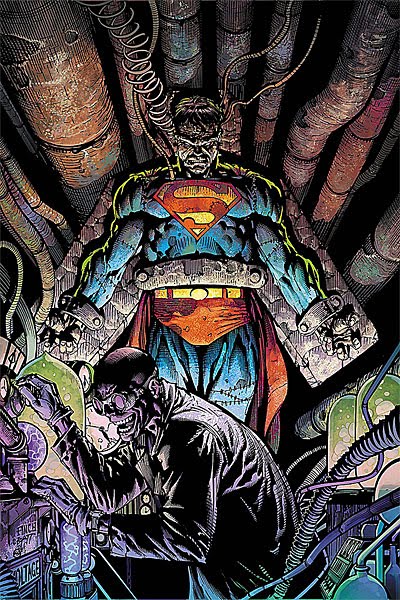
Paul Cornell delivers yet another awesome issue of his run on Action. Instead of focusing on the adventures of Superman, Cornell has opted to make Lex Luthor the focus of the series. Its hard to pull off villain-centric books by Cornell plays into the whole super scientist aspect of the character. There’s even the incorporation of long time Captain Marvel villain Mr. Mind, which makes me instantly love the issue. When you can have a mind controlling Venusian caterpillar in your story you have won me over. This has quickly become one of my read as soon as a I can books.

The Flash #4

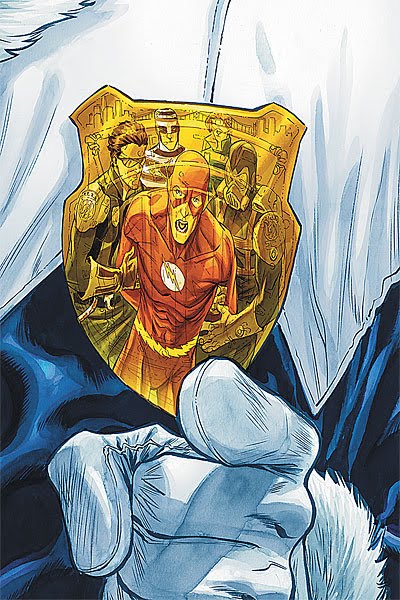
A decent fun issue that continues building towards something. I can’t help but feel Johns is stretching the story a lot here. What’s gone down in these first four issues could have been told in two. With hints towards the next storyline, “Flashpoint”, this can come off as feeling like killing time till then. Its well written though, and the future Rogues of the 25th Century are interesting, in that they model themselves after villains but are police in their era. We get some interesting info about a possible path for Flash’s wife, Iris, and I wonder if this is something Johns will carry through on. Francis Manapul’s art is amazing though, he’s one of the best artists I have ever seen on this character, really captures speed on the page.

Green Lantern #56

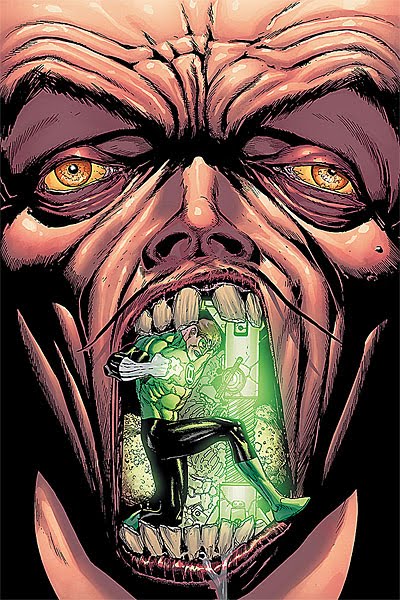
Green Lantern just can’t fail. With Geoff Johns’ development of the other colors in the universal spectrum it has really made the Green Lantern mythos absolutely riveting. This issue spotlights Larfleeze, the Orange Lantern, whose power comes from greed. There’s a brilliant bit where Larfleeze has learned of the Santa Claus myth and has plans to force the fat man to give him every thing he desires. It’s just one of those clever little bits that makes the comic so much fun. Long time GL baddie Hector Hammond also plays a major role and it has me anticipating next month and the continuation of this story. Also, Doug Mahnke’s art is spectacular.

Green Lantern Corps #50

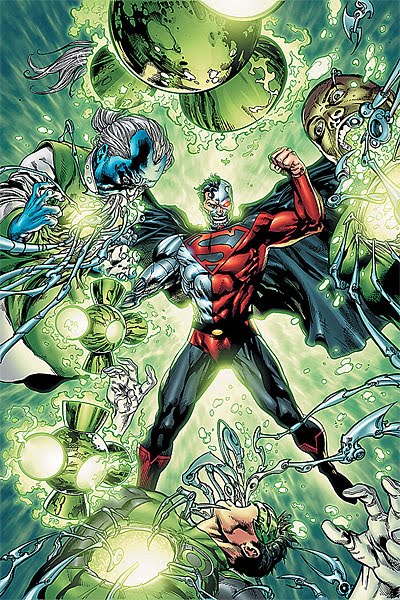
There’s some interesting things going on in the GL Corps. This issue we learn that the Cyborg Superman is back from the dead and, because he is a machine, is invisible to death. He believes the answer lies with the robotic Alpha Lanterns who police the Corps. At the same time we get some info about the mysterious figure who is plotting behind the scenes. My guess is that is Appa Ali Apsa, one of the Guardians of the Universe who went crazy years ago. The mystery here, and also popping up in the solo Green Lantern book definitely has me hooked.

Justice League: Generation Lost #6 (of 26)

Just when I was beginning to tire of this series, Winick and Giffen deliver an awesome issue! The majority of this issue jumps back to #1 when Captain Atom left Earth’s atmosphere to release an atomic explosion he absorbed. The way his power work are he absorbs the explosion, gets displaced in time for a few hours, and then ends up back in the present. The place he ends up in reveals some things about the effects of Max Lord’s plan if he and the League fail to stop it. It’s also one of the first times I’ve clicked with Captain Atom character. Conceptually I’ve always liked him, but never seen an applied version that I enjoyed. After reading this, I’m really hoping Cap plays a bigger part in the story.

Comics I’m Getting This Week


BOOM! Studios
Incorruptible #8
The Muppet Show #8

DC Comics
Action Comics #891
Batman: The Return of Bruce Wayne #4 (of 6)
Billy Batson and the Magic of Shazam! #18
Detective Comics #867
First Wave #3 (of 6)
The Flash #4
Gotham City Sirens #14
Green Arrow #2
Green Lantern #56
Green Lantern Corps #50
Justice League of America #47
Justice League: Generation Lost #6
The Outsiders #31
Teen Titans #85
Wonder Woman #601

Dynamite
The Green Hornet Strikes #2

Image
Haunt #8

Marvel
Deadpool Team-up #891
Fantastic Four #581
Franken-castle #19
Secret Avengers #3
Thor #612
Thor: The Mighty Avenger #2
Ultimate Comics Mystery #1 (of 4)
Uncanny X-Men #526
X-Campus #2 (of 4)
X-Men: Legacy #238

Vertigo
American Vampire #5
Jack of Fables #46
Northlanders #30

Wildstorm
The Authority: The Lost Year #11 (of 12)

Wizard
Wizard Magazine Vol. 229