Movie Review – Rashomon

Rashomon (1950)
Written by Akira Kurosawa & Shinobu Hashimoto
Directed by Akira Kurosawa

This is a classic, and Akira Kurosawa is a legend. But you might be wondering how this film qualified as a Hope in the Midst of Darkness entry. It’s a pretty bleak movie that relies on the unreliable narrator trope. This leads to a relatively dark interpretation of humanity by the characters in the framing device. I am here to argue that Rashomon is an intensely optimistic movie that is attempting to overcome the audience’s assumed pessimism. It’s also a film masterpiece and a piece of cinema whose influence continues to ripple out into movies today, across the planet.

Continue reading “Movie Review – Rashomon”

Movie Review – Some Like It Hot

Some Like It Hot (1959)
Written by Billy Wilder & I. A. L. Diamond
Directed by Billy Wilder

Billy Wilder, as previously established, authored or at least refined many of the comedic subgenres in mainstream American cinema. Some Like It Hot takes classic tropes from authors like Shakespeare with the protagonist in disguise as another gender who is in love with another character and modernized them. Some Like It Hot is set in the 1920s, but its story is a classical one seen through the 1960s’ eyes while reflecting back across literature. There are definitely some problematic issues when viewed through the context of our modern gender progressive era. Additionally, it is a genuinely entertaining and influential piece of film.

Continue reading “Movie Review – Some Like It Hot”

Movie Review – The Seven Year Itch

The Seven Year Itch (1955)
Written by Billy Wilder and George Axelrod
Directed by Billy Wilder

Watching these later works by Billy Wilder feels like if David Fincher went from doing dark thriller movies to working exclusively in light comedies. They aren’t bad, but they are definitely not as strong as the earlier work. The Seven Year Itch is another film based on a stage play, and it feels like through the first half. It’s slow, and the main character thinks aloud constantly, which gives away the stagey-ness of the production. Throughout the film, I kept thinking of Mad Men and how this picture was pretty dated with its portrayal of marriage.

Continue reading “Movie Review – The Seven Year Itch”

Movie Review – Sabrina (1954)

Sabrina (1954)
Written by Billy Wilder, Ernest Lehman, and Samuel A. Taylor
Directed by Billy Wilder

Sabrina is not my favorite Billy Wilder film. I’ve never been a big fan of the romantic comedy, but compared to modern fare in that genre, Sabrina is a masterpiece. This feels like the ur-text of romantic comedies, all of the serendipitous tropes and plot contrivances to work towards a happy ending. The plot couldn’t be more simple, but that is to the film’s favor, keeping the cast pared down so that time is spent developing core relationships. There are side characters that exist to provide comedic relief. It’s all very fluffy & light, a great tasting meal of cotton candy.

Continue reading “Movie Review – Sabrina (1954)”

Movie Review – Stalag 17

Stalag 17 (1953)
Written by Edwin Blum & Billy Wilder
Directed by Billy Wilder

It’s strange to say that Billy Wilder’s film about Americans in a Nazi prisoner of war camp is the most light-hearted of his movies I’ve watched so far. But that is most definitely the case. I almost wonder if Wilder took a step back from the bleak tone of his previous work, especially after Ace in the Hole was received so poorly by American audiences. Stalag 17 is much more of a “cheer for the heroes” type of film, but Wilder still manages to make the main protagonist buck conventions.

Continue reading “Movie Review – Stalag 17”

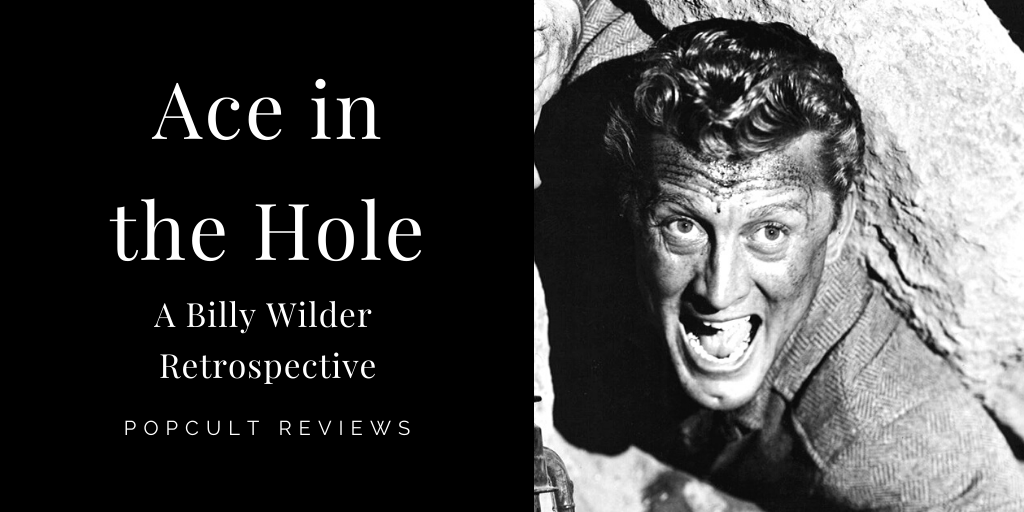
Movie Review – Ace in the Hole

Ace in the Hole (1951)
Written by Billy Wilder, Lesser Samuels, and Walter Newman
Directed by Billy Wilder

Billy Wilder was wildly prescient when it came to the worst of mankind. Long before 24-hour news cycles became a thing, Wilder was already foreseeing a time where a small incident could be exploited by the media into something more substantial. The forces of entertainment would find ways to prolong human suffering because it makes such a compelling narrative to the public. Wilder makes no bones about how he believes humans often succumb to their worst impulses and delivers a noir film that doesn’t need Los Angeles to give it atmosphere.

Continue reading “Movie Review – Ace in the Hole”

Movie Review – Sunset Boulevard

Sunset Boulevard (1950)
Written by Charles Brackett, Billy Wilder, and D. M. Marshman Jr.
Directed by Billy Wilder

Movies about making movies was not a new thing when Sunset Boulevard came along. What was novel about this film was that it wasn’t a story of rags to riches, a reflection on the dream of fame. This is a film noir version of those Hollywood tales. Our protagonist is a screenwriter who fails to make it big. The antagonist is a movie star who fell from great heights and never recovers. Much like in Day of the Locust, we have an examination of the effects of a system that promises wealth & fame that rarely delivers those dreams.

Continue reading “Movie Review – Sunset Boulevard”

Film Review – The Bad Seed

The Bad Seed (1956, dir. Mervyn LeRoy)
Starring Patty McCormack, Nancy Kelly, Eileen Heckart, Evelyn Varden, Henry Jones

Contemporary audiences would probably be bored and not find this film scary. Contemporary audiences are dopes on the whole, though. This piece of pernicious, regressive cinema is one of the tightest horror pics I’ve seen. What makes it such a juicy little piece of evil is the context. Its the repressive Red Scare 1950s where wholesomeness and purity is slathered on suburban streets like whitewash. Children especially are angelic and your neighbors can pop in when ever they choose.  This is also the height of psycho-analysis, where Freud’s phallic fantasies are holy and it becomes acceptable, and encouraged to visit the shrink. Into this tense situation, we’re given Rhoda Penmark (McCormack), the sweetest little blonde in pigtails you ever did see. Rhoda is absolutely perfect, her parents and teacher agree. But Rhoda doesn’t like having what she wants withheld and she will take it, no matter the cost.

Continue reading “Film Review – The Bad Seed”

Hypothetical Film Festival – Unreliable Narrators

There’s a very interesting plot device called the Unreliable Narrator, wherein the point of view you are getting the story from comes from a person who is possibly skewing the facts in their favor, creating a story that is not quite true. Here’s some films that use that idea to great effect.


Rashomon (1950, dir. Akira Kurosawa)
Rashomon was the introduction of Kurosawa and post-war Japanese cinema to the world. The framing of the story was unlike anything that had really been seen in cinema, but had roots in older literature, particularly Shakespeare (whose works would be a major influence on Kurosawa throughout his career). A woodcutter and priest are seeking shelter in the husk of an old building while it storms outside. A passerby enters and they explain a strange murder of a samurai and the court case in which his wife, the bandit being accused, and the spirit of the samurai himself all testify. Through the three differing viewpoints we get three different pictures, with the added framing of these figures telling us the story. It’s a like a hedge maze of narrative.

Amadeus (1984, dir. Milos Forman)
The elderly composer Salieri tries to kill himself but is stopped. Later he is visited by a young priest and the old man tells the tale of his rivalry with Wolfgang Amadeus Mozart and how Salieri believes he killed the virtuoso. Salieri of course frames himself as pious and obedient, devoted to tradtion. Amadeus is seen a lewd and bawdy figure. Salieri sees his craft as a gift from God and cannot comprehend how someone as heathen and ribald as Amadeus was given a gift that far surpasses his own. The question we must ask is, how honest is this portrayal of the composer, and is this Salieri’s attempt to justify his hand in Amadeus’ death?


Memento (2001, dir. Christopher Nolan)
Both the film that introduced us to director Nolan (The Prestige, The Dark Knight) and what presents probably the most unreliable of unreliable narrators. Leonard is a man without the ability to form new memories. This was the result of a break-in at his home years prior that also resulted in the death of his wife. Now Leonard is on a hunt for the man responsible. Because of his lack of new memory he has tattooed key facts about the assailant on his body. Beyond that, he carries a Polaroid camera where ever he goes, photographing acquaintances and scribbling notes about them on the pictures. But what does Leonard really know? As we experience time in the same way Leonard does, we will ask lots of questions and when the disturbing conclusion comes about we will be left questioning Leonard himself.

Spider (2002, dir. David Cronenberg)
Dennis Cleg (Ralph Fiennes) has just been released from a mental asylum. The reason why he was there in the first place is not revealed at first, instead we follow him to the work home he has been assigned to in an attempt to transition back into society. He immediately draws the ire of the housekeeper and befriends housemate Terrence (John Neville). Mixed into his day to day life are nightmarish flashbacks to his childhood, focusing on his alcoholic father (Gabriel Byrne) and his beaten down mother (. The story of their tumultuous relationship is what forms Dennis and ultimately drives him to the asylum. The reason behind his nickname, Spider, is tied directly to this childhood incident. But then you must ask yourself, how reliable are the childhood flashbacks of a psychopath?


Bubba Ho-Tep (2002, dir. Don Coscarelli)
The film is told from the perspective of Elvis Presley (played brilliantly by Bruce Campbell), or it could be mechanic Sebastian Haff. Presley explains that he traded places with Haff in the 1970s to get away from the business, and for some reason the staff of his nursing home doesn’t believe him. Also living in this home is a black man who claims to be President Kennedy (Ossie Davis), explaining that he was dyed black and abandoned in the nursing home after the assassination attempt. Terrorizing the elderly at night in this home is an ancient Egyptian mummy who, for some reason, has taken on the garb of a cowboy. The two men, unable to get the staff on their side, take matters into their own hands and battle the mummy. But what if they are simply just two crazy people?

Charlie Chaplin Month – Limelight


Limelight (1952)
Starring Charlie Chaplin, Claire Bloom, Nigel Bruce, Buster Keaton, Norman Lloyd, Sydney Earle Chaplin

During Chaplin’s trip to Europe to promote this film, he had his re-entry to the Unites States revoked (he always legally remained a British citizen). It was the height of Red Panic at the time in the US and Chaplin had never been shy about voicing his personal opinions on the treatment of the working class. Chaplin’s long standing tensions with J. Edgar Hoover led to his re-entry papers being revoked and he decided to set up his home in Switzerland. This would be where he would live for the rest of his days and this film (while not his last) would stand as his symbolic goodbye to cinema.

It’s 1914,  and Calvero (Chaplin) is a former performer on the East End stages. He now comes home drunk out of his mind in the middle of the day, slowly weathering away in his flat. One afternoon he returns and finds his downstairs neighbor, Teri (Bloom) unconscious holding a bottle of pills and letting gas from her stove fill her apartment. He saves her life and afterwards learns she became suicidal when her dreams of performing ballet were slowly crushed. Calvero nurses her back to health as she suffers from psychosomatic paralysis. Eventually, she regains her confidence and becomes the prima ballerina of a great company. Teri meets and falls in love with composer Neville (played by Chaplin’s own son, Sydney Earle). She goes onto secure a part for Calvero in the show as a clown and he eventually gets his own showcase which is to be his final, great performance.

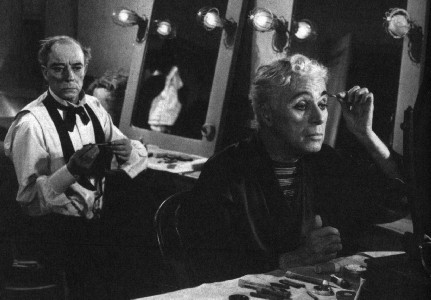
1914 is an incredibly significant year in the life of Chaplin. It was in that year he made a small appearance in the Keystone short Kid Auto Races at Venice. The character he played was called The Little Tramp. The birth of one of the most iconic film characters means the death of the stage variety that brought Chaplin up. As Calvero he recognizes both the twilight of his own career and how his rise to fame was responsible for the end of many East End performers’ careers. It’s made even more significant that Buster Keaton plays Calvero’s old partner who joins him in the final stage performance. Here we have the two men who birthed cinematic comedy taking one last bow in an era that no longer had room for their style.

Despite the symbolic significance of much of the film it is still a very self-indulgent picture. Chaplin made his film’s independently meaning he got to make final cut. Limelight clocks in at 2 hours, 11 minutes and it is a real stretch. Much like The Great Dictator, another over 2 hour picture, the middle sections sag painfully. The bits Chaplin performs are never all that funny either. The two man piece he does with Keaton at the end of the film is pretty decent but never lives up to his old films.