Game Review – Heavy Rain


Heavy Rain (2010, Quantic Dream, PS3 only)

In 1999, I was very excited about the release of Shenmue on the Dreamcast console. The conceit behind that game was you were in a completely open world where you could interact with everything. That had me very interested, while the game’s action mechanic didn’t seem as appealing. For instance, if you were in a footchase with someone, buttons would flash on screen and you would have a couple seconds to press the corresponding one on your controller. At the time, I found that style of play a little stressful and not very fun. Heavy Rain doesn’t have the freedom and openness, but makes that initially frustrating game play riveting.


In an unnamed metropolitan city, we find ourselves in the shoes of architect Ethan Mars, a family man with a beautiful wife and two sons. His happy life turns to tragedy when his eldest, Jason is hit by a car and put in a coma. Ethan’s marriage falls apart and he ends up sharing custody of his younger son, Shaun. A second horrific tragedy strikes when Shaun disappears and appears to be the victim of the Origami Killer, a criminal plaguing the city. You will simultaneously play as Madison Paige; a journalist who befriends Ethan, Norman Jayden; an FBI agent using experimental VR tech to investigate the Origami Killer, and Scott Shelby; an ex-cop turned crusading P.I. out to avenge the victims of the Origami Killer. The game is divided into alternating chapters as these characters pursue their individual paths, while occasionally crossing over.

What stands out most about Heavy Rain over traditional video games, is that you can’t die in a way that ends the game. Instead, characters can be wounded and make mistakes that branch the story in different directions. Near the end of the game the possibility of death becomes a major reality, but up until then you constantly feel progression even if you aren’t making headway in the case. For example, Shelby and his partner visit a local repair shop where things go bad. Before they can leave you (as Shelby) have to wipe your prints from everything you touched in the store. If you fail to wipe down everything the story branches into you being brought in for questioning. This type of game play comes across as a more complex version of a Choose Your Own Adventure.

There are other types of play moments that involve a limited amount of time. Fights with characters consist of a button flashing on the screen, which you must hit within seconds or you miss a block or the chance to throw a punch of your own. Occasionally you end up in a grapple with a foe which requires you to quickly tap a button to break through. Other moments involve the physically movement of the controller to emulate a character’s on screen action. There’s also certain challenges that involve your hands contorting unnaturally on the controller as your avatar on screen must contort to escape being bound or restrained.

Heavy Rain manages to deliver an interactive cinematic story that will pull you deep into the drama. From the excitement of footchases and fights, to the shocking reveal of the Origami Killer’s identity I was completely absorbed.

Film Review – The Social Network


The Social Network (2010, dir. David Fincher)
Starring Jesse Eisenberg, Andrew Garfield, Justin Timberlake, Armie Hammer, Max Minghella, Rashida Jones, Brenda Song

In the middle of David Fincher’s latest film a character sums up the current technology driven economy by saying this current generation creates jobs for themselves. In the past supply-demand was the dominating force; the people wanted something, then someone provided it. Now, we have products that are given to us and we are conditioned to need and want them. Facebook as one example. No one ever needed Facebook, but by preying on some very primitive psychological compulsions, it has become an addictive force. The Social Network rewinds back before there was Farmville or Poking or Mafia Wars, and focuses on the collegiate roots of Facebook. Here we see at its core the entire idea came from the exclusivity of Harvard’s Final Clubs.

The more intimate moments of the film are fictionalized and used to reveal aspects of Mark Zuckerberg’s personality, but the litigations that frame the film are very real. Its 2003, and Mark is a sophomore at Harvard, a kid from a middle class family who is studying computer science. Mark and his best friend, Eduardo are a clever pair, with Eduardo able to get money together whenever needed. After being spurned by a female student due to his emotionally stilted personality, Mark strikes back via Livejournal and quickly cobbled together webpage that has students rate Harvard girls against each other. The site gets him placed on academic probation and the attention of the Winklevoss twins, monied legacies who want to make a Harvard dating site. Mark listens to their idea, turns it down, then rebuilds it in his own images. As the site spreads beyond the walls of Harvard and even across the pond, Mark becomes more obsessed with becoming the very elite he resented in school.

This film succeeds on a number of factors: Aaron Sorkin’s amazing script, David Fincher’s perfect direction and editing, and Trent Reznor and Atticus Ross’ score. In a movie that is mostly people sitting around talking, you think it would drag, but the craft around everything creates tension and drama in every moment. I find myself liking every *other* Fincher film. Meh on The Game, loved Se7en, Fight Club doesn’t hold up, Zodiac is underrated, Benjamin Button is a yawn, and now The Social Network. I think Fincher works best with a script that isn’t trying to be anything huge. These small stories are given scope through the way he makes films. The score is also one of the strongest elements of the film, in particular a rowing competition scene that involves tilt-shift camera work and tight editing that is a short film unto itself.

The Social Network reminded me a lot of films like All the President’s Men. That film was made only a couple years after the events of Watergate, and it is a much stronger film about the Nixon administration than it would have been if they made it in 1990. The Social Network is very much about this moment and mindset in time. The young men behind Facebook were following the capitalist fundamentalism they were born into in the 1980s. They were never too concerned about the money behind the site, it merely worked to fund the venture, but they desired the power that came with it. There’s a moment in the film, Mark and Eduardo have just had sex with a couple girls in a club bathroom, they stand outside grinning and revealing their adolescent nature. Eduardo turns to Mark, smiling, and says “We have groupies”. Counter this with an image at the end with Mark obsessively refreshing a Facebook page and its clear this mindset is a destructive one.

In Theaters Now: Scott Pilgrim vs The World


Scott Pilgrim vs The World (2010, dir. Edgar Wright)
Starring Michael Cera, Mary Elizabeth Winstead, Kieran Culkin, Mark Webber, Alison Pill, Johnny Simmons, Anna Kendrick, Jason Schwartzmann, Brandon Routh, Aubrey Plaza, Chris Evans, Mae Whitman

EPIC!

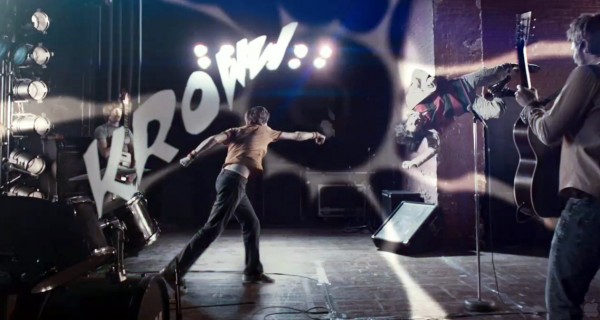
This is the official film of the Nintendo Generation, from the opening Universal logo to the final battle, the film is painted with pixelated brush strokes of late 80s video game fandom. Its also the closest I’ve seen director Edgar Wright come to recreating the style of humor found in his wonderful British series Spaced. These are the same kinds of people that populated that television show, just born a couple decades later. They have the same idiosyncratic obsessions and quirks just colored in an 8-bit aesthetic. This also marks a major departure for Michael Cera who has made a career on playing the lovable loser. The Scott Pilgrim character is a real asshole, especially to the girls in his life, and Cera does a good job of shifting his style of acting to fit Pilgrim. Simply put, this is the best date movie/action flick of the year.

The story takes us to the snowy streets of Toronto where Scott plays bass in Sex Bob-Omb and has upset fellow bandmates by dating the 17 year old Knives Chow. His dalliance with Chow is usurped when the mysterious Ramona Flowers crosses his path. Once they start a relationship its quickly revealed that Ramona’s seven exs have formed a villainous league who are intent on destroying anyone who dares to date her next. In this world you don’t need to be a black belt to fight like a character out of Mortal Kombat, and no one questions when Scott drops his bass and flies into the air to clash with ex after ex. This is a world where the line between game console and reality are blurred.

The humor here is so wonderful, its geeky and silly and the film never takes it self too seriously. Its the kind of thing you expect from Edgar Wright. Characters talk in a hyper real way, popping in and out frame when ever they are needed. The standout in the cast for me was Kieran Culkin as Scott’s gay roommate Wallace. Wallace is devoid of stereotype and is simply a perfect compliment to Scott’s often immature relations with the female of the species. The rest of the cast hits every note they needed to. None of the characters are all that fleshed out, by the conceit of the film is that they don’t need to be. This is a live action video game so characters are more types rather than three dimensional. Despite that lack of character dimensionality, the film does an excellent job of world building. While the far edges are kept blurred, the world of this fictional Toronto feels like it is bursting with life with so many characters passing through the frame.

It’s a shame the film didn’t have a bigger opening and appears to be quickly fading from theaters. It is Wright’s highest opening film though, almost twice as much as Hot Fuzz. The thing about Scott Pilgrim is that it is not ever going to appeal to a mass audience. This is a film made squarely for people who were kids when the Nintendo was released and were obsessed with it. It doesn’t have the mass guy appeal of The Expendables or the mass gal appeal of Eat Pray Love. Though, I’m willing to bet it is much much better than either of those films.

Tune-age: End of Summer Mix 2010

Here’s a mix for your downloading pleasure. It features songs that I first heard this summer, or have some sort of connection to a mood or tone during this season for me. Enjoy.

1. Money – Sharon Jones & The Dap Kings
2. City With No Children – Arcade Fire
3. The Happy Goth – The Divine Comedy
4. Lady Luck – Richard Swift
5. Teenagers – Department of Eagles
6. God Help the Girl – God Help the Girl
7. Airplanes – Local Natives
8. Kim & Jessie – M83
9. Flash Delirium – MGMT
10. Crash Years – The New Pornographers
11. Melectric- Ramona Falls
12. Sleep All Day – The Rural Alberta Advantage
13. Home – Edward Sharpe & The Magnetic Zeroes

Click here to download

Tune-age: Arcade Fire – "Suburbs"

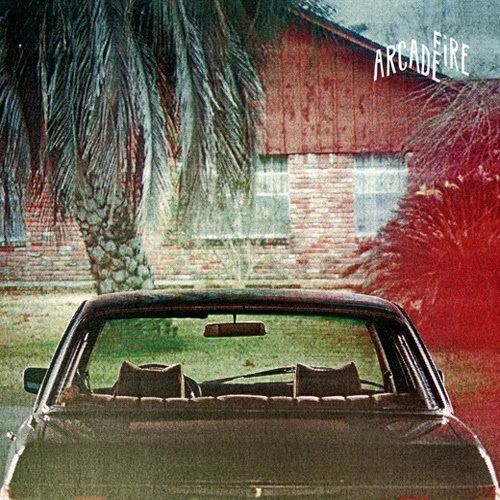
Arcade Fire – Suburbs (2010, Merge Records)

To try and define the Arcade Fire’s sound is an impossible task. When I first heard “Wake Up” in Brent Hamric’s car in the spring of 2004 I immediately thought of The Flaming Lips. One track later and that was changed. Three albums later and they are still too eclectic to pin down. A lot of music critics wait like vultures for the bands they love or others love to slip up, so that they can pounce and claim that the grandeur that once was is lost. Arcade Fire seems to dare them to try it, by dropping the dark gloom of Neon Bible and adopting a more pop-folk vibe. There’s some familiar sounds to bring you back in, but then suddenly things change up and we hear some arrangements and instruments that show the band is still testing its limits.

It seemed a natural fit for Arcade Fire to score a film, and they did so last fall for Richard Kelly on The Box. While the music there resembled Bernard Hermann more than any of their typical music, they still have a cinematic sound in this latest album. It’s a very West Coast, bouncier collection of songs. Every few tracks there’s that dark underscoring that comes through, but for the most part this is a pop-ier album, very much music you could dance to. Like all their work, the cinematic qualities come from the story being told in the lyrics. Each album has felt like a dystopian novel, touching on themes of the end of our civilization. It sounds like heavy material to be working with, but they manage to make tracks that you tap your foot to. The voices in these song stories are typically disaffected twenty-somethings reflecting on the desolation around them.

The opening track “The Suburbs”, has a bouncy piano underscoring the song which came as quite a jolt when I started the album. For the first time on their albums, I find lead singer Win Butler sounding like a spiritual successor to Neil Young. And this opening song, like a couple others, have a folk-rock element to them. “Ready to Start” is the track you expect to hear on an Arcade Fire album, there’s pounding drums and alt-pop guitar riff. References are made in the lyrics to “the kids”, a recurring noun in all their albums, that seems to represent youth in general who has an awareness above the adults. “Modern Man” is back in Neil Young country, but also made me think of some of The Talking Heads’ work in the early 1980s and is a song I would not have guessed was an Arcade Fire song if I didn’t already know it. “Rococo” seems to be a mix of expected elements and this new West Coast folk sound being incorporated now. “The kids” are back again, a force of apathetic destruction, constructing massive pillars of junk to burn down. “Empty Room” begins with some wonderfully light strings and then turns into a classic right out of the standard playbook, with some very Kate Bush like vocals led by Chassagne Butler. “City With No Children” evokes thoughts of *gasp* Bruce Springsteen, a comparison I never thought I would make. There’s a strong of sense of small town nostalgia woven through the song and even the arrangement feels like a track off Thunder Road.

“Half Light I” and Half Light II” continue the nostalgia trip, and I have a feeling the band made this album as homage to their own youths growing up in the 1980s and the music that filled their lives during that time. It is a good explanation for how the album is able to evoke memories of so many different artists of that time, yet is still able to not go off the rails. “Suburban War” comes back to Springsteen but not as heavily, its much more Arcade Fire gloomy. “Month of May” is yet another splash of ice cold water as the band is backed by the unceasing guitar of what could easily be a Ramones song and more mentions of “the kids” as a defiant force of purity. “Wasted Hours” is back to folk pop guitars and continues the themes of adolescents tooling around the desolate wastes of Southwestern small towns and looking back on this time as something to be missed. “Deep Blue” is one of the few tracks where Win stands alone, his voice turned into an echo-y voice mourning the past, but also makes use of that same bouncy piano rhythm from the first track. “We Used to Wait For It” continues on from “Deep Blue”, now talking about the time spent by youth in anticipation of the future, only to look back on their youth as adults and want to somehow return to it. “Sprawl I (Flatland)” is Win Butler returning to his childhood home, singing out from open landscape and becoming lost looking for it. This is a track so full of narrative elements, it makes you want the band to compose an opera. And where that songs leaves us mournful, “Sprawl II (Mountains Beyond) is a chorus of angels beyond the hills that surround this small town lifting our protagonist up and away. The album wraps up with a short and haunting track, reprising the opening song, where Win states that if he could have the time back he wasted as a child, he’d simply waste it again.

Arcade Fire proves that they are about revisiting the same ideas thematically, but constantly experimenting with their sound. This by far the most listener friendly album they have released and every track could easily find a place in the radio rotation. They take a lot of chances and flirt with mainstream sounds, only insomuch as they hearken back to brothers Win and Reg Butler’s youth in the suburbs outside of Houston. For all its slightly dark atmosphere at times, there’s a revelry in being a kid without responsibilities or being forced mete out time as a valuable commodity. A great album from one of the best bands of the 21st century.

In Theaters Now: Life During Wartime


Life During Wartime (2010, dir. Todd Solondz)
Starring Alison Janney, Shirley Henderson, Ciaran Hinds, Dylan Riley Snyder, Paul Reubens, Ally Sheedy, Charlotte Rampling

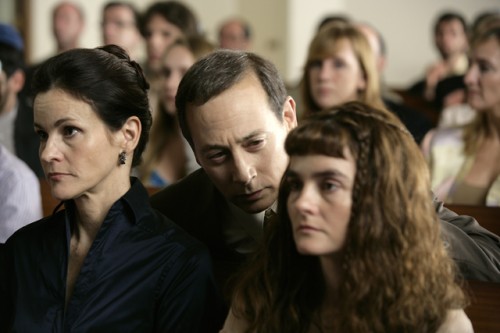
I can’t see anyone who hasn’t seen Solondz’s 1998 film Happiness being able to get much from this movie. It is about a direct sequel as you can get, making references to plot points from the first film in ways that makes it un-enjoyable for someone unfamiliar with the older picture. It’s not a bad film, I enjoyed it a lot, it just is not made for the uninitiated. What it does is revisit some familiar faces, some in a more interesting way than others, and offer different perspectives on their personalities. It’s very sad and at times very funny, probably Solondz’s most restrained film to date, but also has me worried about his lack of new characters or material. Life During Wartime also shares elements with Palindromes, as not a single one of the actors from Happiness reprise their roles here, which I suspect is a choice made by Solondz.

Joy (Henderson) has dinner with her husband, Allen in a scene that mimics the opening of Happiness. The entire affair has her remembering that first dinner with Andy (Reubens) who killed himself after she rejected him. It’s decided she will take a trip to visit family in Florida, and Joy ends up in the company of her divorcée mother and single parent sister. Trish (Janney) is getting involved with a new man and helping her middle child, Timmy (Snyder) prepare for his bar mitzvah. Up the coast, Trish’s ex and convicted child rapist, William (Hinds) is released from prison. He also wanders down to Florida sneaking into the house just for glimpses of the family he lost. Joy ends up in California at the home of her other sister, Helen, a pretentious and self-obsessed writer. Where ever she goes she is haunted by the ghost of Andy, who always starts out gentle but becomes violent. It’s a large ensemble movie where characters are connected, but rarely interact.

Solondz seems to have a very strong personal connection to these character types, and I suspect they come from his own family and acquaintances, an exaggerated cinematic sheen spread over them. I found his criticisms of the East Coast Jewish community very interesting. At one point, Trish is talking about her new beau, a middle-aged New Jerseyian and says that he voted for Bush twice and McCain, but only because he knows they support Israel. From many of the more liberal Jews in America, this has been an issue of frustration, how the right has co-opted the pro-Israel cause as their own. So, there’s a lot personal issues in this and all of Solondz’s films. The film has three central figures: Joy, William, and Timmy. All three of these characters are haunted (some literally) by the past. Joy is visited by Andy, whose suicide she spurred forward. William, newly released from prison, has lost every thing and wanders down the east coast and eventually to the pacific northwest searching for something. Timmy has been told William was dead his entire life and has just now learned his father was a pedophile. This warps his sense of intimacy with others, and will have a profound effect on his mother’s burgeoning relationship.

While the film is seen as an exaggeration of real life, I suspect it is closer to realism than most films. Solondz appears to be a very good listener, especially for interactions between family members. In almost every conversation between a mother and daughter, sisters, etc. no one is every asking about or talking about the other person they are with. While Helen may be the most outwardly self-absorbed, every character here only talks about themselves, is only concerned with what they need. The only exception I would say is William, the pedophile. There’s a couple moments where we gasp, thinking he may be tempted, but he abstains. He contemplates stealing from his family to pay his way, but stops. William eventually ends up at his eldest son, Billy’s college in Oregon and explains he sought him out just make sure Billy didn’t inherit his father’s predilections. Once he is assured Billy is “normal”, he says goodbye, and the implication is that he goes off somewhere private and kills himself.

Wartime is a heavy film, to be sure, but also surprisingly funny in very dark moments. Not a movie for the cinematic light at heart, but for the viewer who wants to have their ideas about “good” film challenged, then I think there is definitely some thing here for you.

In Theaters Now: Inception


Inception (2010, dir. Christopher Nolan)
Starring Leonardo DiCaprio, Ellen Page, Joseph Gordon-Levitt, Cillian Murphy, Tom Hardy, Ken Watanabe, Dileep Rao, Marion Cotillard, Tom Berenger, Michael Caine, Pete Postlethwaite, Lukas Haas

Don’t think about elephants. What are you thinking about? Elephants, right? That is a very basic form of an inception, mentally influencing another person’s thoughts. But for a more complex idea, an idea that will cause someone to make a life-altering decision you have to do something a little more elaborate. As Cobb (DiCaprio), an expert dream infiltrator tells us early on, its much easier to steal an idea than to insert one in a person’s subconscious. With his seventh film, director Christopher Nolan takes the heist film formula and tosses it into an imaginative blender. The result is yet another highly complex and intelligent film that respects the intelligence of the audience, a rarity for a summer film.

Dominic Cobb is a professional dream infiltrator. Along with partner Arthur (Levitt), they use a special device to sneak into the subconscious of others and steal their ideas, primarily working in corporate espionage. However, Cobb is visited by his wife, Mal (Cotillard) in these dreams and she always seems to foil his plans. During the opening heist, Cobb loses his architect, the person whose job it is to design the key structure in the dream. He visits his father in law (Caine) who hooks him up with a young architecture student named Ariadne (Page). Cobb teaches Ariadne how to manipulate dreams, but warns that the subconscious will attack like white blood cells if an invading consciousness is detected. Their new job is much more difficult than an extraction (taking an idea), they are hired to perform an inception, planting an idea in the heir to vast corporation to split it up. Cobb gathers his team and begins the heist which involves multiple dream layers, but Cobb may be his own worst enemy.

Inception plays like a wonderful literary science fiction novel more than a film. It is so dense and full of ideas you can’t help but feel overwhelmed at first. Nolan has definitely produced a film that begs for multiple viewings and intelligently leaves its ending open for interpretation. So often that twist in a film comes off a as sloppy writing, but here the ambiguity is the trigger for Nolan’s inception on us. The seed of questioning our own reality begins, and is much better presented that The Matrix. Here there is no hard sci-fi overlords, rather we are our own jailkeepers, constructing realities that make us feel safe, when we knew if we woke up we’d deal with unpleasantness. The dream infiltrators all have a totem, an object that no one else should touch, that they carry in the waking and dream world. If the object obeys the laws of physics when used then they know they are awake. Cobb’s is a small silver top, he spins it and, if it doesn’t wobble and fall over, he knows he is still trapped in a dream. The dream layers in the film are incredibly complex and amazing. At one point they are in four separate layers of consciousness.

The performances here are stellar. While Nolan doesn’t ask for incredibly emotional performances, he does push his characters to show depth wordlessly. Both Page and DiCaprio give complex performances where a lot is told to us about them and they never go into expository passages of back history. The supporting cast is excellent as well, and I enjoyed the smarminess of Tom Hardy’s character, as well as the straight to the point workman Levitt plays. Cillian Murphy also delivers, with a bit of very believable emotion in one of the final scenes. Marion Cotillard was one of the biggest standouts in the supporting cast, both her performance and her characters play such a huge part in the story. This is one of those film you have to see, not an “if you like this then”, no. Go see this! You have to! No questions asked!

Newbie Wednesdays – Greenberg


Greenberg (2010, dir. Noah Baumbach)
Starring Ben Stiller, Greta Gerwig, Rhys Ifans, Mark Duplass, Jennifer Jason Leigh

Hey, you know what isn’t an interesting topic for contemporary cinema right now? Angst ridden white people who live comfortably and don’t have to worry about any necessities. Especially when they aren’t in some sort of hyper-realistic universe (i.e. James Bond, comic book movies). When the films are meant to be set in reality and feature characters whose biggest problems are that their band when they were in their twenties didn’t work out, yet are still rich through other endeavors, then I don’t really have much empathy towards them. This is yet another hugely pretentious piece of cinema from the grating Noam Baumbach. If you’re interested in navel gazing claptrap you’ve found your film.

Florence (Gerwig) is the personal assistant to the Greenberg family, a wealthy couple with two kids and a dog. The Greenbergs are off to Vietnam to open one of the husband’s hotels and they let Florence know his brother, Roger will be visiting for a few weeks while they are gone. Roger had a nervous breakdown and is coming the mansion to relax and work a doghouse. Roger and Florence meet, and she inexplicably ends up liking him. She learns Roger was involved with a semi-successful band in the 80s and they would have made it big if Roger hadn’t freaked out and left. Roger runs into some of his old bandmates (Ifans, Duplass) and while one of them has gotten over it, the other still holds a grudge.

The character of Greenberg is not necessarily a bad concept. I think everyone enjoys a good curmudgeon every once and awhile. But the curmudgeonly attributes of Roger Greenberg come across as cliche and totally dishonest. It doesn’t help that Noah Baumbach is doing what he did in Margo at the Wedding, one of the least watchable films I’ve ever had the privilege of falling asleep during. This is film straining desperately to be so clever and erudite, yet maintain that angst white middle class tone I hate. While some people have the same things to say about Wes Anderson’s films, I argue that Anderson works his damnedest to make his work feel intentionally separate from reality, in effect making contemporary fairy tales. Baumbach thinks he’s making a movie grounded in realism, and I guess for self-absorbed upper middle class people it probably is. I just have zero sympathy who have these problems.

There are few moments of good in it. I think Greta Gerwig is a great actress, more so in more mumblecore type movies than this one. She has a very natural ease in front of the camera and is one of the few people in the movie who doesn’t feel like she is acting. There’s a sub plot involving her ex-boyfriend that I found to be good to see in a film, its something that never really happens even in movies, and if it does there seems to be some moral cultural obligation to make it a big deal. Here Gerwig simply does this thing and everyone moves on with their lives, the way in reality it would probably be. Many of the supporting players are quite good, with the exception of Jennifer Jason Leigh as Roger’s ex from back in the band days. Leigh is also the co-screenwriter, producer, and the wife of Noah Baumbach. She’s just not very good in this role. If you have the option to watch this film, I can’t really say its one of those worth one view ones. It really isn’t, it doesn’t say anything of importance, it doesn’t work to achieve any interesting artistic aesthetic, it is just simply nothing.

Newbie Wednesdays – The Last Airbender

The Last Airbender (2010, dir. M. Night Shyamalan)

M. Night and I have a long history together. The first film I saw my freshman year of college was The Sixth Sense. It terrified me. Now, with a decade of film obsession behind me, it takes a lot to creep me out that badly, and I look at The Sixth Sense as a very sad atmospheric film, still good though. His next film, Unbreakable, is still one of my favorite comic book films, in that is captures a certain idea of superheroes that I’ve never seen another film come close to. About there is where my love for the director ended. I’ve seen every film he’s made in the theater, the only other director who I have done that with is Christopher Nolan, sort of the antithesis of Shyamalan. While Nolan produces better and better films, Shyamalan only gives diminishing returns. This latest, his first foray into adapting an already established property, is an utter disaster.

If you haven’t seen the Nickelodeon animated series Avatar: The Last Airbender (I’ve only seen the first five episodes) here’s the premise. In a fantasy world, the planet is ruled by the four elemental nations: Fire Nation, Air Nation, Earth Nation, and Water Nation. A hundred years before the start, the Air Nation was wiped out and the Fire Nation began its quest to spread its empire across the globe. Two Water Nation children, Katara and Sokka, discover a little boy frozen in ice. Once thawed, they learn he is Aang, the last of the airbenders and the one destined be the Avatar, meaning control over all four elements. Searching for the Avatar is Prince Zuko, the exiled son of the Fire Nation king. He sails the world, hoping to prove his might to his father by bringing him the Avatar. Zuko’s forces become aware of Aang and epic battles ensue.

The concept here is ready made for a film franchise, and it has the potential to be as popular and well loved as Harry Potter. It’s a rich, complex universe that doesn’t pander to kids. It treats them like intelligent beings who can handle more than stand alone episodes. The film however, creates a narrative mess. One of the elements of screenwriting that you’ll find is seen as a no-no is voice over exposition. Its passable at the beginning of the film, just to set up the story, but when large chunks of the movie are rushed over and explained with voice over you have a major problem. The sort of things being summed up in a sentence by Katara, the narrator, are romantic relationships, something that you have to earn from your audience, make us care that these two people get together. Not so, and Shyamalan has never been too good with romantic relationships.

This is an incredibly faithful adaptation in terms of story elements, hence the rushed exposition as Shymalan tried to condense 20 episodes of the first season into 90 minutes. Motivations are cast out the window for the sake of hitting plot points. The most glaring omission from the the series though, is the sense of humor. In the cartoon Aang is a mischievous klutz who is both the hero and the comic relief. Katara and Sokka are also not great warriors and don’t master their abilities in the series near as quickly as their movie counterparts did. To delete the humor and sense of growing into these powers sort of turns the film into something that an unfamiliar audience member won’t enjoy and neither will a die hard fan of the cartoon. There really is no audience for this type of film, and its sad because the failure of this picture probably dooms the chances of a different director coming onboard and correcting things. And once again, we have to wonder how many chances does Shyamalan get before they revoke that DGA card?

State of the Blog – First Half of 2010

So I have been running the blog since November 2009, longer than I have kept any of these things going before, so that’s impressive for me. The blog has garnered over 600 visits since the start of the year ranging from all over the U.S. to Europe and Asia. There’s some interesting things I have coming up on the blog, that I think you’ll enjoy.

– Dropping Jolly Good Thursdays and going to alternate between Hypothetical Film Festivals and It Should Be A Movie. ISBAM will focus mostly on comics at first, and present a property which I have read or encountered that would make a good film.

– I will be coming to the end of my focus on Brian De Palma in July, so be on the lookout for the next poll on my next director. Right now, I am pretty sure Samuel Fuller and Werner Herzog will be two of the choices, so if you wanted to find out a little bit about them before the poll is put up, go ahead.

– I have been researching some incredible looking films for Wild Card Tuesdays, mostly independent or overlooked pictures from the last decade, with some older films thrown in along the way. In July, I’ll be looking at The Dinner Game (which has been remade into the upcoming Dinner for Schmucks) as well as the Peter Sellers’ picture The World of Henry Orient.

– DocuMondays are also kicking into high gear with some very dynamic films. Monday I’ll be reviewing Prodigal Sons, a film that got a lot of attention a few months ago. Will be focusing my attention a lot more personality driven docus as well (Zizek!, Beaches of Agnes, Stevie) so keep a look out for those.

– As you’ve probably noticed, in June Fridays became focused on films from the Criterion library. That is definitely going to provide a lot of material for years to come, and is finally getting me to sit down and watch those films on my list. This Friday, I’ll be reviewing Iranian director Abbas Kiarostami’s 1990 film Close Up, just released on DVD last week. In addition to that I will be looking at some films by Sidney Lumet, Powell and Pressburger, as well as sampling some directors I have never experienced before.

– In upcoming months I’ll be presenting some themes: For July it is Character Actor month, August will look at my favorite Director/Actor pairings, September will be Hispanic Cinema Month, October will be a month full of just horror films, and in November I’ll be looking at my favorite films based on books.

Hope you stay with the blog for the next half of 2010. I encourage you to leave your comments and feedback. I’m always interested to know what the readers think.