Film 2010 #32 – Ragtime


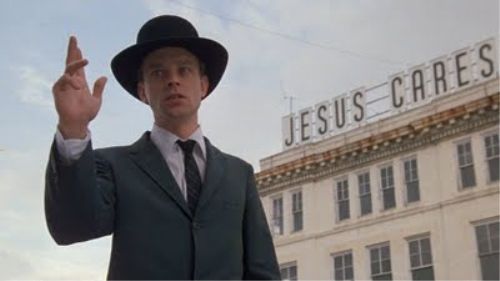
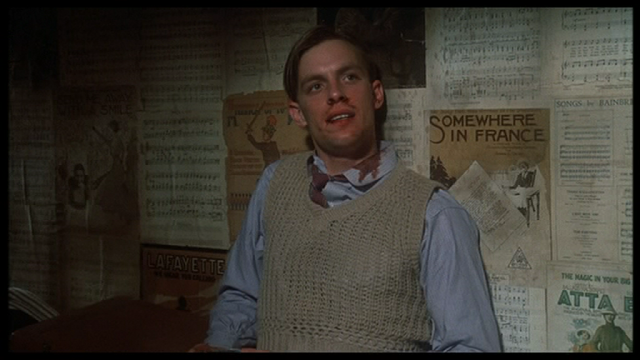
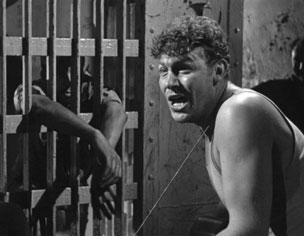
Ragtime (1981, dir. Milos Forman)

Starring Elizabeth McGovern, Mary Steenburgen, Brad Dourif, James Cagney, Mandy Patinkin, Norman Mailer, Moses Gunn, Debbie Allen, Donald O’Conner, Howard Rollins Jr.
I first became familiar with the story of Ragtime from the 1996 Broadway musical, script written by the talented Terrence McNally and based on the novel by E.L. Doctrow. The story (in all mediums) is an attempt to create a slice of life in America right before World War I broke out. Milos Forman was an interesting choice to helm this project; he doesn’t really take on historical epics, instead when he does period pieces he chooses to focus on specific individuals and analyze them down to the grain. In Ragtime, we get broad painted strokes that only give us glimpses.
The interwoven plots contain a mix of fictional characters given vague names like Father, Mother, Younger Brother and historical figures like Booker T. Washington, Harry Houdini, and Evelyn Nesbit (the focal point of what was called the Scandal of the Century at the time). The novel and musical version contain even more historical figures including Henry Ford, J.P. Morgan, Admiral Peary, and Emma Goldman, but I assume they were cut for the sake of time.
In the core plot of the film an upper middle class family in New Rochelle, New York discovers an African-American infant crying in their garden. The police bring a young woman to their house who admits the child is hers and that the father abandoned them. Mother decides to take Sarah, the girl into their home against the wishes of Father. Eventually, piano player Coalhouse Walker, Jr. arrives on their doorstep revealed to be the father of the child and stating that now that he has a job he is willing to ready to provide for his family. However, tragedy occurs that sets the characters down a path where they witness a change in the entire world. Alongside this plot, Mother’s Younger Brother falls in love with former dance hall girl Evelyn Nesbit and is played for a fool. There’s also Tateh, a Jewish immigrant talented in making silhouettes who eventually makes it big as an early silent filmmaker.
The film presents the world of New York in 1917 with amazing accuracy. Clothing and vehicles and set dressing are spot on and anachronisms are non-existent. However, the broad nature of the film left me feeling indifferent about every character on screen. Every thing feels like it is played towards cliche rather than reality. Part of me feels that uber-producer Dino de Laurentiis played a part in the films broad, flat nature. It’s an interesting film, most notable for the costume design and art direction, but definitely a weaker entry into Milos Forman’s work.
Film 2010 #30 – The Secret of Kells


The Secret of Kells (2009, dir. Tomm Moore, Nora Twomey)

Starring Brendan Gleeson, Mick Lally
When the 2010 Oscar Nominations were announced I’m sure I wasn’t the only one who wondered “What the hell is The Secret of Kells?” Well, it’s an independently produced Irish film that played for a week in L.A. to qualify for the Academy Awards. The nomination will definitely garner attention for the film when it receives an expansion on American screens on March 12th, but is the picture deserving of the nom? A million times yes, and while Up will probably win because of its notoriety and box office, The Secret of Kells brings a style drastically different from the Disney formula that dominates American animation.
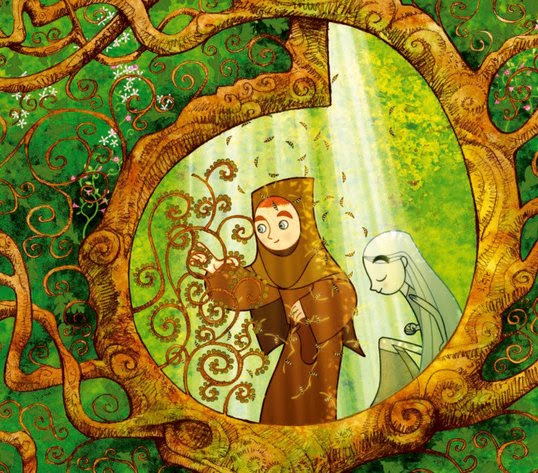
The story of The Secret of Kells is based in the history of Ireland circa 1006 A.D. The Vikings are massacring and raiding any village them come across in the hopes of amassing gold. The Abbey of Kells has become a sanctuary for many monks whose island homes have been burnt to the ground. Now, surrounded by the deep forest, they have gone back to creating gloriously intricate illuminated texts while the Abbot Cellach works to finish the wall before the Vikings arrive. Cellach’s nephew, Brendan befriends Brother Aidan, the monk who has been working on the Book of Iona, believed to be the most beautiful illuminated manuscript ever made. Aidan enlists Brendan’s help in gathering the supplies needed to finish the text by gathering inkberries for him in the forest. Brendan sneaks away, meeting the fairy Aisling, who introduces him to the wonders of the world outside the walls of the abbey.
The intricacies of the animated work in this film are astonishing. From the moment of the prologue, narrated by Aisling, there is no doubt that the love put into the picture is remarkable. The clever reasoning behind the level of detail is a direct nod to the craftsmanship put into illuminated manuscripts by monks. The same swirls, flourishes, and Celtic crosses seen in the texts can be found hidden amongst the gnarled roots of trees and clusters of leaves and flowers. The subtext here is that Brendan can only rise to the level of his hero, Aidan, by journeying beyond the walls of his limited experience. Someone like Aidan has been able to create such a beautiful piece of art because he has confronted his fears and conquered them.
While Brendan’s story does follow closely to the accepted hero’s journey archetype, there are many story beats that separate this film’s plot from others. The unblinking look at violence at this period of time and this part of the world is very much there. When the Vikings rear their ugly heads it is apparent that they leave few alive in their wake. There is also tragedy of other sorts in the film’s climactic sequence involving the unfinished abbey and its weak scaffolding. But the subtext throughout is telling us fear will be your end. Running frightened and unthinkingly at the sight of your fear leads you into destruction, but those characters who use their wits and remain calm are able to escape.
My own personal opinion is that the originality of content and artistic achievement of The Secret of Kells earns it the Best Animated Feature. However, the Academy Awards is usually more reflective of a mix between artistic elements and public awareness, meaning Up is the most likely candidate. Not to take away from Pixar, they would probably argue in favor of Kells as well, but I am excited for this film to reach a wider audience and gain more enthusiasm like mine.

Film 2010 #28 – King of New York


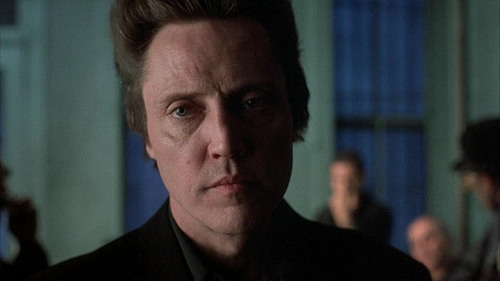
King of New York (1990, dir. Abel Ferrara)

Starring Christopher Walken, Laurence Fishburne, Victor Argo, David Caruso, Wesley Snipes, Giancarlo Esposito, Steve Buscemi
When I was a child, I noticed a bleak tone in many films and the music of the era. I think of Nirvana and other grunge artists and films like Terminator 2. It felt like there was a darkness over all these things. Now, many years older I look back and realize that it was in part a response to the downturn of the self-indulgent 70s and greedy 80s. This is why Abel Ferrara’s King of New York is such a excellent culmination of this sense of burning out after decades of success.
The story opens with the release of Frank White (Walken), a crime boss who has finished serving his term in prison (We’re told he’s been gone for years, but never given an exact number). Frank’s lieutenants on the outside begin a systematic execution of rival bosses as a signal that Frank has returned. Frank’s new outlook on life has him redirecting his criminal enterprise into helping keep a hospital for low income families open, an admirable goal indeed. However, Roy Bishop (Argo), the cop who took him down originally is keeping an eye on Frank. Both men, Frank and Roy, have metaphorical children, young soldiers who were raised in their service and owe everything to their “fathers”. And both sets of children are the victims of their fathers’ legacies in the end.
Walken plays things in his trademark bizarre way. Frank never approaches anything remotely human, he is forever emotionally distanced from everyone around him. His devotion to saving the failing hospital is admirable but he has no strong reaction when he own men are gunned down around him. On the flip-side, Roy is shattered when his “boys” are gunned down. It’s regret that separates these two men, Frank stance summed up nicely in the line, “I never killed anyone that didn’t deserve it.” Frank is able to justify his actions because he is so distanced from them, he assuages any guilt by taking up a cause in the community like the local hospital.
The film is much more about style than substance though. The soundtrack and visuals are all meticulously crafted to generate a very specific tone. The picture never feels like it could take place in reality until the final sequence. For the majority of the pic, Frank and his crew’s actions are incredibly over the top, specifically a shoot out in Chinatown where every single person on the street seems to have access to an automatic assault rifle. What this picture does best is create palpable tone, from the opening frames you have no doubt about the type of world you are entering and get a feeling for the bleak, hopeless finale its heading toward.

Film 2010 #27 – Wise Blood


Wise Blood (1979, dir. John Huston)
Starring Brad Dourif, Harry Dean Stanton, Amy Wright, Dan Shor, Ned Beatty, William Hickey

I first became aware of the author Flannery O’Conner during my Freshman Comp II class with Dr. Greg Carpenter. We read the classic short story “A Good Man Is Hard to Find” and was shocked and happily surprised at how bizarre and quirky the piece was. I would continue expand on my knowledge of the late Southern writer in American Lit II, Southern Lit, and a short stories class all with Dr. Greg’s wife, Dr. Dana. In her Lit of the South class I read Wise Blood, the novel that serves as the basis of this film and found some deep insights and themes that are woven into the fiber of everyday life here in the South.
So, how did Academy Award winning director John Huston do when it came to adapting the novel? Good and bad. If you are one of those people who hates for a film to deviate too far from its source material then I guess you’ll be happy. In my own opinion, Huston stuck so close to O’Conner’s novel that you see how poor of a film it truly makes. The book benefited from the omniscient narration of O’Conner to talk about the psychology of our characters and provide backstory. Here we just have characters speaking the author’s words but with no idea of who they are beyond that.
The biggest problem with the film are the stylistic choices Huston chooses to make. The Southern Grotesque that O’Conner brought to all her work is all but absent here. The film is so bright and the score is horrendous. The music definitely pulled me out of the film on multiple occasions. It’s a bizarre mix of synthesized folk tunes and doofy Hee Haw-esque musical cues. While watching, I couldn’t help but think how the film would have benefited to have been filmed in black and white and to have had no musical score at all. I anticipate a lot of people who love O’Conner disapproving of the film’s contemporary (late 70s) setting. While there are elements of her work that could be argued to be set in a specific time in the South, her stories are equally without grounding in a specific era. Huston’s decision to make it contemporary though, seems to reflect budget constraints rather than artistic choices.
The one character who was used terribly was poor Enoch Emery. The young man who steals a shrunken head doll and dresses as a gorilla is played in a strange way. We aren’t quite sure if he is simply a religious simpleton or has serious mental issues. My own opinion was the latter, but his portrayal in the film feels very uneven. Amy Wright does a great job as the Sabbath Hawkes and Harry Dean Stanton does an adequate job for the small role he is given. The weight of the film rests on Brad Dourif’s shoulders as Hazel Motes and I can’t criticize him too much. The problems with the film come down to a strict adherence to the novel and a lack of strong cinematography.

Film 2010 #25 – Thieves Like Us


Thieves Like Us (1974, dir. Robert Altman)

Starring Keith Carradine, Bert Remsen, John Schuck, Shelley Duvall, Louise Fletcher, Tom Skerritt
Much like the rest of Robert Altman’s work, Thieves Like Us is a subversion of genre. The premise is that a trio of bank robbers, Bowie; Chickasaw; and T-Dub (Carradine, Schuck, and Remsen respectively) escape a Mississippi chain gang and go back to the old trade. They hole up with a gas station owner (Skerritt) and Keechie, his young daughter (Duvall) who becomes smitten with Bowie. As it is to be expected with men on the run, life become very complicated very quickly and the men must split up after a heist gone wrong. Bowie ends up in the care of Keechie; the two fall in love and decide to start a life together.
Altman loves creating a human universe that works in direct opposition to our expectations seeded by traditional cinema. The action in this film is incredibly muted and when violence does occur it is either off camera or intentionally unglamorous. Characters never undergo arcs and rarely behave as if they are somehow aware of the screenwriter’s intentions of them. These characters just exist and live their lives and Altman just happens to have a camera to record them. One way he achieves the sense of the mundane while stylistically flipping cinema on its head is by an absence of the standard film score. Instead, music is provided by the ever present radio of Depression-era America. For the most part, its standards of the day but in a few scenes the radio is used to underscore the action. As the men prepare to rob a bank a car radio plays the introduction of a true crime radio drama. In yet another scene as love blossoms between Bowie and Keechie, we can hear the a radio version of Romeo and Juliet.
Characters are never more intelligent than they would typically be in a comparably real situation. The three men never achieved much of an education and neither did Keechie so their dialogue reflects that. There’s very little conversation and what there is of it is intentionally inconsequential and uninteresting. Unlike Bonnie and Clyde, where there’s meant to be a weight to the moment when authorities gun the pair down, a similar scene in the finale of this film has its drama emphasized but also a restraint is felt not to make it rise to any mythic proportion. The very final scene of the film also strips away any sense that Altman is making these men into heroes and ends up raising Keechie, who appears to be a dull girl, into the one character in the film with the strongest sense of honor and decency.

Film 2010 #24 – The Late Shift


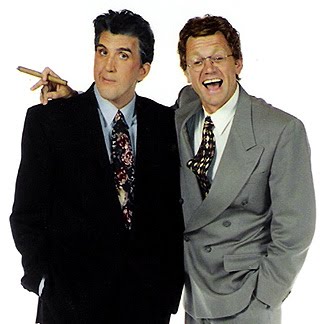
The Late Shift (1996, dir. Betty Thomas)
Starring Kathy Bates, John Michael Higgins, Daniel Roebuck, Bob Balaban, Treat Williams, Rich Little

While the Leno/Conan scuffle has been making headlines for the last month, it serves only as a reminder of NBC’s consistent inability to manage its late night talent. The well-known fight between Leno and Letterman for The Tonight Show inspired similar headlines, a book by New York Times reporter Bill Carter, and an HBO film based on the book. The film is basically in exercise in the failure to have your cake and eat it too.
The problem stemmed from NBC’s selfish business sense to not let go of Jay Leno, a very popular young comic at the time. He has huge popularity as the guest host of The Tonight Show and as a regular guest on Late Night with David Letterman. In their infinite wisdom and through the coercion of Leno’s manager, Helen Kushnick (more on her in a minute), NBC signed a behind closed doors deal to give Leno The Tonight Show. They just happened to never tell Johnny Carson or Letterman that until it was too late. When the news is finally announced, Letterman is heartbroken but keeps his eye singularly on somehow getting his dream job back. Months go by and his management gets him out of his contract and into a new spot at CBS and the rest is history.
While the film is in theory about Leno and Letterman I would argue is is just as much about Helen Kushnick (Bates) as well. While the idea of pushing Letterman out of spot he truly earned is pretty low, the tenacity of Kushnick in an industry where the majority of power players are men is admirable. For a woman who had just managed comedians for most of her career to come in and bully the NBC executives into giving her client the number one property in late night television is an amazing accomplishment. She was given executive producer-ship and her downfall came in threatening guests that if they appeared on any other talk shows they would be banned from hers.
Early on there is a scene where Helen is telling off someone over the phone whom is unwilling to attend an AIDS benefit she is organizing. Her tongue lashing on the man (Kushnick was famous for her profane mouth) is brutal, and later in the film it is mentioned that her son died from an AIDs-infected blood transfusion. This bit of backstory reveals how intensely Helen’s convictions informed her personality. Helen is eventually forced out by the NBC execs and Leno folds very easily when he realizes his place as host would be taken if he defends her.
The film is no directorial masterpiece. Betty Thomas is a Second City alum with some tv acting and directing experience who went on to direct theatrical films such as Dr. Doolite, 28 Days, Alvin and the Chipmunks: The Squeakquel, and arguably her best work The Brady Bunch Movie. The cinematography is very much of the made-for-tv quality but the film makes for an interesting historical artifact and would probably spark an interest in reading Carter’s book.

Film 2010 #22 – Terribly Happy

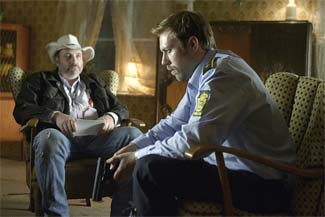
Terribly Happy (2008, dir. Henrik Ruben Genz)

It’s a common plot device in literature of all kinds to tell the story of the outsider in the tight-knit community. The plot of this Danish film could easily be dropped down into the middle of any Midwestern agricultural based small town. We have a disgraced police officer, Robert, punished by being moved from Copenhagen to a small outpost in South Jutland. Once there he meets Ingerlise, a young wife and mother whose husband, Jørgen beats her daily. Robert is tries to keep things professional but is slowly but surely seduced beyond his duties as an officer of the law. Things progress until Robert finds his hands stained with blood and his destiny now tightly grasped in the hands of the townspeople who dislike having outsiders interfere in village business.
Landscape is a vitally important element of the film. The small town is surrounded by dismal bogs and we’re told in the opening voice over of how cows are swallowed up in a matter of minutes. One particular town legend tells of a cow who surface in the spring and birthed a two-headed calf (one cow, one human) and the cow was hidden away after women began having stillbirths. This story is a metaphor for the politics of the town. Horrible things may happen but they townsfolk hide them away so that they don’t contaminate the rest of the populace. The bog itself both metaphorically and literally swallows up the town secrets. A half sunken truck peers ominously above the water but it is never explained, the circumstances of its arrival there hidden away decades ago.
It would be easy to cast Robert as the hero against the townspeople and for the first 45 mins of the film it appears that will be so. But as the circumstances of the officer’s placement in the wilderness are revealed it becomes obvious that Robert hides as much as the citizenry around him. As these past indiscretions are uncovered, Robert becomes assimilated more and more into the workings of the town. When he first responds to a juvenile shoplifter and is told by the store manager the old marshal would hit the boy and that would teach the lesson, Robert is appalled and says he would never hit a child. Later in the film, when the second shoplifting incident occurs, Robert doesn’t hesitate for a second to strike the child down.
This is a very complex crime film about unspoken social contracts. As quirky and eerie as the town appears and as dark as Robert’s actions become, they are fundamentally no different than a community where a father who abuses his family goes unreported or where a young woman refrains from reporting a rape out of fear of how her social standing will be effected. Director Genz tells a very universal story in a clever and dynamic way.

Film 2010 #21 – A Face in the Crowd


A Face in the Crowd (1957, dir. Elia Kazan)

Starring Andy Griffith, Patricia Neal, Walter Matthau
Sheriff Andy Taylor this ain’t. If you familiarity with the acting of Andy Griffith doesn’t expand much further than The Andy Griffith Show then prepare to be shocked by this picture. Released three years prior to the television series, the role Griffith plays is that of a scoundrel, liar, womanizer, emotionally abusive drunk. The character’s profession as a television personality delivering blues-based country music and humorous monologues about his upbringing in North Carolina is remarkably similar to how Griffith made his start in show business. However, the darker aspects of the character are believed to be inspired by television and radio personalities Arthur Godfrey (who fired an employee on air in 1953, revealing his controlling personality) and Uncle Don, a child TV personality who was caught calling his audience “little bastards” on air.
The story begins with Marcia Jeffries, the niece of a radio station owner in North Arkansas who hosts a series called “A Face in the Crowd”, whose focus is finding everyman figures with dynamic personalities. She comes across Larry Rhodes, a drifter picked up for public drunkenness. Larry is a very charismatic person who pulls people in and Marcia decided to make him a regular on the station, nicknaming him Lonesome Rhodes. Lonesome rises up through a local television station in Memphis and is eventually picked by a national network in New York City. All the while, he reveals his true nature to Marcia as someone not truly as “salt of the earth” as he claims.
The film feels prophetic, but when its based on personalities and hosts of the past it reveals how cyclical the fame and media machine truly is. It is inevitable that parallels would be drawn between this film and Bill O’Reilly, Rush Limbaugh, Glenn Beck, and countless other politically driven svegalis who emphasize their simple roots and connection to the common man. Lonesome Rhodes is a sympathetic character at points in the film, but never an admirable one. The theatrical audience could easily be pulled in by Lonesome’s grin and “fuck you” to the Man take on his earlier career.
The film is a pretty standard cautionary tale and director Kazan knows how to use his camera to accentuate the madness that begins to overtake Lonesome. I absolutely loved a montage that shows how Lonesome’s national television series becomes a hit. It was the perfect example of how to use montage in an effective way that isn’t simply cheating on the part of a screenwriter. I also loved a sequence near the end where Lonesome is taking an elevator down to the limo waiting for him. The camera cuts between the elevator buttons lighting as he descends and simultaneous descent of his approval in the eyes of the public and his sponsors. Brilliant, classic piece of cinema.

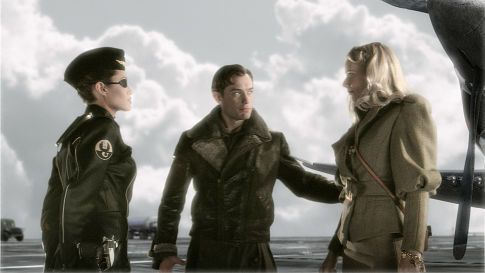
Film 2010 #20 – Sky Captain and the World of Tomorrow


Sky Captain and the World of Tomorrow (2004, dir. Kerry Conran)

Starring Jude Law, Gwenyth Paltrow, Angelina Jolie, Giovanni Ribisi, Sir Laurence Olivier
Nostalgia is a strong element in mainstream cinema. You can look at many of the franchise films (Transformers, Batman, Harry Potter) and see that their popularity is due in part to the emotions the audience associates with the properties in how they experienced them as children. George Lucas pioneered the blockbuster nostalgia film, first with American Graffiti, but more importantly with the Star Wars series, based on the science fiction movie serials shown in theaters from the 1930s up through Lucas’s childhood in the late 40s/early 50s.
It’s the same sense of nostalgia that informs Kerry Conran’s Sky Captain film. It’s clearly modeled on the fantastical and cliffhangered films of yesteryear. Sky Captain borrows in particular from Buck Rogers, Flash Gordon, Arthur Conan Doyle’s The Lost World, Fritz Lang’s Metropolis, and DC Comics’ Blackhawks. This is pure cinematic escapism with no real subtext. Its clear the director is quite fond of The Wizard of Oz as well and that provides any sort of under the radar thematics.
The look of the film is incredibly striking, done washed out colors that are only one notch above black and white. I could see the CG being criticized for not looking realistic but I think its done in the stylization of Sin City. It also made me think of what computer generated effects would have looked like if they had existed in the 1930s for a film like this. The director used archive footage of Sir Laurence Olivier for the film’s villain, Totenkopf, and I’m completely at a loss as to why that actor was used. Olivier didn’t have a history of working pulp films, though he would have been very interesting in them.
Character development is appropriately stiff. This is the sort of film where you know there just isn’t going to be a significant character arc. The relationship between Sky Captain and his Girl Friday, Polly Perkins, is Han & Leia revisited. Everything is very combative and jealous, barely concealing how deeply the two care for each other. I actually laughed at a couple moments between the two and found their back and forth exchanges appropriate for this type of film.
At the end of the day, this is a film purely about the visuals and nods to its source material. It has much more heart than a Transformers and its apparent much love went into making it. A fun film that won’t change your life, but will appeal to imaginative kid in ya.

Film 2010 #19 – Big Night


Big Night (1996, dir. Stanley Tucci, Campbell Scott)

Starring Stanley Tucci, Tony Shaloub, Minnie Driver, Ian Holm, Alison Janney, Marc Antony, Isabella Rosselini, Liev Schrieber, Campbell Scott
The senses of smell and taste are hard ones in the realm of film. To convey them with an absence of any true manipulation of the nose and tongue seems almost impossible. That is why this small independent feature is so impressive. As each course of the traditional Italian meal is presented the aromas and flavors pop off the screen. But as much as Big Night is about food, it is also about film and art in general.
Set in the late 1950s, the film follows Primo (Shaloub), the temperamental chef and his brother Secundo (Tucci), his desperately entrepreneurial brother. Secundo struggles to make their small restaurant Paradise a success, which is not helped by the traditionalist attitudes and unwillingness to budge by Primo. A bit of a boon comes along in the form of their rival Pascal (Holm) telling them he will tell his friend Louie Primo, the popular Italian crooner, to stop at the brothers’ place when he comes to town. This sets Secundo into preparing a massive feast worthy of Prima’s lips. Secundo also balances his relationship with Phyllis (Driver) and his affair with Pascal’s wife (Rosselini).
The origins of this film came when Tucci was working on a film he absolutely hated. On the side, he worked on the script for Big Night with a friend and eventually went to Campbell Scott to help him direct and Oliver Platt to produce. Because of the subject matter and this being a film made by actors, thematically it is addressing the conflict between making profitable films and making artistically honest films. As easy as it would be to say that Primo’s unwavering stance on traditional Italian cuisine is honorable, it can also be flipped and seen as destructive. The film leaves the brothers in a very shaky place, quite aware that they don’t have much longer in their establishment.
The film is also a wonderfully clever comedy. There is a lot of language play with many of the major players being Italian immigrants. One particular exchange occurs between Tucci and Shaloub, when the latter uses the phrase “raining outside” and Tucci jokingly comments that it’s better than it raining outside. This joke is completely lost on the elder brother and very humorous back and forth results. The major feast the film is built around is also full of very funny moments, one customer in tears exclaiming that her “mother was a terrible cook” after partaking in Secundo’s masterpiece of a meal.
Big Night is a great quiet film made by people who truly love what they do. It comes across in every frame that this is a project that they worked hard on but enjoyed every minute of. And if you don’t have a craving for rissoto or the film’s chief dish, timpano at the conclusion than I would be shocked.