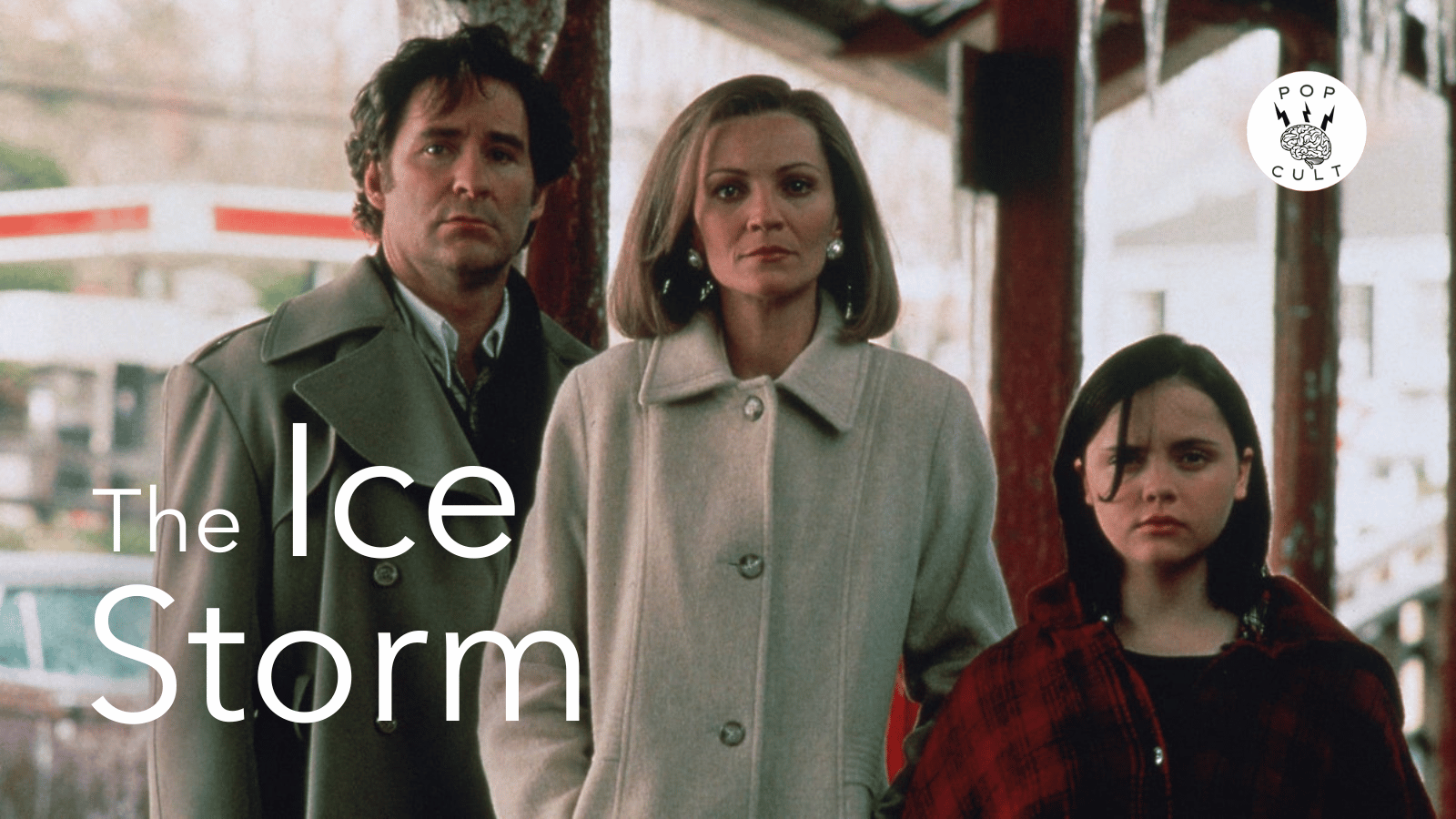
Movie Review – The Ice Storm

The Ice Storm (1997)
Written by James Schamus
Directed by Ang Lee

In our series “Hazy Shades of Winter,” we’ll be looking at films set during winter that also exude the cold, lonely feeling that the season can often bring about. Winter has often been seen as a necessary time of death in many cultures, with the spring being a renewal period. As a result, wintery films often feature themes of grief and desolation or even more interesting, deep self-reflection. As you’ll see in this series, characters often come to significant revelations about their current status; this may be the realization that a marriage is over or the recognition that a person has lost their religious faith. In the winter, the leaves have all fallen away, trees are laid bare, and there is nowhere to hide your secrets.

Continue reading “Movie Review – The Ice Storm”

TV Review – Disclaimer

Disclaimer (2024)
Written and directed by Alfonso Cuaron

Alfonso Cuaron is a filmmaker who has delivered some art that wowed me over the years. Children of Men is one of the best post-9/11 films to have come out. Watching it now feels prophetic as a study of social collapse in Western societies that cannot handle the refugees they created. His Harry Potter film is the only one with merit outside of being part of the franchise. I was slightly less impressed with Gravity, but Roma is a fairly good movie told from a privileged point of view. I don’t always love his work, and Disclaimer falls into that ambivalent category.

Continue reading “TV Review – Disclaimer”

Movie Review – Arabian Nights

Arabian Nights (1974)
Written by Dacia Maraini and Pier Paolo Pasolini
Directed by Pier Paolo Pasolini

Pier Paolo Pasolini would be dead a year after Arabian Nights’ release. It was the final film in his Trilogy of Life, preceded by The Decameron and The Canterbury Tales. Of all his work, it was the first to fully embrace queerness. Pasolini was a homosexual who existed in a strange tension with the Catholicism in which he had been raised. His work often looked to the past to comment on or understand some aspect of the future. Instead of focusing on the misery of the peasant class, Pasolini sought to display the joy experienced by those people the wealthier parts of society often dismissed. These classic stories that had shaped so many people’s imaginations were the perfect soil from which to grow that seed. 

Continue reading “Movie Review – Arabian Nights”

Movie Review – The Decameron

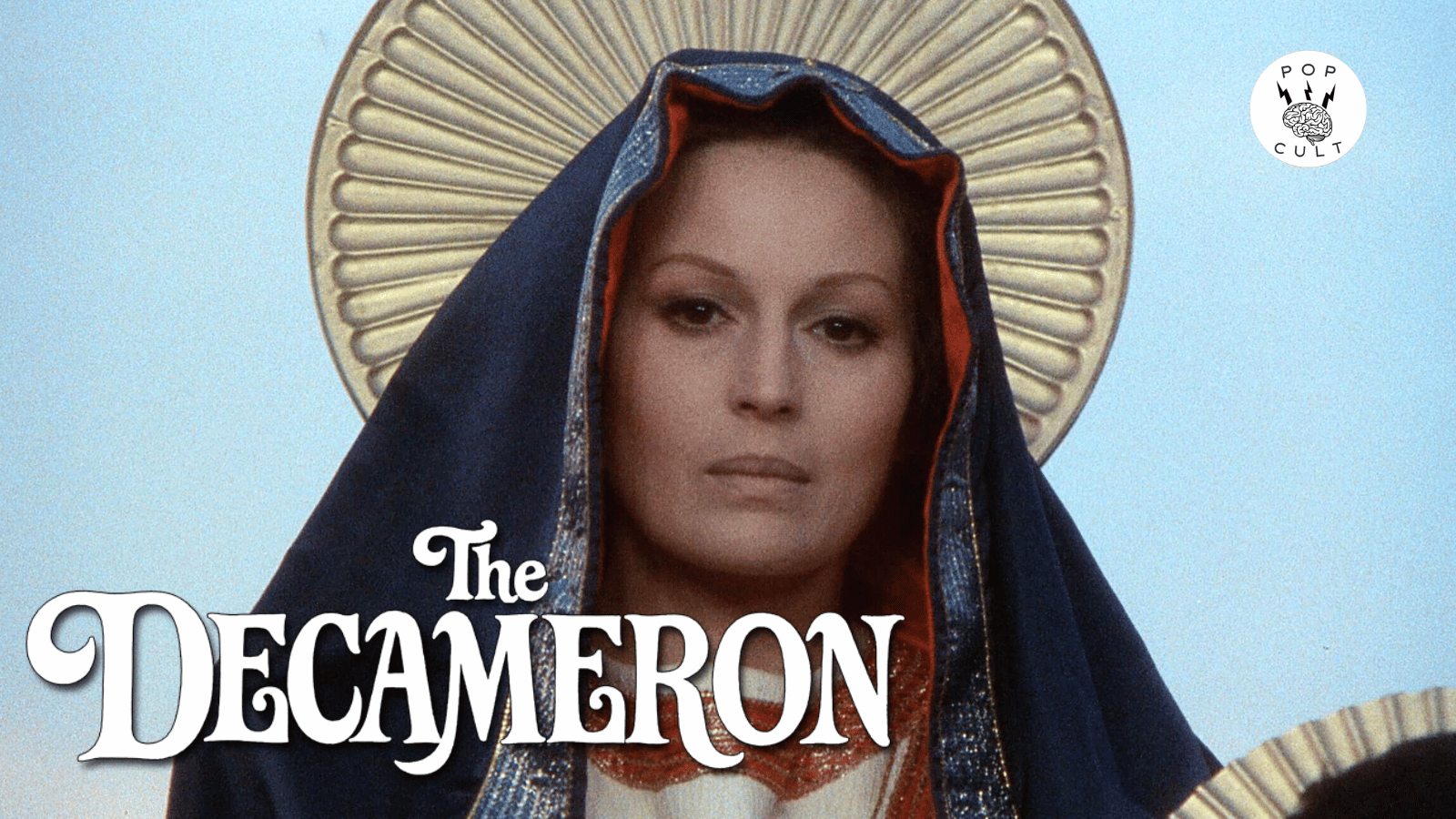
The Decameron (1971)
Written and directed by Pier Paolo Pasolini

While Pier Paolo Pasolini was fond of adapting classic pieces of literature, he wasn’t keen on making them period-accurate. Instead, he sought to use these foundational texts of Western civilization as critiques of the contemporary world. Changes to details like locales were commonplace to get his point across. This is why he transplanted Salo from revolutionary France to the era of Mussolini in Italy. The Decameron doesn’t see a shift in time; it’s still set in 14th-century Italy, but in the southern region where characters speak with a prominent Neapolitan dialect. Pasolini saw this as a commentary on southern Italy’s exploitation at the hands of the wealthier north.

Continue reading “Movie Review – The Decameron”

Movie Review – Medea

Medea (1969)
Written and directed by Pier Paolo Pasolini

You hear about Medea’s homeland long before you see her. The film opens with the usurping of King Aeson and Jason, his son, being put in the care of the centaur Chiron. Chiron knows that one day, Jason will travel too far away from Colchis and steal the golden fleece. The film shifts to an almost documentary-like portrayal of an event on Colchis. We observe that the king’s own son is sacrificed, and Princess Medea, whose chief role is as a priestess, oversees the whole affair. It’s disturbing and portends trouble for Jason when he embarks on his eventual mission.

Continue reading “Movie Review – Medea”

Movie Review – Oedipus Rex

Oedipus Rex (1967)
Written and directed by Pier Paolo Pasolini

Pasolini had a deep interest in the mythic. In his early films, the mythic could be found among the peasant class that lived on the outskirts of post-war Rome as it was rebuilt into a modernized city, complete with mass consumerism. Despite being a very modern type of person – queer, atheist, communist – Pasolini was constantly returning to the past, especially to myths & fables where symbolism provided a mystical explanation for how the world came to be what it is. After experimenting with it in a short film, this was the director’s first feature-length color movie. The result is a picture where Pasolini pushes his filmmaking to new heights but still stumbles along the way.

Continue reading “Movie Review – Oedipus Rex”

Movie Review – The Gospel According to St. Matthew

The Gospel According to St. Matthew (1964)
Written and directed by Pier Paolo Pasolini

It may seem like an incredibly odd match. A queer, atheist, communist Italian man making a film about the life of Christ. Even more bizarre, it was In an effort to find relevance in the landscape of the post-war world,  Pope John XXIII had asked for an audience with contemporary non-Catholic artists. Pasolini had been raised in the Church and accepted the invitation, knowing so much of his identity clashed with the institution. The meeting occurred in Assisi, and the subsequent traffic jam caused by the Pope’s presence in town left the filmmaker stuck in his hotel longer than he had expected. Pasolini claims he paged through a Bible in the hotel room, reading through each of the Gospels and settling on Matthew as the perfect one for the film he had in mind. His opinion was that the three other Gospels embellished or lacked a clear perspective on Christ; Matthew’s gospel was the most human. 

Continue reading “Movie Review – The Gospel According to St. Matthew”

Movie Review – The Face of Another

The Face of Another (1966)
Written by Kōbō Abe
Directed by Hiroshi Teshigahara

Hiroshi Teshigahara found his cinematic muse in the writing of Kōbō Abe. He directed an adaptation of Abe’s novel Woman in the Dunes two years prior. He returned to the author’s work for his next film, The Face of Another. Teshigahara’s relationship with filmmaking was very tempestuous, though, making a film in 1972 and abandoning the medium for nearly a decade. He pursued other interests like calligraphy, ceramics, and ikebana (the art of flower arranging, of which his father was seen as the master). While he returned to film, Teshigahara never recaptured the height of this period when he and the work were perfect. Western critics dismissed his work at the time of release, but a new appreciation has grown in the following decades. 

Continue reading “Movie Review – The Face of Another”