Book Club Announcement – March 2017: Bird Box

Bird Box (2014, Josh Malerman, Ecco)

51bin6sub1l-_sx321_bo1204203200_

The apocalypse came and with it was the poisoning of a sense: sight. Whatever is out there, when you gaze upon it, you become a violent raging killer. Malorie, a single mother in Detroit, lives with her windows boarded up and her children blindfolded on a daily basis. They must learn to grow their other senses because what they might see beyond the door of their home could destroy them.

“Malerman excels at building tension with his eerie descriptions of blindfolded characters groping their way through a world of the dead, aware that something inhuman and beyond comprehension might be observing them, or possibly standing right in front of them. Malorie’s trek down the river is frightening, but even more unsettling is the constant awareness of the characters’ helplessness in both timelines, and the possible price of any attempt to alleviate it: Every time they hear a strange noise, encounter an unnervingly unfamiliar object, or feel what might be a gentle touch from an unseen, alien creature, they’re tempted to lift their blindfolds and settle their fears—possibly at the cost of their sanity, and then their lives” – The AV Club.

PopCult Book Club – February: The Pulse Between Dimensions and The Desert

The Pulse Between Dimensions and The Desert by Rios de la Luz

pulse-between

Rios de la Luz is a Xicana Oregonian who writes weird fiction. This is her debut collection and is purported to have a wild and exciting variety of the strange and supernatural. Join me, won’t you?

“In The Pulse between Dimensions and the Desert, Rios de la Luz’s writing is electric and alive. It grabs you and pulls you into her universe, one that is both familiar and foreign, a place where Martians find love, bad guys get their ears cut off, and time travel agents save lost children. In this innovative, heartfelt debut, de la Luz takes her place as a young author that demands to be read and watched.” —Juliet Escoria

PopCult Book Club January Review – A Once Crowded Sky

A Once Crowded Sky by Tom King
(Touchstone, 2012)

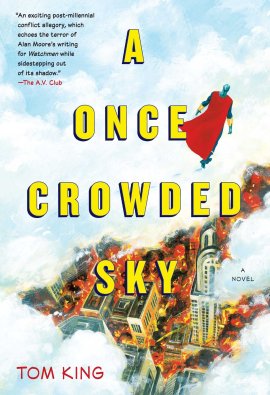
once-crowdedOver the course of 2016, I became enamored with the writing of Tom King. King was responsible for penning Marvel’s The Vision as well as The Omega Men, Batman, Grayson, and The Sheriff of Babylon (Vertigo). I have yet to read Grayson and still have half of Babylon to read, but I can safely say he has become one of those writers I will actively seek out. This led to my discovery of his 2012 novel A Once Crowded Sky. King was an intern to writer Chris Claremont before joining the CIA and becoming a counterterrorism officer. After a decade he left that position so he could write the novel we’ll be talking about. This would eventually transition into his current spot writing exclusively for DC Comics now.

A Once Crowded Sky feels like Watchmen and The Dark Knight processed through a post-9/11 lens. The world of the actual comic didn’t seem to produce a definitive work of this period like it did during that. While never directly addressing the War on Terror, the novel presents a world where the literal superpowers are gone, and a wave of bombings terrorize Arcadia City.

The story focuses on a number of character with chapters titled like issues of fictional comic books featuring them. Foremost is Penultimate, the sidekick of the deceased Ultimate. Ultimate was an android, much like The Vision or original Human Torch, whose creator was killed at the moment of creation. Inspired by a Superman comic he glimpsed early on, Ultimate became a caped crusader. He ends up being responsible for the death of Penultimate’s parents during a battle with a villain. He adopts the young boy, nd the two become the most iconic heroes in the city. An event occurs before the start of the novel where a cosmic force known as The Blue began to leak into the universe. This phenomenon caused villains to commit mass suicide and threatened to tear reality apart. Ultimate sacrifices himself by taking on the powers of all the other heroes and flying into the heart of the force. Penultimate became afraid in those final hours and fled leaving him the only remaining superhero, and a lot of resentment from his former allies.

One of Pen’s tenuous allies is Old Soldier, a version of Captain America who was kept in a sleeper state until the United State’s government needed his services, dating back to World War II. He is a deeply troubled figure who resorts to violence as instinct but always with a pained heart and full of regret. In the years before The Blue he was in a relationship with Masallah, a devout Muslim heroine. Their relationship is lightly touched upon and was one of those parts of the book I would have loved to see developed more.

Filling out the supporting cast are Strength, a combination of Shazam and Wonder Woman, who greatly resents Pen after how much she sacrificed. There’s Devil Girl, a very enigmatic young woman who Old Soldier seems to remember from throughout his life and claims to be the actual Devil. Star Knight is a successful businessman who uses his wealth to continue his crime fighting. There are a lot more and King is very good at filling in the blanks on each one just enough so it feels like a lived in world. He also has a penchant for ending their lives quickly and tragically, in line with the fear of terrorism the city is under through most of the book.

There are moments in the middle of the book where the story feels like it is a bit stalled. But when the third act begins things go fast and character’s have a heavy finality brought down on them. The themes of the book deal with sacrifice and facing your calling in life. So many of the characters either want to push away what they once were or desperately seek to get it back. Once upon a time they all knew who they were and then an event forever changed their world and left them stumbling about in the dark trying to relearn how to be a person. A Once Crowded Sky feels very much a piece of literature of our time, but with ideas and themes that keep it from becoming an irrelevant relic for future readers.

PopCult Book Club Announcement #7

A Once-Crowded Sky by Tom King

once-crowded

He was definitely my favorite comic book writer of the year thanks to Omega Men, The Sheriff of Babylon, Batman, and The Vision. Once I saw he had written a superhero-themed novel I decided to give it a chance.

“King’s story revolves around the only superpowered hero left in the world—the one who stayed behind with his wife when all the others sacrificed themselves to save the world. As a strange new violent terrorism begins destroying parts of cities at random, PenUltimate needs to decide whether he wants to be a hero again…an enjoyable postmodern superhero story.” (Washington City Paper)

Pop Cult Book Club Review #6: The Visible Filth

The Visible Filth by Nathan Ballingrud (This Is Horror, 2015)

the-visible-filth-nathan-ballingrud-horror

One trend I’ve noticed almost my entire time on the Internet in places like 4chan or seedier corners of Reddit is gore posting. Not once has the idea of looking at the human body in various states of mutilation struck me as intriguing. The times I’ve accidentally stumbled upon these pictures have left me frantically trying to scrub their afterimage out of my brain.

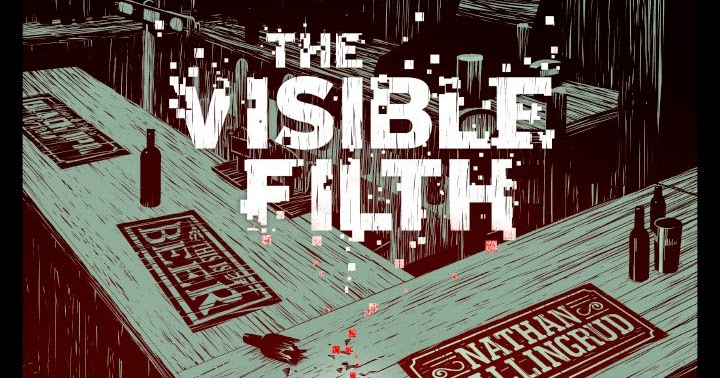
In The Visible Filth, Will, the bartender at a dive in New Orleans stumbles across a bedazzled cell phone after a fight in his place of work. Taking it home with the intention of finding the owner he stops in his tracks when text messages and strange images are sent to the device. Eventually, Will and his live-in girlfriend see a series of images that imply a ritual killing. Despite the mystery, the story is not concerned with solving the case, rather looking at the way we get lost in despair and pain.

Will comes home to find his girlfriend lost in an internet rabbit hole of investigating a book glimpsed in one image. She is never close to finding any closure or answers and seems to be physically deteriorating as a result. Ballingrud grounds the work by continually shifting the focus back to Will’s feelings for a frequent bar patron, the person whose relationship status never seems to line up with yours. There’s also one of the participants in the bar fight who lives in an apartment over the bar. Will visits and finds the man refusing to go to the doctor as the wound from a broken glass bottle festers and grows worse. The story would also suffer if we didn’t have a believable character making believably foolish choices. In this situation, we would all be tempted with curiosity to look again. It’s a lot packed into 68 pages.

The Visible Filth delivers something imperative that a good horror story needs: Incompleteness. A piece of mystery writing gives you a series of steps and then an answer. Horror should give you some of the steps but never answer. The horror is the ambiguity of what you witness. The story behind the photos on the phone are never going to be explained, and as a result, they haunt you and keep picking away at your sanity, at your trust in the reality of the external world. And Ballingrud’s external world is very textured and visceral. The opening of the text lays out a tactile space where the story will unfold:

The roaches were in high spirits. There were half a dozen of them, caught in the teeth of love. They capered across the liquor bottles, perched atop pour spouts like wooden ladies on the prows of sailing ships. They lifted their wings and delicately fluttered. They swung their antennae with a ripe sexual urgency, tracing love sonnets in the air.

I can’t think of too many better ways to convey a sense of filth. We’ve all been in this bar. The sticky floors our shoes cling to. The every present stench of background cigarettes. The watery slosh of cheap beer. The sense of place is so strong and claustrophobic at times. Similar scenes take place at Will’s apartment with briefly glanced figures in the shadows. The Visible Filth will put you in the shoes of its protagonist: uncomfortable, left without answers, everything a good horror story should be.

Pop Cult Book Club Announcement #6

the-visible-filth-nathan-ballingrud-horror

The book for December 2016 will be The Visible Filth by Nathan Ballingrud.

After a bar fight, a man discovers a cell phone left behind. He decides to hold onto the phone until the owner contacts him. And then he begins receiving messages. The book is a nice short novella for the busy holiday season clocking in at 68 pages.

“This isn’t the type of horror you can easily categorize, put inside a box and say, ‘THIS. This is what makes this story scary.’ The Visible Filth is deeply unnerving and you’re not sure why. It has all the requisite thrills and chills, but it’s what’s under the surface that will be your undoing.” Joshua Chaplinsky, LitReactor.com

Pop Cult Book Club Review #5 – Swift to Chase

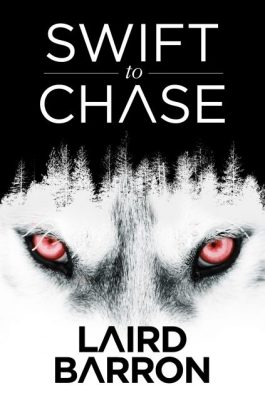
Swift to Chase: A Collection of Stories by Laird Barron (JournalStone)

swift-to-chase

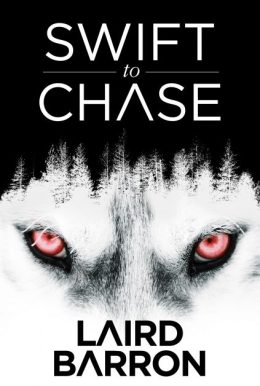
Laird Barron’s latest work is everything I ever wanted out of American Horror Story but never got. It is the best season of a horror series you could ever pick up. I admit this was not the book I expected to get. Last year I worked my way through Barron’s three previous collections, saving his novels and novellas so I didn’t lose all his literature in one all you can eat buffet. His work touched on the same themes of cosmic existential horror developed by Lovecraft and Barron was placed in the same cluster of authors working in “weird horror.” His collection Occultation is one of my favorite works of horror literature with “Mysterium Tremendum” and “The Broadsword” being stories that profoundly affected me after years of consuming horror media.

Swift to Chase represents a significant sea change in the mythos that Barron will be exploring for the foreseeable future. The distant tentacled cosmic gods and Carcosa are gone. Barron never really did a Lovecraft pastiche, but there were cultists and cold alien presences that worked to undermine humanity. In this collection, we’re introduced to a brand new mythology that does touch on Lovecraft but brings in 1980s slasher tropes, MKULTRA like conspiracy theories, and a plethora of new concepts. Each story was published at different times in various publications before being collected here, but you would never know because they complement and flow into each other with such precision.

Told in non-chronological order, the stories all revolve around a small town in Alaska that seems to be the focal point of some evil presence. A house party held in 1979 acts as the hub where many of the stories return to, a night when a masked killer rampaged through the house and the survivors are cursed into the rest of their lives. The standard narrative conceits you come to genre lit with are tossed out the window and instead Barron gives us a very postmodern, deconstructed horror novel. It might seem like hyperbole, but I kept thinking back to James Joyce as I read the collection. There is such a mastery of language and particular character voice that reading the collection is less about finding plot threads but discovering the rhythm of the writing and letting its flow carry you through.

Barron refuses to present us with one type of protagonist, a la Lovecraft and makes certain stories are told from multiple perspectives and diverse voices. “Ardor” features a gay man hired to hunt down a missing horror film actor believed to have fled to the Alaskan wilderness. “(Little Miss) Queen of Darkness” features the story of a gay teenager involved in the occult club that the evil spawns out of in Alaska. Barron never plays these characters as “fey” or “limp-wristed.” Their sexuality is just one of many aspects of their character, and it’s not shied away from in the same way a straight character’s sexuality can play a role in their narrative.

The focus of the first third of the collection is Jessica Mace, the survivor of a brutal attack that left her neck with a signature scar. Her voice is that of a hardass, calloused by her experiences back in Alaska and now on the run from an evil that pursues her across the continental United States. Her story is finally told in the mind-blowing fragmented narrative of “Termination Dust.” There’s Julie Vellum, the captain of the cheerleading squad surrounded by hangers-on who ends up having an up close encounter with evil after trying to hire faux lounge singer Tony Clifton to meet her fan father in “Andy Kaufman Creeping Through the Trees.”

Upon finishing the collection, my first thought was “I want to read that again,” something I rarely think even when I have loved the book. I usually find myself ready to pick up the next text but this one has such a strong gravity, and it is pulling me back in. I highly recommend Swift to Chase as a magnificent piece of literature. I was reminded of the weight and horror I’ve read in Cormac McCarthy and the language complexity of Faulkner and Joyce. If you look around the internet, you’ll see many similar gushing reviews. These are not hyperbole, and I cannot wait to return to this world and explore the mythology again.

PopCult Book Club: November Announcement

This month’s book will be Swift to Chase by Laird Barron. Barron is a horror author responsible for the short story collections Occultation, The Imago Sequence, and The Beautiful Thing That Awaits Us All. I have not tried to hide the fact that I am an immense fan of Barron’s work, particularly The Beautiful Thing collection which includes some of the most frightening short stories I have ever read. This most recent collection has been receiving very high praise and I can’t wait to dig into it with you.

swift-to-chase

“This book will go down as one of the best horror story collections of the decade. This I promise you.” – Max Booth III, Litreactor.com
“Swift to Chase is the best collection of short fiction that Barron has put together so far, and likely to be among the top such books to be produced in our current decade.” Shane Douglas Keene, This Is Horror.

PopCult Book Club Review #3 – Experimental Film by Gemma Files

Experimental Film by Gemma Files

(ChiZine Publications, 2015)
exp

Lois Cairns is an ex-film critic/ex-film professor who seems to be mired in a permanent funk. Her only son is on the extreme end of the autism spectrum and her mother and husband seem to have more love for the child than she. Feeling hopeless personally and professionally, Lois stumbles across an experimental film made by a wealthy Toronto art scenester that incorporates some fascinating found footage. Doing a little background work leads Lois to discover the secret film career of Mrs. Whitcomb, a turn of the century philanthropist who threw the majority of her husband’s wealth into the work of an unscrupulous medium. A side project appeared to be the filming and re-filming of an obscure Eastern European fable about Lady Midday, an angelic entity that tormented those who refused to toil in the fields. As Lois investigates further, she uncovers dark truths about Mrs. Whitcomb and the story of Lady Midday.

Experimental Film does a lot of world-building, almost 80 percent of the text is world building. Told from the first person point of view of Lois Cairns, the reader is educated on a large number of the topics, the main one being the Toronto academic film scene, and in some instance, the way film is funded by the state in Canada. There was a point around halfway through the novel that I began to feel fatigued from the amount of digressions being taken from the mystery of the story. Any time a supporting character is introduced, we’re given multiple pages of prefacing about who this character is in the larger film scene, rumors and relationships in Toronto that may or may not have any weight in the larger narrative, and just lots and lots of details. You often get lost in the details that the path of the overarching story becomes lost.

The horror that the story is leading is a very original one, but its reveal is a rough sequence in the novel. Lois and a side character are in a literal race against time to prevent the “gateway” from being opened that will allow the entity to kill again. It plays out as the type of confrontation I do not seek out in my horror fiction, a little too direct and too on the nose. The direct battle leads to a disappointing resolution and happy ending that I believe undercuts the entire horror of the piece.

There are excellent ideas here and a few scenes that are captivating, but the overall piece was disappointing. I was all right with Lois being a less than admirable character; I enjoy characters that are rough around the edges. Where the novel falls apart is with its constant digressions, losing the very delicate tension and atmosphere that great creeping horror needs to build.

Discussion Questions:

Experimental Film poses the idea that film can be a form of haunting. As the back catalog of film, both professional and amateur grows in our culture, how do you think this phenomenon could be used effectively in horror fiction and media?

Lois Cairns is a protagonist who does not embody the benevolent, virtuous figure we see in a lot of popular fiction. She doesn’t adhere to traditional maternal expectations and is unapologetic for it, finding a way of communicating with her son that works for them both. How do you feel about unsympathetic characters in fiction? What about them helps you connect with their character or do you feel yourself disconnected?

PopCult Book Club #3 Announcement

The third book for our Book Club is here! Experimental Film by Gemma Files.

exp

Lois Cairns is a former film critic turned professor with a son that has severe Autism. Her life feels like it’s out of her control. She feels unable to pursue her dreams of being a filmmaker or connect with her child. Then she receives an invitation to attend the unveiling of a seemingly lost piece of early 20th-century film. The malevolent force behind this piece of film begins to worm its way into her life threatening to tear it all apart.

Looking forward to this read and something that will hopefully be appropriately creepy for October.

Purchase this book here!