Retro Review – Legend (1985, dir. Ridley Scott)

legend

I can remember being in my grandmother’s living room at her home in Clarksville, Tennessee. I was about seven or eight. My Uncle Thomas has control of the television and it was on the mysterious and forbidden HBO. The film playing captivated me with the dreamlike world being presented on screen and when the moment came that the towering demonic villain of the piece stepped on screen I was absolutely floored. Later, I would learn this was the film Legend.

Legend is about as classical of a fairy tale you could get. There’s a beautiful princess, Lily (Mia Sara) who plays in the forest with a child of nature named Jack (Tom Cruise). A foolish encounter with a pair of unicorns plunges the world into the beginnings of eternal shadow. It’s up to Jack and band of dwarves and fae to defeat the fiendish Darkness (Tim Curry) before evil overtakes the world for all time.

After watching The Force Awakens I realized more than anything that film is able to perfectly recreate how it *feels* to watch Star Wars for the first time when you were a kid. I don’t know how to explain it but it’s a very primal, emotional thing that Abrams is able to tap into. In Legend, Ridley Scott accomplishes the same sense of nostalgic wonder on the topic of reading a fairy tale. Every single archetype looks and plays so perfectly. Tom Cruise pulls of the generic hero who has received the Call. Mia Sara’s Lily is ethereal in her beauty but also brings a strength to her character not typically seen in fairy tales. It’s by no means a feminist portrayal, but her confrontational scenes with Darkness show she is a character able to overcome her initial fears. The supporting cast of goblins, dwarves, faeries, and demons are everything you remember from laying in bed and leafing through a hardback anthology of fairy tales.

Even now, some twenty-plus years later, the film still brings out that sense of slipping into a dream. This is accomplished thanks to two key crew members: Assheton Gordon, the production designer, and Rob Bottin, makeup designer. Gordon was a British film veteran having worked on some of the great British New Wave films of the 1960s (The Knack…and How to Get It, Wonderwall, The Magic Christian) and was part of the crew of Michelangelo Antonioni’s countercultural crime thriller Blow-Up. I don’t believe Gordon had done production design on a film of this scale before, but he produced a brilliant world. Filmed entirely on the famous 007 soundstage at Pinewood Studios, the entire enchanted forest and hellish citadel of Darkness were perfectly realized. It is obvious that our characters are moving through an artifice of nature, but I think that helps add to the dreamlike qualities of the picture. It reminded me of Canadian director Guy Maddin’s work which intentionally lets its audience in on the layered reality of watching a film. The plan had been to shoot on location and if that had gone through I think the story would have suffered.

Rob Bottin handled makeup design and the variety of magical beings, both angelic and sinister, look wonderful. The obvious crowning achievement of the film is Tim Curry as Darkness. This is the definitive Devil. Massive black horns, piercing cat’s eyes, brilliant white fangs in a malevolent grin, goats hooves that tower him above the rest of the cast. Just from an engineering point of view this is a massive task. Bottin made his way up on some classic 1970s cheesy films (King Kong, Rock and Roll High School), but really broke out through his work with John Carpenter (The Fog, The Thing) and particularly The Howling. The most important part about his transformative work with Darkness, and the testament to Tim Curry’s prowess as an actor, is that neither the makeup or the actor ever overwhelm each other. It’s such a perfect synthesis of both crafts.

Legend did not do well upon its release. The plot is paper thin and character development is almost nil. But I would argue neither was something the film set out to do. Legend is a film about dreaming and about imagination. I suspect it still works to lure in the attention of children even today, evoking in them those ancient curiosities that have kept fairy tales alive in our culture for centuries.

Newbie Wednesdays – The Last Airbender

The Last Airbender (2010, dir. M. Night Shyamalan)

M. Night and I have a long history together. The first film I saw my freshman year of college was The Sixth Sense. It terrified me. Now, with a decade of film obsession behind me, it takes a lot to creep me out that badly, and I look at The Sixth Sense as a very sad atmospheric film, still good though. His next film, Unbreakable, is still one of my favorite comic book films, in that is captures a certain idea of superheroes that I’ve never seen another film come close to. About there is where my love for the director ended. I’ve seen every film he’s made in the theater, the only other director who I have done that with is Christopher Nolan, sort of the antithesis of Shyamalan. While Nolan produces better and better films, Shyamalan only gives diminishing returns. This latest, his first foray into adapting an already established property, is an utter disaster.

If you haven’t seen the Nickelodeon animated series Avatar: The Last Airbender (I’ve only seen the first five episodes) here’s the premise. In a fantasy world, the planet is ruled by the four elemental nations: Fire Nation, Air Nation, Earth Nation, and Water Nation. A hundred years before the start, the Air Nation was wiped out and the Fire Nation began its quest to spread its empire across the globe. Two Water Nation children, Katara and Sokka, discover a little boy frozen in ice. Once thawed, they learn he is Aang, the last of the airbenders and the one destined be the Avatar, meaning control over all four elements. Searching for the Avatar is Prince Zuko, the exiled son of the Fire Nation king. He sails the world, hoping to prove his might to his father by bringing him the Avatar. Zuko’s forces become aware of Aang and epic battles ensue.

The concept here is ready made for a film franchise, and it has the potential to be as popular and well loved as Harry Potter. It’s a rich, complex universe that doesn’t pander to kids. It treats them like intelligent beings who can handle more than stand alone episodes. The film however, creates a narrative mess. One of the elements of screenwriting that you’ll find is seen as a no-no is voice over exposition. Its passable at the beginning of the film, just to set up the story, but when large chunks of the movie are rushed over and explained with voice over you have a major problem. The sort of things being summed up in a sentence by Katara, the narrator, are romantic relationships, something that you have to earn from your audience, make us care that these two people get together. Not so, and Shyamalan has never been too good with romantic relationships.

This is an incredibly faithful adaptation in terms of story elements, hence the rushed exposition as Shymalan tried to condense 20 episodes of the first season into 90 minutes. Motivations are cast out the window for the sake of hitting plot points. The most glaring omission from the the series though, is the sense of humor. In the cartoon Aang is a mischievous klutz who is both the hero and the comic relief. Katara and Sokka are also not great warriors and don’t master their abilities in the series near as quickly as their movie counterparts did. To delete the humor and sense of growing into these powers sort of turns the film into something that an unfamiliar audience member won’t enjoy and neither will a die hard fan of the cartoon. There really is no audience for this type of film, and its sad because the failure of this picture probably dooms the chances of a different director coming onboard and correcting things. And once again, we have to wonder how many chances does Shyamalan get before they revoke that DGA card?

The Summer Blockbuster: 1975 – 1985

It began with a great white shark.

It wasn’t until the mid-70s that the concept of summer being a time to release big budget, special effects driven pictures came into the zeitgeist. Looking at the current wave of summer movies, its easy to see that science fiction and fantasy dominate, but back in the 1950s and 1960s the majority of these genre films were low budget and full of poor acting. The novel Jaws by Peter Benchley was purchased by Universal in 1973 and went through two directors before the studio settled on the relatively green Steven Spielberg. Universal’s first choice had been John Sturges (The Magnificent Seven) and then Dick Richards, who was fired after continually referring the shark as “the whale”.


To Universal, Jaws was going to be a successful film, but they never expected to be as huge a hit as it became. On June 20th, 1975 the picture was released nationwide, meaning it opened in Los Angeles and New York as well as smaller venues across the country. In the past, a film would open in a larger market and slowly spread across the country. Many film historians see this business move as the one that ensured Jaws‘ success. Up to this point the late 1960s and early 1970s had been dominated by artist driven pictures, and the studios had given up the reigns to young and headstrong young directors with a vision. Directors like Bob Rafelson (Five Easy Pieces) and Hal Ashby (Harold and Maude) had been the kind of filmmakers producing studio pictures, something very unlikely even today. In many ways, by using Spielberg, a contemporary of these young directors, but saddling him with a very studio controlled and non-character driven film, the studios were attempting to reassert their control. But the success of Jaws was nothing compared to Star Wars‘ release two years later.

There’s not much to say about Star Wars that isn’t well-known already. George Lucas, after establishing himself with American Graffiti and THX-1138, released his science fiction epic using the tropes of the serialized films of his childhood. Unlike Jaws, Lucas didn’t have a plethora of studio support behind his film and clashed with his crew, who were veterans of the film industry while Lucas was seen as an upstart. After missing its Christmas 1976 release, 20th Century Fox moved it to May 1977. Early director’s cuts were screened for Lucas’ friends, including Brian de Palma and Steven Spielberg and their reactions were disappointing. Every thing seemed to be pointing at Star Wars being a colossal failure. Lucas finally screened the picture to 20th Century Fox executives and was shocked. They loved it. One executive admitted to crying during the film at how beautiful it was, and Lucas was completely blown away from getting studio approval on a film for the first time in his career.

However, instead of becoming a studio lackey, Lucas began to build his own quiet corner of the film industry and cleverly established production facilities for sound and other technical aspects of film to create a financial safety net.  Filming for The Empire Strikes Back began in 1979, with Lucas letting Lawrence Kasdan direct while Lucas supervised as producer. While the budget for Star Wars has been $11 million ($3 million over budget), Empire had a pool of $18.5 which, after a studio fire, became $22 million. Lucas always seemed to be struggling with the limitations of the contemporary technology to realize his vision. It can be seen in the concept art of Ralph McQuarrie, that Lucas wanted to make something so expansive and ground breaking. It wouldn’t be till 1999’s The Phantom Menace that he got his wish, while audiences felt the heart of the series was lost amidst masturbatory world building.

For most of the 1970s and 80s, Spielberg and Lucas dominated the summer movie. Spielberg went on to give us Close Encounters of the Third Kind and E.T. He then teamed with Lucas to create the Indiana Jones franchise, a film series that seemed to up the ante in terms of character based blockbusters. Harrison Ford has said in interviews that he is always much more eager to play Indiana Jones again, than Han Solo. With Indiana Jones and the Temple of Doom, Hollywood underwent a change that would shape the industry for decades to come. The level of violence in Temple challenged the MPAA’s standards and Spielberg desperately didn’t want the film to be slapped with the death sentence of an R rating. These Spielberg/Lucas films depended greatly on the viewer-ship of young audiences, particularly for the merchandising tie-ins. As a compromise, the MPAA invented the rating of PG-13.

One year after Temple, Spielberg released the Robert Zemeckis-directed Back to the Future, a film that combined special effects driven sci fi with the teen comedy. The film proved that you didn’t have to have Spielberg or Lucas directing a film to make it a huge success. Both Zemeckis and screenwriter Bob Gale were terrified that the film had not lived up to their vision and figured it would bomb. Audiences went crazy for it however, and critic Roger Ebert pointed out that at its core it shared a lot of thematic similarities with the beloved It’s A Wonderful Life. As we entered into the mid-80s, Lucas began to fade from the scene as a director and Spielberg would continue to top the grossing-lists. However, there were now a group of directors moving in to prove their own ability to pull audiences in.

Next: 1986 – 1995: Gump, Disney, and Ahnold.

Newbie Wednesday – The Imaginarium of Doctor Parnassus


The Imaginarium of Doctor Parnassus (2009, dir. Terry Gilliam)
Starring Christopher Plummer, Heath Ledger, Lily Cole, Andrew Garfield, Verne Troyer, Tom Waits, Johnny Depp, Jude Law, Colin Farrell, Peter Stormare

After filming the first half of this picture, director Gilliam learned the tragic news that Heath Ledger had died due to an accidental drug overdose. Gilliam is no stranger to films having to overcome obstacles before their release. His 1985 picture Brazil was the victim of an unexcited studio and Gilliam had to break the law to get his version of the picture shown. His attempt to make a film version of Don Quixote at the beginning of the century was ultimately scrapped when financial and natural conditions fought against him. With Imaginarium Gilliam found a way that the film could continue without Ledger’s presence and it hinges on the movie’s core theme: Imagination.

The movie opens in modern day London and follows a old time traveling show made up of the ancient sage Doctor Parnassus, his daughter; Valentina, his right hand man; Percy, and the boy in love with Valentina; Anton. Their show is no longer captivating to contemporary audience and during the opening performance a drunk man stumble through a mirror on stage that places him inside his own imagination. Parnassus has been in a centuries old struggle with Mr. Nick, the Devil who is in a competition to see who can collect the most souls before Valentina’s 16th birthday. If Nick wins he takes Valentina from Parnassus. Into this scenario comes an amnesiac man found hanging underneath a bridge. The man slowly but surely takes over creative control of the show explaining he has Parnassus best interests in mind. As the date moves closer to the bet’s end more of this stranger’s secrets are revealed.

The film is better than much of Gilliam’s more recent films and I credit that to his choice of working with co-writer Charles McKeown. McKeown previously worked on the scripts for Brazil and The Adventures of Baron Munchausen which are two of Gilliam’s strongest pictures. The story here can be a bit straining on the brain but its able to keep up with Gilliam’s visuals the whole way through. I also like the use of CG effects here not in an attempt to replicate reality (see Avatar), but to make surreal landscapes feel tangible. In my opinion, that should be the purpose of using CG in films. While I didn’t care for the story of The Lovely Bones is also did an excellent job of created fully realized surreal worlds.

The subtext in the film seems to be Gilliam’s own examination of his profession. Parnassus starts out as a man sequestered in a Tibetan monastery where he and his disciples sit around telling the story of the universe. He makes a deal with the Devil and travels out to make his fortune with these stories, being told he will be immortal if he does. Valentina is a living breathing creation and the idea of turning her over to the Devil is what drives Parnassus to fight for independence. In his desperation he turns to a smooth talker who assures him he will be present the show in the way the doctor wants, but instead we see the integrity of Parnassus slipping away.

Like most of Gilliam’s work this will never appeal to a mainstream audience. He is very much an artist who makes the things that amuse him and its always coincidental if they appeal to anyone else. If you are open to a film that prefers to play rather than dictate and hit plot beats then I think you’ll enjoy this picture.

Newbie Wednesday – Clash of the Titans (2010)


Clash of the Titans (2010, dir. Louis Leterrier)
Starring Sam Worthington, Liam Neeson, Ralph Fiennes, Gemma Artherton, Jason Flemyng

When I was 8 years old I went through the entire Webster’s Dictionary so I could catalog the Greek gods and monsters listed therein. Afterwards, I got the idea the library might have books on these things, and from there I devoured the stories of Greek mythology. Once, while visiting Nashville’s local to scale replica of the Parthenon around the age of 10, I began telling my mom and visiting aunt whom all the figures in the statues and carvings were. An man touring the structure began following and listening and remarked to my mom “Your son knows a lot!” I tell you these things to show that I am onboard when I hear about films based around Greek myths. How does director Louis Leterrier’s (The Transporter, The Incredible Hulk) remake of the 1981 fantasy film stack up?

Perseus, son of Zeus and a mortal woman has his adoptive family taken from him when they are bystanders to an vengeful act of the gods. The hero ends up in Argos, where its citizens are rebelling against the Olympian Pantheon and Zeus has decided either they all die or they sacrifice the princess to his beast, the Kraken. Perseus and a rag tag group of Argosian soldiers head out into the wilderness to figure out if there is a way to defeat the unstoppable beast. Along the way they battle giant scorpions, blind witches, a beast who bleeds acid, and finally the classic Medusa. Oh yes, there’s flying horses, too.

Why does Hollywood insist on continuing to cast Sam Worthington (Terminator: Salvation, Avatar) in films? The man is an uncharismatic bore. He has two acting settings: “grunt” and “brooding”. It can be said that the action films of the 1980s and 1990s were inane, but at least the leads were charismatic. Think about Schwarzenegger, Willis, Stallone, etc. They all had charming personalities that made us root for them. With Worthington you root for him out of default, he’s the protagonist on the screen so you hope he wins because that’s what mainstream cinema has taught you. I also was flabbergasted at the actors cast as gods. Why cast Danny Huston as Poseidon if you give him one line? Just cast an generic actor for the role! And Nicholas Hoult (About a Boy, Skins) as Eusebios, what a waste of great talent. And he’s a million times more charismatic than Worthington!

The plot is a mix of the original film, mixed with attempts to “bad ass” it up. It became apparent to me that the screenwriters and art directors seemed to want to make a God of War film rather than a remake of the 1981 Clash of the Titans. Every encounter feels like a stage in a video game, complete with boss battles. I can forgive discrepancies between the original myths and the film (Example: Pegasus is the name of one specific winged horse, in pop culture we refers to the species as Pegasi now), I’m not one of those fanboys who harumphs when they change a detail. I understand the need to create a fluid, organic script. However, there are some pretty glaringly dumb subplots in the film that were attempts to blend elements of the original picture. I also rolled my eyes at their attempt to be clever by giving Bubo the Mechanical Owl from the original film a cameo. Bubo has more charisma than Worthington, people!

At the end of the day, this is yet another dull CG-dependent action flick. Leterrier’s previous films have left me bored and with this one I was literally falling asleep halfway through. His upcoming Captain America movie has my expectations about as low as they could get. But, if you are hoping to cleanse your palette for Greek myth based flicks, Tarsem Singh (The Cell, The Fall) has one coming out November 11th, 2011 titled Immortals. Hoping he shows Leterrier how it is done.

Newbie Wednesday – How To Train Your Dragon


How To Train Your Dragon (2010, dir. Dean DeBlois, Chris Sanders)
Starring Jay Baruchel, America Ferrara, Gerard Butler, Craig Ferguson, Jonah Hill, Christopher Mintz-Plasse, T.J. Miller, Kristen Wiig

In 1981 we got Dragonslayer, which was a step up in the medieval film genre in terms of effects. In 1996 Dragonheart was released, and while its hard to dislike a film with both David Thewlis and Sean Connery, the picture never stuck with me as a re-watchable one. In 2002, the movie was Reign of Fire…and well, lets try to forget that one. The latest dragon-centric film is Pixar Animation’s How To Train Your Dragon, from the writer/director team behind Lilo and Stitch and Mulan. And how does this flick stack up against its fire-breathing brethren?

Hiccup (Baruchel) is the son of a gruff Viking king (Butler) whose village is regularly attacked by a variety of diverse dragons. During one of these attacks, Hiccup witnesses an elusive go down in the forest outside of his village and ventures into the wilderness to find it. The two are confrontational at first, but grow on each other. Simultaneously, Hiccup is being pressured by his father into being a dragonslayer. What is he to do as he begins to understand this creatures better than anyone in his village?

What this movie does best is put you on the back of a dragon. The flying scenes are far and away the best aspect of the picture, many times done from the POV of Hiccup. There’s also an interesting variety of dragons presented in the film, each with quirk that makes them unique and different. The look of the flick is thanks to cinematographer Roger Deakins (“No Country for Old Men”, and pretty much every other Cohen Brothers film ever). I also liked that the film focused on thinking your way through a problem over just rushing into battle. Hiccup’s tendencies to go to books and conduct scientific study pay off and save his father and the entire village.

I liked that the film shied away from previous Dreamworks ventures, which seem to rely so heavily on modern pop culture references. It felt more like a Pixar film in establishing its own universe. However, every character except for Hiccup feels underdeveloped. It would have been nice to get some backstory on the village and how their conflict with the dragons developed. Despite these hiccups (pun intended) in the story, its still one of the better and more intelligent films marketed towards kids.

Newbie Wednesday – Bunny and the Bull

Bunny and the Bull (2009, Paul King)
Starring Edward Hogg, Simon Farnaby, Veronice Echegui, Richard Ayoade, Julian Barrett, Noel Fielding

Note: This film has no planned release date for either theaters or DVD in the US. So, your best bet is to torrent the sucker.

“Come with us now on a journey through time and space”. If you are familiar with the immensely popular British series The Mighty Boosh then those are familiar words to you. The director of that series, Paul King, embarks on his feature film debut, bringing with him some familiar faces in supporting roles as well as the quirky aesthetic sensibilities of his television series.

The premise puts agoraphobic Stephen in the midst a year long hermit period. He is dealing with a trauma that occurred in Europe while he was on holiday with his friend Bunny. The two follow Stephen’s idea of fun by touring the various museums of the continent, but once Bunny takes the wheel things become a lot crazier. They meet waitress Eloisa who is looking for a way back home to Spain, and Bunny decides that once they arrive there, he is going to fight a bull.

The strongest thing this picture has going for it are the inventive visuals. King is definitely a peer to a director like Michel Gondry, in the way he intentionally lets the audience in on the hacked together set pieces. A fast food delivery bag becomes the setting for a flashback in a restaurant. A snow globe becomes the Swiss mountain chateau the men stayed in. A photograph of their train becomes a chain of photos, set against a landscape made of similar snapshots. The Mighty Boosh did the same, and it caused the universe to feel like a timeless fantasy-scape.

The plot on the other hand is not very strong. There’s no real depth to the two main characters, Stephen is a very stereotypical neurotic and Bunny is the typical crazy risk-taker. There’s not attempt to give us more about these characters or attempt to explain their motivations. The rest of the film is populated with set piece characters, such as the dog-milking Polish man, an innkeeper overly fond of her stuffed bear, and a former matador who uses a shopping cart with horns for practice. The film is very pretty to look at, and showcases the cleverness of the director aesthetically, I just hope he can find a richer level of writing for his next film.

Cinematic Television – Science Fiction & Fantasy

One of the television genres to really rise to the level of cinematic programming are those based around science fiction and fantasy. Television is full of shows that either go the hard sci-fi route (Stargate, Battlestar Galactica) or incorporate their elements more subtly (Lost).


Twin Peaks (1990 -1991, created by David Lynch and Mark Frost)
Starring Kyle MacLachlan, Michael Ontkean, Sherilyn Fenn, Madchen Amick, Sheryl Lee, Lara Flynn Boyle, Jack Nance, Grace Zabriskie, Ray Wise

There had never been a show like, and probably never will be another show like, Twin Peaks. The series was a perfect combination of the avant-garde sensibilities of filmmaker David Lynch and primetime soap producer Mark Frost. The show is at moment high camp and melodrama, then switching to tense neo-noir thriller, and over to creep-infused cinematic horror. The premise is incredibly simple: Young girl’s body washes up on the shores of her small Washington state town, FBI eventually called in to investigate. Out of this premise rises one of the most eclectic casts ever assembled on the small screen. Kyle MacLachlan plays Special Agent Dale Cooper, an investigator the likes of which you have never seen. He doesn’t put much stock in typical detective work, but rather relies on Eastern philosophy and his enigmatic dreams to guide the case. The series will introduce you to the wonders of the Log Lady, the Backwards Talking and Dancing Midget, The One-Armed Shoe Salesman, and a coffee percolator with a trout inside. You’ll never have coffee and pie the same way again. Though the series lacks horribly in the middle of its second season (Lynch was away from the series to work on a film), it is still light years better than anything you’ve ever seen on TV.


Battlestar Galactica (2004 – 2009, created by Glen A. Larson, Ronald Moore, and David Eick)
Starring James Edward Olmos, Mary McDonnell, Katie Sackhoff, Jamie Bamber, James Callis, Tricia Helfer, Grace Park, Michael Hogan, Tamoh Penikett, Aaron Douglas

When I first heard they were doing a remake of the cheesy Star Wars knock-off Battlestar Galactica I was a bit suspect. It wasn’t till 2006 that I actually sat down and began to work my way through the first two seasons of the series and was amazingly surprised. The names were the same, and original premise was fairly intact (Cylons destroy the Twelve Colonies, forcing a small fleet of ships to begin searching for a new home), but the themes and tone of the remake was startlingly fresh. What was done so well in BSG was that is stayed true to the great science fiction trope of being more about our present society and context, much more than any future environs. The series manages to capture a lot of tension in post-9/11 America, with characters finding it easy to dehumanize their enemies, debating if authority has the right to seize power in the midst of crisis, and approaching issues of religious conflict. Despite the first half of the third season being one of the most brilliant things ever, the show begins to crumble in the second half and never recovers during the final season. The show’s focus began to get tied up in trying to explain its overly dense mythology and characters behaved in erratic ways. The series is definitely one of the best science fiction series ever aired and spawned a spin-off prequel series, Caprica.


Lost (2004 – 2010, created by Jeffery Lieber, JJ Abrams, Damon Lindeloff, and Carleton Cuse)
Starring Matthew Fox, Terry O’Quinn, Michael Emerson, Josh Holloway, Evangeline Lilly, Jorge Garcia, Daniel Dae-Kim, Yunjin Kim, Naveen Andrews, Henry Ian Cusick

I must admit my bias. Lost is one of my favorite things ever. EVER! I was less than interested when I watched the premiere during its original airing, but returned to the series when my roommate ‘s obsession pulled me back in at the start of the 2nd season. I have been hooked ever since. What makes Lost great is that it took its time to get to its big mysteries. The entire first season is all character based, with slight touches of mystery sprinkled throughout. Because we have an emotional investment in these people when the trouble goes down, we feel it more. The production values of the series are astonishing. Every episode features beautiful cinematography, gorgeous music, and writing that is very clever and knows how to dole out pieces of a mystery perfectly. The show has a dragging point in the first half of season three, but quickly recovers and hasn’t let up since. The current and final season has been carefully pulling the layers of the onion back before the full reveal is made. The creators of the series have an apparent love of classic crazy sci-fi TV, particularly the shows of Irwin Allen (Land of the Giants, Lost in Space, Time Tunnel). That is mixed with some fascinating spiritual themes and literary references, that make the show enjoyable if you want to simply watch for fun or mine it for all its thematic richness.


True Blood (2008 – present, created by Charlaine Harris and Alan Ball)
Starring Anna Paquin, Stephen Moyer, Sam Trammel, Ryan Kwanten, Rutina Wesley, Chris Bauer, Nelsan Ellis, Todd Lowe, Carrie Preston

If Tennessee Williams wrote a vampire novel, this would be what was produced. The accents are garish, the acting sickeningly melodramatic, and the plots are over the top. But I can’t stop watching it! Set in the fictional hamlet of Bon Temps, Lousiana, True Blood focuses on Sookie Stackhouse, a dive bar waitress with psychic powers and in love with a Civil War era vampire, Bill. In the world of the series, vampires have “come out of the coffin” and are attempting to become integrated into modern society. The impetus behind this is that scientists have managed to synthesize blood, meaning vampires can crack open a cold one rather than gnawing on a warm one. However, there are certain vampires who see this as selling out to the establishment, and there are humans who have fetishized being the playthings of the living dead. The heart of the show are not the leading romantic pair, but all the supporting citizens of Bon Temps. The short order cook is secretly dealing “V”, vampire blood used to trip like acid but better. His replacement is an Iraq War veteran suffering from PTSD. The bar’s owner vanishes on certain nights, showing up naked in the middle of nowhere. A voodoo priestess lives in a trailer just outside of town performing exorcisms. This is not for people looking for Mad Men, though you can enjoy both shows. If you like some supernatural insanity then definitely check this one out.

I’d like to know what dramas, comedies, and sci-fi/fantasy series YOU are watching that I haven’t included and you believe should be. Reply to the comments here or e-mail me at huckabees@gmail.com

The Burton/Depp Collaborations – The 2000s

Director Tim Burton’s style of filmmaking began to change in a not so wonderful way in the new millennium. His work became much more adaptation and remake based, rather than producing original ideas and scripts. Stylistically he fell into a major rut, reusing the same aesthetics over and over again, which felt much more bland now that we had been consuming them for a decade already. However, he did have films that rose above the repetition of his tropes.

Charlie and the Chocolate Factory (2005)
Starring Johnny Depp, Freddie Highmore, Helena Bonham Carter

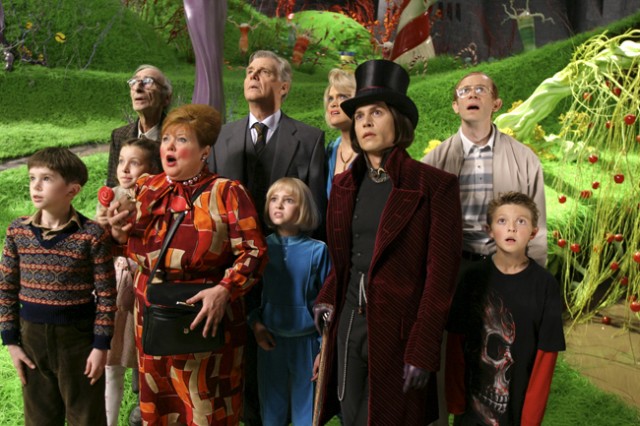
This remake had been in production limbo for around a decade. At one point, Marilyn Manson had been attached for the Wonka. Now that would have been an interesting pic. The studio decided on Burton, who brought along his old collaborator Depp and new wife Helena Bonham Carter. Despite earlier shakiness with the Planet of the Apes remake, I was still fairly confident in Burton. Big Fish had been a huge departure from his typical style of filmmaking. However, upon seeing this picture I found that the visual flourishes that had once captivated me caused me to literally fall asleep. The first time I saw this film, it was the middle of the day and I actually fell asleep in my chair, something that never happens to me when I am watching a film. Afterwards, I realized that Burton seemed to using his aesthetics as a crutch, providing us no real meat to the film. Oh yes, there was some half-assed attempt at giving Wonka an origin story (such a terrible idea), but if you had seen the first film there was nothing here that added to it except updated CG graphics.


The Corpse Bride (2005)
Starring Johnny Depp, Helena Bonham Carter, Emily Watson, Tracey Ullman, Albert Finney, Christopher Lee

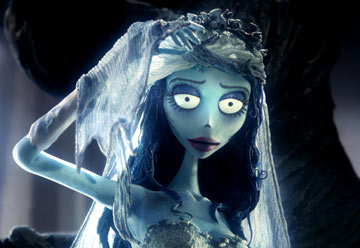
The Nightmare Before Christmas is one of the most beautiful and perfectly made stop-motion films in history. Its an art style of animation that is rarely attempted, compared to its CG brethern, but when done right it stands above all else (Also remember, Burton only produced and did design work for that film, not direct). I was very excited to see Burton returning to that method of filmmaking and interested to see the story he told this time. For the second time in a year I was utterly bored. The film’s look was basically Victorian Nightmare Before Xmas, the shape of characters and the way ghosts were designed. I don’t remember much of the plot of this film, because I found my mind wandering and uninterested. It’s definitely a beautiful film. Let it never be said Burton doesn’t know how to fill a frame. However, like with Charlie, it lacked substance underneath the surface. The humor and characters were both ultimately forgettable.

Sweeney Todd (2007)
Starring Johnny Depp, Helena Bonham Carter, Jeremy Irons, Sacha Beren Cohen

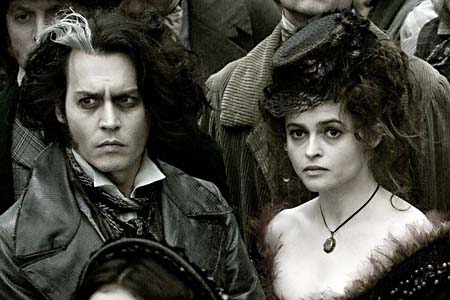
This was a semi-return to form for Burton. The key this time wasn’t his aesthetics (they were as bland and repetitive as usual), but the writing of Stephen Sondheim that caused this picture to rise above the rut. Because this film was an operatic tragedy, the bleak landscapes of Burton felt perfectly at home. London came across the dirty, grime-covered hellhole Sondheim originally tried to get across on stage. The casting for the film was wonderful, though Depp wouldn’t have been my first choice for the lead. He does a good job, but its the supporters who really carry the film here. For me, this was the single true highlight of Burton’s in the 2000s. It kept my interesting throughout every frame and has a truly devastating and heartbreaking finale. It’s my hope that Burton is able to reproduce this sort of emotional resonance in his coming work.

Maybe Sundays – I’m Here


I’m Here (2010, dir. Spike Jonze)
Starring Andrew Garfield, Sienna Guillory

I’m Here is available to watch at http://www.imheremovie.com/
I would recommend you go here instead: http://www.youtube.com/watch?v=_TQuzRCbpsY

Brief note on the presentation of the film, before I get into my review: The film is sponsored by Absolut Vodka, who decided to offer the film to online audiences in one of the stupidest ways possible. The film has scheduled showings, forcing you to wait in a queue to watch it. There’s no reason why this should be, as plenty of other video media is offered on demand. This seems to have been a move on the marketing department, and who knows how many countless viewers they will lose because of this nonsensical wait time. Onto the review:

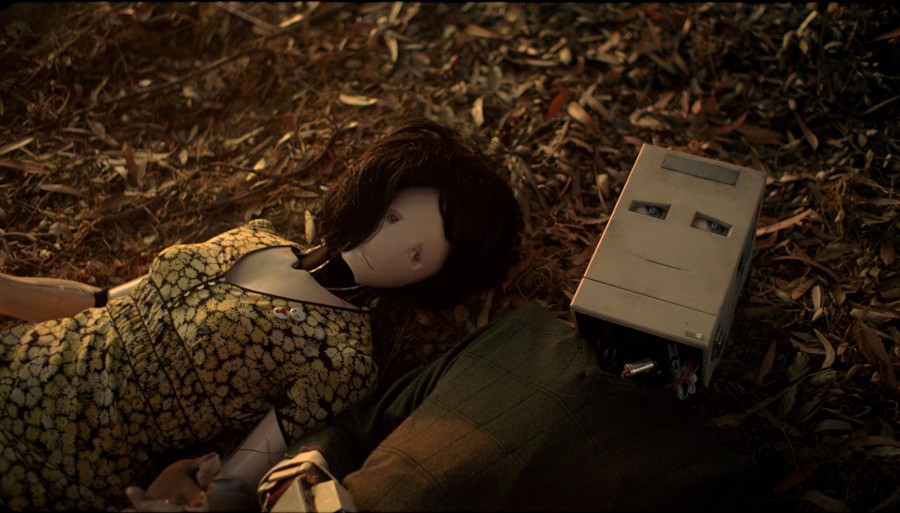
Spike Jonze knows how to work with very little, and create a lot. Here he employs his trademark marriage of low-tech and high tech to create a very fleshed out world in just about 30 minutes. The story is a science fiction one, but a sort of retro-futuristic Los Angeles. Humans and robots live together, the robots appear to be built of those unattractive beige computer cases from the 90s. The only CG employed are in the eyes and mouths of the characters, and that is done in a subtle way.

The story follows Sheldon, a librarian robot who is introverted and nervous, returning to his apartment every evening, plugging into the wall recharger and sitting alone. One day he happens to meet Francesca, a female robot who is driving a car, something robots are not allowed in this world. The two hit it off and a romance develops. During a concert, the crowd gets a little rough and Francesca loses her arm. In an act of love, Sheldon unscrews his own and gives it to her. As their relationship continues, it becomes apparent a larger sacrifice will be made. The film is an interesting mix of heartbreaking and unsettling. A lot of the choices made in this relationship appear to be one sided, and it can be read as an act of unconditional love or of a selfishness. Definitely worth a watch and a beautiful looking film from director Jonze.