
Un prophete (2009, dir. Jacques Audiard)
Starring Tahar Rahim, Niels Arestrup, Adel Bencherif, Hichem Yacoubi
Un prophete is playing at the Belcourt Theater starting today.
Everyone loves a story of “boy makes good”. Nothing better than a young man pulling himself up by his bootstraps and making a name. The only downside is the body count. That story is what French film Un prophete seeks to tell, and colors its story with issues of racial identity, particularly how it can influence other’s perceptions of us. And the film also manages to not miss the simple moments amongst all the crime and violence. It’s in those moments that the picture shines.
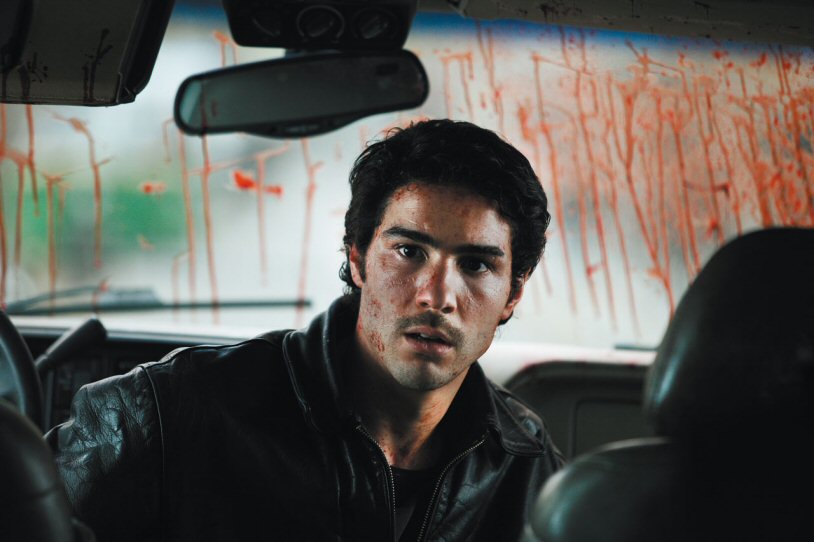
Malik has just entered prison after an undisclosed crime. He’s a very young Frenchman of Arabic descent, who is incredibly nervous and introverted now confronted with years in prison. After a chance encounter with Arab inmate Reyeb, he’s recruited by the Corsican mob on the inside to kill this rival. That murder colors Mailk’s existence, Reyeb appearing in his bed in the middle of the night, his garish throat wound still present. The haunting happen in such a subtle way, Reyeb just suddenly there, Malik never jumping but living with this ghost in his mind.
Malik begins taking on more responsibilities with the Corsicans, who still view him as a “filthy Arab”, while the Arabic in prison see him as a “Corsican dog”. It’s evident that this labeling has a strong effect on Malik. Despite this internal conflict, he soldiers on, running errands while on day leave for Cesar, the head of the Corsican prisoners. What Malik doesn’t tell Cesar is that he is starting his own low level operations on the outside, particularly running drugs.
Every thing Malik does is out of an innate sense of survival. He knows he won’t make it long on the inside so he takes the murder job from the Corsicans, spending hours trying to hold a razorblade on the inside of his cheek for preparation. The film lingers on those moment of prep time, letting Malik fester in the anxiousness of what he has to do. As terrible as you know his actions will be, you still root for him, want him to get away with it because of his relative innocence compared to the weathered inmates around him.
One of the highlights of the film comes when Malik flies a plane to meet with Arabs in Italy. This is his first plane ride and, instead of skipping over it to get to the action with the Arab mob, the film pauses and lets us see Malik’s wonder at riding in a plane. He peers over his seat mate for a glance out the window and is surprised when a flight attendant brings him cookies and glass of water. Scenes like this are what make Un prophete stand out from other “rise to power” mob stories. Malik’s tale ends in the way the audience will probably expect, but its not his position as the new boss that is important, its the journey that brought him to it and the person he was that he left behind.
 PopCult Reviews