PopCult Book Club Review: March 2017 – Bird Box

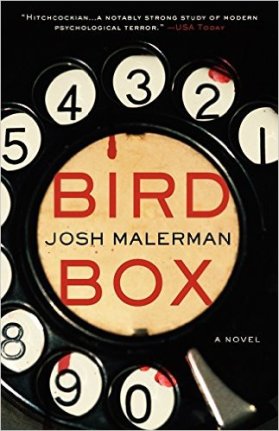
Bird Box by Josh Malerman
(Ecco, 2014)
51bin6sub1l-_sx321_bo1204203200_

The day society collapses Malorie learns she is pregnant. No one can say why everything has fallen apart, but there are some theories. The most prevalent are that the people who have gone murderous and crazed saw something, creatures or entities, that broke their minds. By the time Malorie heads to the safe house in Detroit people are boarding up their windows and only going outside equipped with blindfolds. Humanity is slipping into darkness. Josh Malerman’s debut novel jumps between Malorie’s pregnancy in the safe house to her blind journey down a river with her equally blinded children. She’s been told that somewhere down the river lies a place where the three of them can be safe. But is something stalking them on the shore?

Bird Box gets a lot of things right. First, it builds tension incredibly well. The concept of something you see, possibly even from the corner of your eye and can drive you to a homicidal rage is terrifying. The book introduces the apocalypse in the background, just a few strange piecemeal stories out of rural Russia. Then more and more incidents are reported until everything has crumbled. It also hits Malorie personally as early on she comes across a loved one who has seen whatever is causing this mental break. Malerman’s smartly leaves the exact nature of what is going a mystery. Characters wildly speculating is much scarier than the book spelling out what is happening outside the doors of the safehouse.

By building a paranoid tension, the author also develops his characters based on how they react to their circumstances. This is an excellent way to let your readers quickly get to know Malorie and the six or so supporting figures around her. As soon as she arrives at the safe house, we are aware who these people are right away. We see who is keeping a level head and trying to come up with workable solutions. We are aware who is petrified with fear about the change. We see who is quick to anger and irritation. I’m not a huge fan of The Walking Dead television series, but I do think Bird Box treads similar ground in its focus on ensemble character interaction. Malerman juxtaposes Malorie against another pregnant survivor. The house’s de facto leader Tom is mirrored and contrasted by a couple of other characters, one of whom comes late the story and could be considered the antagonist of the novel.

There is also something to be said for how smart it is to handicap your characters with the apocalypse, and then on top of that take away their chief sense. Malorie’s blindfolded odyssey out to a local bar to gather supplies is a grippingly tense sequence. Everything takes longer to do, and these stretched out moments allow us to immerse ourselves in the scene. We know as much as Malorie knows. When she discovers the trapdoor in the floor and the subsequent stench of horror that comes from it, we receive the same sensory input she does. This particular mode of information delivery is at it’s best during the journey down the river. Malorie has spent four years adapting herself and her children to the world without sight. As their boat floats down the waters, every sound is a potential threat. A brief encounter with another human on their trip is paranoid and suspenseful. Everyone is a danger, and she begins to speculate about the creatures and if they can now mimic human speech.

Overall, Bird Box is a very breezy exciting read. I wouldn’t place it up there with the type of horror I treasure, but it is a read very worthy of your time. I guarantee it will keep you glued due to his narrative momentum. When the horrific finale in the safe house finally comes about in the last two dozen pages, you’ll not be able to stop until you find out how it concludes. When Malorie and the children are within hearing distance of the new haven, her paranoia will overtake you, and you won’t be sure if they will make it.
Movie Review – Trash Fire

Trash Fire (2015, dir. Richard Bates, Jr.)

TrashFire_Trailer

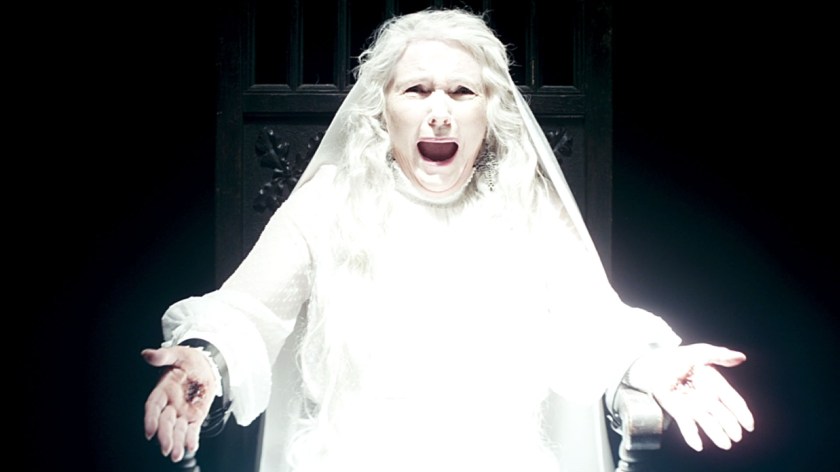
Owen and Isabel have an extremely unhealthy relationship. He has a laundry list of neurosis and treats Isabel like a doormat. She openly despises him. For some reason, they seem unable to break this relationship off, kept in each other’s toxic orbits. Everything changes when Isabel despondently reveals she is pregnant. Owen appears to change his tune, but she explains she wants him to get back in touch with his estranged family. When Owen was a child, his parents were killed in a house fire he blames himself for. His sister lived, but suffered third-degree burns over her entire body and now lives with the acidic grandmother. The couple makes a trip to visit these two strange family members, and the secret behind that house fire slowly comes to light.

Like many horror films these days, Trash Fire has a lot of interesting pieces but fails to come together as any enjoyable experience. It’s the greatest flaw is the inability to settle on the tone. The first third of the film presents itself as a pitch dark comedy and arrival at the grandmother’s home has enough quirky strangeness that it feels like this is what the film will be. However, the last third of the movie goes completely off the rails and bounces back and forth between comedy and horror, before finally settling on pure nihilistic horror for the finale. At some moments it seems to want to comment on relationships, in others, it seeks to be a satire of fundamentalist religion. And for all it’s plot spasms it ends up equaling nothing at all.

I had previously seen Bates’ Excision, a horror film with similar problems. There is no arguing that he has a distinct style. His scenes are framed in the static medium and wide shots, with subjects dead center in the camera. A line of symmetry splits the subject down the middle, and they are typically flanked by set details on either side. This type of framing is so associated with Wes Anderson at this point that we are subconsciously pushed towards expecting dry comedy, and that appears to be the case…at first. Bates continues to use this framing even in scenes that he intends to evoke great horror. It just falls so flat, so hard.

I don’t have a problem with a film featuring unlikable protagonists, as long as it knows how to handle them just right. Bates does not, so when the tragedy of the finale occurs, I didn’t care because he’d done nothing to frame his protagonists in legitimate conflict with the antagonists. I guess the protagonists weren’t murderous, but they didn’t even exhibit charisma or charm to make me root for them. Unlikable doesn’t mean they have to completely unrelatable. Bates also features his star from Excision, Annalynne McCord as Owen’s scarred sister. She does fine with the material she is given, but I can’t help but imagine how a more nuanced actress could have made the character more interesting.

The worst thing about Trash Fire is that it is a dumb film that thinks it is very clever (the same problem Excision had, hm). Mr. Bates is not a bad filmmaker; he is just aiming to make a kind of film he isn’t necessarily suited for. There is a sense that he is somehow elevating the material when at its heart it is pure horror shlock. If he could embrace it for the particular horror subgenre it is and have fun with the material, he might have a decent flick.

Movie Review – Spring

Spring (2014, dir. Aaron Moorhead & Justin Benson)

spring-alley

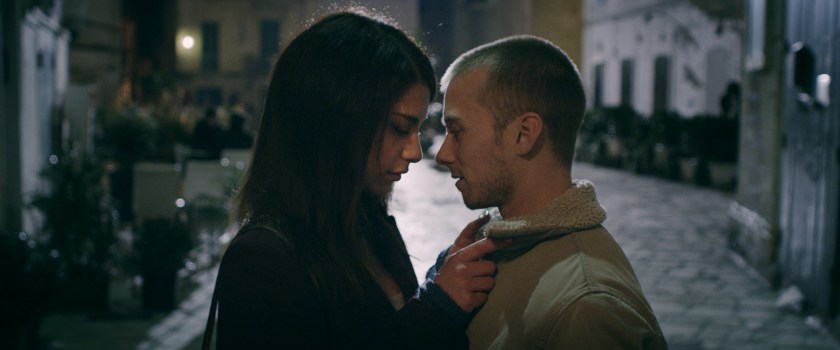
I began the filming expecting one thing but ended up delighted and surprised with what I got. Evan’s mother dies in front of him, succumbing to a two-year battle with cancer. He feels lost and without purpose, so this leads to a spontaneous trip to Italy, the place his parents wanted to take him before they died. Evan wanders to a small town on the coast where he meets Louise, a young student. The two click right away but there is something mysterious about her, for all her charm and wit she remains cagey about certain parts of her life.

I remember seeing the trailer for Spring before its release and got the sense it would be a dark, horror film. However, it ends up becoming a romance story without any traces of cynicism. It is a dark film, but there is an emotional truth underneath the surface. Early in the first act, after Evan first arrives in Italy there is a sense of Eli Roth’s horrid Hostel films, that creeping sense of dread. We worry Evan is winding his way down into a trap. The filmmakers establish a very gloomy mood. However, I find the film has more in common with Linklater’s Before Sunset. It ends up being lots of conversations about relationships and the nature of love between Evan and Louise. Yes, there is gore and violence, but it never overtakes the film and become the focus. Instead, character work is the meat, with violence punctuating dramatic moments.

Spring is a gorgeous looking film. Directors Moorhead and Benson previously worked on Resolution, a small indie horror flick that did similar genre play. It’s very clear they have developed their technique with some truly beautiful and well-choreographed shots. There is an explosive argument in the streets of the small village after Evan discovers Louise’s secret. It is a single take, but it is a dizzying race through the back alleys and narrow streets. They also make use of drones to produce some stunning, sweeping shots of the coastal town that stand up to an expensive crane and helicopter shots.

The bulk of the film rests on the shoulders of the two lead actors, Lou Taylor Pucci and Nadia Hilker. I have never been overly impressed by Pucci. I’d seen him in his early work (Thumbsucker, The Chumscrubber, Southland Tales) and felt he was fairly flat and have noticed him popping up from time to time. Here he reaches depths in his character I wasn’t expecting. Hilker was a discovery for me and is a perfect match for Pucci. You get caught up in the chemistry these two genuinely have. That chemistry, more than the horror elements, is what makes the film. While Spring is a definite play on genres, it teaches a valuable lesson that horror is stronger when it relies on the more human and character-focused elements of storytelling.

Spring is a film that benefits from mystery. I would highly encourage you to read as little about it as possible and just know that it’s a movie that is body horror, but also something more. It’s a film about a young man working past grief and aimlessness and the risk of love. Its whole concept is a metaphor about what we give up when we allow ourselves to fall in love, and weighing if that is worth the risk.

Book Review – The Worst Kind of Monster: Stories

The Worst Kind of Monster: Stories by Elias Witherow (Thought Catalog, 2016)

worst kindElias Witherow is an author who I first encountered through their presence in the NoSleep community on Reddit. His stories induce such a true fear in me I felt myself drawn to his work time and time again. In this collection, he takes many of those NoSleep stories, along with new material and delivers a very powerful short story collection. As I read through the collection, I felt like I was reading, not the masterpiece of a writer, but the first seeds planted on the path to that great work of horror. Here are my thoughts on some of the stories in The Worst Kind of Monster.

“The Tall Dog” – This is what I would call the most typical NoSleep story in the collection. Grieving widower dealing with his daughter waking up in the middle of the night complaining of the “tall dog” that comes in her room whispering horrible things in her ear. The father doubts but as the story progresses, he becomes convinced something is in his home. This opening story highlights a significant element of Witherow’s work: endings where protagonists don’t die but have to endure an even worse state of living.

“The House in the Field” – I first heard this story on the NoSleep Podcast, and it prompted me to buy this collection. A narrator tells a story from their youth about seeing an old farmhouse in a field on her family’s property. No one else can see the house, until one day another person can. The monster revealed behind this house is unlike any I have read about in horror. The description will give you chills. All I will say is that gigantic monsters usually don’t scare me, but this one is both hidden and massive at the same time.

“There’s Something Wrong With Dad” – Domestic horror is a common trope in Witherow’s work (see Tommy Taffy), and this is very bare bones version. Dad comes home from work, starts to behave increasingly erratic, hell on his poor family begins. And like Tommy Taffy, the violence visited upon the family is not directly by a family member. The perpetrator is a metaphor. Or, another way to read the story is that the fantastic “happy” ending is all delusion of a child being killed by their father.

“Feed the Pig” – The most surreal and fantastic of the stories in a pretty surreal collection. Our protagonist has hung himself and ended up in a bizarre afterlife. What I love here is the mythology building. Apparently, God felt the need to create a place for suicides separate from Hell. So he created the Black Farm and put The Pig in charge. He eventually forgot that he created this place, so The Pig attempted to become a god and shape a world in his image. The narrator’s journey through the world is obscured so we get the slightest of glimpses of a place that seems like Clive Barker would be right at home. This story also features a genuinely hopeful ending.

“horse/8min” – Another very NoSleep type of story. The narrator finds a strange DVD on his front step. The video contained on it shows a murky obscured scene. Nothing overtly horrific. Then the creeping fear and dread set in. This is a great mood piece. It’s short and to the point while leaving us hanging in the final moments.

A Different Kind of Monster spans some horror genres, but the common thread is “a fate worse than death.” No one gets out that easy, especially those who have done wrong by their fellow man. The worse a person is, the worse they will get in the end.

Book Club Announcement – March 2017: Bird Box

Bird Box (2014, Josh Malerman, Ecco)

51bin6sub1l-_sx321_bo1204203200_

The apocalypse came and with it was the poisoning of a sense: sight. Whatever is out there, when you gaze upon it, you become a violent raging killer. Malorie, a single mother in Detroit, lives with her windows boarded up and her children blindfolded on a daily basis. They must learn to grow their other senses because what they might see beyond the door of their home could destroy them.

“Malerman excels at building tension with his eerie descriptions of blindfolded characters groping their way through a world of the dead, aware that something inhuman and beyond comprehension might be observing them, or possibly standing right in front of them. Malorie’s trek down the river is frightening, but even more unsettling is the constant awareness of the characters’ helplessness in both timelines, and the possible price of any attempt to alleviate it: Every time they hear a strange noise, encounter an unnervingly unfamiliar object, or feel what might be a gentle touch from an unseen, alien creature, they’re tempted to lift their blindfolds and settle their fears—possibly at the cost of their sanity, and then their lives” – The AV Club.

Movie Review – XX

XX (2016, dir. Jovanka Vuckovic, Annie Clark, Roxanne Benjamin, Karyn Kusama)

1280_xx_anthology_the_box_still

Okay, horror anthologies. I keep wanting to love you but, dammit, you keep fucking it up. I was looking forward to this one quite a bit, much more than the last few anthologies I’ve sat down to view. It had only four films meaning we should have some good quality control, not flooding the picture with too many. You had Kusama has your big headliner and a first time director in the form of Annie Clark (aka St. Vincent). One of the shorts was based on a great story by Jack Ketchum. The trailer had me hooked the first time I saw it. So what went wrong?

Continue reading “Movie Review – XX”

Book Review – Lost Signals

Lost Signals: Horror Transmissions (2016, Perpetual Motion Machine Publishing)

Edited by Max Booth III and Lori Michelle

lost-signals-header-2_1050_591_81_s_c1

Certain things click with me as horror tropes more than others. Numbers stations, haunted baby monitors, signals coming from the deep dark woods. Something about radio waves can be genuinely creepy. No matter how secure your door is, they can get in. That’s why I was delighted to discover this anthology full of stories that touch on these very elements.

Some of the highlights of the collection are:

“If He Summons His Herd” by Matthew M. Bartlett

Finn Groomer is obsessed with the legends surrounding his small town community. One of these is a phantom FM station that comes and goes and seems connected to the disappearances of some kids. Finn is also troubled by the death of his mother and believes that through this station he can speak to the dead. There are some great classic devil worship type notes in this story but how it ends is unexpected and deeply disturbing.

“Transmission” by T.E. Grau

Max is zooming through the Nevada desert in the middle of the night when he stumbles upon what he thinks is fire and brimstone religious station. Something bolts across the road and forces the man off the road, but despite his predicament, something about this station keeps him from going for help. The more he listens, the more he realizes this isn’t about saving your soul but about being awakened to reality most can’t see.

“How the Light Gets In” by Michael Paul Gonzalez

A filmmaker and her partner are traveling through and documenting the people who live in the Salton Sea. They meet one strange, older woman who claims her husband discovered something in the area that was responsible for his death, a strange shimmer in the sky, a place where reality bends. Deciding to investigate for fun the couple ends up an abandoned hotel and experience a night of horrors as the sky splits open.

“Eternity Lies In Its Radius” by Christopher Slatsky

Molly is roommates with her fellow punk bandmates when one of them, Mark, discovers a strange pirate radio station he finds songwriting inspiration from. Now the music is evoking visions when she closes her eyes of railroad tracks leading off into a jagged cave in the side of a mountain. The images are so vivid she’s unnerved and discovers the place in her dreams is real and in their small town. All the while, Mark is spending more time locked in his room and getting lost in this strange radio station.

“All That You Leave Behind” by Paul Michael Anderson

A couple is living in the aftermath of a miscarriage. Told from the wife’s perspective, she is becoming increasingly distressed that her husband spends all day on a computer listening to the ultrasound heartbeat recording on a loop. She keeps trying to throw away objects that are connected to the late child, but her husband appears to be digging them back out of the trash. As their relationship deteriorates, she begins to have significant questions about her sense of reality. A horror story that ends with some poignancy.

More than just a one-note collection, Lost Signals gets a lot of mileage about of its concept. In our current era, there are a lot of signals crossing the globe and the opportunity to glean some horror from that is perfect.

Roots of Fear: Tommy Taffy

ken_doll

The Third Parent – https://www.reddit.com/r/nosleep/comments/51bnu3/third_parent/

His Name was Tommy Taffy – https://www.reddit.com/r/nosleep/comments/53kgyr/his_name_was_tommy_taffy/

Tommy Taffy’s Twins – https://www.reddit.com/r/nosleep/comments/55qjdf/tommy_taffys_twins/

The Night I Met Tommy Taffy – https://www.reddit.com/r/nosleep/comments/5ozie0/the_night_i_met_tommy_taffy/

The stories of Tommy Taffy are ones that touch on some of the most sensitive and terrifying aspects of our lives. The first story, the only one that’s required reading before this article is The Third Parent. In the midst of a quiet, happy family comes Tommy Taffy. He barged his way into their home, and the parents, who know him from their own childhood allow the monster to remain til he is satisfied. In both appearance and intent, he is about as evil as horrors get.

Continue reading “Roots of Fear: Tommy Taffy”

PopCult Book Club – February: The Pulse Between Dimensions and The Desert

The Pulse Between Dimensions and The Desert by Rios de la Luz

pulse-between

Rios de la Luz is a Xicana Oregonian who writes weird fiction. This is her debut collection and is purported to have a wild and exciting variety of the strange and supernatural. Join me, won’t you?

“In The Pulse between Dimensions and the Desert, Rios de la Luz’s writing is electric and alive. It grabs you and pulls you into her universe, one that is both familiar and foreign, a place where Martians find love, bad guys get their ears cut off, and time travel agents save lost children. In this innovative, heartfelt debut, de la Luz takes her place as a young author that demands to be read and watched.” —Juliet Escoria