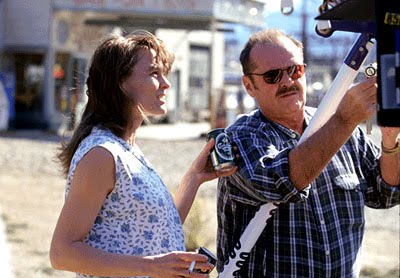
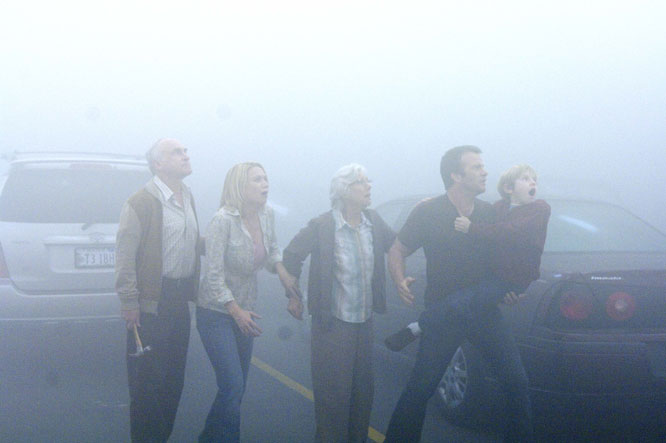
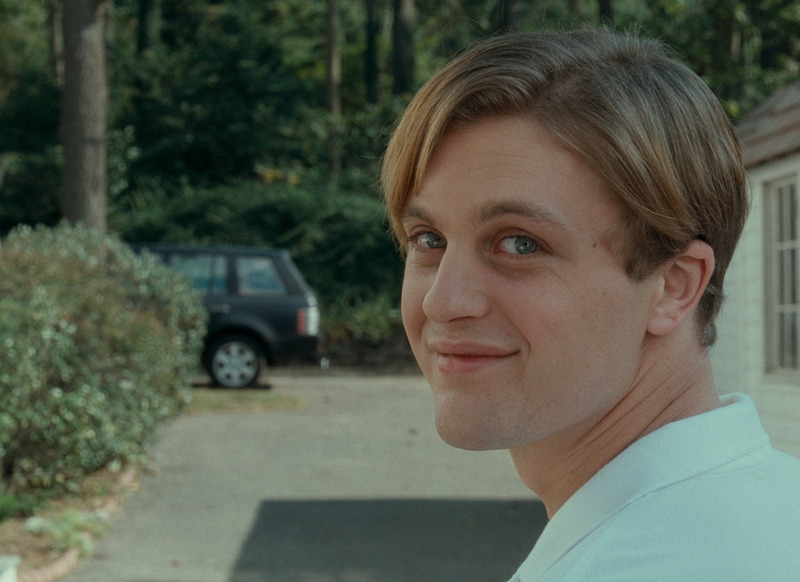
In honor of St. Patrick’s Day, here is a film festival in celebration of the Irish people:
Category: hypothetical
Hypothetical Film Festival #8 – Visions of Wonderland
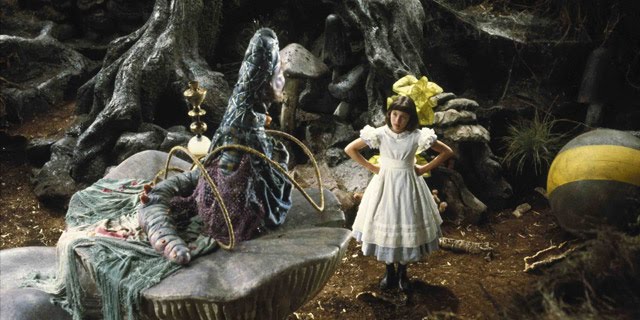
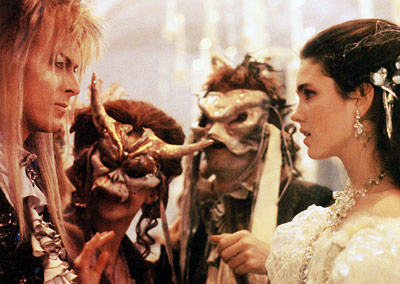
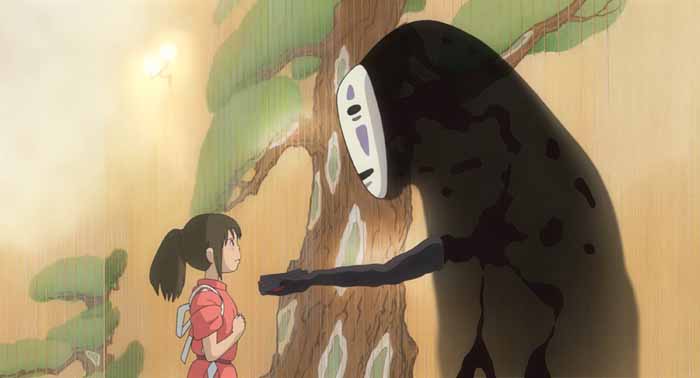
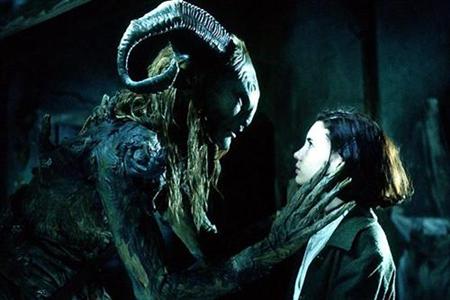
So Tim Burton’s rendition of the Wonderland story has been unleashed upon theaters. This, of course is not the first time this story has hit the big screen and it won’t be the last. In fact the archetypal elements of Lewis Carroll’s 19th century novel have been incorporated into films that might not be immediately recognizable as Wonderland. Here’s a line up of pictures that re-tell Alice’s adventures in a new way, with new twists.
Hypothetical Film Festival #7 – Not Happy Endings
There are “crowd pleaser” films, meant to deliver an upbeat tone to the audience and make sure everyone leaves the theater smiling. And then there are films like the ones on this list. These movies are pretty bleak from the start and any one in the audience can tell things will not end up alright for the protagonist. But as “down” as their endings might be, they are worth watching and will stay with you for days.
Hypothetical Film Festival #4 – Deconstructing Darko
One of my favorite indie flicks of the early 00s is Donnie Darko. Though it has been inflated beyond any acclaim in deserves in the years that followed I still believe its an interesting puzzle of a film, made by a director who truly does love movies. That said, Richard Kelly hasn’t directed anything worth a flip since (Southland Tales, The Box). Kelly infuses lots of film references into the flick, and they are worthy of a film festival:
Hypothetical Film Festival #3 – No Capes Comic Book Films
The super hero movie is valuable stock in Hollywood these days. From Batman to Iron Man to Spider-Man and the X-Men, every superpowered being in print is fodder for the next big budget blockbuster. On the flipside, existing parallel to the Big Two (DC and Marvel), has been an independent and creator driven comics industry. Out of this alternative has come unique and quirky stories that use the sequential art medium to tell stories off the beaten path. Here’s a few that would make for a dynamic and engaging film festival.

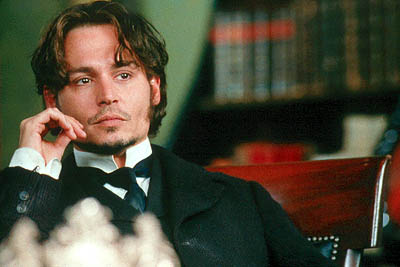
From Hell (2001, dir. The Hughes Brothers)
While I am no big fan of this adaptation of Alan Moore and Eddie Campbell’s graphic novel, it is still decent film even though it loses the essence of the original work. The story follows British Inspector Frederick Abberline (Johnny Depp) who has been brought onto the Jack the Ripper case. He befriends East End prostitute Mary Kelly (Heather Graham), whose friends are being picked off one by one. The mystery unfolds as part of a dark Illuminati conspiracy and the Ripper’s motives are attached to satanic machinations. The Hughes Brothers, best known for their contributions to African-American cinema with Menace II Society, Dead Presidents, and the wonderful documentary American Pimp, devise a few clever visual tricks but nothing that can raise the film too far beyond a mediocre level. The best part of the film are those metaphysical and occult concepts of Moore’s that made their way from the page to the screen.

American Splendor (2003, dir. Shari Springer Berman, Robert Pulcini)
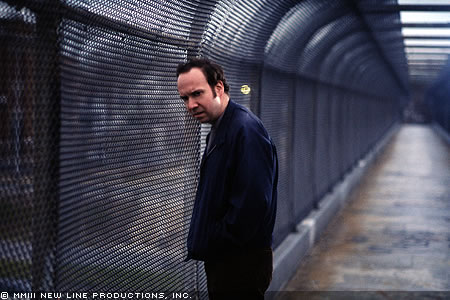
From my earlier review: “American Splendor is one of the most unusual comic book adaptations of the 2000s. While this is an origin story, there are no capes or tights. Instead its vintage records and perpetual scowls. Cleveland native, Harvey Pekar began chronicling his life in underground comic books in the 1970s after befriending cult comix artist Robert Crumb. The film works as a docudrama, that features the real Pekar commenting on his life mixed with Giamatti acting out the anecdotes. Even the illustrations from the comic books are animated and spliced amongst the live action sequences. The entire form and style of this film is unlike any other I have seen and have not seen it attempted since. Giamatti does an excellent job mimicking Pekar, but if you have seen the film you can agree nothing surpasses the natural curmudgeon of the original.”

Ghost World (2001, dir. Terry Zwigoff)
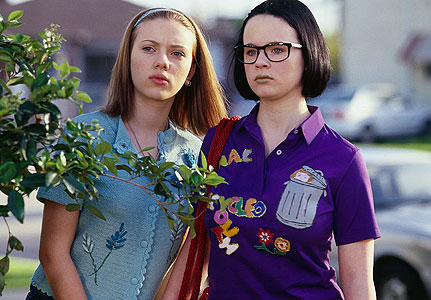
Based on the graphic novel by Daniel Clowes, Ghost World follows the post-high school graduation summer of surly teen, Enid (Thora Birch) and her best friend, Rebecca. The two girls move from episodic moment to episodic moment, slowly growing apart. Enid is the voice for many of the mid- to late 90s proto-hipsters. She has a love of old blues vinyl and kitschy ironic pop culture, and it comes across in a less forced away than many contemporary hipsters do. The summer is a growing time for Enid as her poor temper is forced to dissipate as the responsibilities of adulthood set it. A very sharp, clever film that appeals to the introverted English major type (as I can speak from experience).

A History of Violence (2005, dir. David Cronenberg)
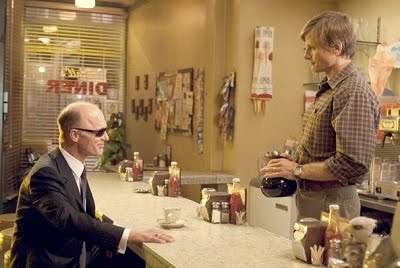
Based on the overlooked graphic novel by crime writer John Wagner, Cronenberg reinterpreted it and took the main character, Tom McKenna (Viggo Mortensen) in a different direction. The inciting incident, a pair of murderous thieves hold up Tom’s small town diner, is the same but the choices the character makes and how figures from his past choose to interact with him is where the changes occur. This is a wonderful film that displays Cronenberg’s gifts as a filmmaker. He is totally comfortable in quiet moments and knows how to jolt the audience without playing to cheap shocks. This is also a film that gives an ending that doesn’t need a twist to create a powerful impact.

Persepolis (2008, dir. Marjane Satrapi, Vincent Paronnaud)
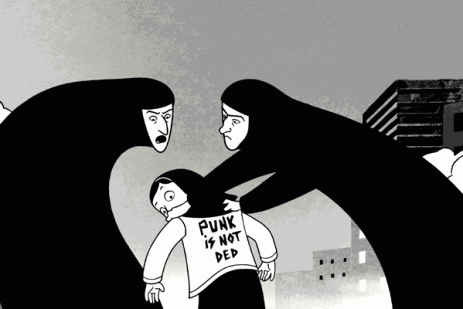
Unlike the other films of this list, the author of the graphic novel had a direct hand in the adaptation and direction of their work. Persepolis chronicles Marjane Satrapi’s adolescence in Ayatollah-ruled Iran and her eventual relocation to Europe when her parents become afraid of the oppression in their country. Both the film and graphic novel give a wonderful history lesson on Iran and showcase how great America’s ignorance is about Iran’s relations with Iran and the rest of the Arab world. On a microcosmic level, it is also the story of a young girl who tests the borders of rebellion and transitions through the awkward moments of childhood into a confident and brilliant young woman.
Hypothetical Film Festival #2 – Offbeat Science Fiction
When you drop the term “science fiction” to a non-initiated non-geek there are a lot of cliched, stereotypical things that come to their mind. They think of the behemoth Star Wars franchise, the obsession of the Star Trek fan, and a myriad of other negatives things that in actuality not truly representative of sci-fi. So you want to bait your non-sci-fi friend into warming up to the genre? Here is a hypothetical film festival meant to show some of the breadth of what science fiction can be.
1) Tremors (1990, dir. Ron Underwood)
Kevin Bacon, Fred Ward, Reba McEntire, Michael Gross
An excellent starter film. If you haven’t seen Tremors (and why haven’t you?!) it is an incredibly irreverent, farcical pic in the vein of Roger Corman’s B-monster movies. The plot concerns two handymen (Bacon and Ward) in a rundown former mining town that is on life support. A series of mysterious deaths occur at the same time a young student seismologist discovers a serious of strange quakes happening in the region. The handymen discover that a brood of prehistoric gigantic worms are burrowing their way under the town and popping up to swallow the citizenry. What follows is a mix of slapstick comedy and bizarre sci-fi tropes that make for a fun, light flick. Beware of the follow up films in this series though. They lack the humor and budget of this film.
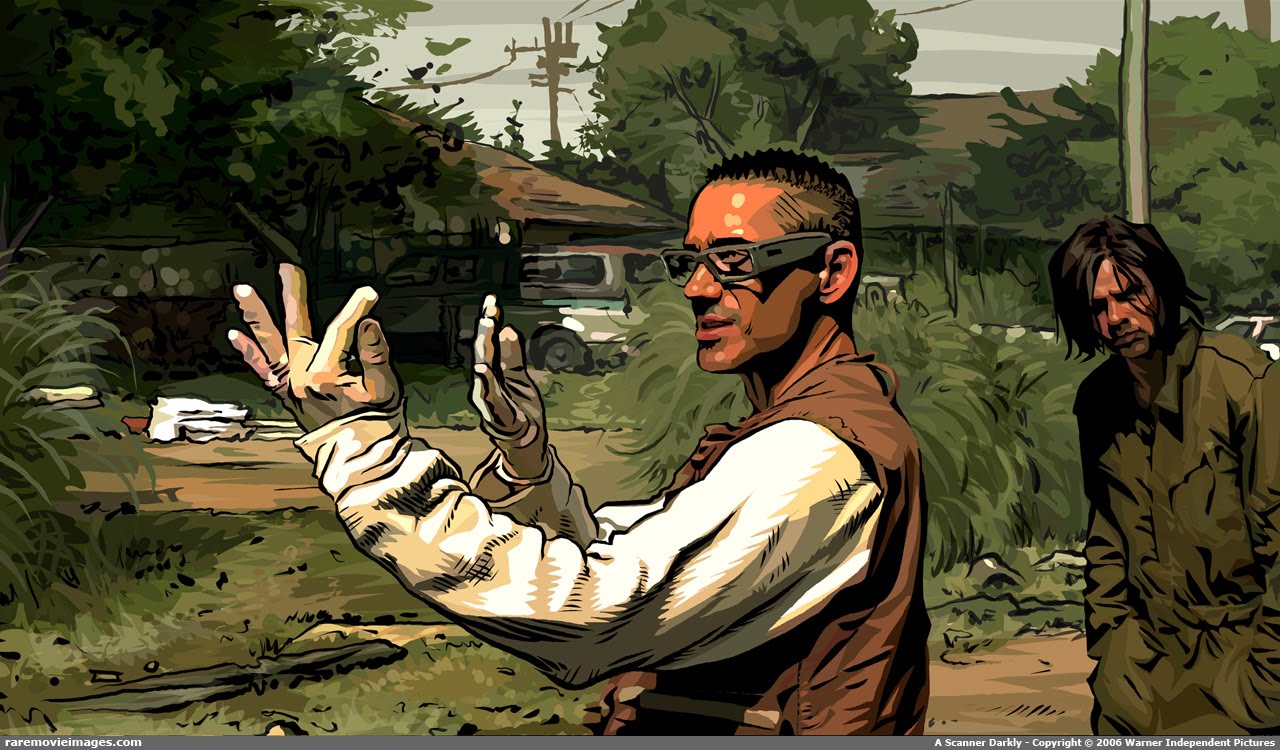
2) A Scanner Darkly (2006, dir. Richard Linklater)
Keanu Reeves, Winona Ryder, Robert Downey, Jr, Woody Harrelson
Philip K. Dick is considered to be a master of re-defining the science fiction literary genre and creating his own branch of more philosophical literature that incorporated science fiction elements into the story structure. Sadly, the majority of attempts to adapt his stories and novels to the screen have failed to live up to their source material (Total Recall, Minority Report) or good films but definitely not what Dick intended (Blade Runner). A Scanner Darkly, an animated film, has been the first adaptation that seems to understand the intent of Dick’s work. The plot concerns Bob Arctor (Keanu Reeves), an undercover police agent in the near future who has been assigned to track down the production of the dangerously addictive drug, Substance D. He ends up posing as a dealer and shacking up with two brain fried addicts (Downey Jr and Harrelson) and dating fellow dealer (Ryder). The catch is that Arctor’s identity must be kept secret to everyone up to his superiors by wearing a scramble suit (a suit that obscures a person’s face and body by shifting through a mosaic of indexed images of people). Arctor’s suffers a crisis of identity as a result and the film focuses a lot of its time on his meditation on figuring out who he really is. Director Linklater is sure to keep this feeling like a not-to distant future by playing the tech side very low. A very nice transition into a branch of sci-fi Hollywood seems to ignore.
3) Happy Accidents (2001, dir. Brad Anderson)
Starring Marisa Tomei, Vincent D’Onofrio
While director Brad Anderson has become known more for his horror film work (Session 9, The Machinist), he made his start with relationship focused films. Happy Accidents works as a perfect date movie but also presents a contemporary science fiction plot that is inventive and clever and has no need for big budgets special effects. Ruby (Tomei) has had horrendous luck with men and had all but given up till she meets Sam Deed (D’Onofrio). Sam is a charismatic, quirky Midwesterner who charms Ruby right away and things move much faster than she planned. Then, Sam reveals something about himself that sends Ruby running; he claims to be from the year 2470. What follows is a clever play on the typical romantic comedy that will keep you guessing whether Sam is yet another nut-job or the real deal. A perfect example of what science fiction can be but is usually presented as.
4) Delicatessen (1991, dir. Marc Caro, Jean-Pierre Jeunet)
Starring Dominique Pinon, Jean-Claude Dreyfus
The minds behind Amelie and The City of Lost Children present this surreal slapstick post-apocalyptic flick. At an undisclosed time in the future, the world is in ashes and one apartment building in the ruins is attempting to keep life going on as usual. A new maintenance man has shown up (Pinon), who tries to figure out how the original maintenance man vanished. This leads him to discover that the landlord (Dreyfus) is butchering passersby and selling the meat to his voracious tenants. Add in a literal underground rebellion of sewer men and you have a very strange, very funny black comedy. A movie that proves even the end of the world can be hilarious.
5) Fantastic Planet (1973, dir. Rene Laloux)
This amazing French/Czech animated film exemplifies what pre-Star Wars science fiction was about: huge, transcendental ideas and the exploration of surreal worlds. On the title planet, the gigantic blue-skinned Draag employs minute, humanoid Oms as household slaves and pets. A small clan of Om have broken away and formed a civilization in the wilderness with plans to overthrow the Draag. This film contains some amazing psychedelic imagery and is a great science fiction picture for people who are more in the Philip K. Dick vein of the genre.
Hypothetical Film Festival #1 – Evolution of the Western
From time to time, I come up with ideas for film festivals. The themes can be as varied as a focus on a single director or genre and even antecedent film festivals, which feature films that inform about a certain director’s aesthetic. The parameter I set for myself with these festivals is that they can contain up to only 7 films.
This particular film festival programming was inspired by watching a Mad Max marathon on AMC and realizing that the plots were all archetypal western plots. The Road Warrior in particular felt like a post-apocalyptic Shane or one of Eastwood’s Man With No Name films. Without further ado, the list:
1) Shane (1953)
Directed by George Stevens
Starring Alan Ladd, Jack Palance
This film contains the most recurring Western plot of a mysterious stranger arriving to come to the aid of citizens being terrorized. Not much to add, other than the 1960s Batman series featured a cowboy villain named Shane that was a directed reference to this film.
2) The Searchers (1956)
Directed by John Ford
Starring John Wayne, Natalie Wood
Not Ford or Wayne’s first Western but arguably their greatest. The film has all the wonderful scenery of Monument Valley on display but also present Wayne in an atypical light. While, he is the hero of the picture, Wayne’s character is also a staunch racist and ends up alienated from his family because of this.
3) Once Upon a Time in the West (1969)
Directed by Sergio Leone
Starring Charles Bronson, Jason Robards, Henry Fonda
Leone was a student of the American Western, John Ford’s work in particular. To make this “ultimate” western, Leone and co-writer Dario Argento watched dozens and dozens of Westerns. They were able to film on location in Monument Valley as well and Leone’s awe is apparent in the film. Not to be stuck making a dull, predictable film it was decided to cast Henry Fonda as the villain. This was such a controversial move that when the film was aired on American television the introduction of Fonda’s Frank killing a child was edited out.
4)Pat Garrett and Billy the Kid (1973)
Directed by Sam Peckinpah
Starring James Coburn, Kris Kristofferson, Bob Dylan
The rise of the anti-hero archetype in the 1970s brought about Westerns with much bleaker protagonists than previously seen. These were men who traditionally had been the black hats in bygone eras. In the same way that Bonnie & Clyde turned the murderous gangsters into heroic figures so did Peckinpah with this portrayal of Billy the Kid. The film is also notable for having a soundtrack written and performed by Bob Dylan, a true sign of the change in this genre.
5) The Road Warrior (1981)
Directed by George Miller
Starring Mel Gibson, Bruce Spence
While at first glance, this film appears to be a punk-aesthetic sci-fi pic it is in actuality a remix of the Shane plot. The mysterious stranger (Gibson) shows up just in time to help a struggling group of survivors combat the maniacal barbarians outside their gates. In this reinvention, the Shane figure is a mercenary, only out for his own self-interest. He is broken eventually, in particular by the admiration of a feral child. A very refreshing take on a worn out plot.
6) Unforgiven (1990)
Directed by Clint Eastwood
Starring Clint Eastwood, Morgan Freeman, Gene Hackman
This film is the tombstone (no pun intended) of the traditional Western. Eastwood was trained by the best when it came to the genre, Sergio Leone. As a result, he respects the tropes but also makes sure to emphasize that this film marks an ending of sorts. The protagonist, William Munny (Eastwood) is an old, broken gunslinger who is now living with the psychological fallout of his past exploits. The film also incorporates the anti-hero device with the villain being a corrupt sheriff (Hackman) allowing his men to terrorize his town’s populace. A bleak conclusion is apparent from the beginning and Eastwood delivers what some critics have referred to as “the eulogy of the Western”.
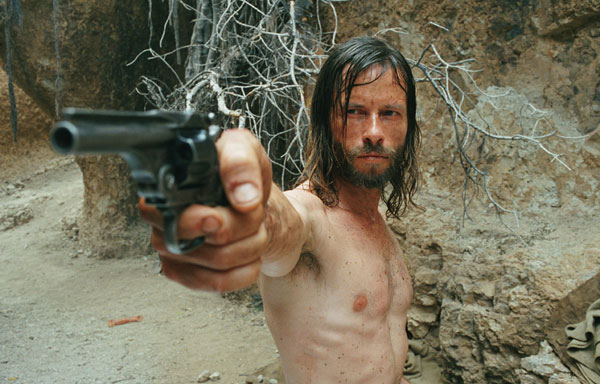
7) The Proposition (2005)
Directed by John Hilcoat
Starring Guy Pearce, Danny Huston, Ray Winstone, Emily Watson
Around the same time the West was being explored in the United States, Australia was undergoing a similar period of lawlessness and expansion. In this film, Charlie Burns (Pearce) is made a deal by the local law (Winstone) to bring in his older, more sociopathic brother (Huston) in exchange for the life of his younger brother. Hilcoat, who just recently opened The Road, presents a Western tone poem. The film moves between harsh brutality and transcendental contemplative nature. The terrain of Australia is given a deeply mystic atmosphere by the aboriginal influence and haunting score by Nick Cave (who also wrote the screenplay).