Movie Review – Entertainment

Entertainment (2015, dir. Rick Alverson)

entertainment-rick-alverson-gregg-turkington-1

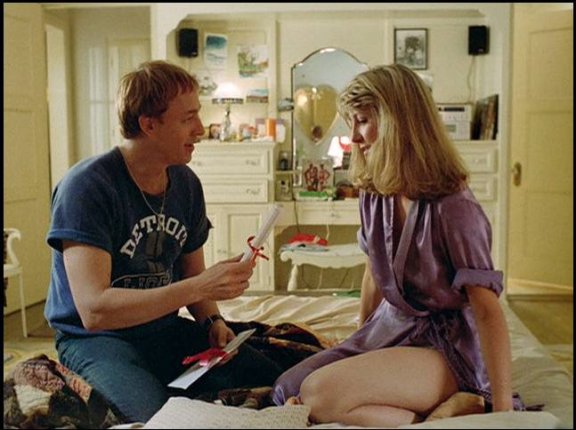
Entertainment is an anti-film. It is the opposite of life affirming, life refuting. It is a road trip to nowhere, about a man who fails to find himself and instead lost forever. Entertainment is purgatory. This is the intent of director Rick Alverson, who helmed the abrasive 2012 independent film The Comedy. In the same way that Tim & Eric deconstruct comedy, Alverson is breaking down the aimless dreamer in search of their dream.

The focus of Entertainment is an unnamed Comedian (played by Gregg Turkington). While the protagonist may be nameless, fans familiar with Turkington’s stage persona of Neil Hamburger will know that this is a fictionalized version of the performer. The Hamburger persona is an assault on the audience of his comedy shows. His material is exaggeratedly homophobic, misogynistic, grossly sexual, and crude. The concept behind this is a comedian who thinks so little of his audience he believes this is the best they deserve. Contrasted with this is Turkington endlessly waiting between shows. He goes on local tours of industry in the Southwestern United States: an airplane graveyard, an oil field, a ghost town built as part of a mineral boom. The landscapes he walks through are husks.

The Comedian himself is a husk. He’s in his forties, performing at low-end dive bars or worse. The first location we see him at is a prison. His last location is at the birthday party of a spoiled rich, aggressive man (played by Tim Heidecker). That final performance concludes with The Comedian bursting out of a cake and bursting into tears. He ends up spending time with a financially successful cousin (John C. Reilly) who tries to advise him on his comedy act, continually saying it’s great but then talking about making it appeal to “all four quadrants.” As we get to know the cousin we see his misery come to the surface as well.

Two constants refrain throughout the film. The first is Eddie the Opener (Tye Sheridan) a clown/mime who opens The Comedian’s sets. Eddie hasn’t been worn down by the road yet. He shares the cynicism of The Comedian towards the audience but takes joy in the performance. The other refrain is The Comedian’s nightly voicemails to an unseen estranged daughter. He expresses frustration eventually at his inability to get a hold of her, the messages growing more and more desperate.

Both Turkington and Alverson have a keen interest in discomfort and provocation. In an interview with Vanity Fair, Alverson explains his personal view on “positive” cinema:

There’s a common insistence that representations of the positive lift us up and buoy us. I’ve never experienced that. At least not in a prolonged way. The idea of resolution has always seemed weird to me. I think if a movie has any naturalistic pretensions or elements in it at all, it needs to respect and represent the disjointed and difficult nature of the world. You can’t solely promote a fantasy version of the formal experience of living. There’s a necessity for a kind of balance in the field—90 percent of the fare for American audiences operates by those conventions and leaves the viewer satisfied in a very tidy, efficient way. They are unaltered in a way that is so disconnected with our daily experiences. Both The Comedy and Entertainment are in a long tradition of cinema flirting and pushing back against that impulse.

Entertainment is not a film that will appeal to everyone. Because some moviegoers have that expectation of films making them feel good, they are going to react angrily at movies like this. I suspect Alverson would welcome that reaction. The majority of movie studio fare is emotionless, just a series of dramatic formula plot points, but never anything that evokes honest emotion. It’s important that we have films like Entertainment and The Comedy because they remind us that the emotions that rise out of dissonance are some of the most real movies can make us feel.
Movie Review – Spring

Spring (2014, dir. Aaron Moorhead & Justin Benson)

spring-alley

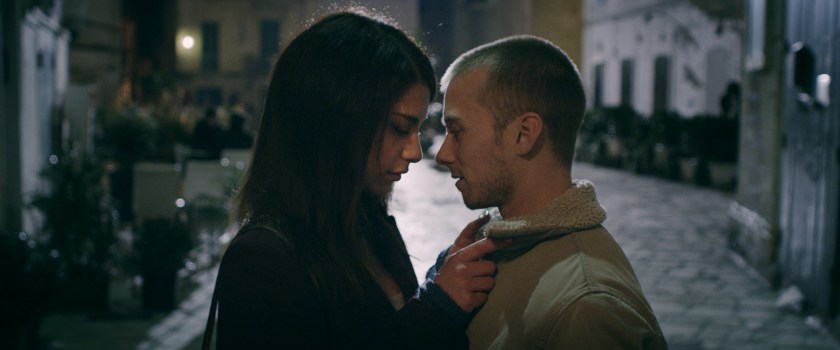
I began the filming expecting one thing but ended up delighted and surprised with what I got. Evan’s mother dies in front of him, succumbing to a two-year battle with cancer. He feels lost and without purpose, so this leads to a spontaneous trip to Italy, the place his parents wanted to take him before they died. Evan wanders to a small town on the coast where he meets Louise, a young student. The two click right away but there is something mysterious about her, for all her charm and wit she remains cagey about certain parts of her life.

I remember seeing the trailer for Spring before its release and got the sense it would be a dark, horror film. However, it ends up becoming a romance story without any traces of cynicism. It is a dark film, but there is an emotional truth underneath the surface. Early in the first act, after Evan first arrives in Italy there is a sense of Eli Roth’s horrid Hostel films, that creeping sense of dread. We worry Evan is winding his way down into a trap. The filmmakers establish a very gloomy mood. However, I find the film has more in common with Linklater’s Before Sunset. It ends up being lots of conversations about relationships and the nature of love between Evan and Louise. Yes, there is gore and violence, but it never overtakes the film and become the focus. Instead, character work is the meat, with violence punctuating dramatic moments.

Spring is a gorgeous looking film. Directors Moorhead and Benson previously worked on Resolution, a small indie horror flick that did similar genre play. It’s very clear they have developed their technique with some truly beautiful and well-choreographed shots. There is an explosive argument in the streets of the small village after Evan discovers Louise’s secret. It is a single take, but it is a dizzying race through the back alleys and narrow streets. They also make use of drones to produce some stunning, sweeping shots of the coastal town that stand up to an expensive crane and helicopter shots.

The bulk of the film rests on the shoulders of the two lead actors, Lou Taylor Pucci and Nadia Hilker. I have never been overly impressed by Pucci. I’d seen him in his early work (Thumbsucker, The Chumscrubber, Southland Tales) and felt he was fairly flat and have noticed him popping up from time to time. Here he reaches depths in his character I wasn’t expecting. Hilker was a discovery for me and is a perfect match for Pucci. You get caught up in the chemistry these two genuinely have. That chemistry, more than the horror elements, is what makes the film. While Spring is a definite play on genres, it teaches a valuable lesson that horror is stronger when it relies on the more human and character-focused elements of storytelling.

Spring is a film that benefits from mystery. I would highly encourage you to read as little about it as possible and just know that it’s a movie that is body horror, but also something more. It’s a film about a young man working past grief and aimlessness and the risk of love. Its whole concept is a metaphor about what we give up when we allow ourselves to fall in love, and weighing if that is worth the risk.

Movie Review – Krisha

Krisha (2015, dir. Trey Edward Shults)

krisha

Krisha is a story that could have easily fallen into cliche and melodrama, but the deft hand of first-time feature film director Trey Edward Shults elevates this story and these characters into something transcendent and horrifically beautiful. Krisha is a woman in her early 60s, reunited with her estranged family after an undetermined number of years. It’s Thanksgiving, so her sister Robyn has the house full of siblings, spouses, and children. A niece has just become a new mother, and the baby is a the center of everyone’s attention. Later in the day, even the matriarch is brought over from her nursing home. As most people can relate, there is a tension underlying the joyful reunions happening, particularly on the part of Krisha. She has suffered from substance abuse, and individual family members are not sure of what condition she is in at the moment.

Krisha’s arrival sets the stage for the tone of the film. The camera hovers above and floats down, following her as she goes to the wrong house and then drags her suitcase across the lawn to the right one. In both the aesthetics and details of the performance we are being informed about who this person is. Krisha is overly cheerful but a mess in her action, disorganized and overwhelmed. It’s explained she lives by herself, but it’s more than that. Her sister Robyn raised her son, Trey and the circumstances are never brought to light. It is apparently tied to Krisha’s substance abuse, though.

We’ve all likely met Krisha, either as a member of our family or a passing acquaintance. She just can’t seem to get her life in order, was probably labeled a “free spirit” when she was younger but now it’s worn on the people around her. Some small gestures and details develop her character without the film ever becoming expository. When she is finally reunited with her mother, the elder woman has a strange aside about her mother. She states that the great-grandmother was a gorgeous woman who always seemed ashamed of where she was from. This causes Krisha to step back in shock, and the implication is that this story may be very similar to Krisha’s experience and what led her away from her family.

Shults is powerfully skilled for such a young filmmaker, and it is evident he has influences from the American canon. The tension built with a wandering camera and taught percussion feels at home next to Paul Thomas Anderson’s Punch-Drunk Love. The naturalistic exchanges between family members and the overlapping family conversations is very much a stroke of Robert Altman across the screen. Star Krisha Fairchild is undoubtedly making reference to the great Gena Rowlands (A Woman Under the Influence, Gloria) in her performance. This film is a beautiful homage to the great directors of the American independent cinema.

One aspect of the film that may not be readily apparent while watching it is the personal connection it has to the director and actors. This is Shults’ real family. Krisha is his aunt, Robyn is his mom, the home is his mother’s house. In interviews, he’s explained that the central character is not based on any one person but a combination of troubled family members. His father was estranged from the family and died as a result of substance abuse a few years ago. The explosive incidents in the film are drawn from a cousin’s outburst at a family gathering, a cousin who ended their life months later.

Krisha is a tragic and powerful film. It is one of those works of film that embeds itself under your skin. Shults’ next work It Comes At Night looks to be a powerful exploration of human relationships in the face of horror. I am excited to see Shults expand his craft and continue developing this talent of building tension and atmosphere.

Movie Review – Christine (2016)

Christine (2016, dir. Antonio Campos)

59643_ppl

The story of Christine Chubbuck is fated to end in tragedy. To most people, she’s known for the stories of a video of her suicide. During the early morning on 1974, while delivering the news, Christine produced a gun from beneath her desk and announced that “In keeping with Channel 40’s policy of bringing you the latest in ‘blood and guts,’ and in living color, you are going to see another first—attempted suicide.” She proceeded to pull the trigger and fire a bullet into her skull. Fourteen hours later she was pronounced dead at the age of 29. To the public who heard of this event the most looming question has always been, “Why?”

Antonio Campos’ dramatization of the last few months of Christine’s life begins in a way that might surprise someone who was only familiar with the story of her death. She is an energetic, passionate reporter struggling to tell positive human stories while up against a news media that is learning sensationalism corresponds to higher ratings. She isn’t willing to give up so easily and argue viciously with news director Mike. While she fights for principles on the news, Christine is also experiencing severe abdominal pains that she attributes to stress but seem to be something more serious.

Taking on the task of capturing who Christine was is actress Rebecca Hall. I’ve seen in some supporting roles in various films but never really felt very impressed. Apparently, she had just never been given an active enough role to show off her talents. Her absence from Best Actress nominations at any of the major awards is yet another sign that the mainstream awards are out of touch. It has been a very long time since I have seen a performance that so transformed an actor. Her voice, the way she moves, just watching her hands tense and grasp at objects, so encapsulates a real person. Christine’s pain is real, but even more surprising is her joy at producing stories about people. It’s hard not to get caught up in her passion as she takes the mundane and attempts to transform it into the remarkable.

Surrounding Hall’s central performance is a brilliant cast of supporting actors. Michael C. Hall plays George, the news station’s main anchor who shares the awkward flirtations of Christine. He could easily have been off as a pastiche of Ted Knight’s archetypal pompous newsman from Mary Tyler Moore, but a moment in the third act reveals a layer to the character I didn’t expect and changes the audience’s perception of him. The always great Maria Dizzia plays Jean, Christine’s best friend at the station and camerawoman. Jean sees Christine’s moments of breaking down and is deeply affected in the wake of her suicide. The final moments of the film choose to focus on Jean and they almost wordlessly convey the real emotions and reaction a friend would feel in the aftermath of such a tragic end. There is a numbness in her eyes and a deliberate effort to try and move past this. Tracy Letts plays the role of Mike, the film’s antagonist, who worries over the station’s dwindling ratings and aggressively pushes Christine to change her angle on the news. But even he is given brushstrokes of character development that reveal he does care about the station beyond just ratings.

The film gets across a sense of alienation that is suffocating. Christine continually spirals further down, never giving up her sensibilities that she can find a way out of her problems. But at every turn something gets in her way, kicking the legs out from underneath her. By the time the film reaches its climactic moment it feel heartbreakingly that there was no other way this could have ended. In the larger context of the news media, everything she represented was going down the drain. Throughout the picture news reports about Nixon and Watergate can be heard. Even the opening has Christine shooting footage for her reel, alone on the set, pretending to interview the president. She points out the idea that you can’t really be paranoid if people are actually out to get you. And for Christine, everyone did seem to unintentionally be out to get her.

Movie Review – One From the Heart

One From the Heart (1982, dir. Francis Ford Coppola)

forrest-garr-one-from-the-heart


Ambition in filmmaking is a dangerous tightrope. In the 1970s, there was a cascade of filmmakers who were highly ambitious and succeeded. Many of them (Spielberg, Lucas, Scorsese) continued their successes into the 1980s. Others were not so successful. Hal Ashby (Harold and Maude, Shampoo) became increasingly addicted to drugs and faded away. Michael Cimino translated his enormous success with The Deer Hunter into the bloated critical and box office failure of Heaven’s Gate. And there’s Francis Ford Coppola. The Godfather and The Godfather, Part II are held is such high esteem and Apocalypse Now has garnered a similar appreciation in the decades that followed its release. But something happened in the 1980s that caused Coppola’s star to dissipate. One From the Heart is widely considered the moment everything collapsed, but it’s more complicated than just one movie.

Continue reading “Movie Review – One From the Heart”

Movie Review – Moonlight

a24 visions

Moonlight (2016, dir. Barry Jenkins)

moonlight

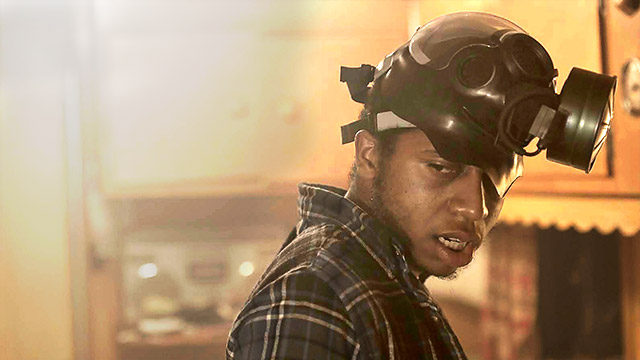
Moonlight is an American masterpiece. Of films I’ve seen in the last ten years, I place it up there with The Master or The Witch, as a piece of cinema that is sure of itself on technical, thematic, and character levels. It tells a story that is primarily American, but yet not beyond connecting with people universally.

The film is told in three acts, each one chronicling a pivotal moment in the personal development of Chiron, a black youth living in Miami, Florida. We first glimpse Chiron (nicknamed “Little”) as he runs from school bullies and hides in a boarded-up tenement. It’s here he meets Juan, the head of the local drug sellers and the older man sees something inside this struggling kid. He takes Chiron to his home to meet his wife, Teresa, and they manage to get Chiron to share a little bit about his life. Later, Juan delivers Chiron home, and we meet the mother, Paula who knows what Juan does and attempts to shield her child from him. Later, we learn Paula is connected to Juan, and this knowledge shapes the relationship between Chiron and the man.

The second act catches up with Chiron in high school where the bullying has continued. Throughout both these acts, his one constant is his friend Kevin, a boy who doesn’t treat Chiron with the revulsion and hate the others do. It is made apparent that our protagonist is questioning his sexuality and finds himself attracted to Kevin and that attraction may be reciprocated. Their relationship comes to a painful conclusion in this act, and then we transition to adulthood. Here Chiron has made himself into the person he thinks he should be but is struggling with his past. This all leads to a reunion between himself and Kevin that will bring out their past and hint at their future.

I had to fight back the tears at two moments in this film. The final scene between Chiron and Juan is profoundly painful and the final scene between Chiron and Kevin is a release of emotions and honesty. The element of the film that I want to praise director Jenkins the most for was the refusal to have a villain. No one is the villain, but many people make horrible choices that hurt people. However, Jenkins chooses to reveal layers to these characters that make a reductive judgement of good/evil near impossible. Juan is a strong of example of this, and my overall favorite character in the film. He is responsible for crack cocaine being in the neighborhood and this business ends up having a direct adverse effect on Chiron. Juan is unaware at first and wants to be a father figure to this kid he sees in need of one. Chiron’s mother rightly suspects Juan is attempting to pull her child into the drug trade. But we learn more about her own connection to Juan and that becomes more complicated. Juan is not a villain but he is responsible for great harm in the community. The scene where he comes to this realization and then also has to admit it to young Chiron is heart-rending. This really highlights the idea that as often as we think we are the “hero” in our own story, we can so easily be the “villain” in another’s.

The acting throughout Moonlight is superb. Chiron is played by a succession of three actors: Alex R. Hibbert (Chiron at 9), Ashton Sanders (Chiron as a teen), and Trevante Rhodes (Chiron as an adult). It’s weird to say I was glad Rhodes didn’t get a Best Actor nomination for an Oscar, but that is only because the character is a collective of three commanding performances. The only way to do justice would have been to have a single nomination for three actors. I have not read much about the production and rehearsal process but the synchronicity between these performances is unlike anything I’ve ever seen. I have to wonder if the movie was made sequentially so that Hibbert set the foundation of the performance, Sanders studied that and adapted, and finally Rhodes was a culmination of his own thoughts of the character filtered through these two others. As a result, Chiron is one of the most fully realized characters I have ever seen on screen. He is a living breathing person who I feel like I’ve met.

As a public school teacher, I’ve worked mainly in the inner city for the seven years of my career. As a result, I have worked with some young men much like Chiron. I have also worked with young black men who are happy and healthy and have very supportive families. So, I don’t think we should view Moonlight as a universal truth of the “black male experience” so much as it is about how masculinity is framed for so many black men. The scenes where Chiron sits at Juan and Teresa’s kitchen table eating food and refusing to speak has been a part of my life. I’ve sat across from young men who are so tormented inside at such an early age. Food is about the only nurture some of them get. I’ve watched young black men crying because they’ve injured themselves only to have their mother smack them over the back of the head and spit “Stop crying and being a pussy! Men don’t cry!” Even with my current year’s class, I have a young black male student who finds it deeply difficult to verbalize his frustration even when it is just the two of us talking. He didn’t want to say sorry to another student he upset in front of everyone because he’d been taught that would make him look weak and his status among his peers is more important to his livelihood than his conscience. This sort of toxic masculinity is what Moonlight is all about. And it’s why the brief glimpse we get of Chiron being able to stop tensing, stop holding himself back is so emotionally cathartic.

I had seen Barry Jenkins’ previous feature film, Medicine for Melancholy, and while it is a great independent character focused film, he has made a significant leap across all elements of filmmaking with Moonlight. This is going to be a defining American film and is going to resonate for many years to come. The intersection of LGBT people and People of Color can be a tough one. Growing up in the South, I have been an outsider and observer of this intersection, and the deeply religious pockets of the black community can be as brutally homophobic as their white counterparts. At the same time, I have seen same sex relationships between women accepted without much strife. It is when men reveal their nature as gay that fear boils up, across all communities. Power is assumed to be heterosexuality, and Moonlight shows that strength doesn’t come from a particular sexual orientation, rather a personal resolve and determination, aided by people in your life who show you what love can be.

Movie Review – The Alchemist’s Cookbook

The Alchemist’s Cookbook (2016, dir. Joel Potrykus)

alchemist

A man named Sean lives in a trailer home deep in the woods outside of Grand Rapids, Michigan. At first glance, it would be easy to mistake his set up as a meth lab, but after further observation, it is revealed he is an amateur alchemist. His only constant companion is Kaspar, his cat, but he does receive erratic visits from Cortez, a cousin, who brings supplies. Cortez is unaware of just what his Sean is up to and that his cousin is close to making contact with demon Belial, whom Sean believes will provide him with incalculable wealth.

It’s hard to classify this film as any one thing. There are touches of drama and of horror and a little comedy. It never settles on one thing, and some reviewers have taken to calling it a “punk” film more than anything else. Director Potrykus has a track record of making films in this off-kilter, low-fi style. I personally don’t connect with much from the punk genre, and that would likely explain why this movie left me frustrated. I can’t see any reason I’ll remember this film.

There is so much here in the ingredients list that should have guaranteed I’d love it. The rural setting, deep in the woods, always an excellent location for horror. I definitely have an affinity for stories about the demonic and humans who are a little too arrogant in their abilities to deal with a summoned entity. There is a sense of danger and tension from the first moments of the film. However, that feels undercut as the tone shifts from chapter to chapter. Or worse yet, the tone goes with a distant documenting of a man pouring substances into various vials without informing the audience of what is going on.

The biggest problem I had with Cookbook was the lack of character development. There is only one real presence on screen, Sean. And with an hour and a half, I ended the film feeling like I still didn’t know much about him. I never needed anything explicit, but some reasons could have been hinted at as to why he was driven to the wilderness and devoted himself to this pursuit of gold. Lots of scenes give us the sense of what this world feels like and Sean’s mannerisms, but never a good sense of motivation. The entire picture seems like a tedious exercise in improv where nothing really bubbles to the surface in the end.

There are great moments throughout, though. Sean and Cortez’s interactions are funny and entertaining, though they mess with the tension. There is a sense of some sort of structure through the chapter breaks and the progression of day into darkness that some key scenes touch on. As a whole, Alchemist’s Cookbook sadly failed to meet my expectations. I was honestly, excited to sit down and watch this one after seeing it’s great trailer. In the end, it feels too insubstantial to recommend and won’t really satisfy any fans of the many genres it touches on.

Movie Review – Always Shine

Always Shine (2016, dir. Sophia Takal)

hero_always-shine-2016

Two friends, Beth and Anna, are headed to Big Sur for a weekend getaway. Both women are actresses in Los Angeles with a big difference: Beth keeps booking bigger and bigger roles while Anna is passed over regularly. Anna believes this is rooted in their personal demeanors. Beth is perfect for the sexy but non-threatening female roles. Anna is “aggressive” by simply being very clear and direct about what she wants. Over the course of this weekend the friendship between these women will be strained to the breaking point with horrific consequences.

It’s no surprise that Always Shine is thematically about women existing in male dominated spaces. Our main characters are archetypal depictions of women in cinema, or in Anna’s case women that are marginalized in cinema. Director Takal shows a ton of skill in layering that theme under the story of this friendship and the psychological breakdown of one character. What could have been didactic and ultimately turned into a philosophical abstraction ends up being a visually engaging psychological thriller that isn’t exploitative.

The challenge in a film like Always Shine is making sure the audience doesn’t view one character as the bad one and the other good one. Beth is your traditional Final Girl and the film opens with her auditioning for the role of such a character in a horror movie. The producers inform her that the role will have “extensive nudity” and Beth is unaware of this fact, her agent didn’t tell her of that detail. Our introduction to Anna is a direct to camera monologue when she picks up her car from the mechanic. A repair was made without her consent and she unloads. Both of these scenes set up how these women are perceived by the men they interact with, but they are also subverted for the rest of the film. In particular as we get to know Anna better, we learn she is not a sweet, kind person. In many ways, she is playing a role to her own advantage.

Mackenzie Davis’ performance as Anna is the core of the film and, like in everything she appears in, she knocks it out of the park. It’s likely Davis experienced the struggles as she was developing her career and likely faces the problem of being offered roles that would force her to take on this behavior that is so antithetical to who she is. There are a number of compelling character scenes between she and Caitlin Fitzgerald who plays Beth that are beyond just awkward but painful. One scene has Anna learning about Beth’s casting as the lead in the horror film from the opening. Anna pushes to do a read through with a hesitant Beth and the scenes plays out like a competition or challenge. Anna is adamant that she’ll show Beth her prowess. The film is intelligent enough to not overtly talk about male perceptions shaping these women, but the subtext is there, buried beneath all the tension.

The structures and the themes of identity working in the film reminded me of Nicolas Roeg’s Performance. In that movie, the traditional macho archetype meets a counterculture sexually liberated almost sorcerer and their persona’s begin to meld and split. Always Shine leaves the final outcome up to the viewer. We see police. We see an ambulance. But one character’s fate is left in question. Will she disappear into the woods, invisible or will she step out and make herself heard?

Movie Review – The Fits

The Fits (2015, dir. Anna Rose Holmer)

the-fits-0-0

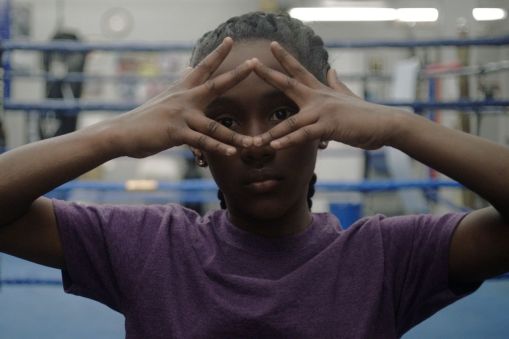
Toni, an eleven-year-old girl, is very focused and determined when it comes to working out with her brother at the local community center’s boxing gym. She even stays after to help him wash towels, replace water cooler jugs, and get a little extra training. However, she’s recently been intrigued with a competitive girls’ dance team that trains in the larger gym at the community center. Slowly, Toni begins to be torn between these two worlds and witnesses girls on the team seemingly falling ill to strange trance-like seizures.

Continue reading “Movie Review – The Fits”

Movie Review – The Eyes of My Mother

The Eyes of My Mother (2016, dir. Nicolas Pesce)

eyesofmymo

The A.V. Club said of The Eyes of My Mother as “If Ingmar Bergman helmed Texas Chainsaw Massacre” and I couldn’t think of a more apt description. The film is a coming of age story centered around Francisca, the daughter of a much older husband and wife. Her mother is an immigrant from Portugal who was a surgeon there and is very direct with her daughter about the intricacies of anatomy. A chance encounter with an extremely twisted individual begins Francisca’s journey down a dark, tragic path. The film is segmented into three chapters (Mother, Father, Family) and ends on what is an inevitable note.

The Eyes of My Mother captures that quiet, uncomfortable tone that you see in a lot of European horror films. It never shies away from the blunt horror of what people do, except in one very cleverly cut sequence. It’s not a film with a straightforward villain. A character appears early on and seems like they will be the villain but this is quickly subverted, and the story goes down an arguably darker route. Throughout, there is a dreamlike sense to the film. Its setting is a rural farmhouse, and the events are so far removed from the sight of civilization you can’t help but sink into the impending sense of hopelessness anyone who comes to the house faces. Something felt very familiar about the hushed tone of the horror in Eyes, and after some further research I found out director Pesce came from the Borderline Films production company which are also responsible for the similarly toned Martha Marcy May Marlene and Afterschool.

The plot of the film wouldn’t work so nearly as well without all the tonal elements in place. If the score had been more melodramatic or, performances were emotionally heightened all the horror would have dissipated. Instead, we are forced to linger in moments of horror. We see Francisca standing over a table working a hacksaw through a human body without revulsion, just a stoic sense of hard work. A character walks in on a brutal murder and, without a sound, deals with the killer. A mother runs after her stolen child only to receive a knife to the back and quietly cry out and squirm in pain on the floor. My personal favorite moment is the least explicit and involves the audience understanding information conveyed through a jump cut. An argument is going on between two characters, probably the most emotion at any point in the film. The tension is building, it’s well understood how this is going to end and then CUT. We see Francisca cleaning up the aftermath, and we immediately know what has happened between those scenes.

The Eyes of My Mother is not interested in pinpointing Francisca motivation. There is a possibility it is triggered by the inciting incident in the first act, or it is connected to things her mother taught her. Some reviews have been critical of this fact, but I personally feel that missing piece is essential to establishing horror. The best horror comes out of an inability to understand what is happening. Disorientation inspires a sense of fear in humans and by not having a long winded speech about why Francisca kills the audience is forced to contemplate why the events of the film occurred. In horror, it is what is unsaid and unexplained that haunts us the deepest.