Movie Review – Au Hasard Balthazar

Au Hasard Balthazar (1966)
Written and directed by Robert Bresson

Robert Bresson was not a part of the French New Wave. He was in his fifties by the time Godard, Truffaut, and company started their cinematic revolution. Bresson is a reminder that French films were already doing things far differently from their Hollywood counterparts. When you watch a Bresson film, you might feel a distance from yourself and his characters, which can be misinterpreted as “coldness.” To understand Bresson and his work, you need to know of his three primary influences: His Catholic upbringing, his time as a prisoner of war, and his love of art, particularly painting. He was never interested in filmmaking as a way to create great wealth, though he lived comfortably his whole life. Instead, film was the most apt means for the director to express his thoughts about the human condition.

Continue reading “Movie Review – Au Hasard Balthazar”

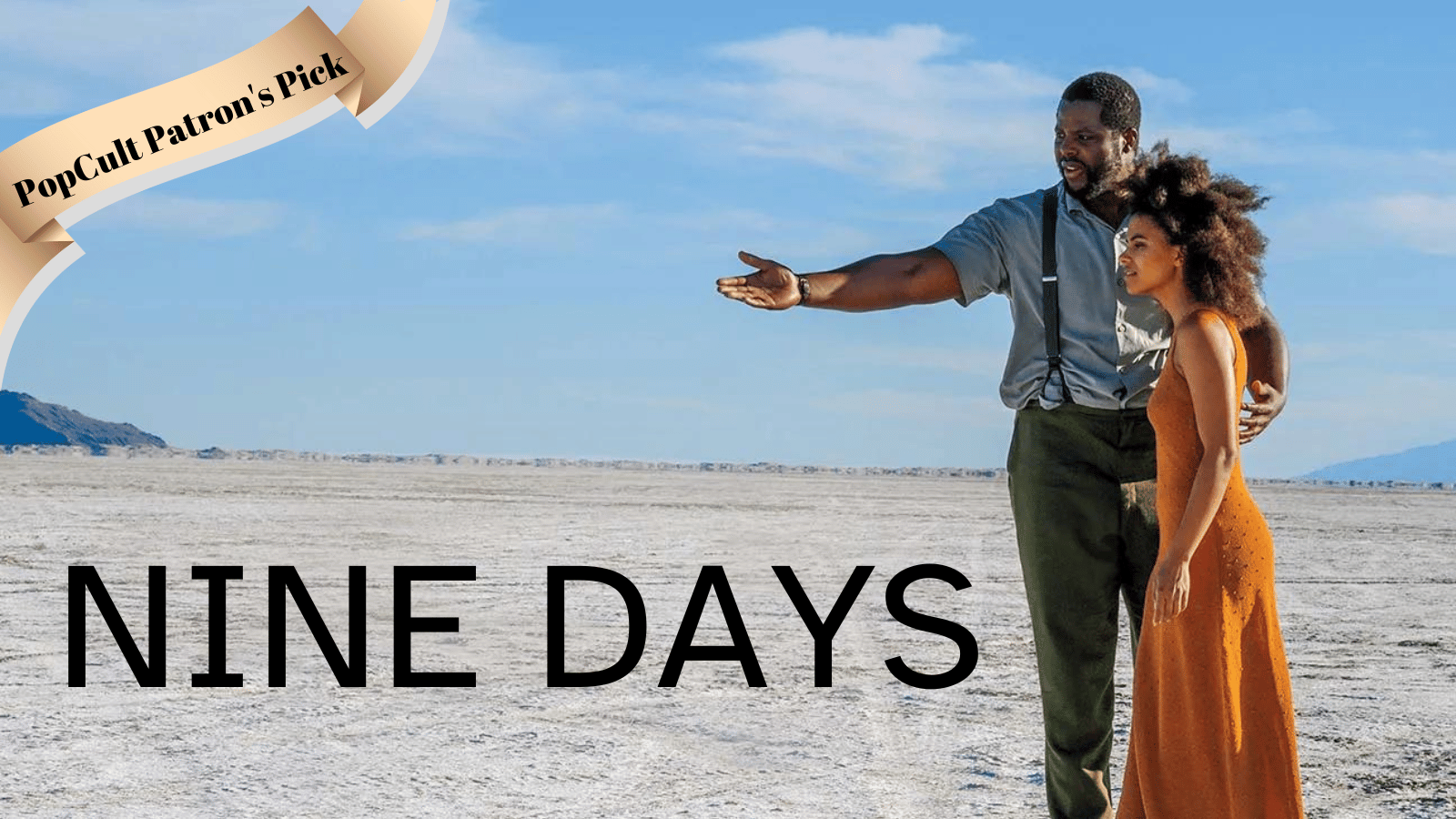
Patron Pick – Nine Days

This special reward is available to Patreon patrons who pledge at the $10 or $20 monthly levels. Each month, those patrons will pick a film for me to review. If they choose, they also get to include some of their thoughts about the movie. This Pick comes from Bekah Lindstrom.

Nine Days (2020)
Written & Directed by Edison Oda

I did not like this movie. From what I see online, it has proven to be a very polarizing film, with few people settling in the middle. I know exactly why I didn’t like it, which concerns some creative choices by the writer/director Edison Oda. I think the film is way too long for what it is trying to say and how it is trying to say it, and I argue the message could have been more poignant if a good half hour was shaved off the runtime. By the time we get to the third act, Oda is just saying a lot of the same things over and over but not building upon them in a manner that excites or interests me. It is thematically similar to another divisive film that came out recently, Alfonso Cuaron’s Bardo. I enjoyed Bardo because I felt the director kept things visually inventive, so I never got bored with the images on the screen. Nine Days is never able to move past the sedate, bland tone it sets at the start.

Continue reading “Patron Pick – Nine Days”

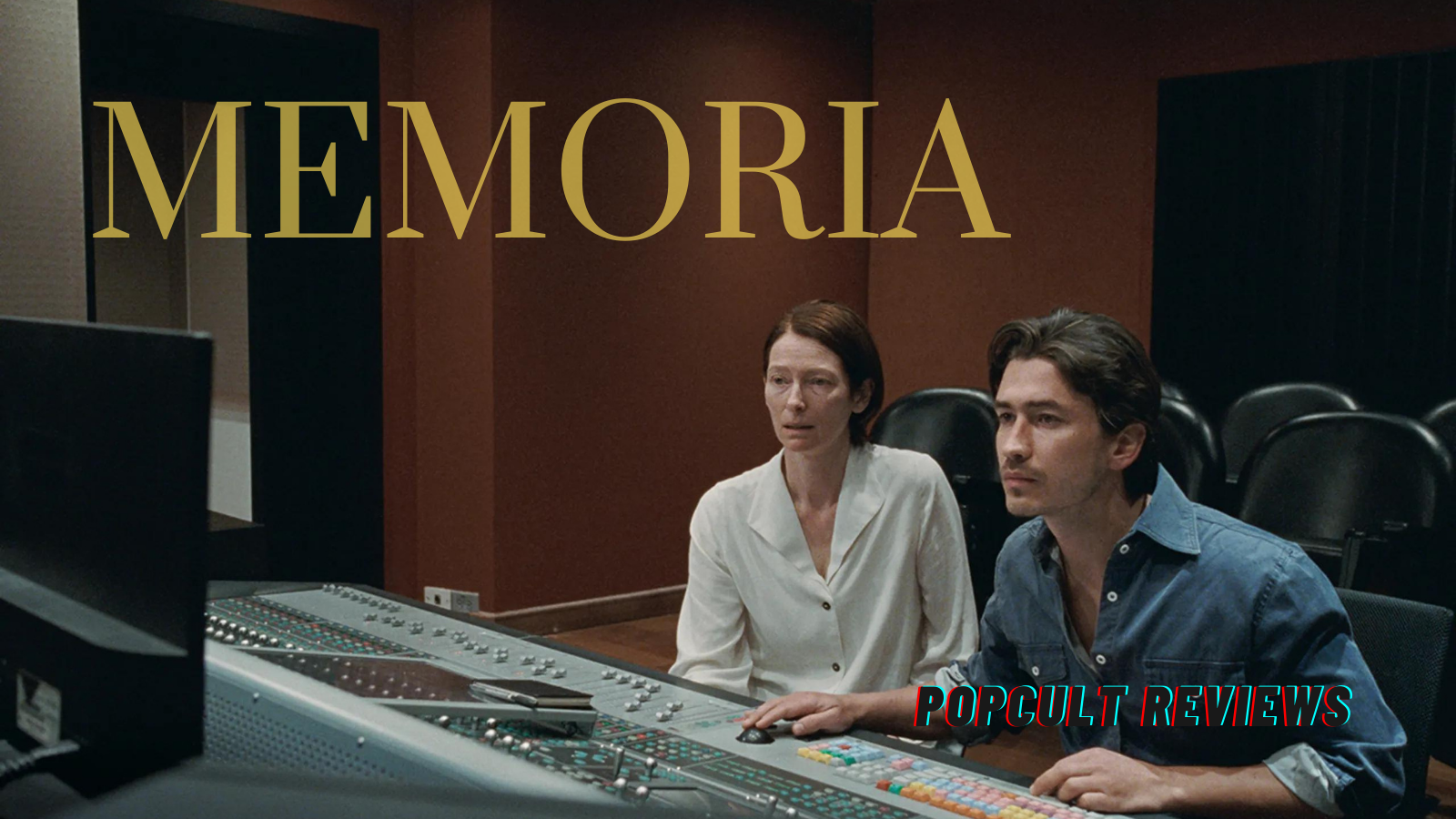
Movie Review – Memoria

Memoria (2021)
Written & Directed by Apichatpong Weerasethakul

Memoria is difficult to talk about because it really isn’t a movie in how we typically define such things. It’s filmed on a camera, there are actors and a script, but in terms of narrative, it’s glacially slow. Memoria is a filmed meditation, and because of that, it can be frustrating at times. I know I didn’t enjoy my entire time with the picture, yet some moments took my breath away. I have to assume this is the desired outcome from the director, Apichatpong Weerasethakul. This is a movie about creeping existential dread that never allows its protagonist to fully define or name what is causing this feeling inside them. 

Continue reading “Movie Review – Memoria”

Movie Review – She Dies Tomorrow

She Dies Tomorrow (2020)
Written & Directed by Amy Seimetz

The world is a scary place right now, fueled by a mix of real horrors and a general sense of growing uneasiness with modern life. People seem to be inching towards a collective mass mental breakdown that is playing out on viral videos peppered across social media. The American population is being confronted with its mortality in a stark manner that you can see is not setting well. Some people are in outright denial and become unhinged, encountering others who very proactively try to keep themselves and others healthy. These anxieties and contemplations of death are what make up the nightmarish ground She Dies Tomorrow covers.

Continue reading “Movie Review – She Dies Tomorrow”

DocuMondays – Examined Life


Examined Life (2009, dir. Astra Taylor)
Featuring Judith Butler, Cornel West, Slavoj Zizek, Kwame Anthony Appiah, Michael Hardt, Martha Nussbaum, Avitall Ronell, Peter Singer, Sunaura Taylor

Fans of Michael Bay’s work will no doubt be rushing out to see this one. That was sarcasm. Canadian-American filmmaker Astra Taylor has assembled 8 philosophers and given them ten minutes a piece to muse on some aspect of existence. This could have been pretentious drivel, but Taylor is able to make herself the subject of the film early on in an effort to point out that such an endeavor is imperfect and we should simply sit back and enjoy the mistake. While walking through a park with NYU literature professor Avital Ronell, the subject becomes the interviewer, asking Taylor what the goal of all this is. Taylor responds that philosophy is such an oral exercise, yet it is communicated primarily in printed words, where there is time and space for it to be stretched out and examined. Taylor states she wanted to see if something similar might be accomplished on film, where the philosophers can speak.

The three standouts for me were Judith Butler, Slavoj Zizek, and Cornel West. Cornel West has had vast experience as a media personality so he has the charisma and verbage to make what could have been a dry seminar into a witty musing on the nature of democracy and authority. Judith Butler is also very interesting, with her segment involving a discussion between Taylor sister, Sunastra, who is a painter and disability advocate. Their talk hinges on the idea of “going for a walk”, and what that means for a wheelchair bound person such as Sunastra. This evolves into the nature of being disabled in a contemporary context and then to an exploration of what the manner in which people walk tells us, and how human behavior is regulated by social expectations.

The best was Slavok Zizjek, a Croatian philosopher whose A Pervert’s Guide to Cinema is a great documentary introduction to film criticism. Zizek delivers his dialogue from a landfill somewhere in New York. He talks about the conflict between humanity and nature, and the trend in some groups to desire a “return to nature”. His argument against this is that Nature is simply an ongoing series of violent biological interactions. He cites oil being such a large part of contemporary life, and how we never contemplate the sheer level of violence that had to occur to destroy so much living matter to produce the oil in the earth. The conclusion of this talk is that it is in humanity’s best interest to create further and further artificial environments that it can control, and that this will involve a redefining of beauty from a pastoral standard to one in which hills of garbage can be found to have a pleasing aesthetic.

The documentary is obviously not for someone needing an escapist film, yet it is not a film for someone who has attained a degree in philosophy. I found it fairly apparent that Taylor is trying to reach out to the contemporary individual who has an interest in continuing their education and not moving through life drone-like. The film is full of idea candy, some interesting questions to contemplate and savor after seeing the picture.