
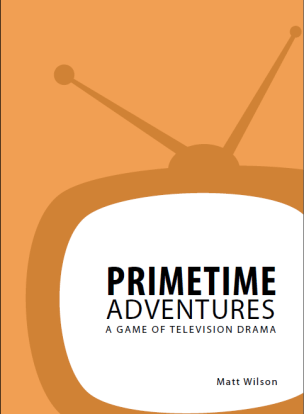
We’ve now come to the finale write up for Origins 2016. It was Saturday afternoon and I could feel myself running out of steam. I was going to just sit out the 2pm slot at Games on Demand, but our friend Mick Bradley encouraged me to take part in his Primetime Adventures game. I hemmed and hawed and with some prodding from my wife decided to go for it.
Primetime Adventures (Designed by Matt Wilson, Published by Dog-Eared Designs) allows a table of players to pitch, develop, and play out a television series of their own invention. The mechanics are there to simply create interesting outcomes from conflict in scenes. In a longer campaign, each character will get an amount of Screen Presence that determines how much influence they have over the events in episodes. For the purposes of the one-shot we played everyone had equal presence. Each scene is focused either on a personal Issue a character is dealing with or a more concrete plot related need. Cards a drawn and highest red card and highest total number of red cards determine how the rest of the scene should play itself out (Yes and, No and, Yes but, No but).
Mick presented the table with a number of series pitches, a good idea to save on time when running a convention game. The table collectively glommed onto a series Sojourn ‘66, an amalgamation of Deep Space 9, Babylon 5, and other various sci-fi media. A once proud hub of galactic diplomacy, now it was an outpost where planetary systems sent their rejects. The day to day operations were done by a couple series of clones, The Rogers and The Steves. The Rogers were the old model and The Steves were the shiny new ones. Player characters in our game consisted of one of the Rogers, a savvy barkeep, a scientist in charge of servicing clones that had gone awry, a past his prime diplomat, and the diplomat’s mysterious new assistant (really an exiled princess who refused to give into an arranged marriage). I played the past his prime diplomat, Tho Sint, who happened to come from the rival culture to our scientist (think Vulcans and Romulans).
The table has the right group of players who all listened closely and added to the story when it was their turn to set up a scene. By the end of the game, everyone would have signed up to continue this as a campaign if we were able. There was the right amount of humor and seriousness, so the game session never lagged. My particular favorite moment was when a bit of larping slipped into one of my scenes. Mick was played a black ops agent sent by my people, the Mox, to do some general nastiness. My character’s issue was always wanting to take control of every session so we played it as a character scene where I Thot was attempting to keep himself in check. The cards were dealt…and Thot was going to go off the handle. Mick and I both stood from the table and got in each other’s faces as our characters tried to chest bump and establish who was in charge. I’m sure we slightly frightened some of the other tables. But those are the moments that are magic when they happen in a tabletop game. Everyone is on the same page with the story and choices become very organic and fluid.
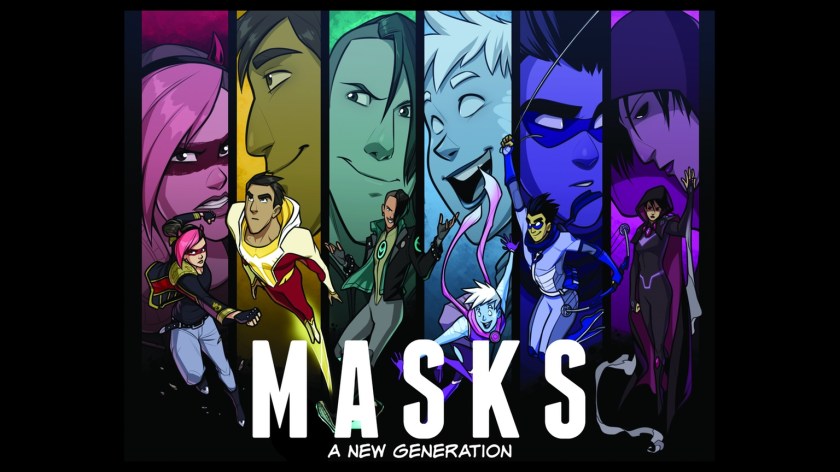
That night I played in an “off the books” game of Masks Brendan Conway ran. Once again, always fun, and the next game I planning on running for my own group.
I don’t have anything to really compare Origins to, I’ve never attended any other conventions. But I can say that the Games on Demand room has never been anything but the most inviting, kind space. The people who run GoD are always happy to welcome new faces and you’ll leave the convention with connections to a myriad number of people. There are people you can’t wait to have run a game for you and people you can’t wait to play alongside. You’ll leave having learned about a new, exciting game or with new ideas about how to run an old favorite. My wife and I had never attended a convention for any hobby until Origins 2015 and we now find ourselves reserving that time for every summer to come as long as we can.
For more information on Origins Game Fair – http://originsgamefair.com/
More importantly, for more information on Games on Demand – http://www.indiegamesondemand.org/
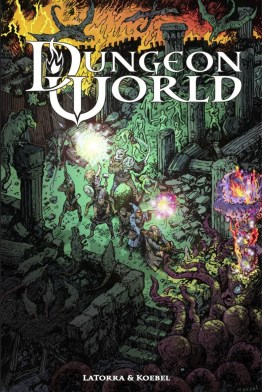
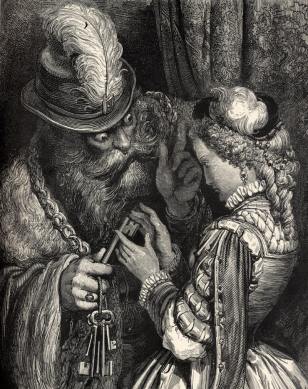 If you know the overlooked fairy tale Bluebeard then you are good. If you don’t, let me summarize: A young maiden is convinced to marry a brutish, ugly aristocrat named Bluebeard. After their wedding, the maiden is left alone in Bluebeard’s home and told the place is her’s, except for one room that must remain closed at all times. As in all fairy tales, she succumbs to her temptation and discovers an abattoir of Bluebeard’s former wives. The husband returns and vows to kill her. Depending on the version, a family member arrives and saves the maiden.
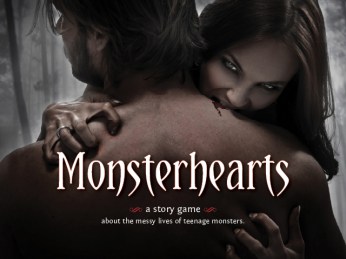 Friday morning rolled around and I knew exactly what table I would be at. We had the great honor of playing Monsterhearts with Joe Beason. Joe has been a Google Plus friend for awhile and I’d been very interested in his variation on Monsterhearts, Elderhearts which focuses on a retirement home rather than a high school. However, we were feeling the original that morning.
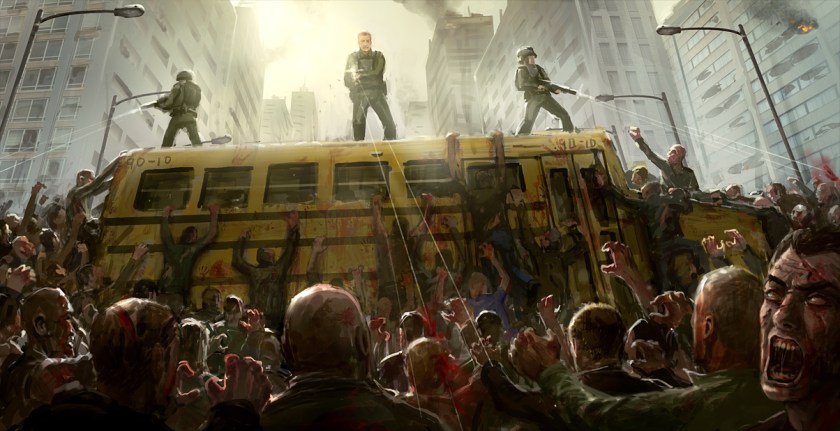
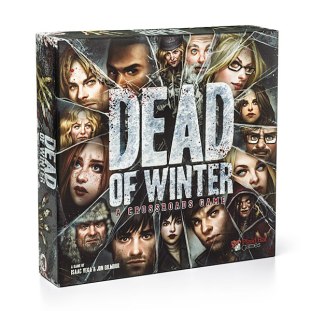 Dead of Winter is a board game from Plaid Hat Games, designed by Jon Gilmour and Isaac Vega. There are a lot of board and card games on the market in the zombie genre, so seeing yet another one might be a turn off. However, Dead of Winter brings some incredibly fresh and interesting elements to the table.
 We’ve played Dead of Winter twice, once as a two player game and most recently with three players. My wife and I invited over a coworker, Tiffany, who is a big fan of zombie media, particularly The Walking Dead. Dead of Winter does a great job in recreating that group tension from shows like TWD. For our game, we used the recommended Main Objective of collecting sample from zombies to develop a cure. The first round of play was everyone getting used to their choices of actions and we managed to stave off the first crisis. What I enjoyed most was that almost every Crossroads card pulled came into play which created a lot more dramatic tension. I remember one of the my characters stumbled across an abandoned oil truck which would have brought a cache of Fuel into the colony (used to make multiple moves around the board during a turn). The catch was that the noise from the truck would bring half a dozen zombies to the outskirts of the colony, putting us on the verge of being Overrun. If a location is Overrun, the character with the lowest Influence is automatically killed, no way to avoid it. I decided against taking the tanker and a few turns later we had a Crisis that needed Fuel to stop it. Those sorts of moments make the game very re-playable because consequences for decisions always have an interesting way of coming back to haunt you.
 PopCult Reviews