Tune-age: Arcade Fire – "Suburbs"

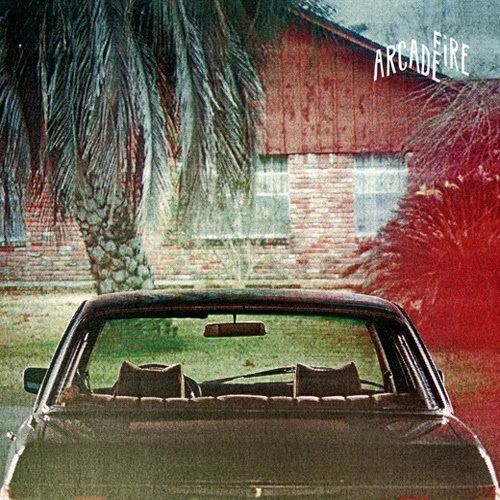
Arcade Fire – Suburbs (2010, Merge Records)

To try and define the Arcade Fire’s sound is an impossible task. When I first heard “Wake Up” in Brent Hamric’s car in the spring of 2004 I immediately thought of The Flaming Lips. One track later and that was changed. Three albums later and they are still too eclectic to pin down. A lot of music critics wait like vultures for the bands they love or others love to slip up, so that they can pounce and claim that the grandeur that once was is lost. Arcade Fire seems to dare them to try it, by dropping the dark gloom of Neon Bible and adopting a more pop-folk vibe. There’s some familiar sounds to bring you back in, but then suddenly things change up and we hear some arrangements and instruments that show the band is still testing its limits.

It seemed a natural fit for Arcade Fire to score a film, and they did so last fall for Richard Kelly on The Box. While the music there resembled Bernard Hermann more than any of their typical music, they still have a cinematic sound in this latest album. It’s a very West Coast, bouncier collection of songs. Every few tracks there’s that dark underscoring that comes through, but for the most part this is a pop-ier album, very much music you could dance to. Like all their work, the cinematic qualities come from the story being told in the lyrics. Each album has felt like a dystopian novel, touching on themes of the end of our civilization. It sounds like heavy material to be working with, but they manage to make tracks that you tap your foot to. The voices in these song stories are typically disaffected twenty-somethings reflecting on the desolation around them.

The opening track “The Suburbs”, has a bouncy piano underscoring the song which came as quite a jolt when I started the album. For the first time on their albums, I find lead singer Win Butler sounding like a spiritual successor to Neil Young. And this opening song, like a couple others, have a folk-rock element to them. “Ready to Start” is the track you expect to hear on an Arcade Fire album, there’s pounding drums and alt-pop guitar riff. References are made in the lyrics to “the kids”, a recurring noun in all their albums, that seems to represent youth in general who has an awareness above the adults. “Modern Man” is back in Neil Young country, but also made me think of some of The Talking Heads’ work in the early 1980s and is a song I would not have guessed was an Arcade Fire song if I didn’t already know it. “Rococo” seems to be a mix of expected elements and this new West Coast folk sound being incorporated now. “The kids” are back again, a force of apathetic destruction, constructing massive pillars of junk to burn down. “Empty Room” begins with some wonderfully light strings and then turns into a classic right out of the standard playbook, with some very Kate Bush like vocals led by Chassagne Butler. “City With No Children” evokes thoughts of *gasp* Bruce Springsteen, a comparison I never thought I would make. There’s a strong of sense of small town nostalgia woven through the song and even the arrangement feels like a track off Thunder Road.

“Half Light I” and Half Light II” continue the nostalgia trip, and I have a feeling the band made this album as homage to their own youths growing up in the 1980s and the music that filled their lives during that time. It is a good explanation for how the album is able to evoke memories of so many different artists of that time, yet is still able to not go off the rails. “Suburban War” comes back to Springsteen but not as heavily, its much more Arcade Fire gloomy. “Month of May” is yet another splash of ice cold water as the band is backed by the unceasing guitar of what could easily be a Ramones song and more mentions of “the kids” as a defiant force of purity. “Wasted Hours” is back to folk pop guitars and continues the themes of adolescents tooling around the desolate wastes of Southwestern small towns and looking back on this time as something to be missed. “Deep Blue” is one of the few tracks where Win stands alone, his voice turned into an echo-y voice mourning the past, but also makes use of that same bouncy piano rhythm from the first track. “We Used to Wait For It” continues on from “Deep Blue”, now talking about the time spent by youth in anticipation of the future, only to look back on their youth as adults and want to somehow return to it. “Sprawl I (Flatland)” is Win Butler returning to his childhood home, singing out from open landscape and becoming lost looking for it. This is a track so full of narrative elements, it makes you want the band to compose an opera. And where that songs leaves us mournful, “Sprawl II (Mountains Beyond) is a chorus of angels beyond the hills that surround this small town lifting our protagonist up and away. The album wraps up with a short and haunting track, reprising the opening song, where Win states that if he could have the time back he wasted as a child, he’d simply waste it again.

Arcade Fire proves that they are about revisiting the same ideas thematically, but constantly experimenting with their sound. This by far the most listener friendly album they have released and every track could easily find a place in the radio rotation. They take a lot of chances and flirt with mainstream sounds, only insomuch as they hearken back to brothers Win and Reg Butler’s youth in the suburbs outside of Houston. For all its slightly dark atmosphere at times, there’s a revelry in being a kid without responsibilities or being forced mete out time as a valuable commodity. A great album from one of the best bands of the 21st century.
In Theaters Now: Life During Wartime


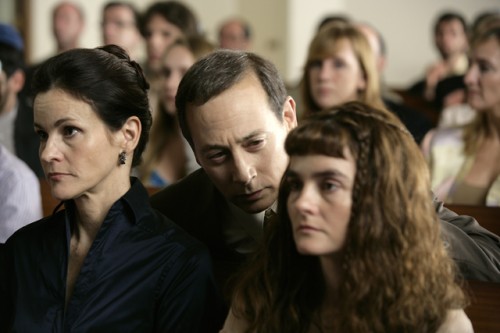
Life During Wartime (2010, dir. Todd Solondz)
Starring Alison Janney, Shirley Henderson, Ciaran Hinds, Dylan Riley Snyder, Paul Reubens, Ally Sheedy, Charlotte Rampling

I can’t see anyone who hasn’t seen Solondz’s 1998 film Happiness being able to get much from this movie. It is about a direct sequel as you can get, making references to plot points from the first film in ways that makes it un-enjoyable for someone unfamiliar with the older picture. It’s not a bad film, I enjoyed it a lot, it just is not made for the uninitiated. What it does is revisit some familiar faces, some in a more interesting way than others, and offer different perspectives on their personalities. It’s very sad and at times very funny, probably Solondz’s most restrained film to date, but also has me worried about his lack of new characters or material. Life During Wartime also shares elements with Palindromes, as not a single one of the actors from Happiness reprise their roles here, which I suspect is a choice made by Solondz.

Joy (Henderson) has dinner with her husband, Allen in a scene that mimics the opening of Happiness. The entire affair has her remembering that first dinner with Andy (Reubens) who killed himself after she rejected him. It’s decided she will take a trip to visit family in Florida, and Joy ends up in the company of her divorcée mother and single parent sister. Trish (Janney) is getting involved with a new man and helping her middle child, Timmy (Snyder) prepare for his bar mitzvah. Up the coast, Trish’s ex and convicted child rapist, William (Hinds) is released from prison. He also wanders down to Florida sneaking into the house just for glimpses of the family he lost. Joy ends up in California at the home of her other sister, Helen, a pretentious and self-obsessed writer. Where ever she goes she is haunted by the ghost of Andy, who always starts out gentle but becomes violent. It’s a large ensemble movie where characters are connected, but rarely interact.

Solondz seems to have a very strong personal connection to these character types, and I suspect they come from his own family and acquaintances, an exaggerated cinematic sheen spread over them. I found his criticisms of the East Coast Jewish community very interesting. At one point, Trish is talking about her new beau, a middle-aged New Jerseyian and says that he voted for Bush twice and McCain, but only because he knows they support Israel. From many of the more liberal Jews in America, this has been an issue of frustration, how the right has co-opted the pro-Israel cause as their own. So, there’s a lot personal issues in this and all of Solondz’s films. The film has three central figures: Joy, William, and Timmy. All three of these characters are haunted (some literally) by the past. Joy is visited by Andy, whose suicide she spurred forward. William, newly released from prison, has lost every thing and wanders down the east coast and eventually to the pacific northwest searching for something. Timmy has been told William was dead his entire life and has just now learned his father was a pedophile. This warps his sense of intimacy with others, and will have a profound effect on his mother’s burgeoning relationship.

While the film is seen as an exaggeration of real life, I suspect it is closer to realism than most films. Solondz appears to be a very good listener, especially for interactions between family members. In almost every conversation between a mother and daughter, sisters, etc. no one is every asking about or talking about the other person they are with. While Helen may be the most outwardly self-absorbed, every character here only talks about themselves, is only concerned with what they need. The only exception I would say is William, the pedophile. There’s a couple moments where we gasp, thinking he may be tempted, but he abstains. He contemplates stealing from his family to pay his way, but stops. William eventually ends up at his eldest son, Billy’s college in Oregon and explains he sought him out just make sure Billy didn’t inherit his father’s predilections. Once he is assured Billy is “normal”, he says goodbye, and the implication is that he goes off somewhere private and kills himself.

Wartime is a heavy film, to be sure, but also surprisingly funny in very dark moments. Not a movie for the cinematic light at heart, but for the viewer who wants to have their ideas about “good” film challenged, then I think there is definitely some thing here for you.

Between the Panels: REBELS v2


REBELS v2 #1-18
Written by Tony Bedard
Art by Andy Clarke and Claude St. Aubin

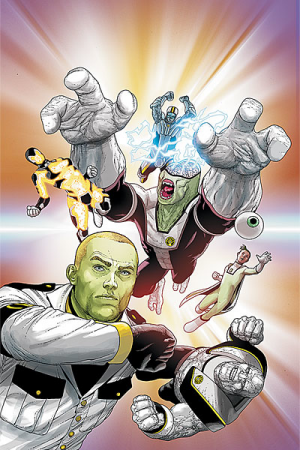
DC Comics has been building a rich science fiction mythos since the 1950s with characters like Captain Comet and Adam Strange. In the 1960s, we were given the futuristic teen team the Legion of Super-Heroes. In the 1980s, elements from the present day DC Universe and alien races introduced in Legion stories came together in an event called Invasion! In this story we were introduced to Vril Dox and a group of aliens all imprisoned by beings bent on invading the Earth. By the end, Dox and company escaped and would go on to form LEGION (Licensed Extra-Governmental Interstellar Operatives Network). These galactic peace-keepers would eventually be usurped by Dox’s rapidly intelligent newborn, Lyrl and form the REBELS (Revolutionary Elite Brigade to Eradicate L.E.G.I.O.N. Supremacy). The entire series met with cancellation in the mid-90s, though the characters would continue to pop up from time to time. Recently, the concept was revived and it is hitting on all cylinders, making sure to avoid the mistakes of its predecessors.

The new series opens with Vril Dox being chased to Earth by his soldiers that used to work for him in LEGION. It’s quickly revealed that the majority of planets under LEGION’s protection have been taken over by the Star Conqueror, a parasitic species of starfish parasites that attach themselves to humanoid hosts and communicate collectively. Dox goes about recruiting aliens who have escaped the infestation, including his now adolescent son, Lyrl. The group works to defeat the Star Conqueror through schemes developed by Dox. Along the way he recruits Captain Comet, Adam Strange, Starfire, and many obscure alien species. The entire first year of the series is taken up by the battle with the Star Conqueror and, while that seems like a long time to stretch a story out it is very entertaining.

Vril Dox is one of those anti-heroic characters that is so much fun to read. He’s the son of Superman villain Brainiac, but instead of going for galaxy conquering through mechanical beasties like his pop, Dox has opted for using diplomacy and backroom deals to conquer. He does offer peace for the systems that get LEGION protection, but there always seems to be an interesting catch. More often than not, his schemes involve putting his closest comrades in the path of destruction without them being aware til the moment has passed. He also possess zero sentimentality, as exhibited in the way he doesn’t hesitate to turn on his equally nefarious son Lyrl.

Because the series is part of the shared DC Universe, its inevitable that big events will crossover. During Blackest Night, where black rings were resurrecting the dead, Dox encountered the deceased mother of his child, Stealth. The issue plays with some of the ideas Geoff Johns has developed with various colors of the Universal Spectrum, and Dox ends up in possession of a yellow Sinestro Corps ring for a short time. Another bit of fallout from the Green Lantern comics is that the Vega System, an area of space that was allowed to be autonomous for millenia is now opened up, and Dox quickly swoops in and gets involved in an arranged marriage with matriarch of Tamaran, Komand’r to bring the planet under the umbrella of LEGION. The most recent storyline finds Dox’s father, Brainiac being placed in a prison on their home planet Colu, but of course escaping and this time going after his offspring.

If you are looking for a fun space faring series that focuses on one of the smartest villains in DC this would be your thing. In addition to Dox, there was some interesting work done with Captain Comet recently. He was a superhero in the 1950s, who left earth in the early 60s, and returns to visit the graves of his family. There’s some interesting things being said about the cost of immortality when those around you aren’t, and it makes me hopeful to see the development of that character in the series as well.

Comic Quick Hits

Action Comics #891

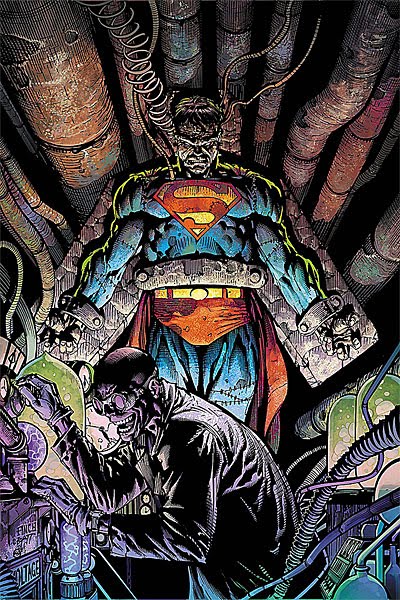
Paul Cornell delivers yet another awesome issue of his run on Action. Instead of focusing on the adventures of Superman, Cornell has opted to make Lex Luthor the focus of the series. Its hard to pull off villain-centric books by Cornell plays into the whole super scientist aspect of the character. There’s even the incorporation of long time Captain Marvel villain Mr. Mind, which makes me instantly love the issue. When you can have a mind controlling Venusian caterpillar in your story you have won me over. This has quickly become one of my read as soon as a I can books.

The Flash #4

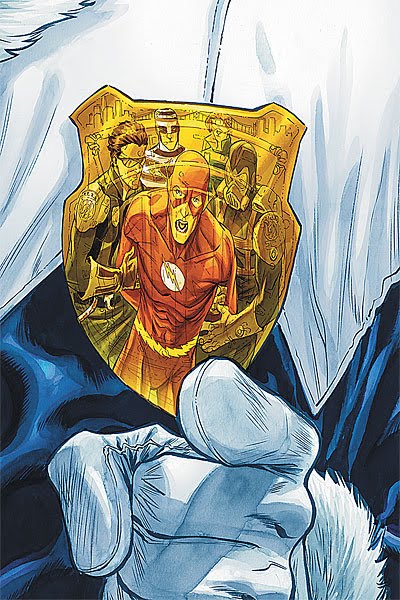
A decent fun issue that continues building towards something. I can’t help but feel Johns is stretching the story a lot here. What’s gone down in these first four issues could have been told in two. With hints towards the next storyline, “Flashpoint”, this can come off as feeling like killing time till then. Its well written though, and the future Rogues of the 25th Century are interesting, in that they model themselves after villains but are police in their era. We get some interesting info about a possible path for Flash’s wife, Iris, and I wonder if this is something Johns will carry through on. Francis Manapul’s art is amazing though, he’s one of the best artists I have ever seen on this character, really captures speed on the page.

Green Lantern #56

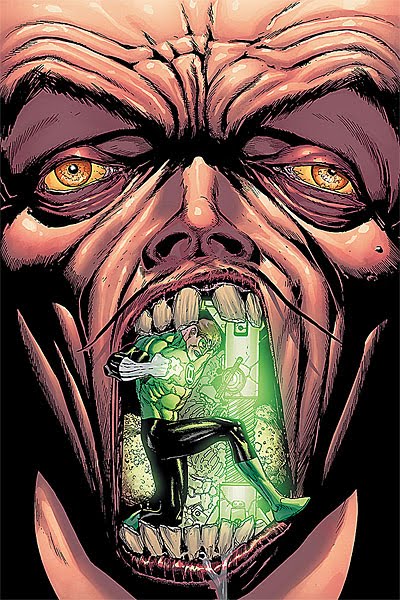
Green Lantern just can’t fail. With Geoff Johns’ development of the other colors in the universal spectrum it has really made the Green Lantern mythos absolutely riveting. This issue spotlights Larfleeze, the Orange Lantern, whose power comes from greed. There’s a brilliant bit where Larfleeze has learned of the Santa Claus myth and has plans to force the fat man to give him every thing he desires. It’s just one of those clever little bits that makes the comic so much fun. Long time GL baddie Hector Hammond also plays a major role and it has me anticipating next month and the continuation of this story. Also, Doug Mahnke’s art is spectacular.

Green Lantern Corps #50

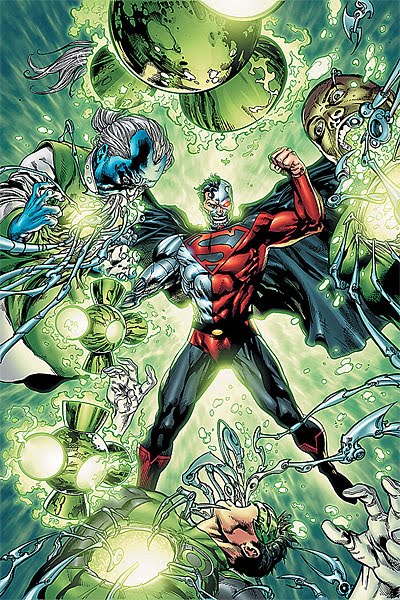
There’s some interesting things going on in the GL Corps. This issue we learn that the Cyborg Superman is back from the dead and, because he is a machine, is invisible to death. He believes the answer lies with the robotic Alpha Lanterns who police the Corps. At the same time we get some info about the mysterious figure who is plotting behind the scenes. My guess is that is Appa Ali Apsa, one of the Guardians of the Universe who went crazy years ago. The mystery here, and also popping up in the solo Green Lantern book definitely has me hooked.

Justice League: Generation Lost #6 (of 26)

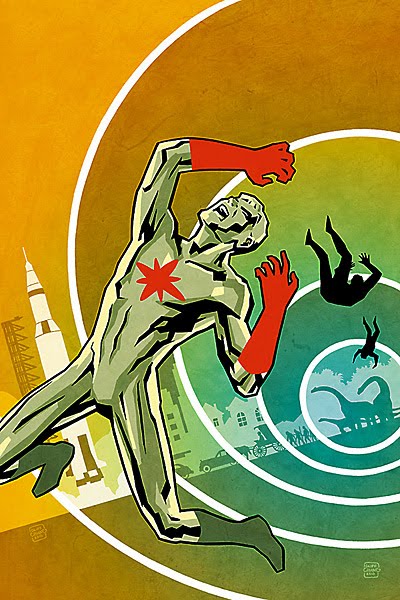
Just when I was beginning to tire of this series, Winick and Giffen deliver an awesome issue! The majority of this issue jumps back to #1 when Captain Atom left Earth’s atmosphere to release an atomic explosion he absorbed. The way his power work are he absorbs the explosion, gets displaced in time for a few hours, and then ends up back in the present. The place he ends up in reveals some things about the effects of Max Lord’s plan if he and the League fail to stop it. It’s also one of the first times I’ve clicked with Captain Atom character. Conceptually I’ve always liked him, but never seen an applied version that I enjoyed. After reading this, I’m really hoping Cap plays a bigger part in the story.

Comics I’m Getting This Week


BOOM! Studios
Incorruptible #8
The Muppet Show #8

DC Comics
Action Comics #891
Batman: The Return of Bruce Wayne #4 (of 6)
Billy Batson and the Magic of Shazam! #18
Detective Comics #867
First Wave #3 (of 6)
The Flash #4
Gotham City Sirens #14
Green Arrow #2
Green Lantern #56
Green Lantern Corps #50
Justice League of America #47
Justice League: Generation Lost #6
The Outsiders #31
Teen Titans #85
Wonder Woman #601

Dynamite
The Green Hornet Strikes #2

Image
Haunt #8

Marvel
Deadpool Team-up #891
Fantastic Four #581
Franken-castle #19
Secret Avengers #3
Thor #612
Thor: The Mighty Avenger #2
Ultimate Comics Mystery #1 (of 4)
Uncanny X-Men #526
X-Campus #2 (of 4)
X-Men: Legacy #238

Vertigo
American Vampire #5
Jack of Fables #46
Northlanders #30

Wildstorm
The Authority: The Lost Year #11 (of 12)

Wizard
Wizard Magazine Vol. 229

In Theaters Now: Inception


Inception (2010, dir. Christopher Nolan)
Starring Leonardo DiCaprio, Ellen Page, Joseph Gordon-Levitt, Cillian Murphy, Tom Hardy, Ken Watanabe, Dileep Rao, Marion Cotillard, Tom Berenger, Michael Caine, Pete Postlethwaite, Lukas Haas

Don’t think about elephants. What are you thinking about? Elephants, right? That is a very basic form of an inception, mentally influencing another person’s thoughts. But for a more complex idea, an idea that will cause someone to make a life-altering decision you have to do something a little more elaborate. As Cobb (DiCaprio), an expert dream infiltrator tells us early on, its much easier to steal an idea than to insert one in a person’s subconscious. With his seventh film, director Christopher Nolan takes the heist film formula and tosses it into an imaginative blender. The result is yet another highly complex and intelligent film that respects the intelligence of the audience, a rarity for a summer film.

Dominic Cobb is a professional dream infiltrator. Along with partner Arthur (Levitt), they use a special device to sneak into the subconscious of others and steal their ideas, primarily working in corporate espionage. However, Cobb is visited by his wife, Mal (Cotillard) in these dreams and she always seems to foil his plans. During the opening heist, Cobb loses his architect, the person whose job it is to design the key structure in the dream. He visits his father in law (Caine) who hooks him up with a young architecture student named Ariadne (Page). Cobb teaches Ariadne how to manipulate dreams, but warns that the subconscious will attack like white blood cells if an invading consciousness is detected. Their new job is much more difficult than an extraction (taking an idea), they are hired to perform an inception, planting an idea in the heir to vast corporation to split it up. Cobb gathers his team and begins the heist which involves multiple dream layers, but Cobb may be his own worst enemy.

Inception plays like a wonderful literary science fiction novel more than a film. It is so dense and full of ideas you can’t help but feel overwhelmed at first. Nolan has definitely produced a film that begs for multiple viewings and intelligently leaves its ending open for interpretation. So often that twist in a film comes off a as sloppy writing, but here the ambiguity is the trigger for Nolan’s inception on us. The seed of questioning our own reality begins, and is much better presented that The Matrix. Here there is no hard sci-fi overlords, rather we are our own jailkeepers, constructing realities that make us feel safe, when we knew if we woke up we’d deal with unpleasantness. The dream infiltrators all have a totem, an object that no one else should touch, that they carry in the waking and dream world. If the object obeys the laws of physics when used then they know they are awake. Cobb’s is a small silver top, he spins it and, if it doesn’t wobble and fall over, he knows he is still trapped in a dream. The dream layers in the film are incredibly complex and amazing. At one point they are in four separate layers of consciousness.

The performances here are stellar. While Nolan doesn’t ask for incredibly emotional performances, he does push his characters to show depth wordlessly. Both Page and DiCaprio give complex performances where a lot is told to us about them and they never go into expository passages of back history. The supporting cast is excellent as well, and I enjoyed the smarminess of Tom Hardy’s character, as well as the straight to the point workman Levitt plays. Cillian Murphy also delivers, with a bit of very believable emotion in one of the final scenes. Marion Cotillard was one of the biggest standouts in the supporting cast, both her performance and her characters play such a huge part in the story. This is one of those film you have to see, not an “if you like this then”, no. Go see this! You have to! No questions asked!

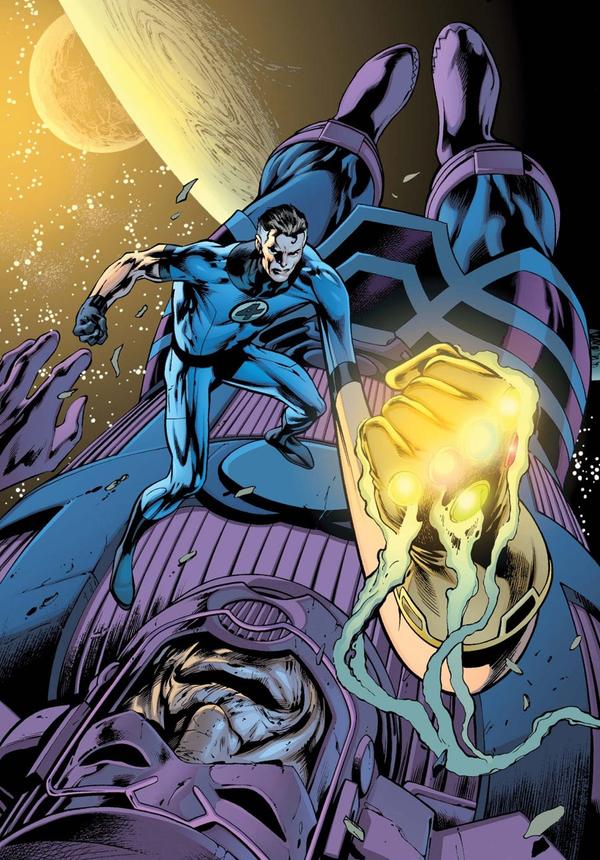
Comics 101: Mister Fantastic

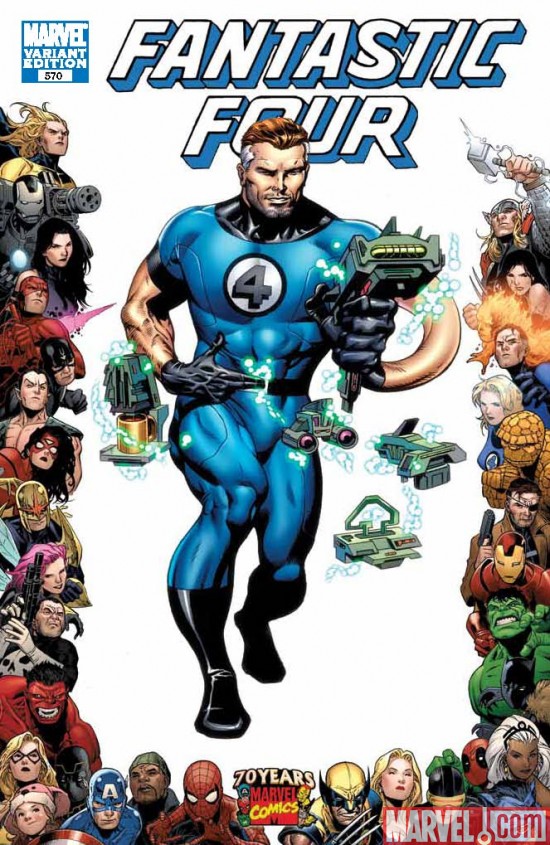
He’s the most intelligent human being on the planet, and with such a mind comes a lot of pressure to make things better for his fellow man. Even before the bombardment of cosmic rays that turned him elastic, Reed Richards was amazing his peers with complex advancements in science. In college he befriends fellow intellect Victor Von Doom and roommate Ben Grimm. Doom is developing technology to transport a human’s consciousness into other dimensions, and Reed points out some flaws in the man’s calculations. Letting his arrogance get the best of him, Doom activates his device and is scarred horribly. From then on, it became Doom’s mission in life to prove his mental superiority to Reed. During college, Reed rents a room in a boarding house owned by the mother of Susan and Johnny Storm. During this time, Reed’s father Nathaniel vanishes without a trace and Reed gets a job NASA. Before the experimental craft he is building can be launched, Reed learns his funding is being cut. Desperate to get data using the craft, he convinces Ben (who is now an airforce pilot) to help him out. Sue and Johnny insist on coming along. In the end the four are bathed in mysterious cosmic rays, each gaining a power, with Reed becoming the stretchy Mr. Fantastic.

This new group of heroes became The Fantastic Four and funded their exploits with Reed’s inventions. He also proved himself a formidable figure during the team’s early years, in particular warding off the destruction of Earth at the hands of the world-eater Galactus. Reed and Sue grew closer during these years as well, eventually became engaged, and married. Sue gave birth to a boy, Franklin, who was revealed to be a latent mutant. Fearful that Franklin’s powers would harm someone, Reed attempt to shut his son’s mind off for a little while. Sue discovered this and became enraged at Reed, leaving him for a short time. This would come to be a recurring theme with the Fantastic Four, Reed’s mental acuity leading him to form emotional barriers between himself and people of average intellect. He would find peers amongst the other brilliant heroes of the Marvel Universe, eventually forming the Illuminati.

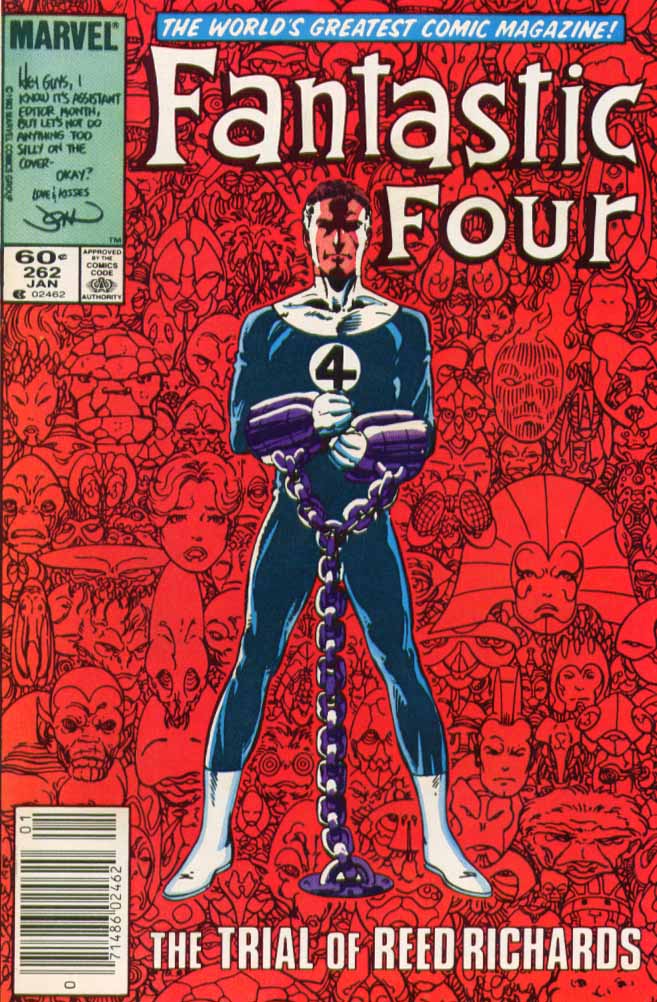
In aftermath of a major alien invasion, Reed met with Tony Stark, Professor Charles Xavier, Doctor Strange, Namor, and Black Bolt to form the Illuminati. Their goal was to head off catastrophes on Earth before the general public ever became aware of them. This would lead to their journeying to the homeworld of the aggressive Skrull race, informing that species that Earth was off limits to them. Reed and Sue reunited and once again he found himself in the presence of Galactus. This time Galactus was vulnerable and Reed had a chance to kill him, instead he showed humanity and spared the being’s life. As a result, Reed was captured and put on trial by the species whose worlds were devoured by the world eater. Reed won with the defense that Galactus was a force of nature, and an essential piece of the evolution of the universe. Back home, Sue was having complications with her second pregnancy and Reed tried to do what ever he could with his knowledge, but sadly the child was stillborn. Reed also learned his father had been living his life out of a parallel world and had become somewhat of a villain.

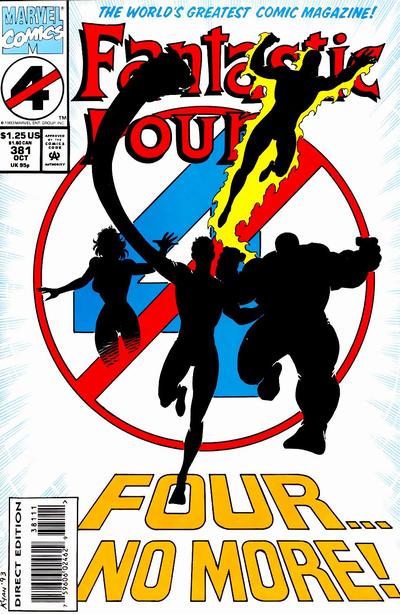
Reed and Sue took a leave of absence, during which they briefly joined the Avengers, but mostly spent their time recovering from the loss of their second child. When they finally returned, Reed was forced into teaming up with his long time nemesis Doctor Doom against an alien entity. In the final moments of the conflict, the two men were disintegrated before the eyes of the rest of the Fantastic Four. While believed dead, Reed had actually been kidnapped by his future grandson, Hyperstorm, a demented overly powered despot. Sue led the team while searching for any trace of Reed. Eventually she found him, and Hyperstorm was defeated. Little Franklin, whose mutant powers had manifested recently revealed that he had saved his little sister who was stillborn years ago, by transplanting her soul to an alternate Earth. She was discovered by Dr. Doom who raised the child as his own, Valeria. To the surprise of everyone, despite being only around five years old, Valeria was a brilliant genius who rivaled even Reed.

A couple years later, the teenaged superhero team the New Warriors were battling villains in a small Connecticut town when the villain Nitro (a living nuclear bomb) went off killing hundreds. This forced Superhero Registration legislation through in Washington which was backed by Iron Man, Tony Stark. Reed along with the rest of his Illuminati cohorts agree that it is time for the age of secret identities to end for the safety of humanity, while other heroes, including Sue, disagree. This leads to the violent Civil War, turning hero against hero. Reed volunteers to build a prison for unregistered metahumans in the strange Negative Zone, an act which turns even more heroes against him. He later defends his position, citing Isaac Newton’s fictional psychohistory theory: that using a mix of math, science, and sociology one can predict the outcome and severity of global disasters. The heroes end up split, many signing up under the law but many going underground. Reed meets with the Illuminati again at a later date where Black Bolt reveals he is not who he appears, but is a shape shifting Skrull alien that has replaced the hero. This kicks off the Secret Invasion, wherein it is revealed many of Earth’s heroes have been replaced with Skrull sleeper agents.

Most recently, Reed has revealed that he has a secret room stored away in a pocket universe with thousands of equations scrawled across the walls. Each equation is a solution to a problem in the universe and he has decided to implement them. One of his most ambitious tasks has been to challenge long time adversary The Wizard about the nature of humanity. He has adopted on of the The Wizard’s clones, a young man still, and decided to encourage him to use his scientific gifts for the benefit of humanity. While Reed has always been well intentioned, it seems his intelligent arrogance may get him in the end.

Across the Pond: Misfits

In across the pond I look at television from the U.K. that stands out as amazing programming.


Misfits Series 1 (6 episodes)

One American television series that completely disappointed me was Heroes. The first season was a slow burn, but once it got where it was going it was incredibly good. After its first season though it started a downward spiral that ended with NBC put a bullet in its head halfway through the fourth season. The idea of a television series that works with the superhero concept is one I can get behind completely. When this BBC drama came around I heard about it, but didn’t really rush to watch it. Recently though, I sat down and tore through the six episodes in two days and it has jumped to being one of my favorite shows. It’s a bit teen drama (and British teen dramas are infinitely more racey than American ones) and a bit super hero series. The mix is a wonderful series that can be deathly serious and absolutely hilarious.

Five juvenile delinquents gather at a community center to perform their court-required service hours. While cleaning up trash along the Thames, they see a strange storm quickly gather over the city and begin to rain down massive chunks of ice. A bolt of energy strikes and moments later they appear to be fine. However, they have each gained a special ability they is tied to an aspect of their personality. Kelly, a chav girl from the estates, can read people’s minds (she’s concerned about what people say about her). Simon, a introverted and awkward boy, turns invisible as long as no one is looking at him. Curtis, a former high school track star caught with cocaine, can send his consciousness back in time. Alisha, a coquettish minx, drives any man who touches her bare skin into becoming compelled to have sex with her. And poor Nathan, the mouth of the group appears to have no powers.

These kids wouldn’t ever hang out with each other so the conceit of the community service hours is a perfect way to have a makeshift team. They even have uniforms, bright orange jumpsuits, which they change into when they meet up. Villains come in the form of other Londoners affected by the mysterious storm. Their first enemy is their probation officer, who is transformed into a Hulk-like agent of rage. From there they run into a man who believes he is a dog during a full moon, a girl who cause others’ hair to fall out, and a former nymphet turned svengali of purity. The show definitely mixes humor in, and is able to joke about what is going while still keeping a sense of urgency. The highlight of the season by far was the episode spotlighting Curtis, the time traveler. He is able to go back to the night the police caught him with drugs and tries to change things. Of course he is forced to deal with the large reaching ramifications of his trip back and is forced to make subsequent trips. The way backstory about all the characters is relayed in this episode is amazing, and puts a lot of the time travel storytelling in Heroes to shame.

My favorite character of them all is Nathan, the seemingly powerless member of the bunch. Every episode he attempts to manifest a different power but ultimately fails. There’s even clues early on as to what it will be and its not till the final episode of the season that we discover what that is. Also, in that final episode, Nathan delivers what is possibly one of the funniest rallying speeches I’ve ever heard. In his effort to convince his friends to shake off the mind controlling influences they are under, he champions teenage irresponsibility, claiming that they’re supposed to be getting drunk and shagging all the time. He plans to do so throughout his twenties, and possibly his early thirties. Its a interesting mix of that aforementioned urgency and comedy. If you have the chance, and this sounds even the smallest bit interesting to you, seek it out. It’s one of the most enjoyable comedy-dramas I’ve seen on television in a long time. Series two is scheduled for the end of 2010, with a Christmas special to precede it.

Tube Review: Mad Men and True Blood


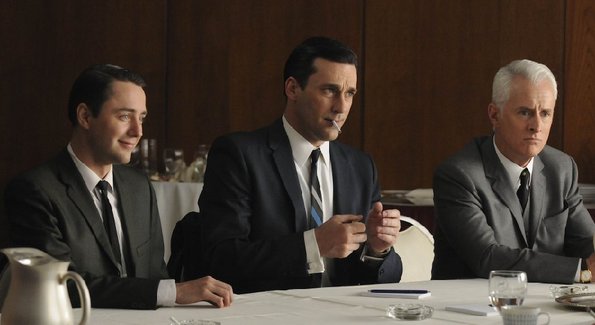
Mad Men – S04E01 – “Public Relations”

Mad Men is back and in a big way. It’s been almost a year since Sterling Cooper Draper Pryce was started thanks to Don’s midnight revolt against the British conglomerate. Since the, the agency has gotten some buzz around its challenging ad campaigns and relocated to offices in the Time-Life Building. Joan Holloway is not the queen bee, with her own office from which she runs the machine. Harry Crane is now a seasoned salesman to television companies, just returning from a trip to L.A. around Thanksgiving. Pete Campbell seems to have discarded his conniving ways and treats Don and his coworkers with respect. Peggy is one of the most drastic changes, appearing to be Head of Creative, with at least one male employee under her whom she makes no bones about showing she is in charge of.

Don is giving an interview to Ad Age magazine in the opening in which he is asked “Who is Don Draper?”, a question that works as the theme of the entire series. Don’s reply is defensive and awkward, and after the article comes out the picture of the agency’s figurehead causes them to lose the Jai Alai account, leaving Phillip Morris as 71% of their accounts. As Don deals with his partners irritation over this he is also handling the rather bitter aftermath of his divorce with Betty. Betty and the kids are still living in the old house, now with her new husband Henry. Don’s lawyer advises him to pressure Betty to finally find a new place and he does at the end of the episode. It’s pretty apparent Betty wants her “pound of flesh” for putting up with Don’s philandering and concealment of his true identity. She’s also the dominate one in her new marriage and is incredibly harsh on the now pre-teen Sally.

All in all, I felt things don’t bode well for Don Draper. There is a freshness and life in the new agency, but Don’s Manhattan apartment is a dark and cold den. He’s unable to bed what ever woman he wants anymore, and ends up calling over a prostitute who knows him well. In bed he shows an affinity for rough play, something we haven’t seen this full blown in the character before. In the end, his interview with a different reporter feels partially forced. Roger Sterling in particular really beat Don for fumbling the spot with Ad Age. We end with Don forcing a smile and telling a story that frames Sterling Cooper Draper Pryce as a rebellious company that is willing to let a client leave, rather than compromise their fresh and edgy ideas.


True Blood – S03E06 – “I Got A Right To Sing The Blues”

This season of True Blood has been the one that really clicked with me. I think its because a lot of what is happening is pay off from the set up of the previous two season, in particular the conflict between the vampire kingdoms of Louisiana and Mississippi. At the end of the last episode, Russell Edgington, the vampire of king of Mississippi, seemed delighted to discovery Sookie’s powers. This episode though, he doesn’t really know what she is or what they are, only that its a great source of power. Bill’s cover is finally blown and his creator, Marlena is tasked with draining his blood resulting in complete death. Eric, discovering that Russell was the man who killed his father centuries ago, is playing like he has complete allegiance to the man until he gets a chance to kill him. On the subplot side, Tara finds a way to escape Franklin and apparently bashes his brains out, Jessica feeds on a patron at Merlotte’s, Jason learns the girl who he was developing feelings for is engaged, and Sam learns his brother has been forced into using his shifting to participate in dogfights.

It can’t be said that there aren’t enough plot threads this season. I personally enjoy how packed every episode is, in comparison to last season which felt like it drug by painfully slowly. Now every episode seems to give a a lot of information and move along at a brisk pace. The cast has definitely grown and even characters that used to grate on me (I’m looking at you Tara) are actually enjoyable now. I am hoping that she didn’t kill Franklin though, as he has been the new addition to the series that I have enjoyed the most. His schizophrenic personality added some interesting dark humor to the show. I also have really liked the werewolves portrayal as trailer trash, juxtaposed against the vampires as Southern aristocracy.

The plots that aren’t keep me interested are Jason’s pursuit to become a cop and Sam’s trashy family. The Jason/Andy side plot has a lot of potential but it seems to be going aimless now and is simply filler. I hope that it gets tied into one of the larger main plots in a cleverly unexpected way. I’m think Lafayette’s local V dealing could lead he and Jason into an intersection. Sam’s family’s story seems like it could be wrapped up next week. He arrives at the dogfight ring and rescues his brother, telling his parents he never wants to seem them again. Unless there is a really interesting twist added to that story its going feel like they are stretching it out for as long as they can. Despite these weak spots, the season has been great fun so far. We just hit the halfway point and I am excited to see where the characters end up because it seems like a big shake up is about to happen in the vampire community.

Back Issue Bin: Alan Moore’s Swamp Thing


Swamp Thing #20-53, 60-61, 63-64
Written by Alan Moore
Art by Stephen Bissette and Rick Veitch

Before Watchmen, Alan Moore was simply known as the guy who saved Swamp Thing from cancellation. The series was born out one story in the horror anthology House of Secrets in the 1970s. The unnamed Swamp Monster proved so popular that creator Len Wein recast the story in the present day and gave the character an origin. He was Dr. Alec Holland, a scientists working in the bayous of Lousiana on a “bio-restorative” formula. Its end purpose would be to turn arid environments into lush forests. His lab is attacked and a fire is started, engulfing Holland. The poor man runs into the waters of the swamp where he dies from the burns, blood loss, and trauma. However, he was coated with the formula during the attack and his essences mixes with the swamps. He is reborn as a plant humanoid, with the memories of Alec Holland. All in all, it wasn’t too spectacular of a series and sales reflected it. That is until the British comics writer Alan Moore said he would taking over writing the series. He was given a handful of issues to turn sales around and that’s just what he did.

Moore’s first issue (Saga of Swamp Thing #21) is very reader inaccesible, but he had tie up the plot point left by the previous writer and he did so fairly well in one issue, ending with the death of the main character. Odd way to start a run on a series. The next issue is where he really kicks into gear. In this single issue, Moore completely resets the status quo of the series, with Swamp Thing learning he isn’t Alec Holland, but merely a mass of vegetation given sentience by the dying Holland’s consciousness and the formula. Now that Swamp Thing realizes he isn’t human, his behavior becomes increasingly alien. The series itself switches from a standard superhero comic into some mish mash of that and a horror series. Artist Steve Bissette is incredibly effective with his macabre, otherworldly illustrations. The enemies the creature fights from this point are not one who can be defeated through brute force alone, and stories take on a very philosophical bent.

One of the standout issues deals with Swamp Thing’s long running relationship with Abby Cable. Even upon discovering he is not the man she thought he was, Abby refuses to abandon him, seeing goodness in the human nature of his soul. They have sex which is one of the strangest love scenes I guarantee you have ever seen. It involves Swamp Thing growing strange fruit on himself, and Abby eating some. The fruit secretes hallucinogens and cause Abby’s consciousness to leave her body temporarily and merge with the plant life. Its a very clear example of how Moore writes comics in a more intelligent and mature way than most writers. He acknowledges the superhero tropes but he also doesn’t feel constrained by them. On the other hand, he doesn’t see spandex outfits and extraordinary powers as “cheesy” or “lame”. He is a great appreciator of the depth and breadth of comic books.

While Saga of Swamp Thing was on the verge of cancellation around issue 30, it went on to run until issue 171, a feat that would have been impossible without Alan Moore’s writing. Moore didn’t change or reinvent comics, he simply wrote them better than they had ever been written before. All the melodrama and soap opera are there, they’re just done in a skilled and crafty way. I particularly remember the inclusion of Golden Age villain Solomon Grundy (familiar if you grew up watching Super Friends). Despite being created forty years apart, Swamp Thing and Grundy had suspiciously similar origins. Moore, being a comic book fan, knew this and made it part of the story. It is such a smart little note of continuity for him to have picked up on and its something that continues to resonate with the Grundy character today. If you are looking for an amazingly literary comic you’ll find no better than Moore’s work on this series.